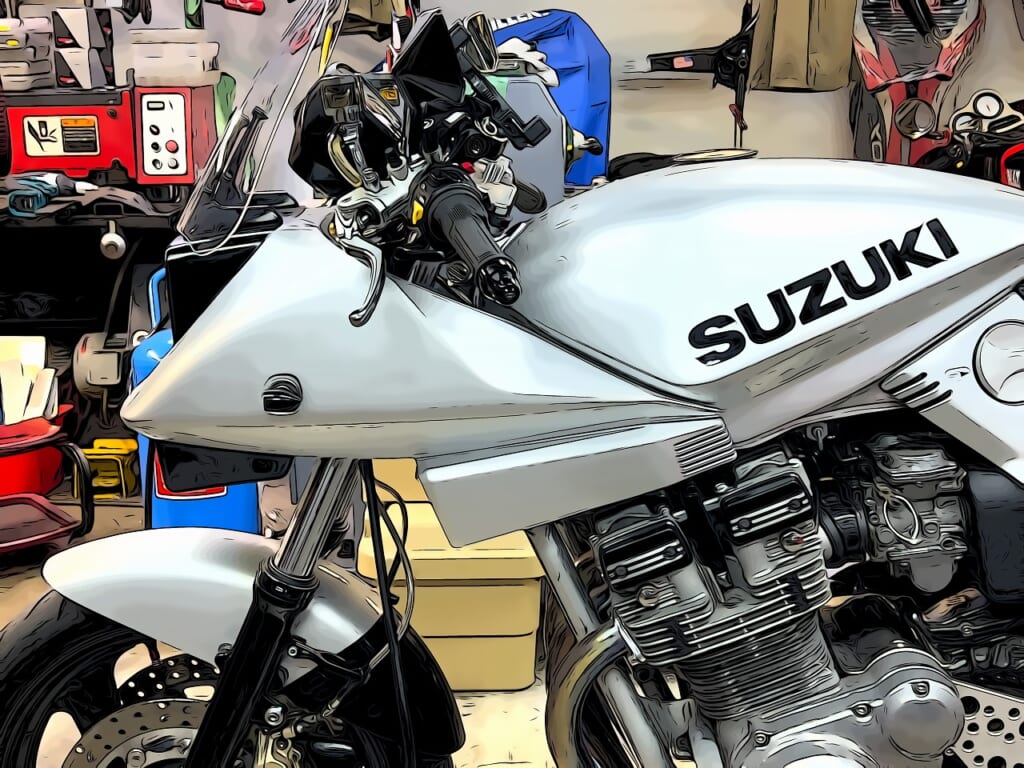
The steering is known for its surprisingly heavy weight.
Yeah, it’s definitely heavy. Since we’ve never done this work before, let’s take care of it.
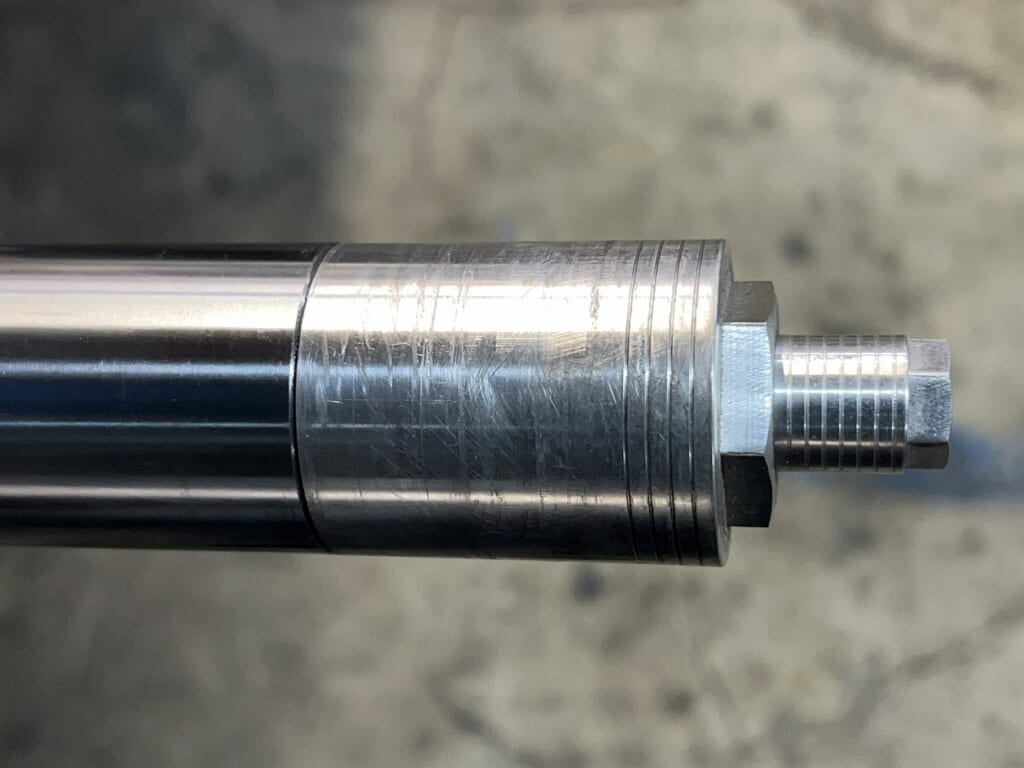
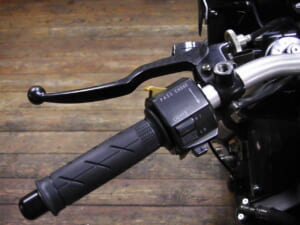
The handlebar is loose!
I thought so, but it turned out an extension was installed. My apologies!
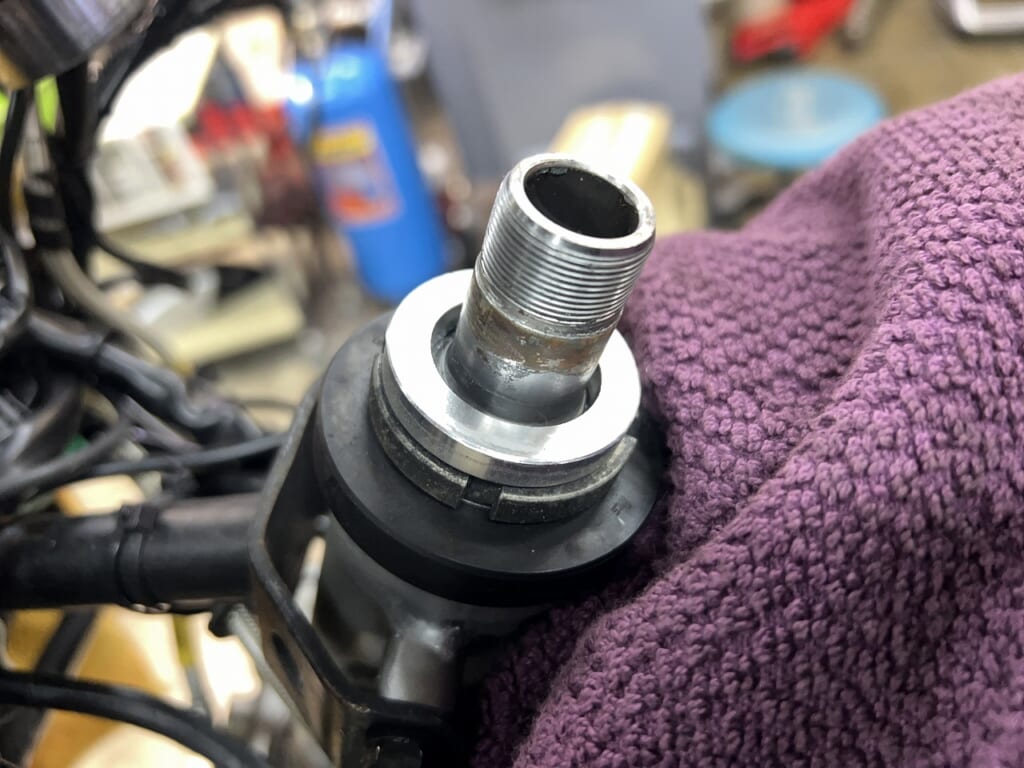
A spacer with an oversized inner diameter, the kind you often see when revving or increasing displacement.
I can see how the lower threads get in the way, but it does seem to seat well.
The builder’s imagination is truly limitless.
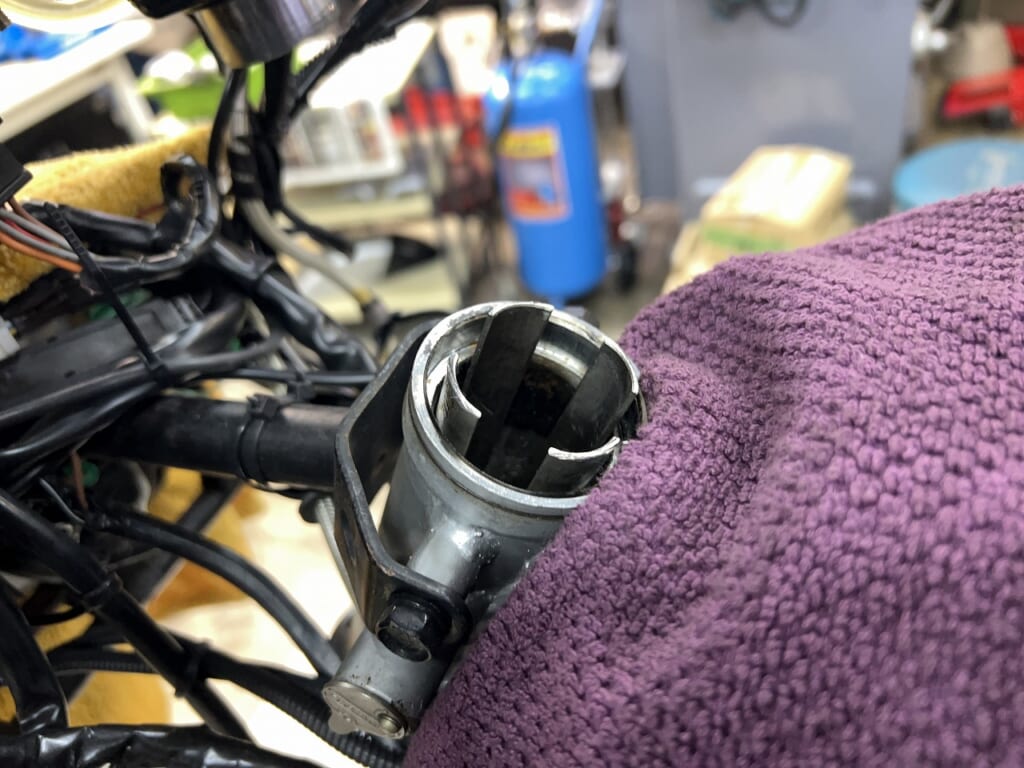
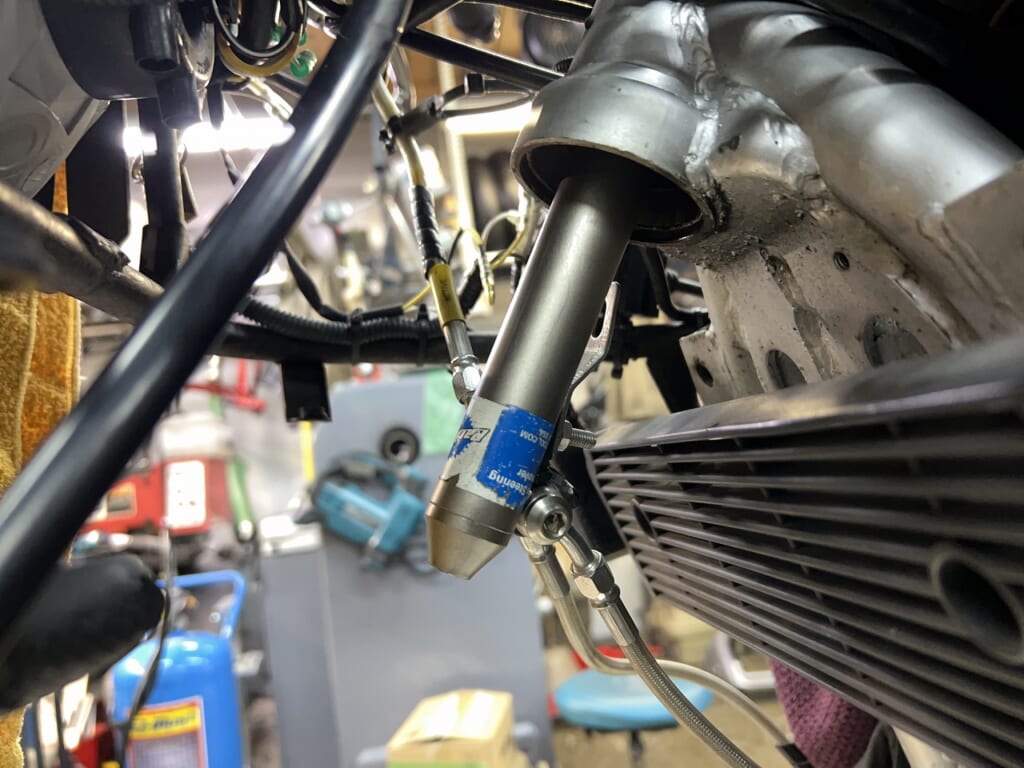
Stem bearing removal revolution
Park Tool’s RT-1/RT-2
While not universal, they’re incredibly helpful tools.
*The lower one didn’t work this time.
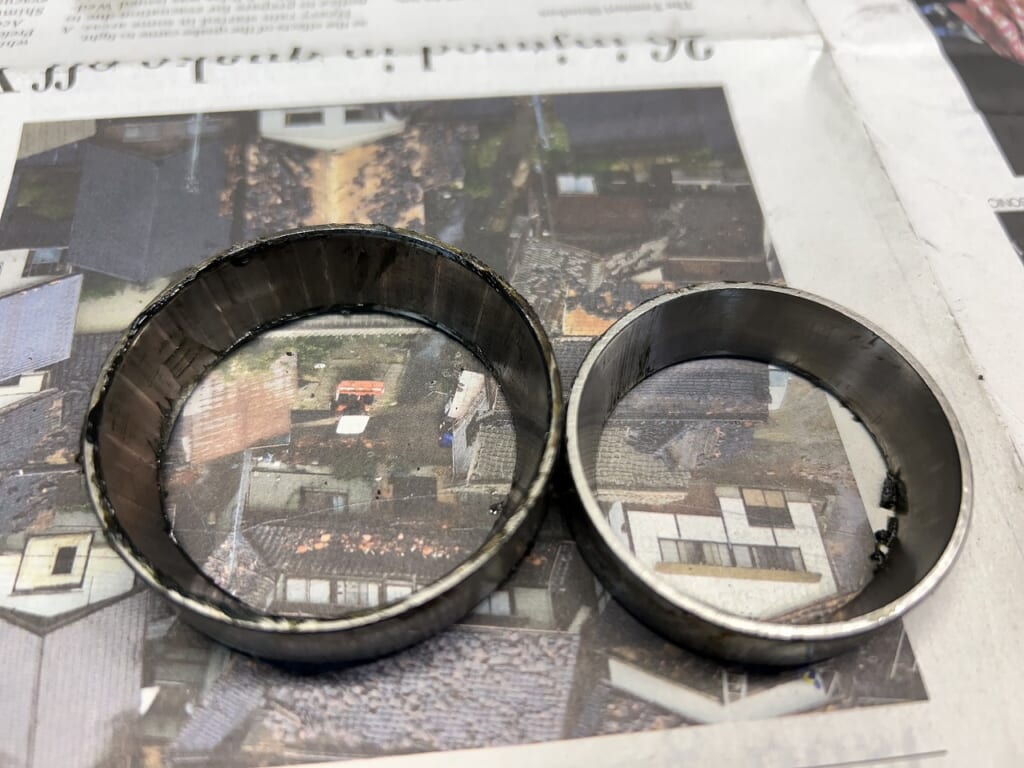
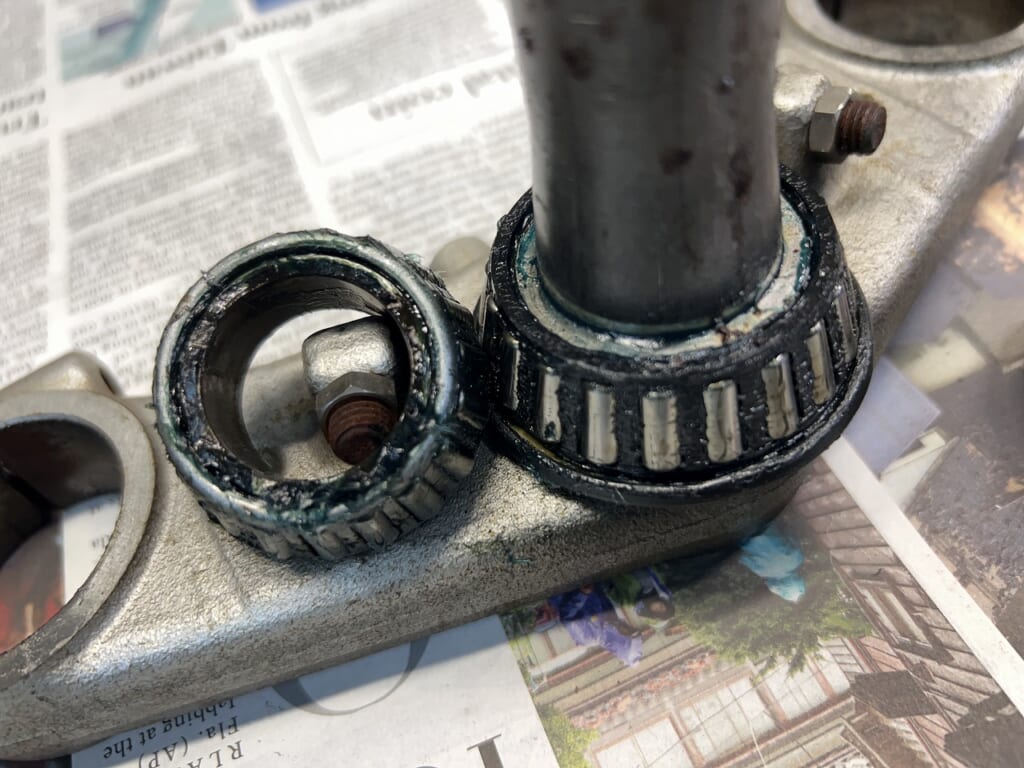
The condition isn’t as bad as I expected.
It must have been tightened way too much.
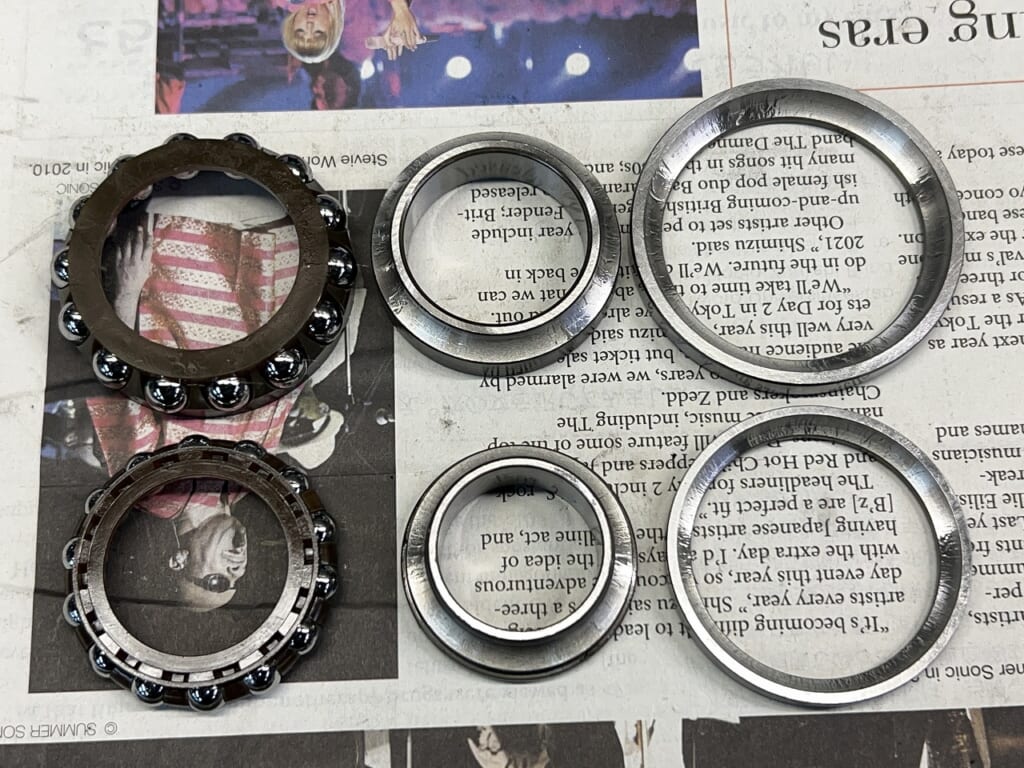
I’m a retainer ball person myself (*´ω`*)
Suzuki has been lazy about it—from the GS1000 onwards, the upper and lower sizes have been identical.
Even the oil-cooled models are all the same.
Basically, if you adjust the stem shaft length, you can fit any front end.
Recently there’s been a trend back toward tapered bearings.
My guess is that tapered bearings are easier to manage during assembly and less prone to changes.
If assembled properly, you can really feel the advantages of ball bearings.
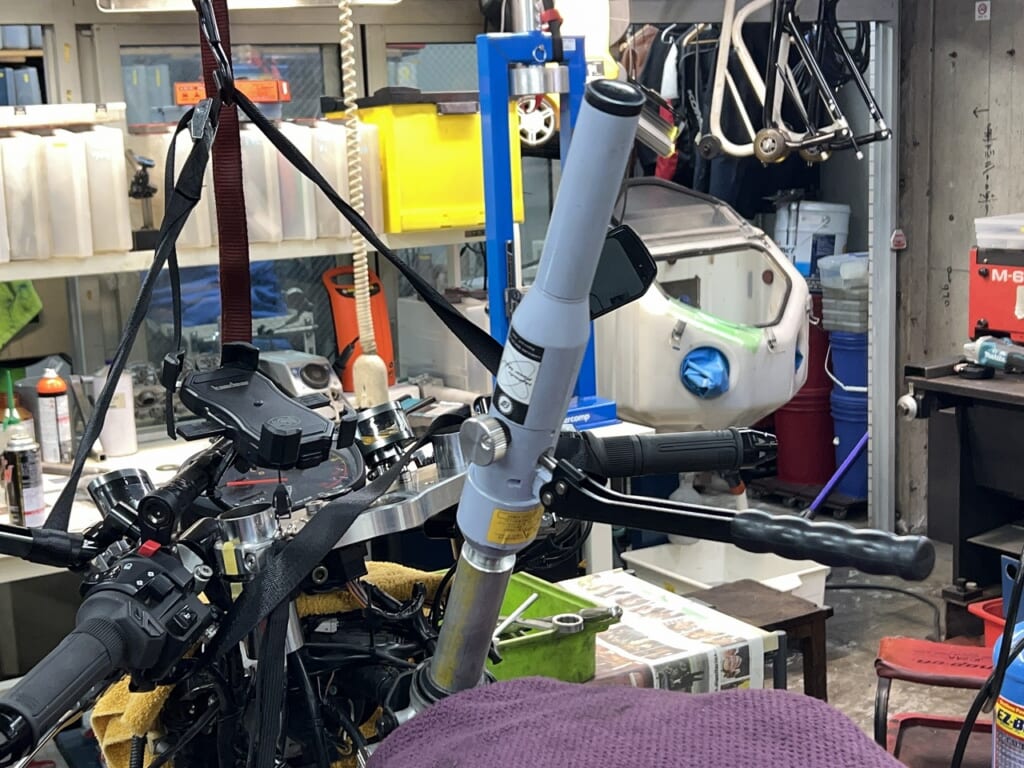
I’m the type who uses a hydraulic press for installation
I have the factory “special tool that presses in by endlessly tightening a nut.” It’s a pain.
Because it’s tedious, I made this. It lets you press in easily and reliably, so you can feel confident.
“Certainty comes from equipment,” “no tricks required.” That’s the idea.
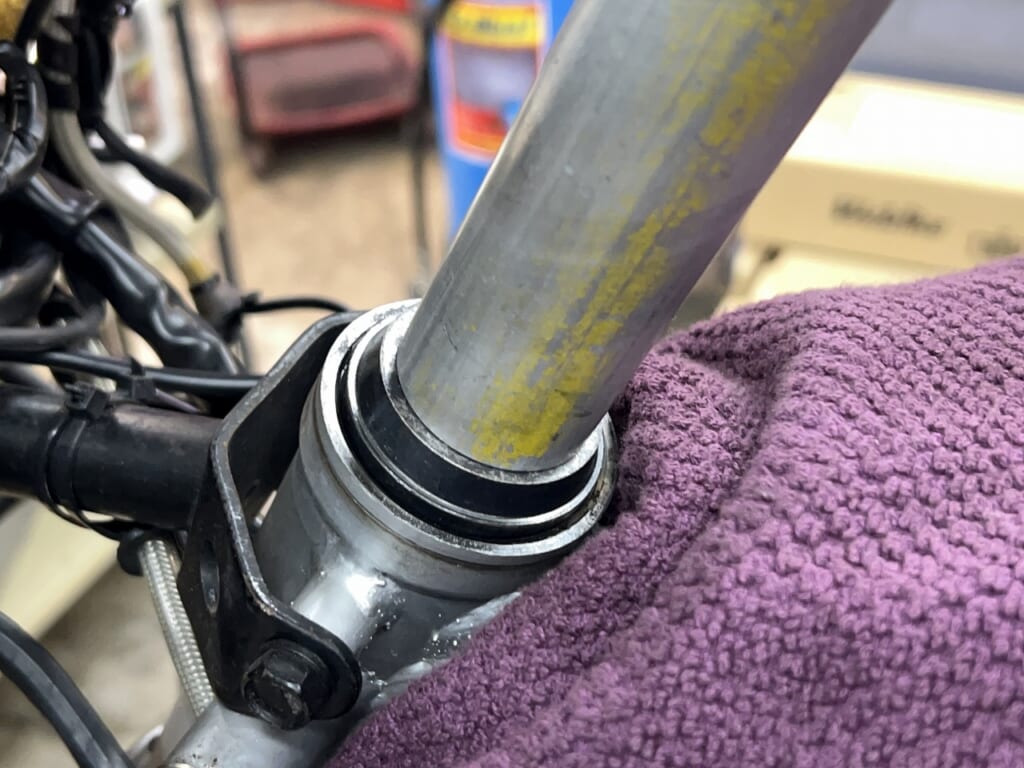
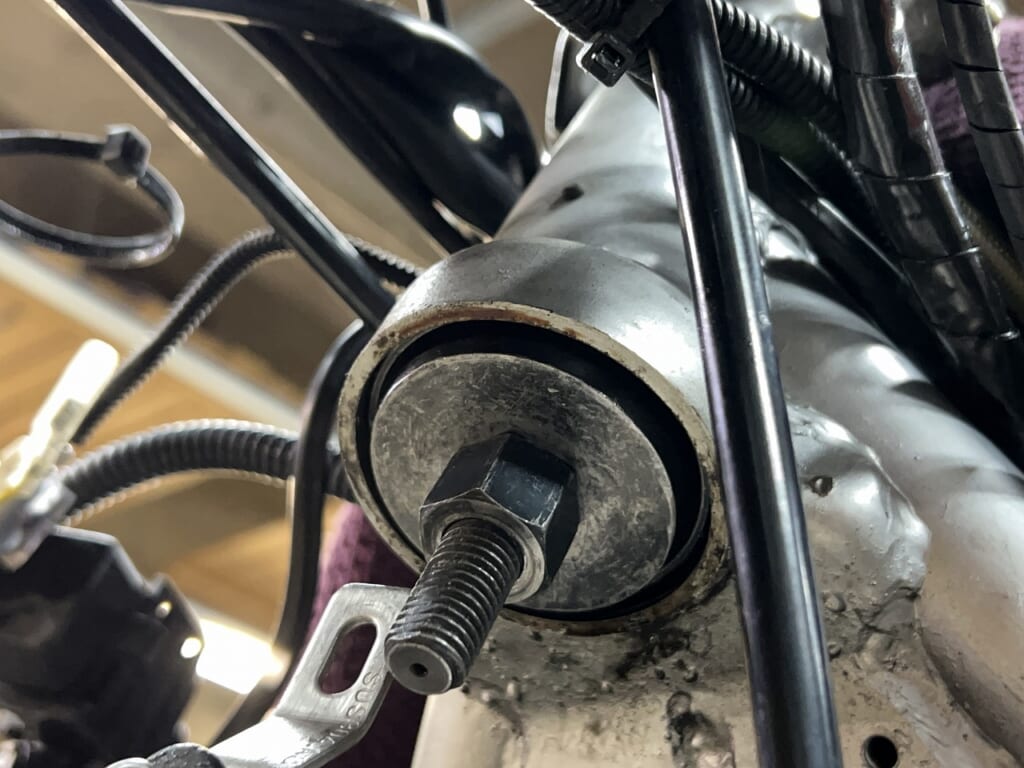
There’s room for more refinement, but pushing it further might not be worth it.
I could make it much faster, but we don’t do that many stem jobs per year.
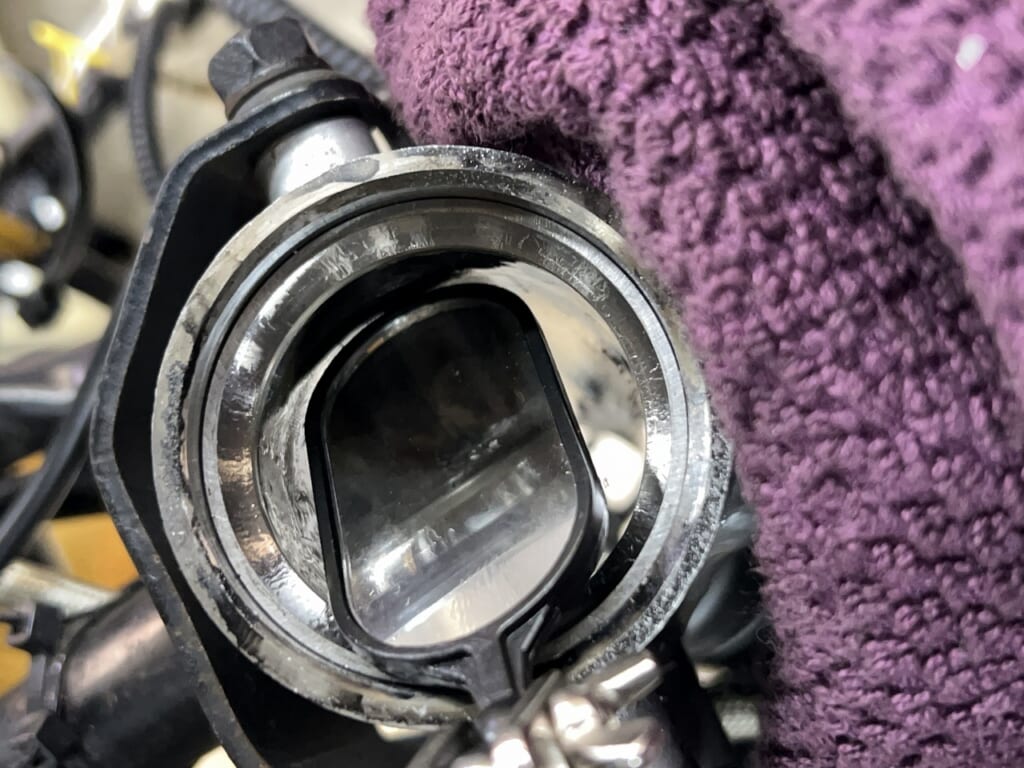
Visual inspection is super important. Always look.
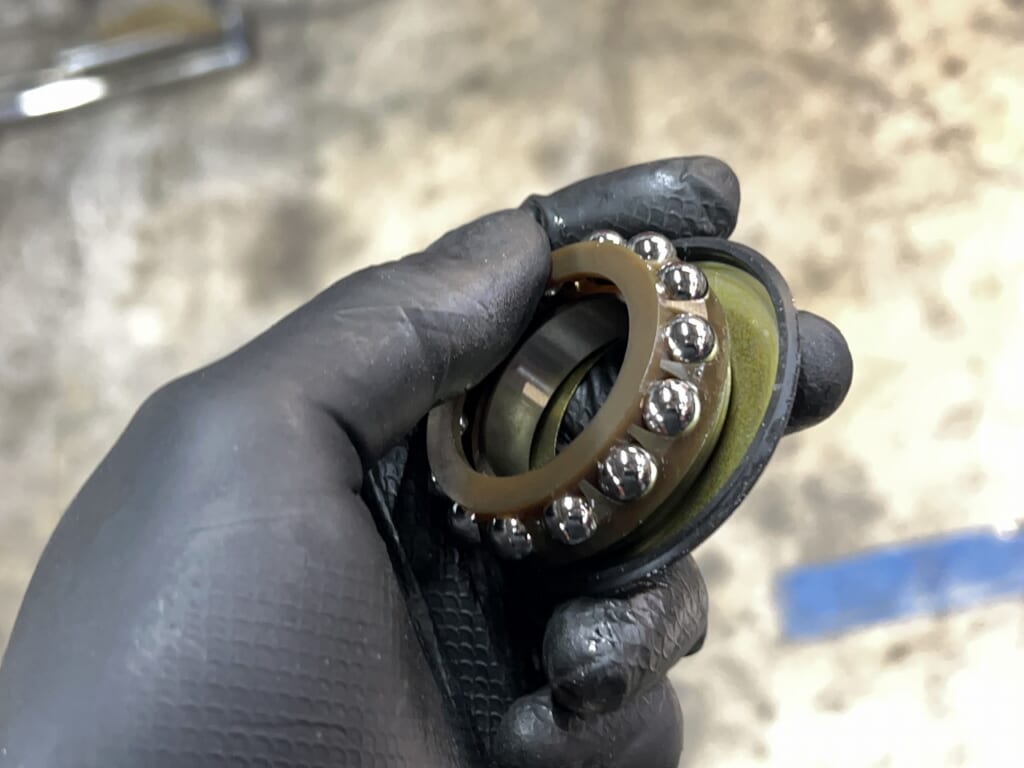
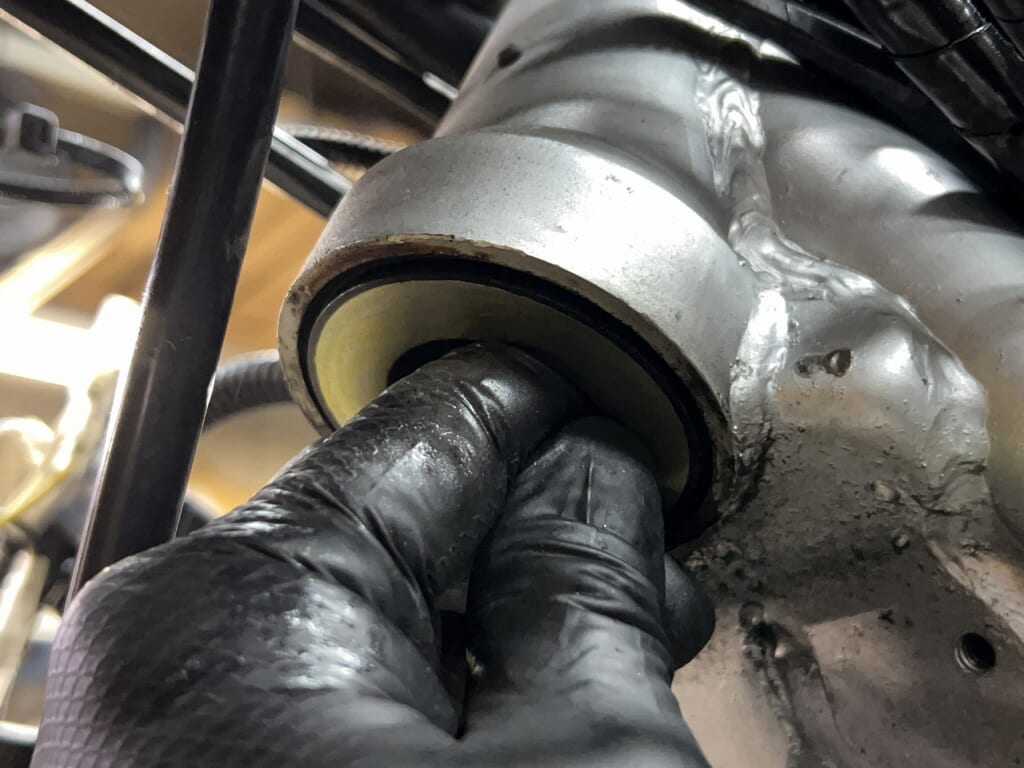
For the lower bearing, “after pressing the race, feel the seal’s grip on the unit alone” is more reliable.
Some units, like Kawasaki’s, have seals that grip extremely tight.
If you adjust the assembly so it moves despite a tight seal,
it might develop play over time, and this could be the culprit.
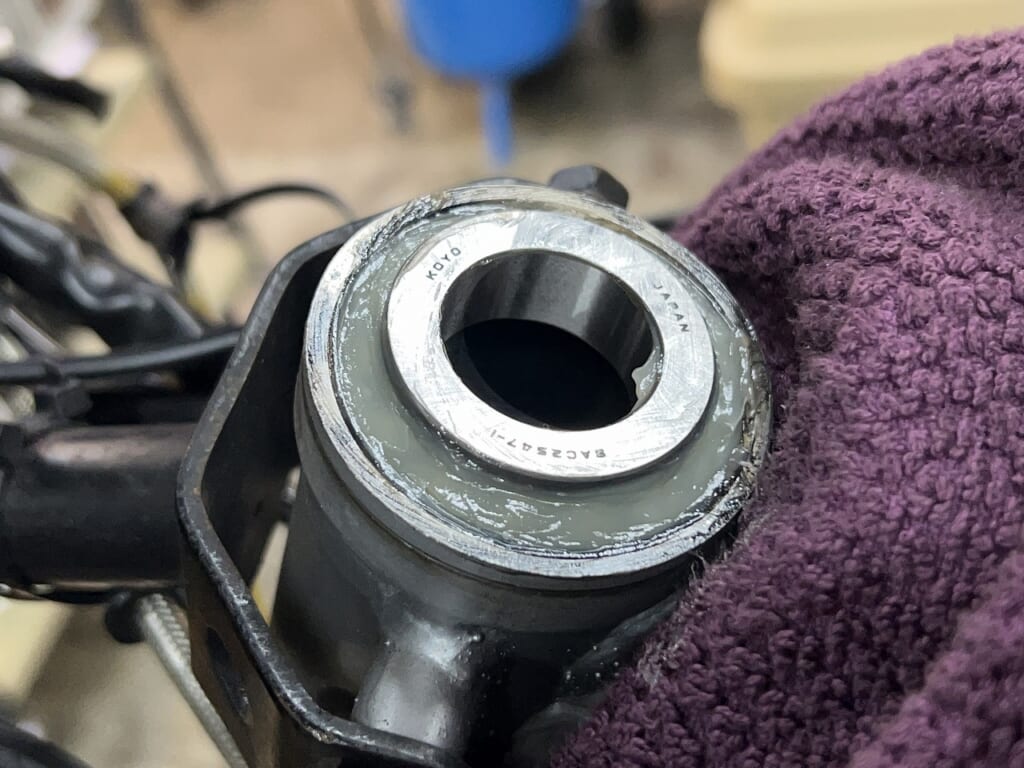
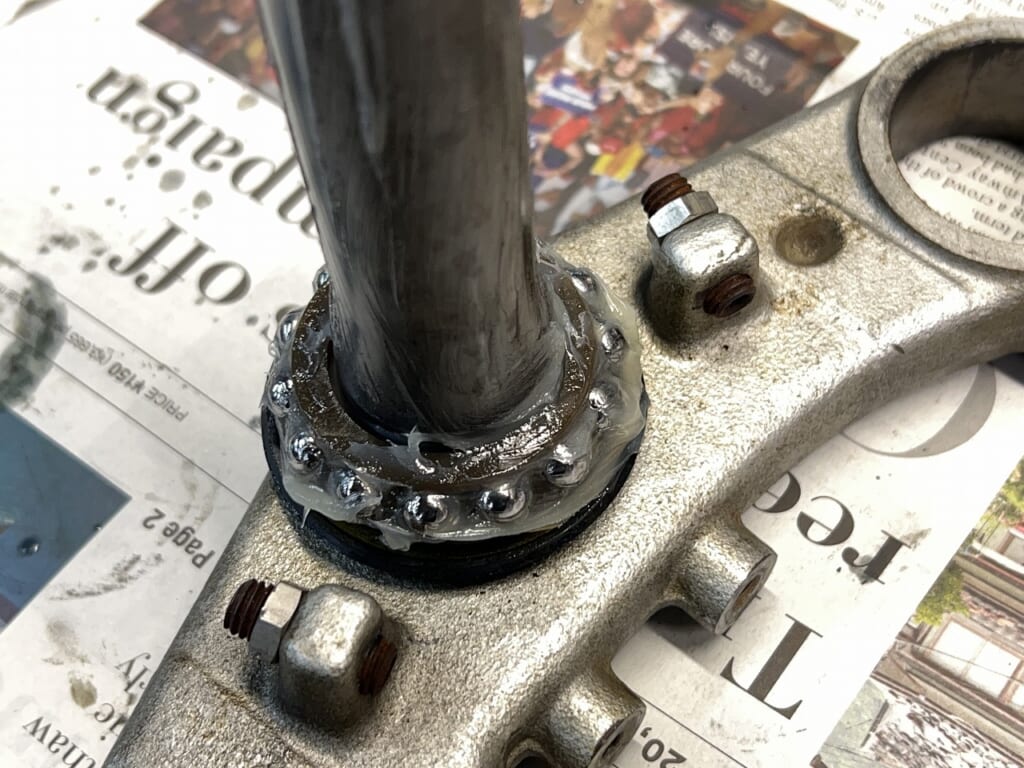
We’ll pack it with the trendy low-viscosity, heat-resistant grease.
The softer the grease, the more natural the steering feels.
But we can’t have it liquefying from heat and leaking out.
Higher viscosity grease doesn’t necessarily mean a stronger oil film.
Balance is needed in the right places.
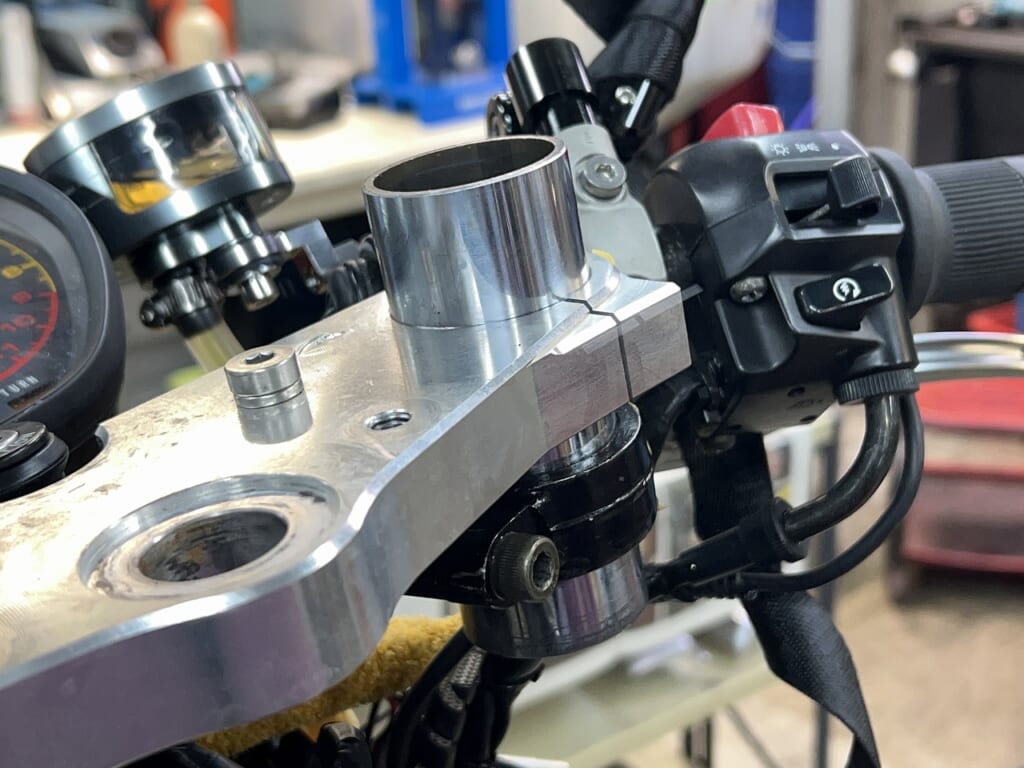
For clip-on bars, using a cut inner tube helps hold the handlebar better.
Work with minimal damage and no stress on the parts “is super important.”
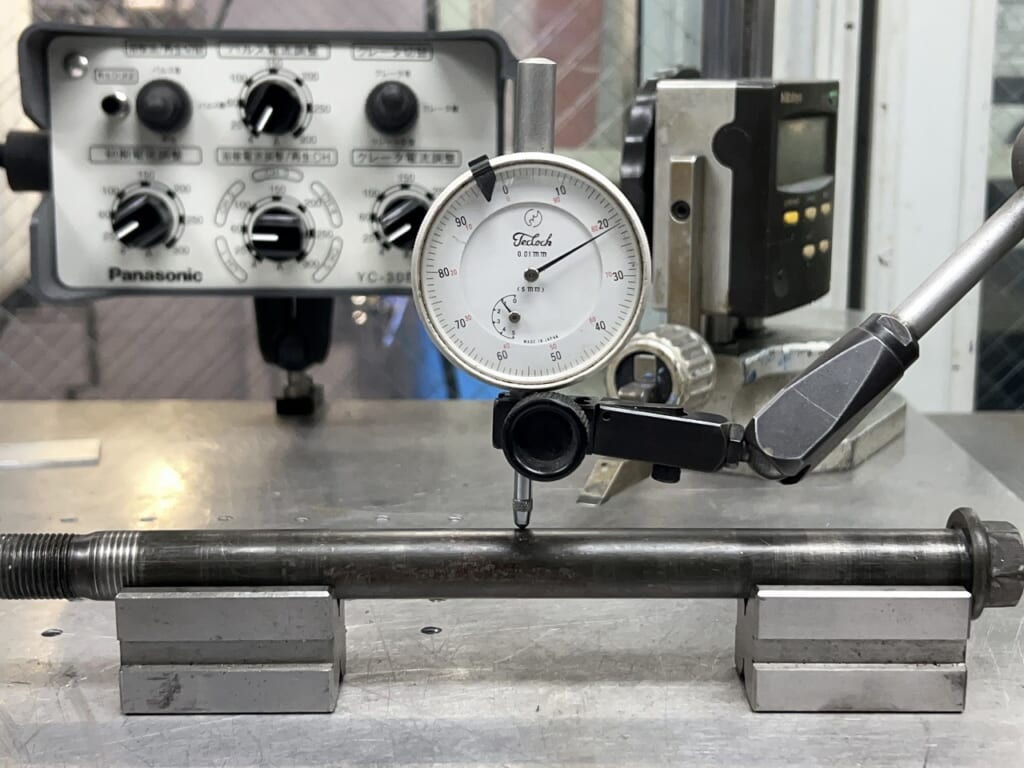
The axle shaft runout is also fine.
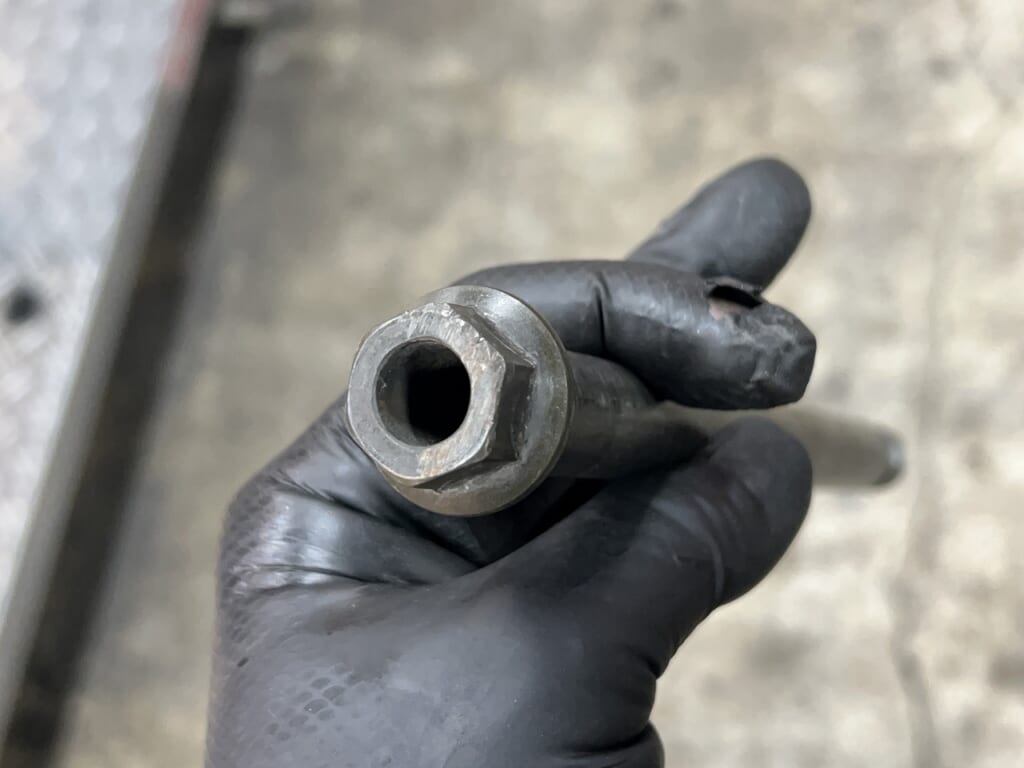
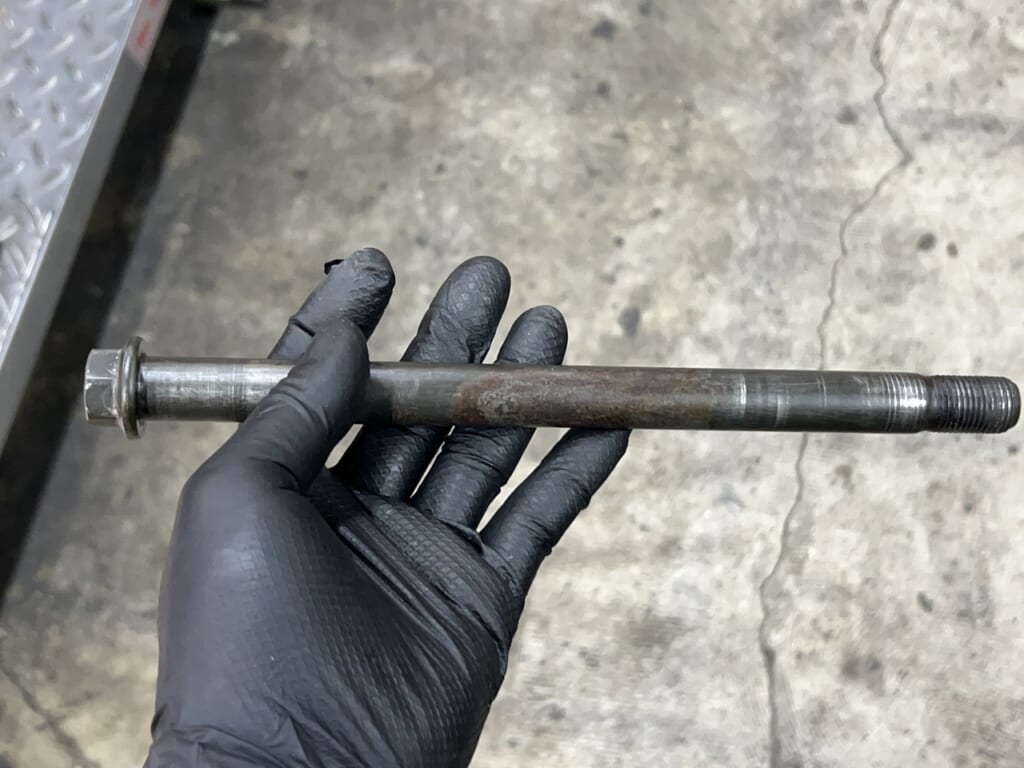
This 17mm axle shaft is nice!
What, you’re not excited?
That’s just how it is.
Now it’s time for a test ride and we’re done! (*´ω`*)