These days, there’s hardly any choice when it comes to tire sizes, right?
For 17-inch wheels, “Front 3.50-17, Rear 5.50 or 6.00-17”
For 18-inch wheels, “Front 2.50 or 2.75-18, Rear 4.00 or 4.50-18”
Mid-size bikes might have slightly different options,
but bikes that come to our shop are pretty much like this.
On the flip side, old bikes with narrow original rim widths are really interesting.
With older bikes, “the OEM tire specifications sometimes ignore rim width” and that can happen.
So, while considering the original ride height, I want to select a tire that fits the rim width.
But honestly, there really aren’t that many options to choose from.


 ポチップ
ポチップ


First, let’s find out the OEM size!
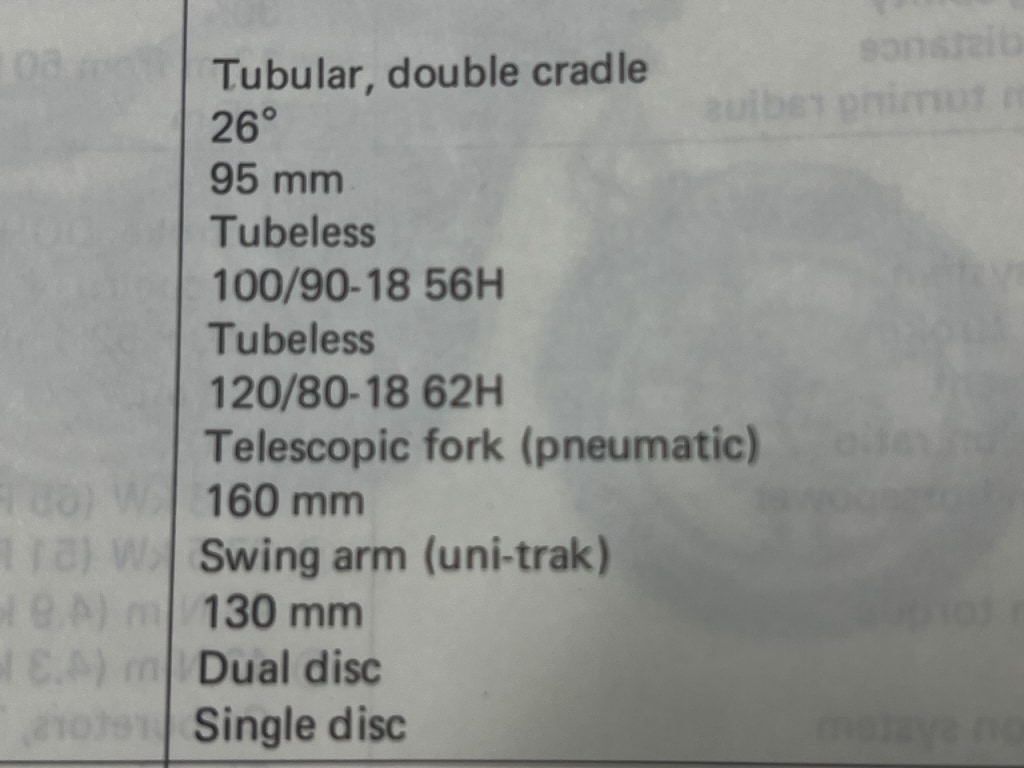
If you have a service manual, you can check the size right away.
If you don’t have one, you can just check the wheel and tire directly.
*Though sometimes completely unrelated tires are installed
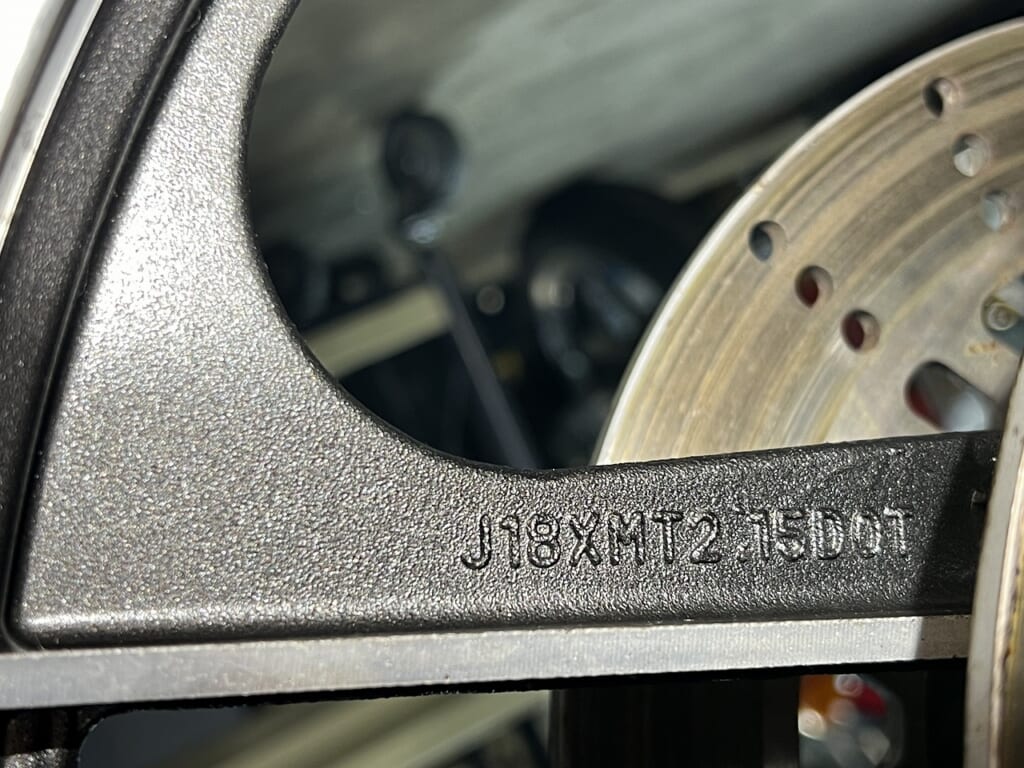
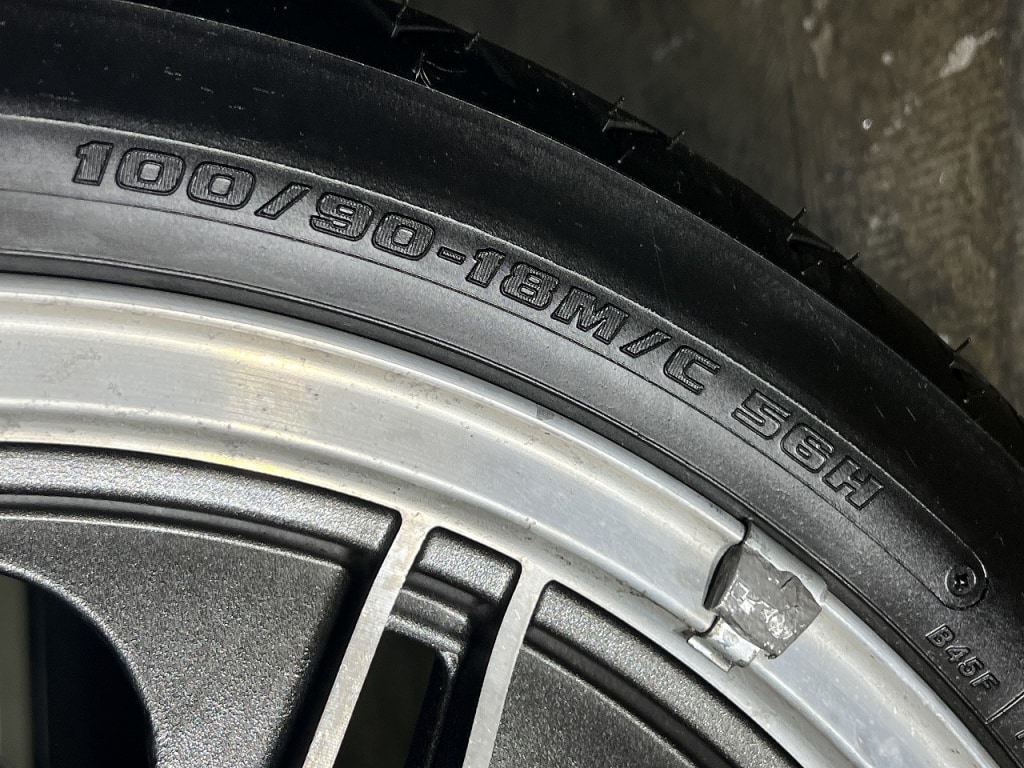
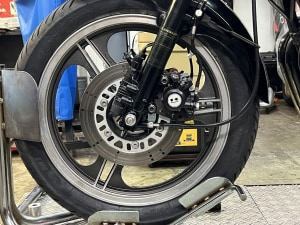
Front Wheel Rim Width 2.15*18
Tire Size 100/90-18
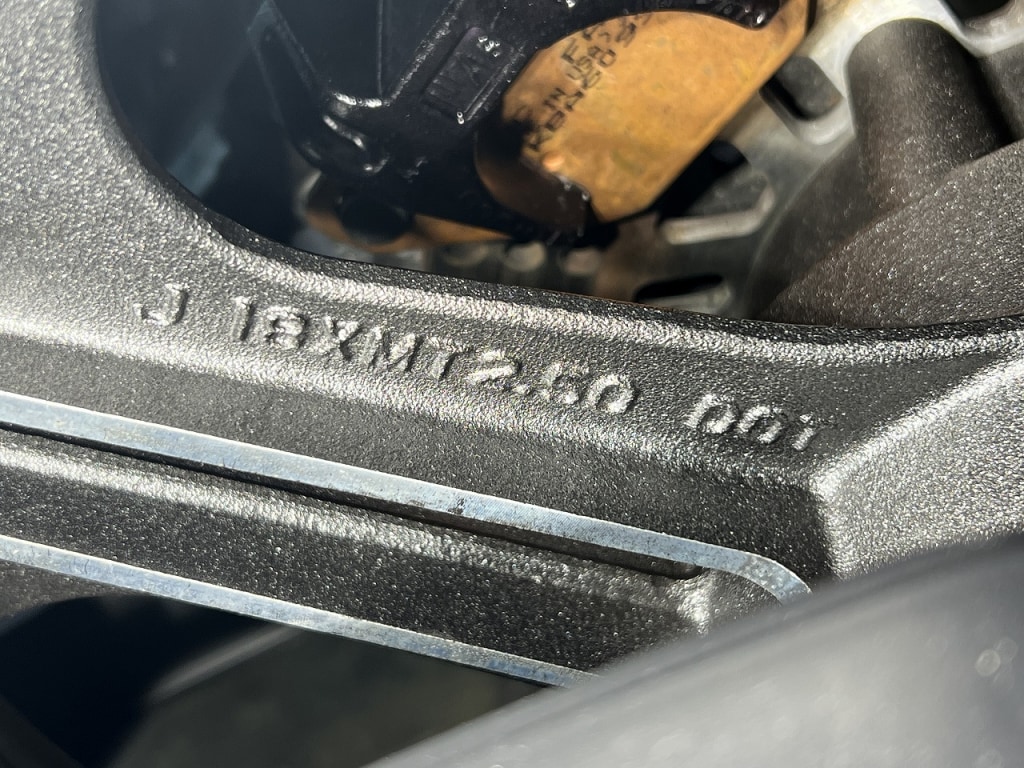
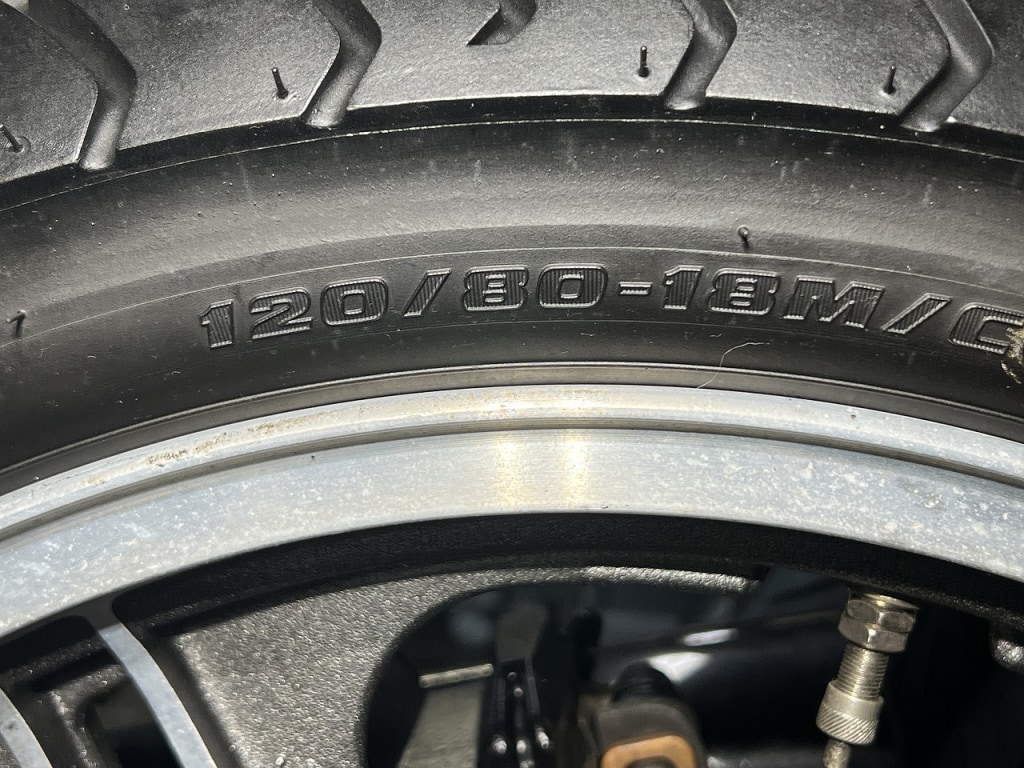
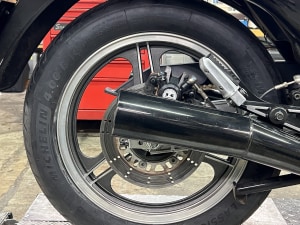
Rear Wheel Rim Width 2.50*18
Tire Size 120/80-18
The OEM specified tire size is installed as expected.
The tire was Bridgestone BT 45.
It’s good to refer to domestic tire manufacturer information



The numbers above are excerpts from Bridgestone BT46 tire OEM specified sizes.
With OEM specified tire sizes, “Front rim width 2.50, Rear rim width 2.75” is the standard rim width according to tire design.
I think this rim width probably gives the tire its best shape according to design specifications.
But there’s also something called “applicable rim width” and
“within this range, you’re good to go~” a proper strike zone is clearly set.
Next, be sure to check the outer diameter, which greatly affects ride height. Since only the bottom touches the ground, half of this number is what matters.
So let’s first select the tire size based on rim width.
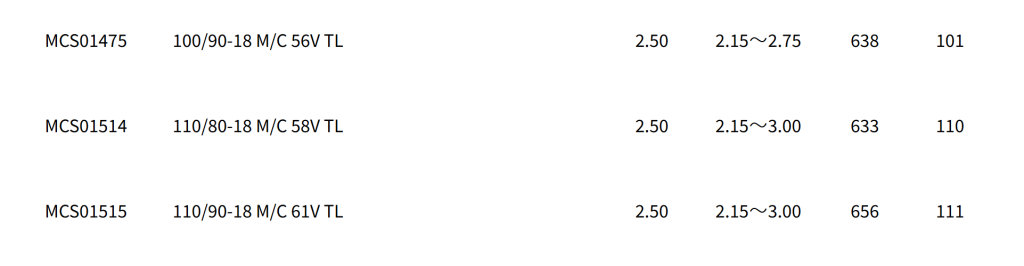
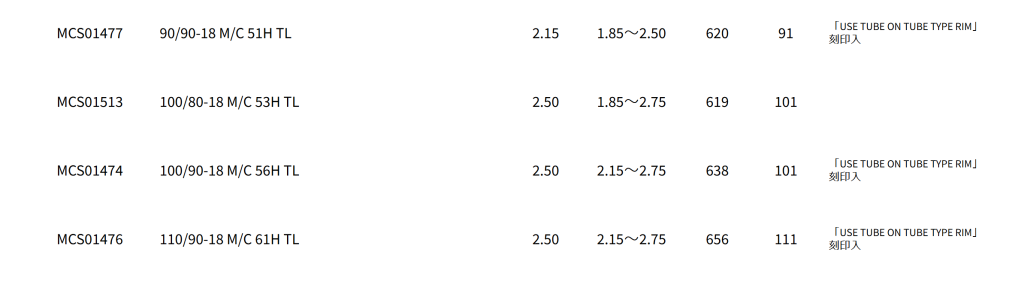
I extracted usable front sizes from BT 46 like this.
If I only select by front rim width 2.15, it would be 90/90-18 with an outer diameter of 620mm
The stock is 2.15-18 rim width 100/90-18 outer diameter 638mm width 101mm
If I chose 90/90-18, the front would drop 18mm × 1/2 = 9mm.
It would be close to a heavily worn tire state right from being new.
Since there are no other options, I decided to go with the same 100/90-18 as stock.

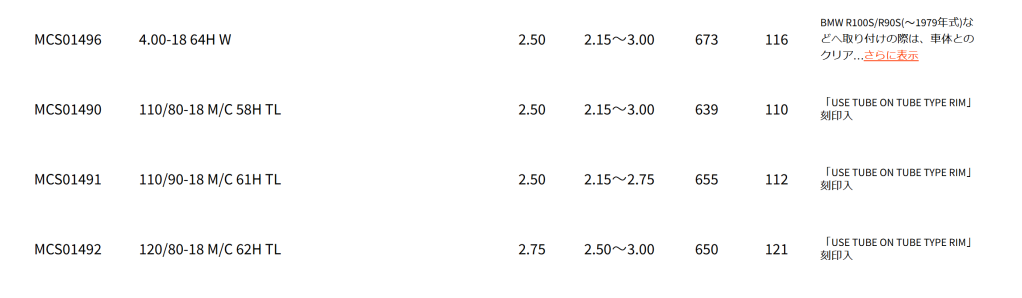
Next, I want to select the rear size.
The stock is 2.50-18 rim width 120/80-18 outer diameter 650mm width 121mm
What caught my attention were 110/90-18 and 4.00-18 two types.
When you put a wide tire on a narrow rim, there’s definitely an unusable edge.
With the applicable rim width, the edge is properly used, so it feels reassuring.
For some reason, that rounded unused edge part feels slippery to me, and I don’t like it.
This time, I decided to go with 4.00-18 which has more tread width margin.
The outer diameter also increases by +23mm (10.15mm ride height increase), so it might have a positive effect on handling.
In short, choosing something other than stock means there’s some risk.
I’m hoping maybe there’s a dramatically pleasant discovery—like a mystery discovery—if I’m lucky.
Since you have to use a tire until it’s gone once you mount it,
that risk is quietly significant.
After checking Bridgestone, I still love Michelin!
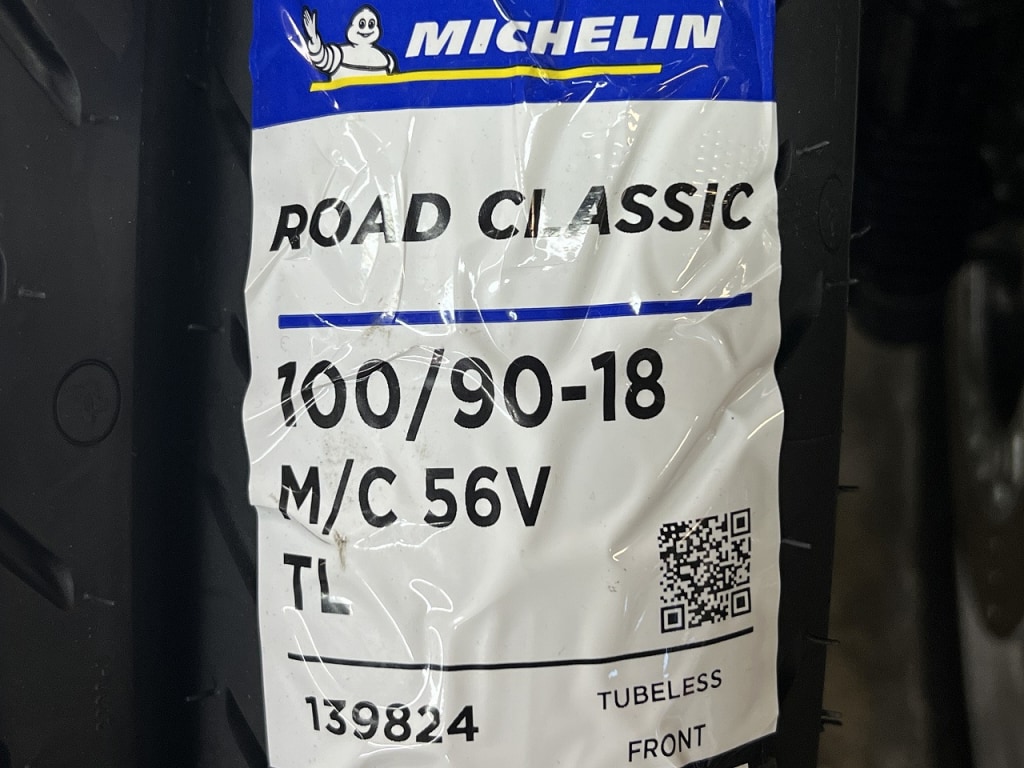
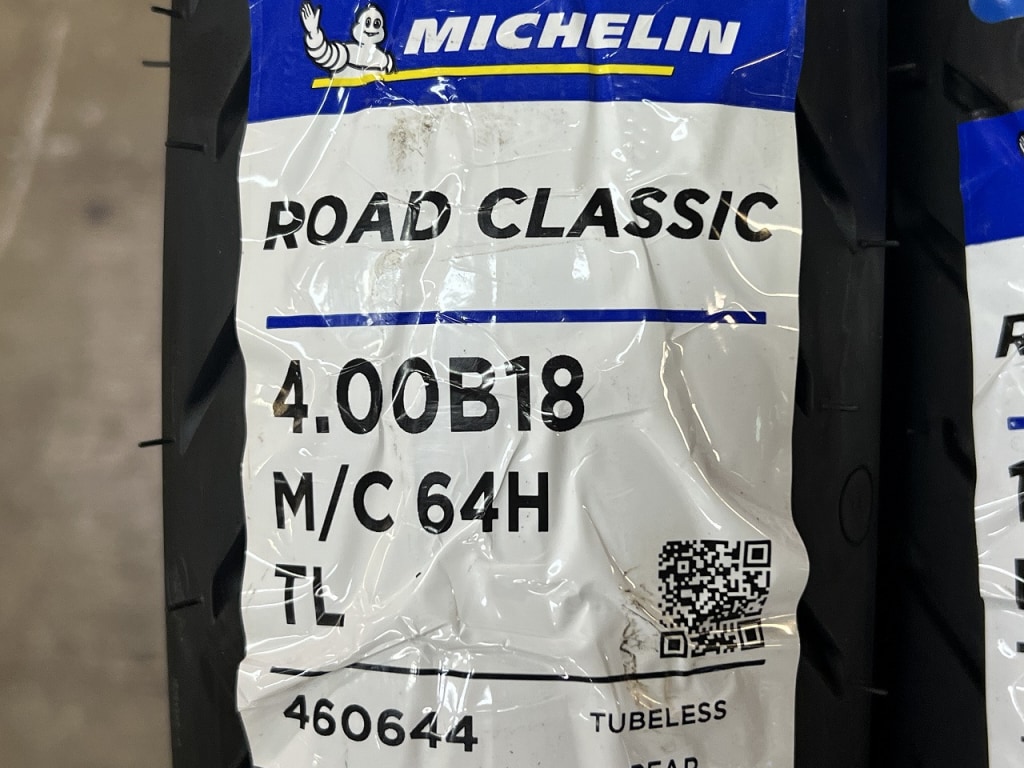
I chose a cool-looking Michelin Road Classic tire.
This tire uses a somewhat unusual construction method called belted bias, an evolution of bias tires.
I noticed after buying that belted bias tires have a “B” marking.
So the front is just regular bias… ( ;∀;)
That’s how it is.
Even with OEM rim width, there are actually tire options.
I’m not sure if results will follow, but since they’re consumables, it might be worth experiencing the change.
The tire’s rounded shape changes quite a bit relative to rim width.
By changing the size,
you might get closer to your preferred handling, so it might be worth trying.
I bought the tires like this, but I haven’t had time to install them yet ( ;∀;)
ポチップ
 ポチップ
ポチップ
 ポチップ
ポチップ
The article was not found.