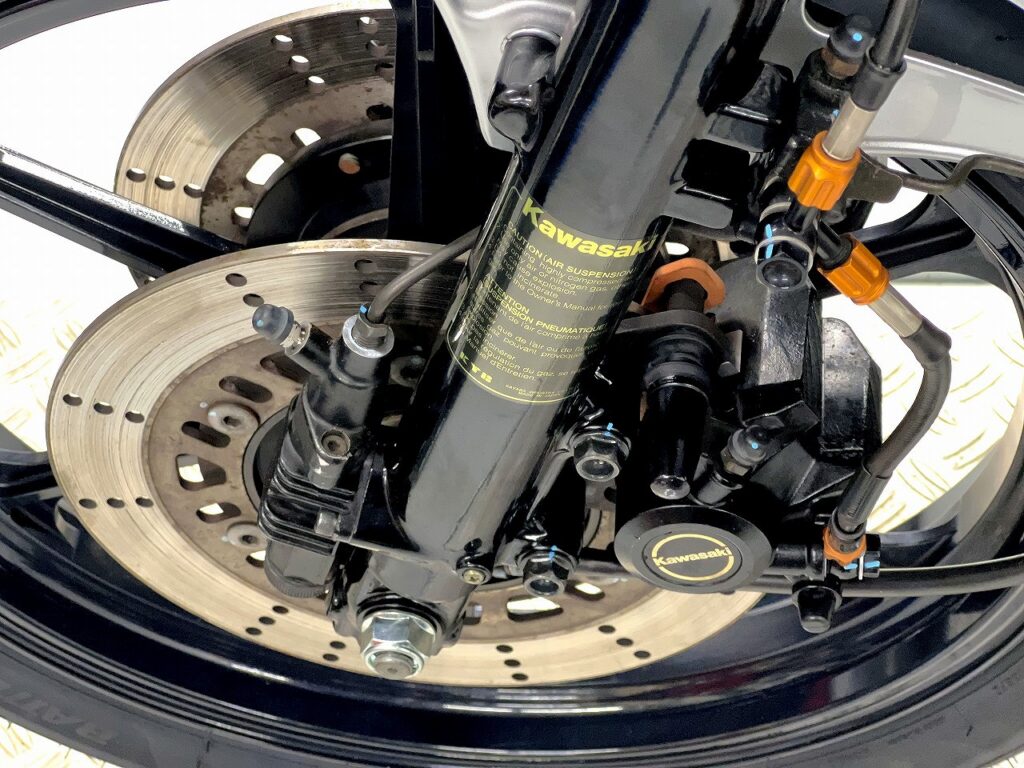
Maintenance log: Is your GPz750F’s push-pull heavy? When caliper piston action feels sticky, don’t hesitate—call 110? Why you should go straight to a full OH
The caliper piston action feels sluggish… so I knead and knead the bleed screw… knead and knead… before I know it, 30 minutes, an hour has passed…
Of course, bleeding alone does have some effect. But ultimately, “seal replacement and thorough overhaul” can’t be beaten. Replacing with a fresh seal and carefully bleeding it, then breaking it in (getting it to seat) is overwhelmingly more effective.
By the way, when pushing the caliper piston back, you have to sense the piston’s tilt and subtle “play (runout)” and push it straight back, or it won’t slide in smoothly. Of course, as you push it back, the brake fluid level in the reservoir rises and threatens to overflow, and internal pressure can prevent it from retracting, so don’t forget to check the fluid level!
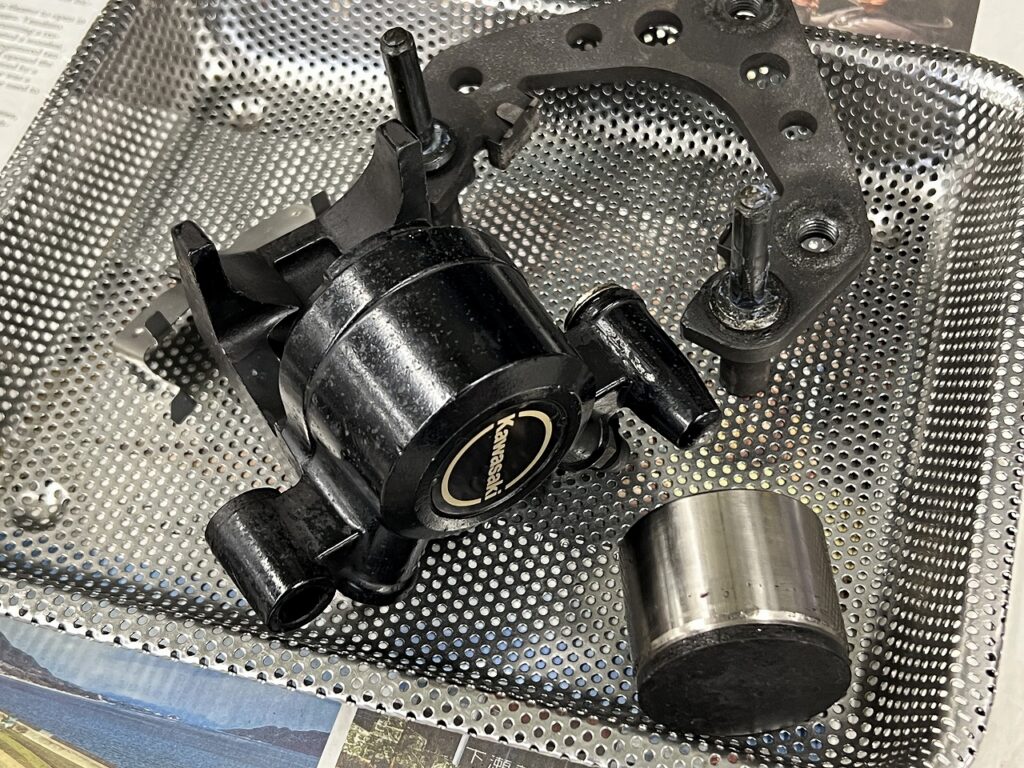
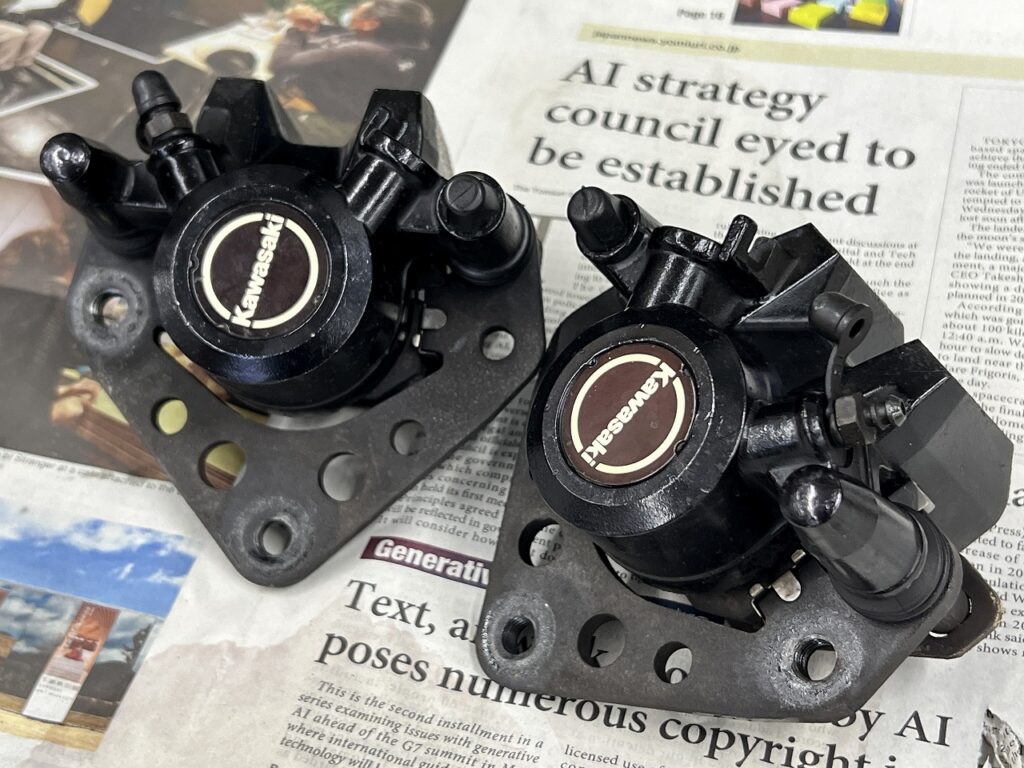
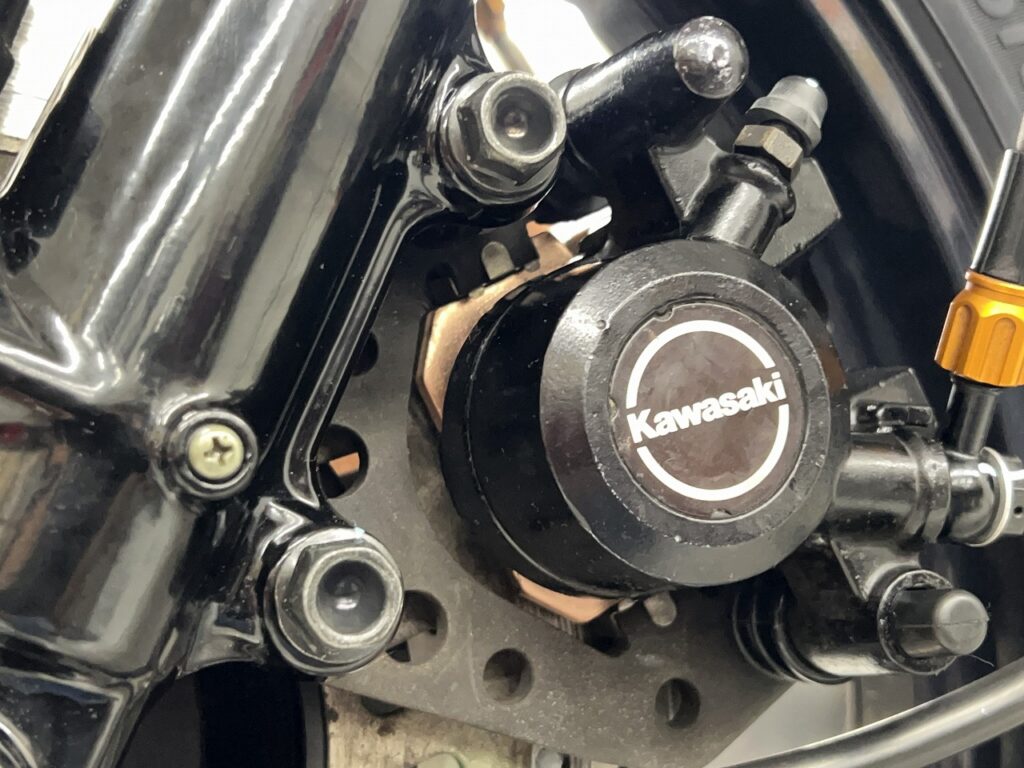
Since the caliper is off, we’ll do maintenance on it too.
Request and work scope:Front brake caliper complete disassembly overhaul & seal groove precision base treatment
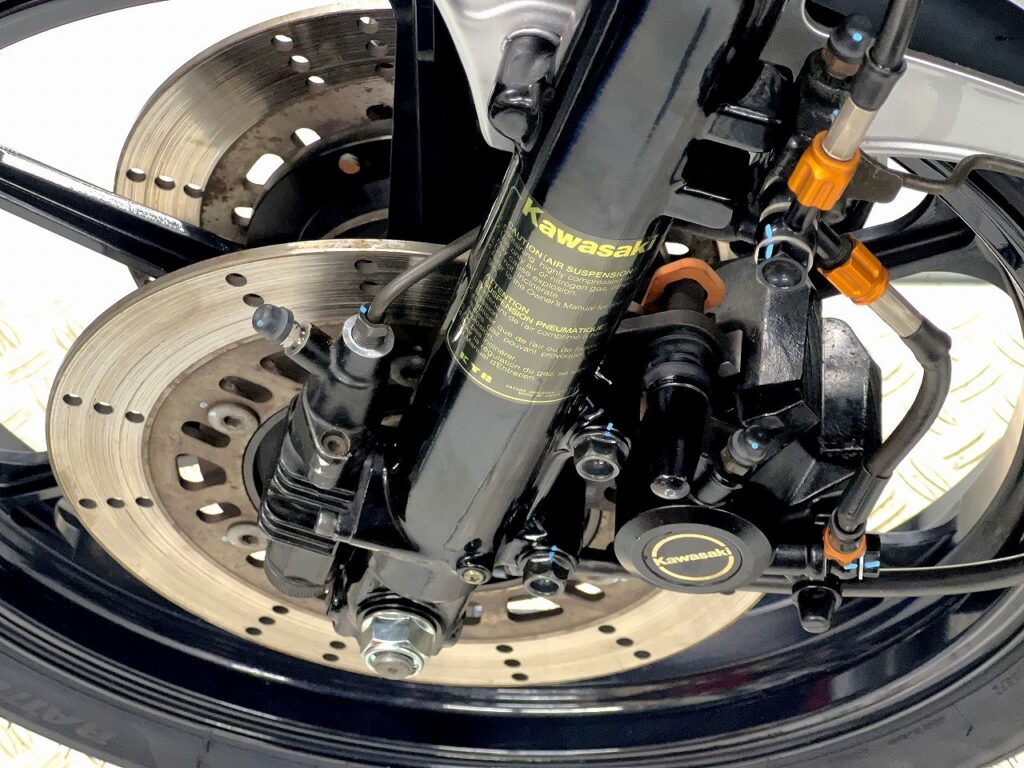
Symptoms on arrival: Pushing and walking the bike is abnormally heavy, the wheel drags with a “scraping” sound when spun by hand, and there’s a slight catch (edge) at the start of brake lever pull.
The absolute essence of caliper OH:
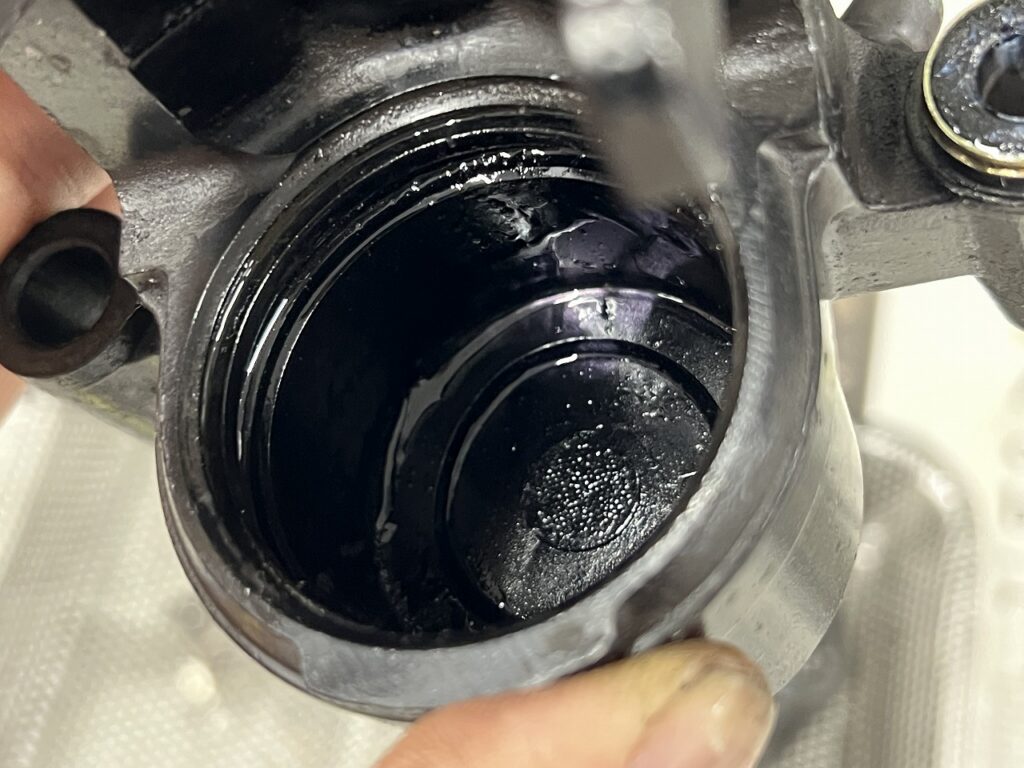
Complete removal of seal groove oxidation and debris: Before installing new seals, we thoroughly scrape out crystallized brake fluid and white aluminum corrosion stuck inside the groove with specialized tools.
Piston mirror finish and inspection: Visually inspect the sliding surfaces for scratches and pitting corrosion, then smooth with micro-lapping.
Restoring ideal “rollback”: We rebuild the hydraulic balance so the piston retracts smoothly a fraction of a millimeter the instant you release the lever, maximizing seal rubber elasticity.
Shop owner’s note: “It’s a bit sluggish, but it still works, so it’s fine” is the most dangerous mindset. We eliminate all friction from the pads dragging on the rotor and restore the light, effortless push-around feel of a new bike!
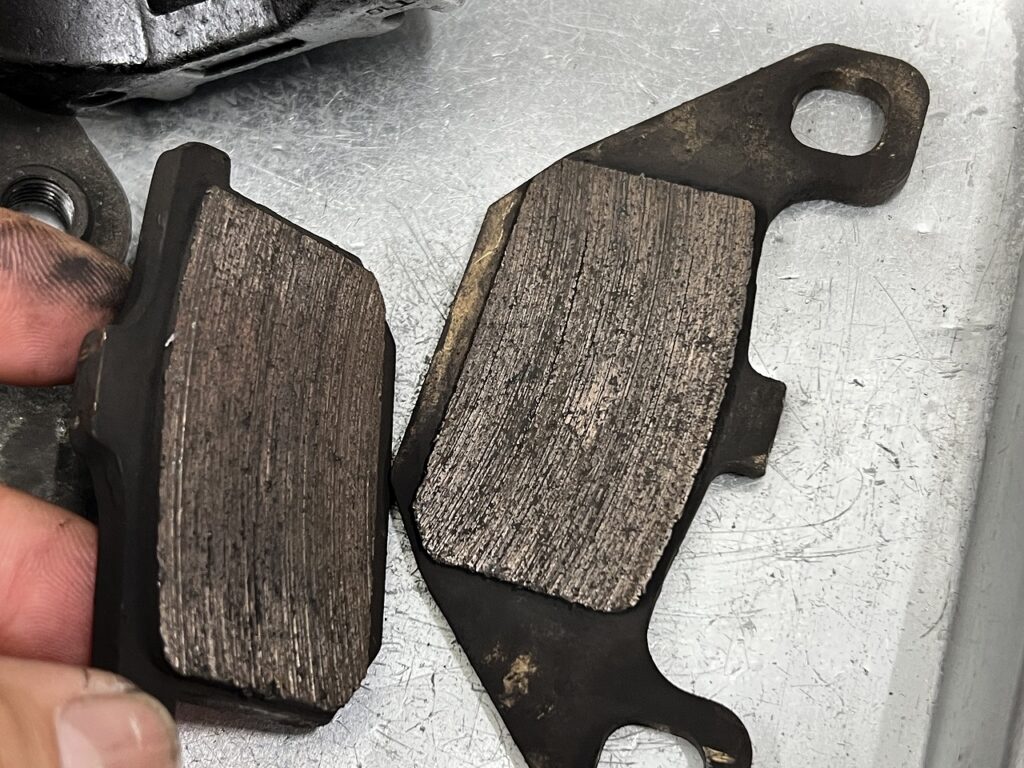
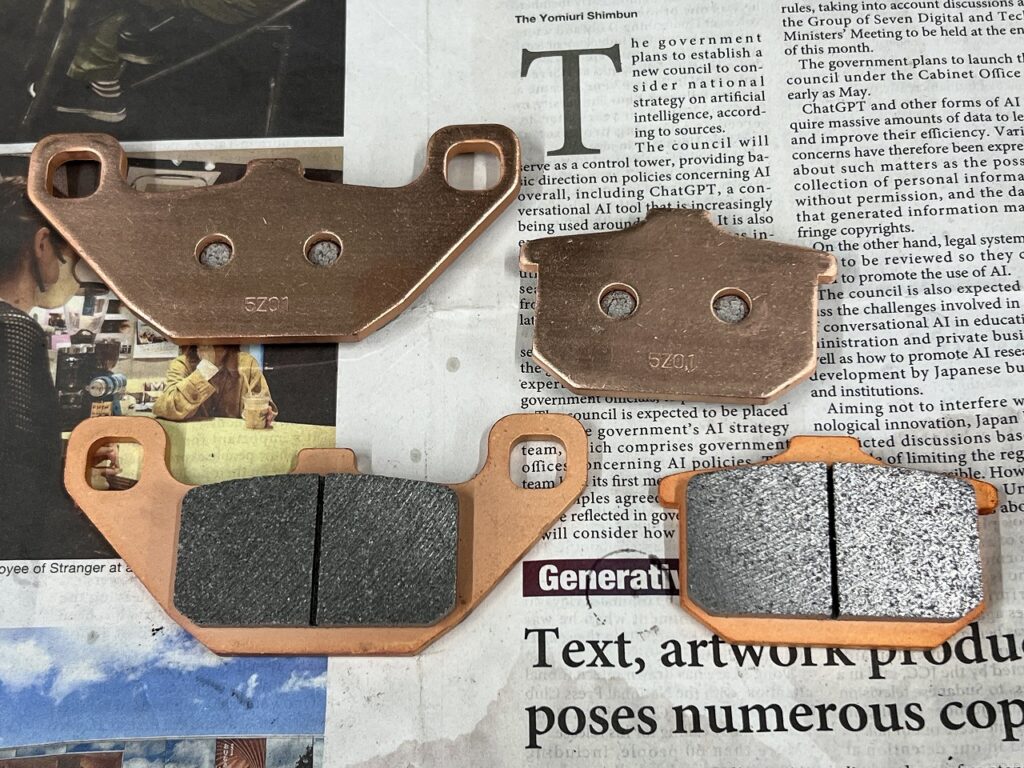
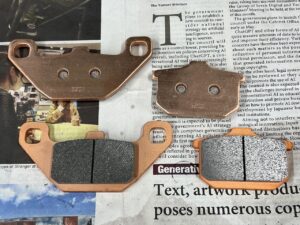
Pad wear is complete. Going with Daytona Golden pads.
Fast brake pad wear and caliper piston action are actually related. Caliper piston extension and retraction depend on “seal deflection” —basically, when the seal ages, retraction becomes sluggish, and the pads get dragged and wear faster. Fuel economy suffers too, and pushing and pulling feels heavy. These subtle effects add up.
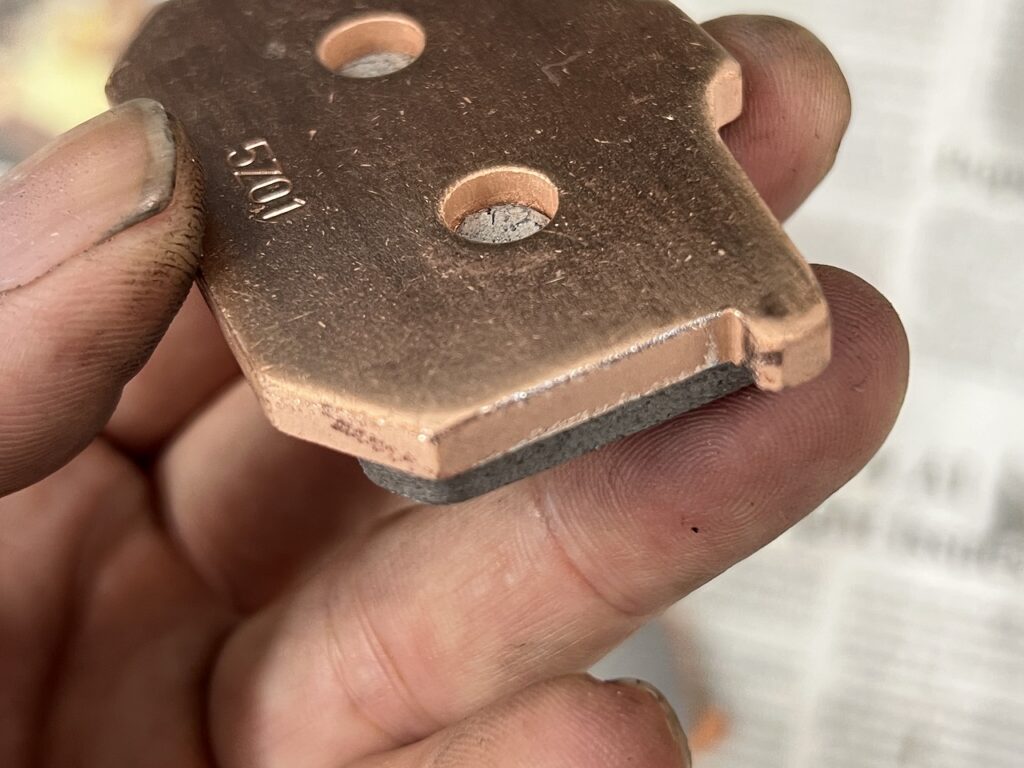
Brake pads are Daytona Golden sintered.
Sintered is known to bite stainless well, so we use it as our go-to. That said, the stainless discs from this era seem to have a slightly different character than modern ones.
As you get older, do you want to pursue the original more? Without forcing a brake upgrade, how far can we push the original…
Just getting it working smoothly and selecting the right pads is enough to make it taste great. If that’s not enough, then we can upgrade. First, let’s squeeze the stock system dry! That’s what I think.
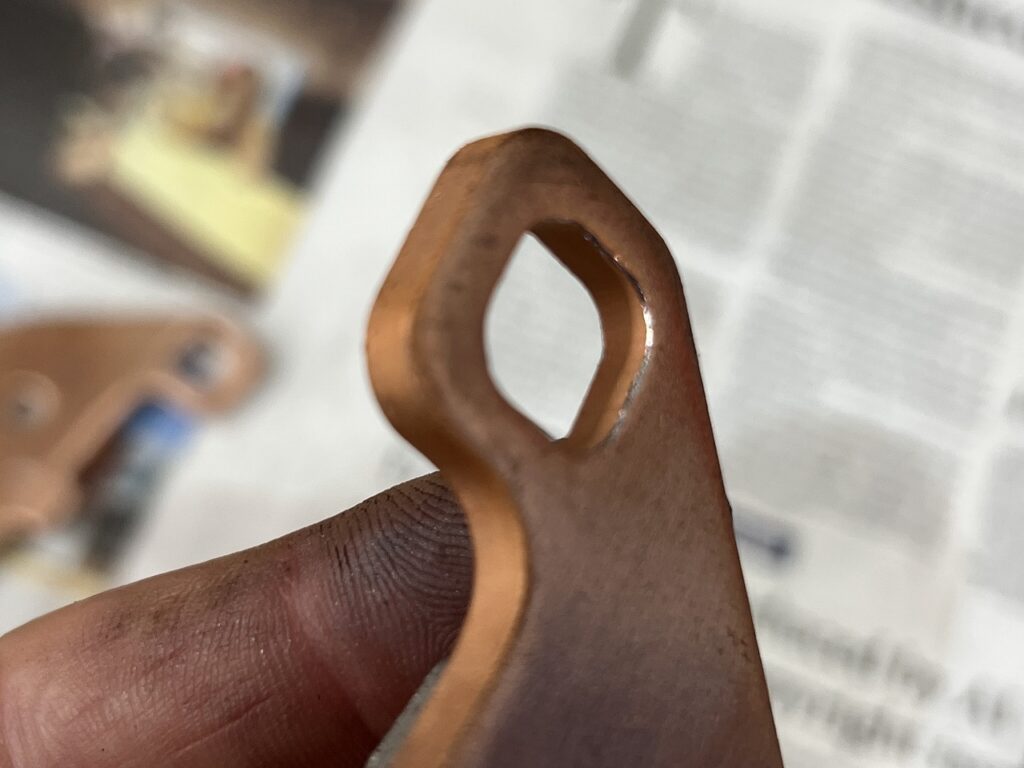
Surprisingly, just removing a few burrs can change how it moves.
Single-piston calipers live and die by slide smoothness
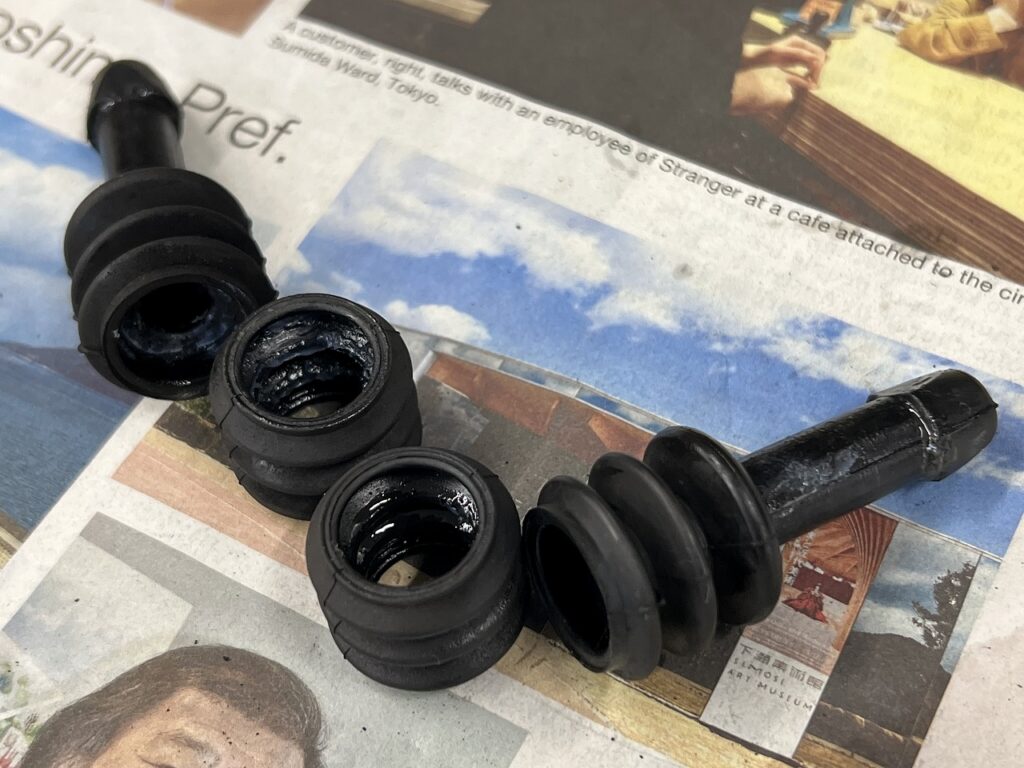
Pad slide is the same, but smoothing the slide pin motion even more is hugely effective.
These boots should be replaced every 2–4 years. Use silicone-based grease—it’s best. Mineral oil-based grease will swell the rubber and make it sluggish, so be careful.
We only use DuPont Molykote fluorosilicone grease. The reliability is just different. If it doesn’t move smoothly when tested alone, something’s wrong. Combining with silicone spray to fine-tune the motion works well too.
I’ve tried lots of brands, but I keep coming back to CRC.
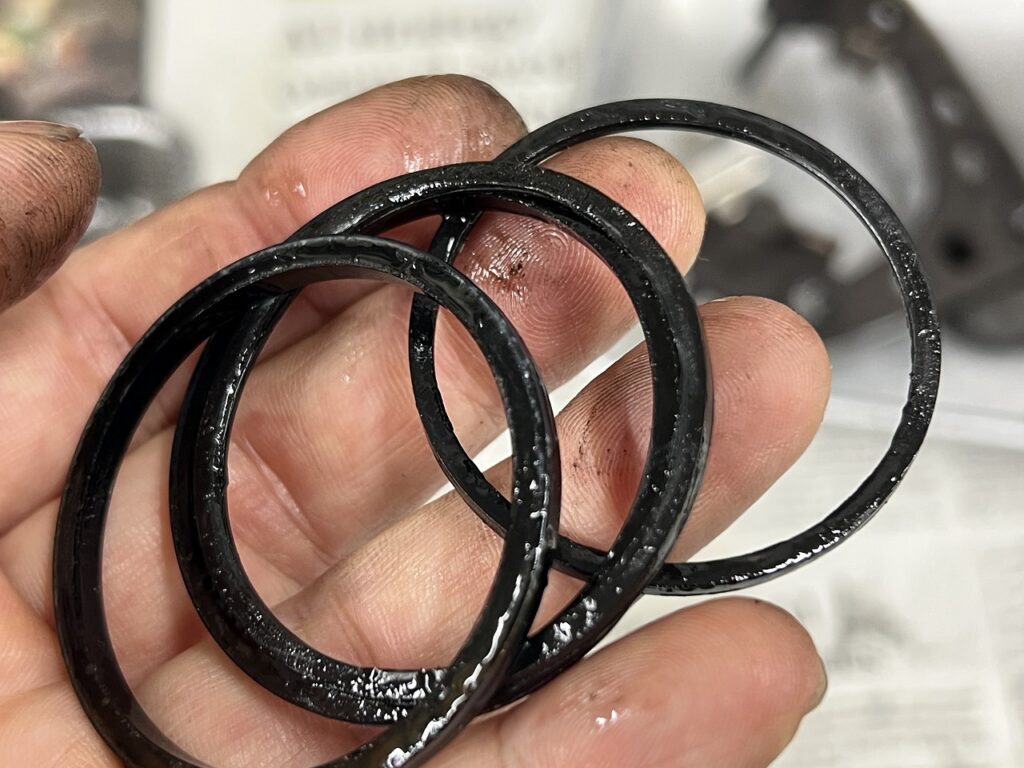
Dust seals wear surprisingly fast. They’re thin, deform easily, and deteriorate quickly. Actually, dust seals swell and deform more often than oil seals, hindering caliper piston action.
An anodized caliper from this era—bravo! It’s virtually corrosion-proof. Conversely, anodized calipers make OH feel pointless… That’s the feeling you get.
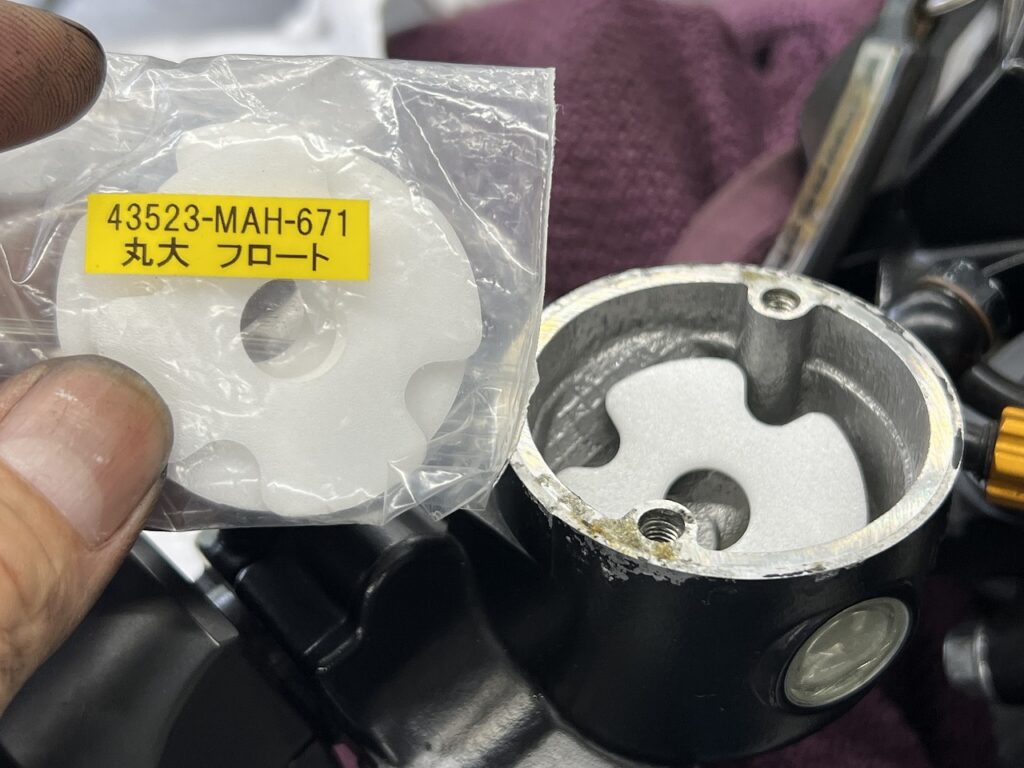
Honda OEM caliper bolts are stubborn
I love sourcing OEM parts and not knowing what I’m doing.
But if you know what you’re doing, you can pick better-functioning, better-designed OEM parts cheaper than the original. You learn what’s behind the parts list when you order and swap them. Bolt strength grades, full-thread versus half-thread, surface treatment.
Taking that step opens up a whole more fun world of OEM sourcing. It feels like it develops your thinking and searching skills… hehe
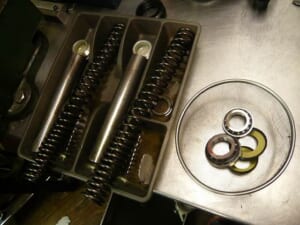
Topic: Overhauling brake calipers immediately when piston action feels sticky: Eliminating brake drag and restoring effortless wheel rotation. Details: Happy Wednesday night from the Decoboco tech bay! Following our front fork restoration on this classic GPz750F, spin testing revealed severe brake drag—the front wheel seized up after barely half a turn. Sticky caliper pistons cause excessive parasitic drag, rotor overheating, and severe fade risks. The absolute core of a true caliper overhaul lies in seal groove prep work. Over decades, crystallized brake fluid and white aluminum oxidation build up inside the caliper body’s seal grooves, pinching new seals against the pistons and destroying hydraulic “rollback.” Using precision scrapers, we thoroughly excavated oxidized debris from the groove recesses, mirror-polished the pistons, and installed fresh OEM seals with rubber-compatible assembly lubricant. Verdict: Pushed gently with two fingers, the pistons slid home effortlessly. With the calipers remounted, the front wheel spins endlessly with zero resistance, transforming garage push-arounds into featherlight motion!
Maintenance log: Is your GPz750F’s push-pull heavy? When caliper piston action feels sticky, don’t hesitate—call 110? Why you should go straight to a full OH



 ポチップ
ポチップ