I brought home three chickens last week, but… I’ll be honest. “Without love, you absolutely cannot keep going” — that’s the world we’re in (laugh). Subjectively, it’s overwhelmingly harder than caring for dogs or cats…!
Before getting them, you dig through YouTube and blogs, and “Easy! Cheap! Fresh eggs every day for free!” — you see all these casual appeals saying “hardly any work at all~” But there’s so much you don’t understand until you actually start in the field.
The biggest challenge is [the poop problem]. The frequency and size of each one are completely unexpected! “What, they produce that much!?” “They just went, and now they’re going again!?” — it’s not even close to what you’d imagine. We don’t go with the typical “build a coop and leave it” style; we want to manage them as cleanly and hygienically as possible with minimal stress, so we’re raising the bar on ourselves (sweat).
But if you ask whether fresh eggs are different from store-bought ones, the answer is “completely different.” There’s no fishy smell at all. I thought I was buying pretty good, pricey eggs, but the difference in freshness and clarity is stark. If you eat them plain, just as egg over rice, the impact is shocking.
It’s the ultimate reward you get in exchange for intense daily poop cleanup (´ω`)
Today’s engine internals and oil-cooled power awakening log
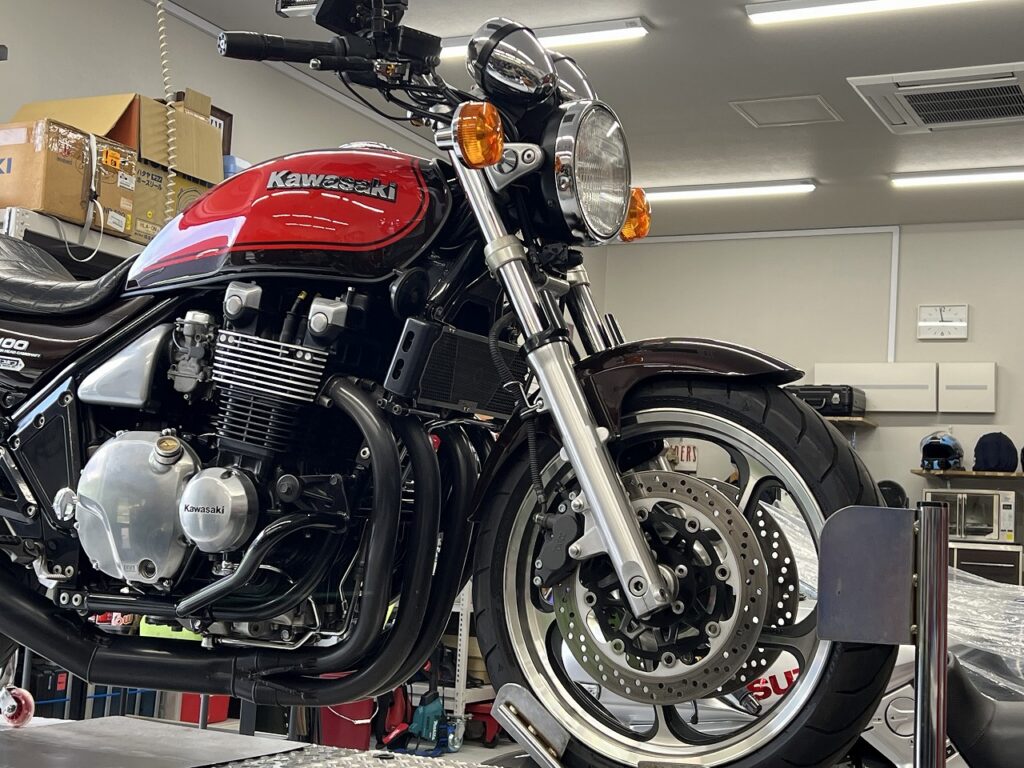
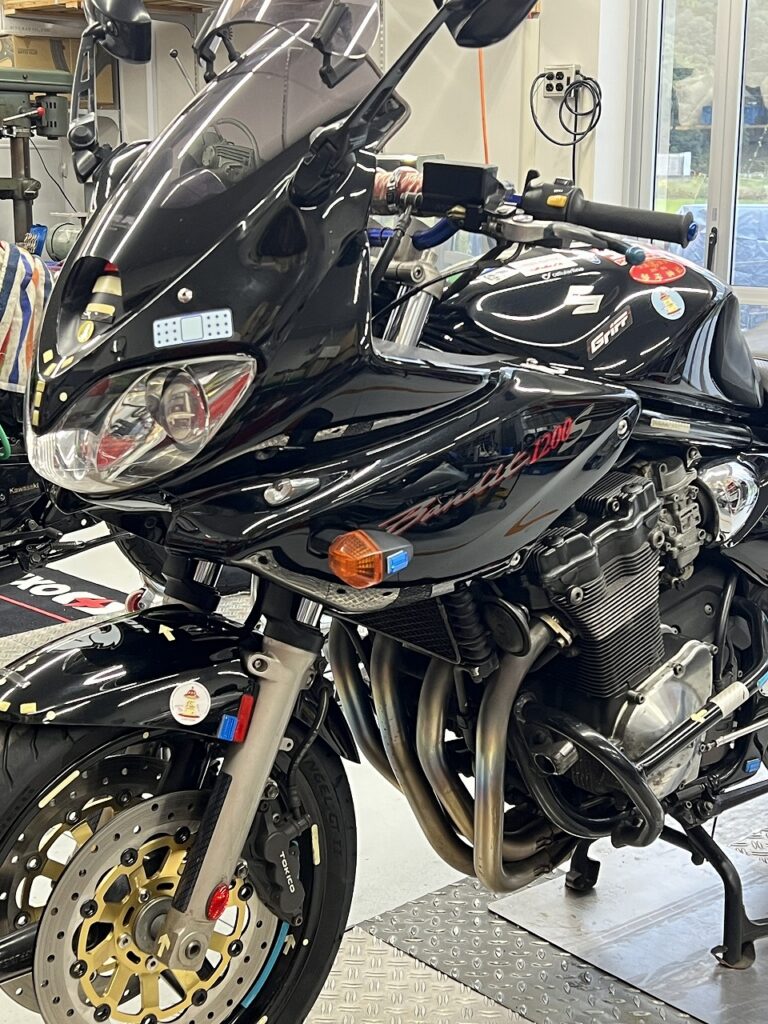
The 2005 model, right before the final oil-cooled generation (K6).
As frame rigidity and suspension matured, and ignition mapping and intake/exhaust emissions controls advanced, the “raw, oil-cooled torque surge” characteristic of the early GSF1200 was tuned to be somewhat milder — a rare transitional year.
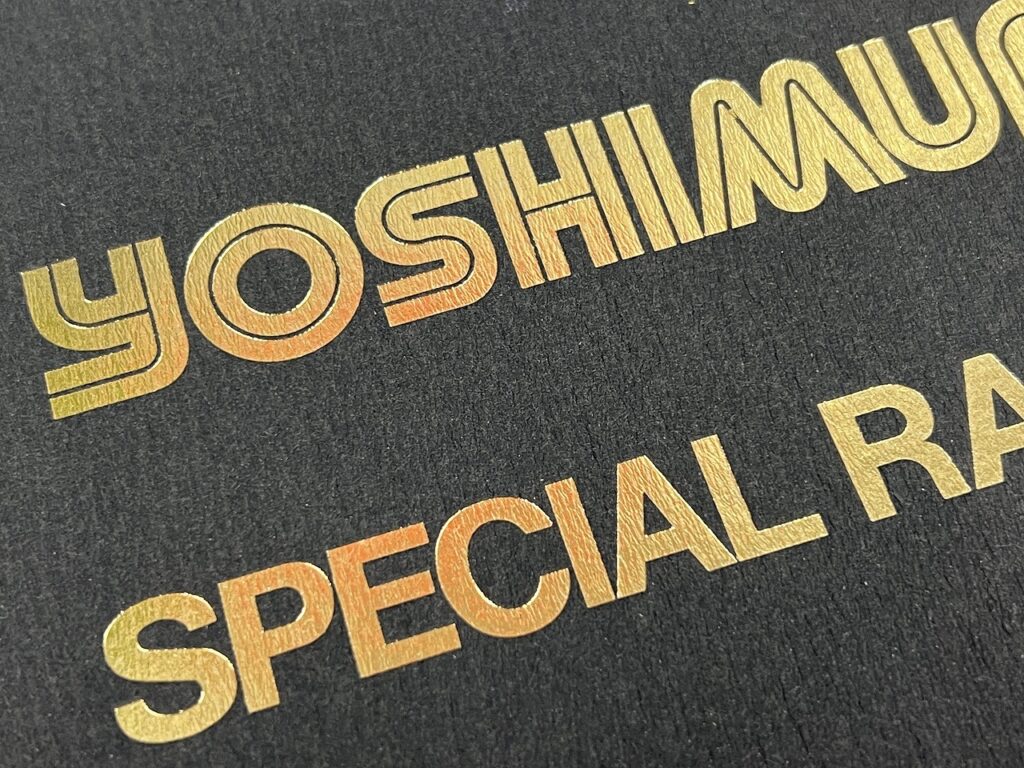
The transformation brought by the Yoshimura ST-1 cam:
Without sacrificing low-to-mid-range rideability, it restores the “true violent acceleration of the oil-cooled big block” that surges relentlessly from mid-range all the way to the rev limiter!
en. We’ve assembled this oil-cooled engine with zero compromise, and we’re delivering its roar!
Finally a true 1200 oil-cooled with the Yoshimura ST-1
The Yoshimura ST-1 cam gives you a flat, solid rev all the way up with a feeling that the engine speed carries. It’s a wonderful part that awakens the oil-cooled engine that had been tamed down.
The carburettor setup barely needs any changes and tastes great right away with just the air cleaner box. A tuning part this nice is really rare.
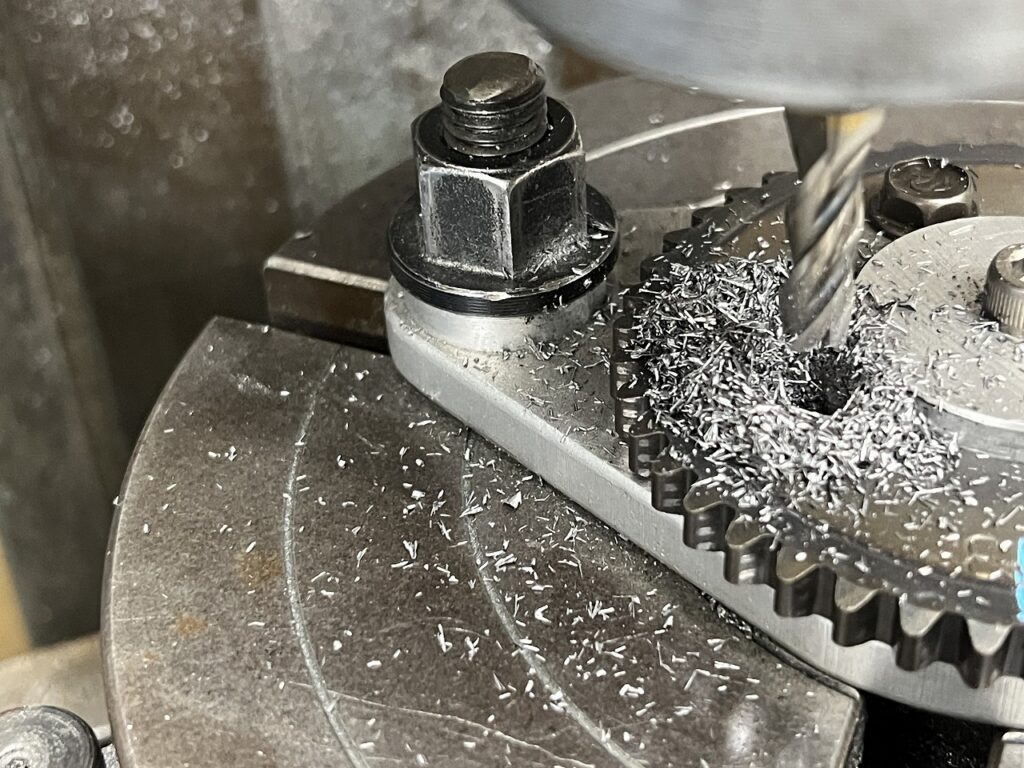
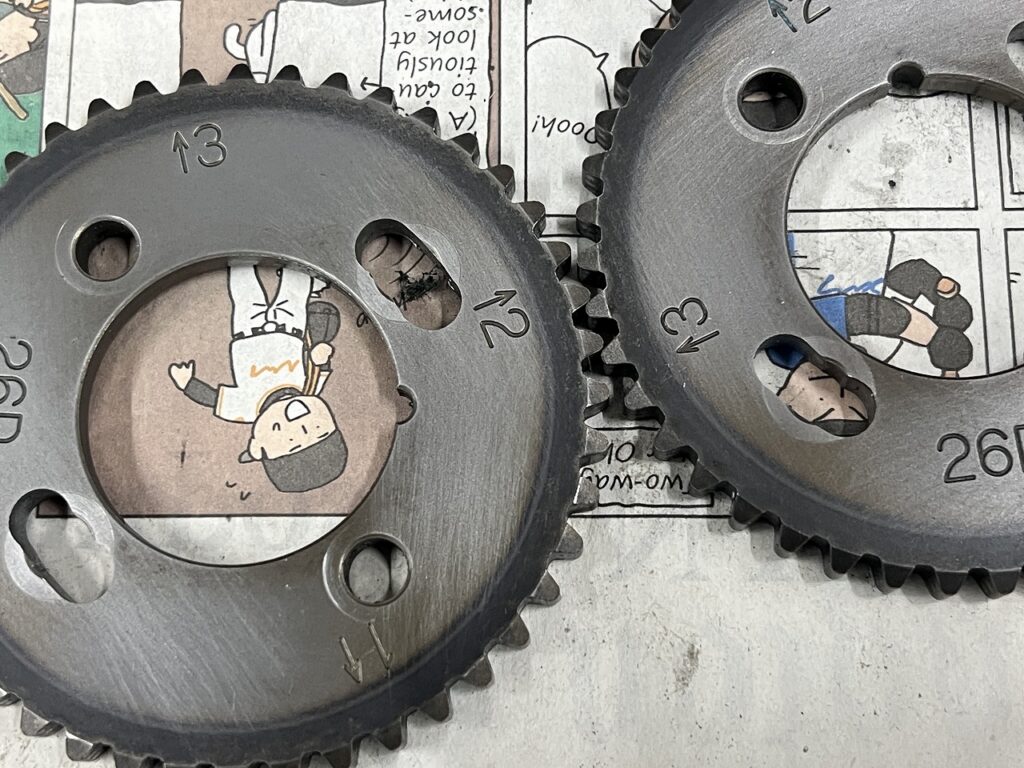
We’ll machine the long holes in the cam sprocket.
I got a new end mill. It’s amazing ( ;∀;) Really, I should have been testing more aggressively instead of doing this piecemeal.
Finished like this (*´ω`*) Work like this would be cleaner if we outsourced it instead of doing it in-house. I’m realizing more and more that we’re not in an era where we have to do everything ourselves.
Head cover gasket cautions
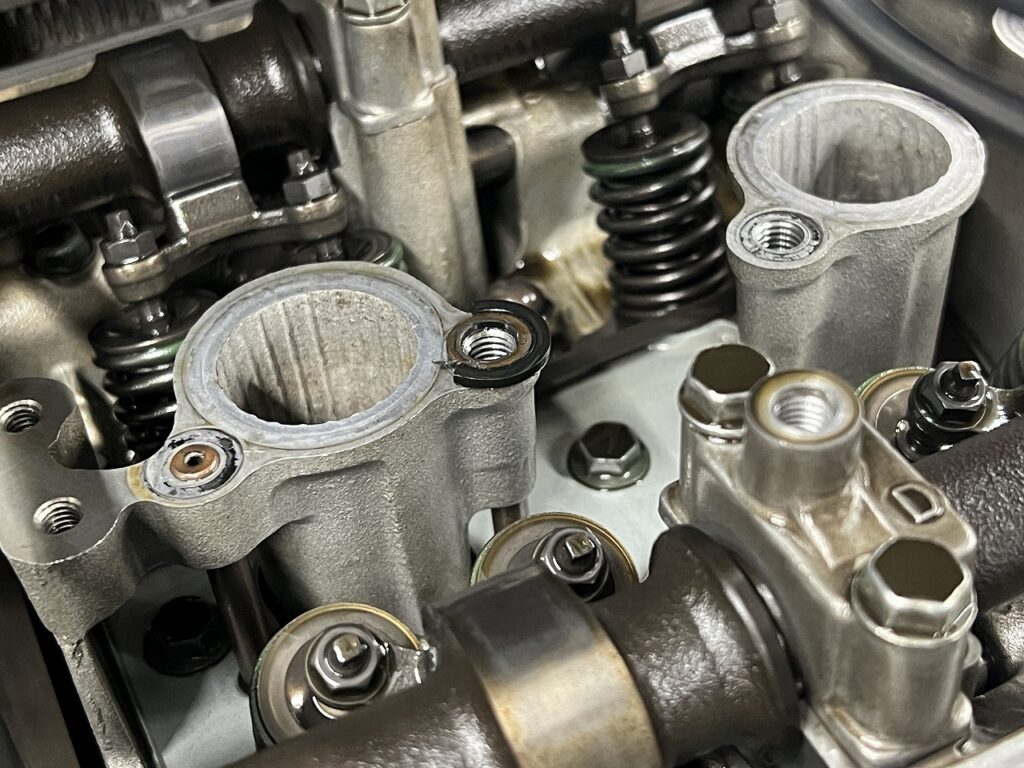
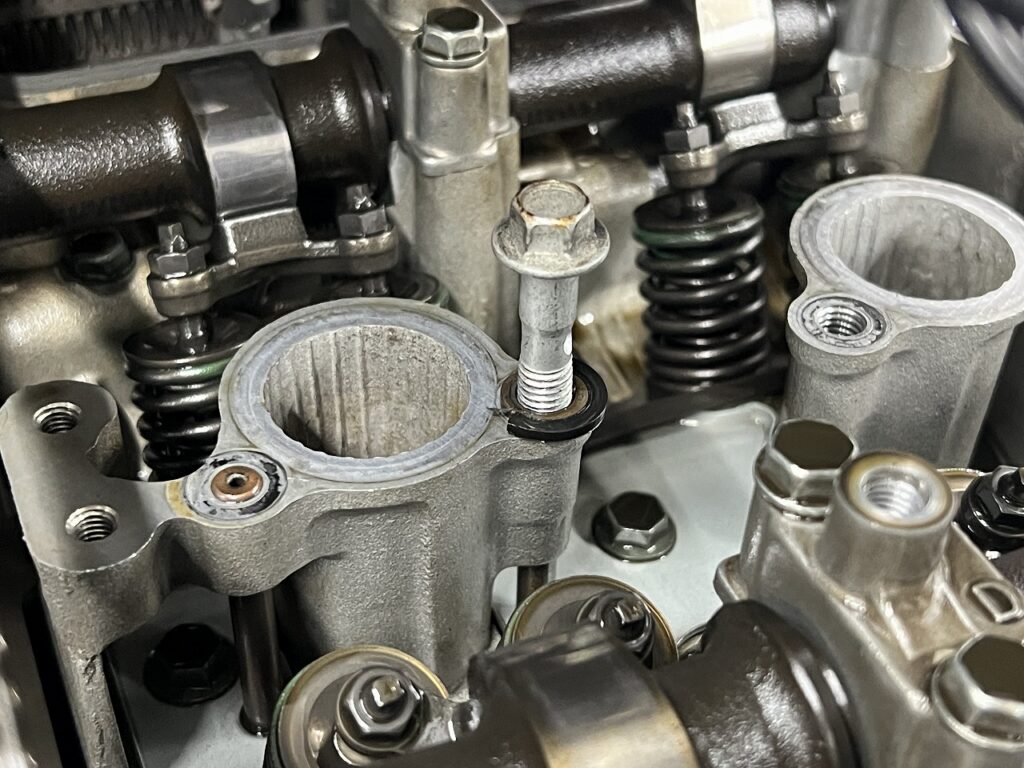
The head cover gasket around the plug hole has a type with “iron” in the core material. When this gets hard and brittle with age, it can crack and stick to the head around the plug hole when you remove the cover.
A light tap will usually pop it right off, but… the problem is where it falls! Right next to it is the gaping cam chain tunnel and oil lines. If it slips from your fingertips and dives deep into the engine, you’re instantly looking at a full lower-end teardown and a major search (sweat).
Skipping the effort to lay down protective rags — that kind of “small shortcut causes big trouble.” It’s a golden rule of maintenance that both weekend mechanics and pros must never forget ( `ー´)ノ
At this point the cam chain slider is front-side only
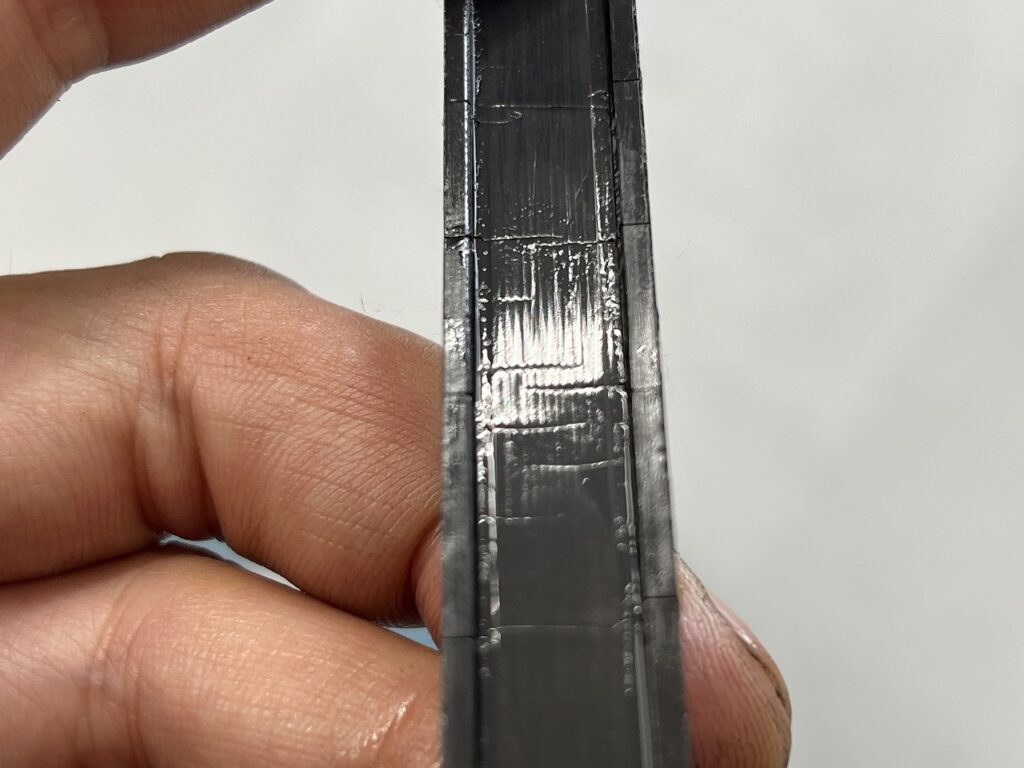
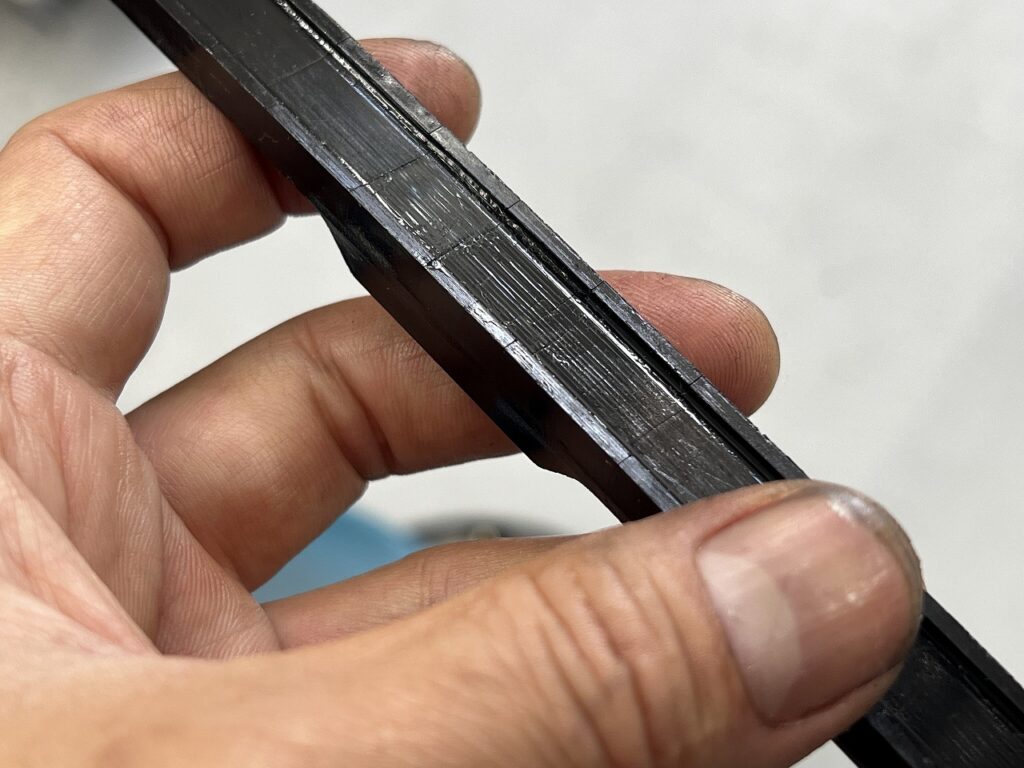
It’s become like pottery, hard and brittle. When you can replace it and parts are still available, that’s the best time to do it.
Looking at the surface, you can see cracks all over it…! At first glance it looks like “this is about to snap in half!?”
By the way, the core has solid iron running through it, so you don’t have to worry about it snapping and falling out. … That said, there’s definitely a risk that the rubber (resin) around it will peel away and brittle with age, scattering fragments into the engine or killing the seal.
“It won’t break, but as far as the job goes, it’s completely done for.” Before it gets worse and causes secondary damage, it’s a point you want to refresh with a new one, nice and clean ( `ー´)ノ
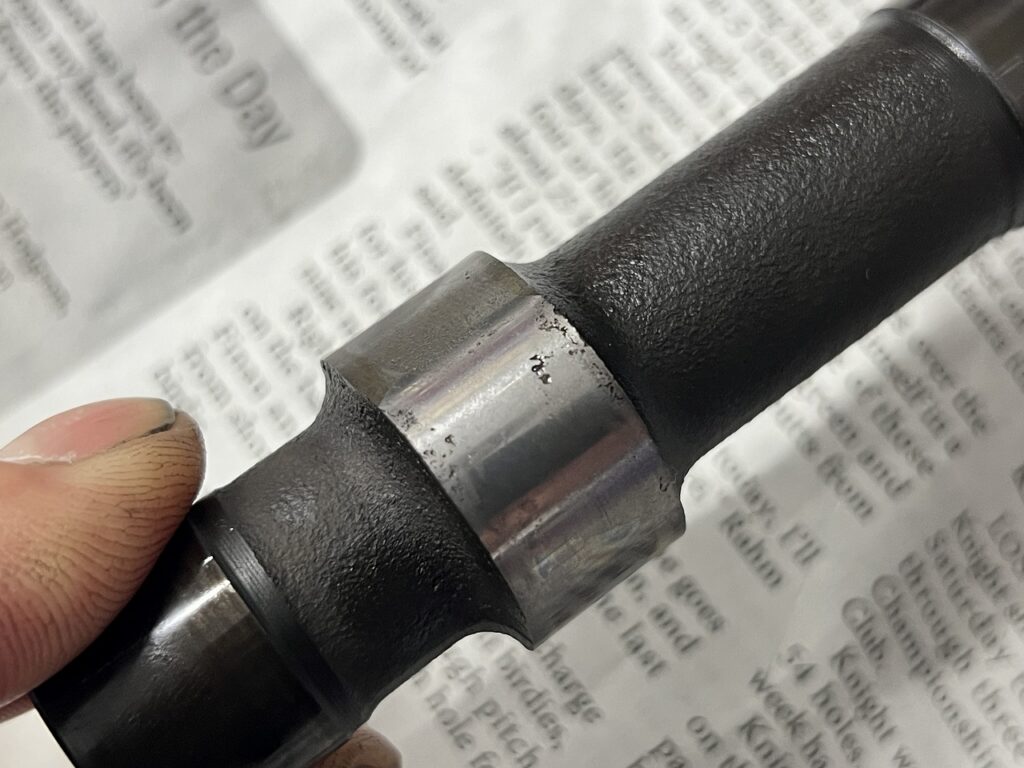
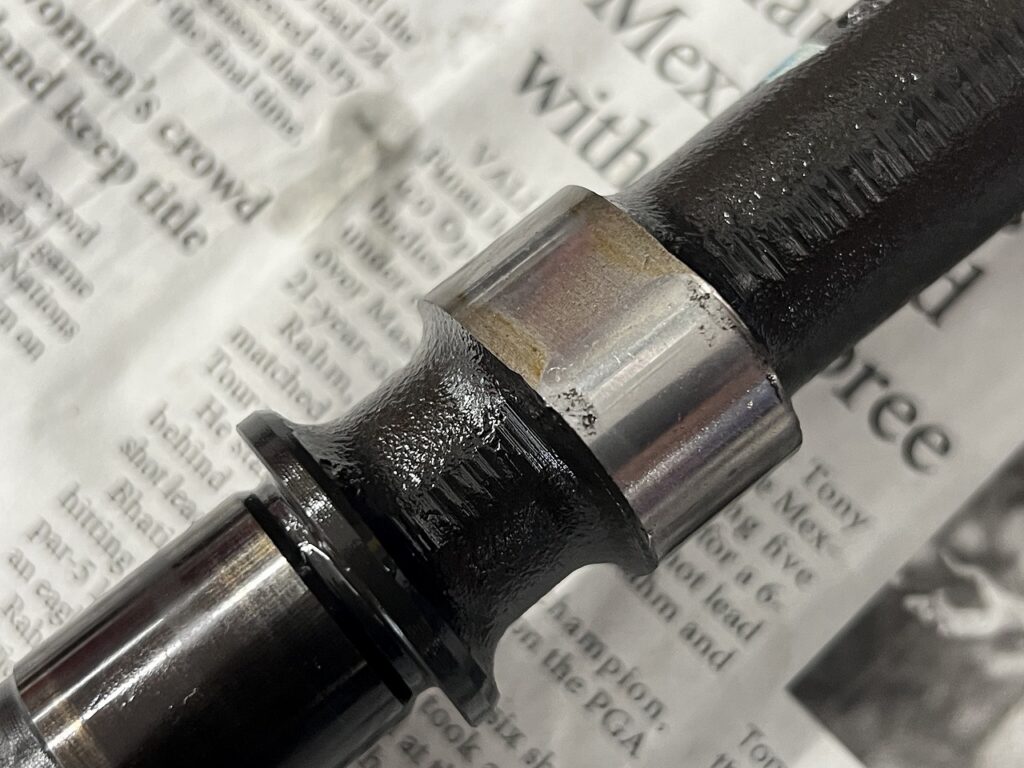
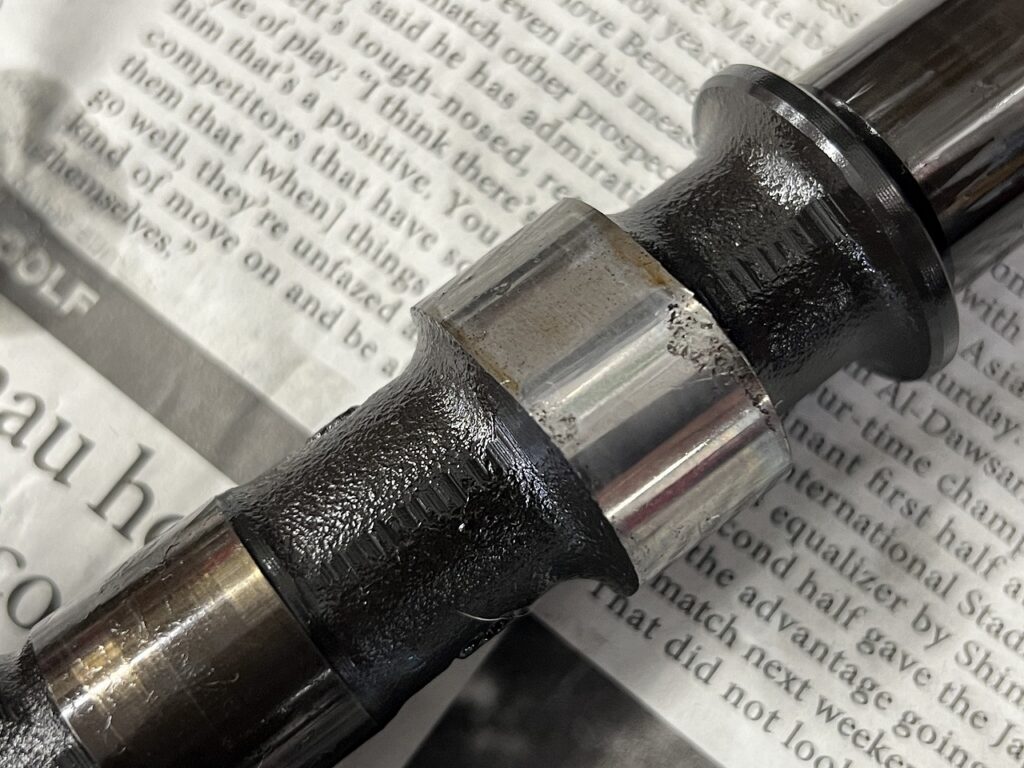
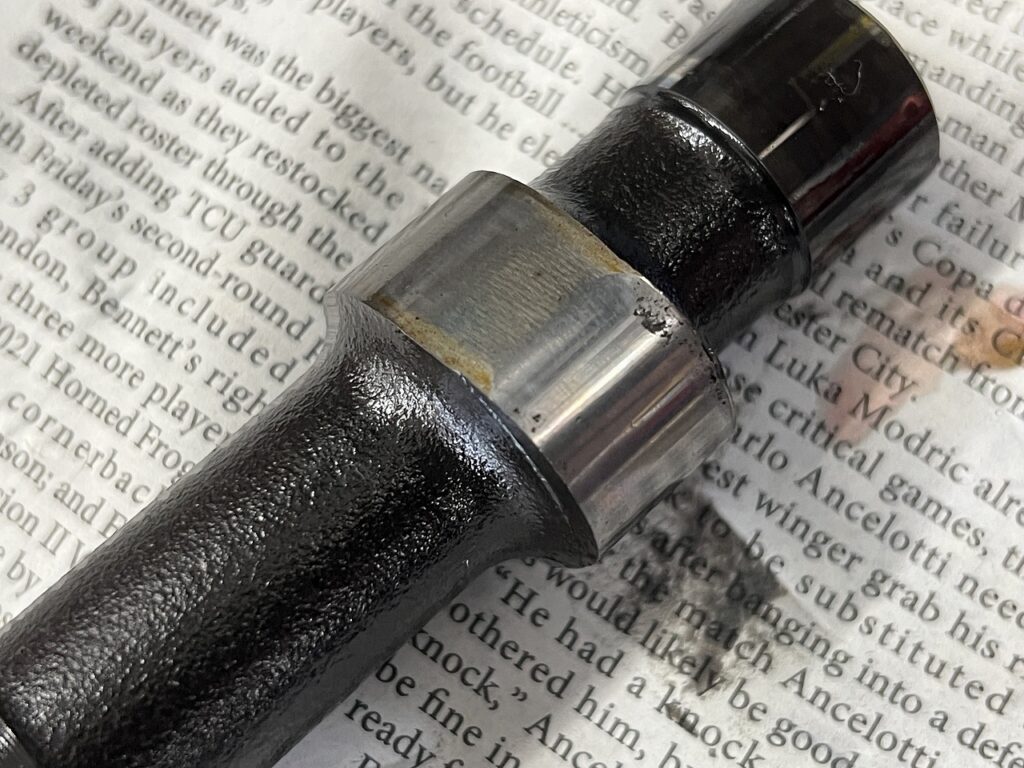
Camshaft scuffing
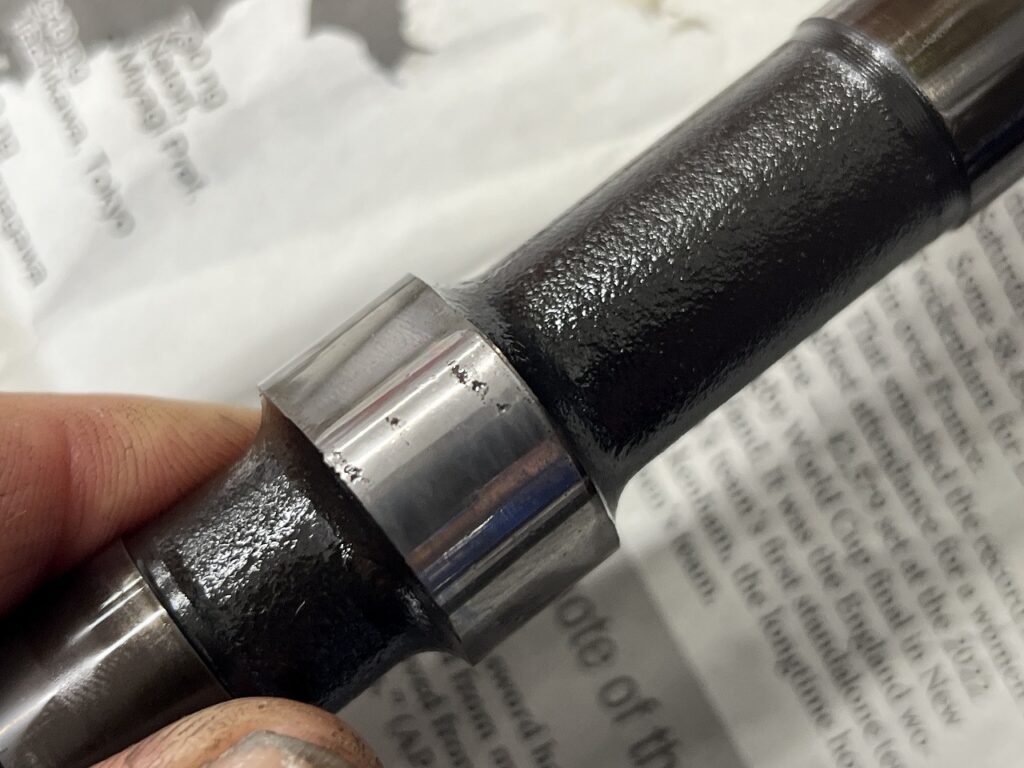
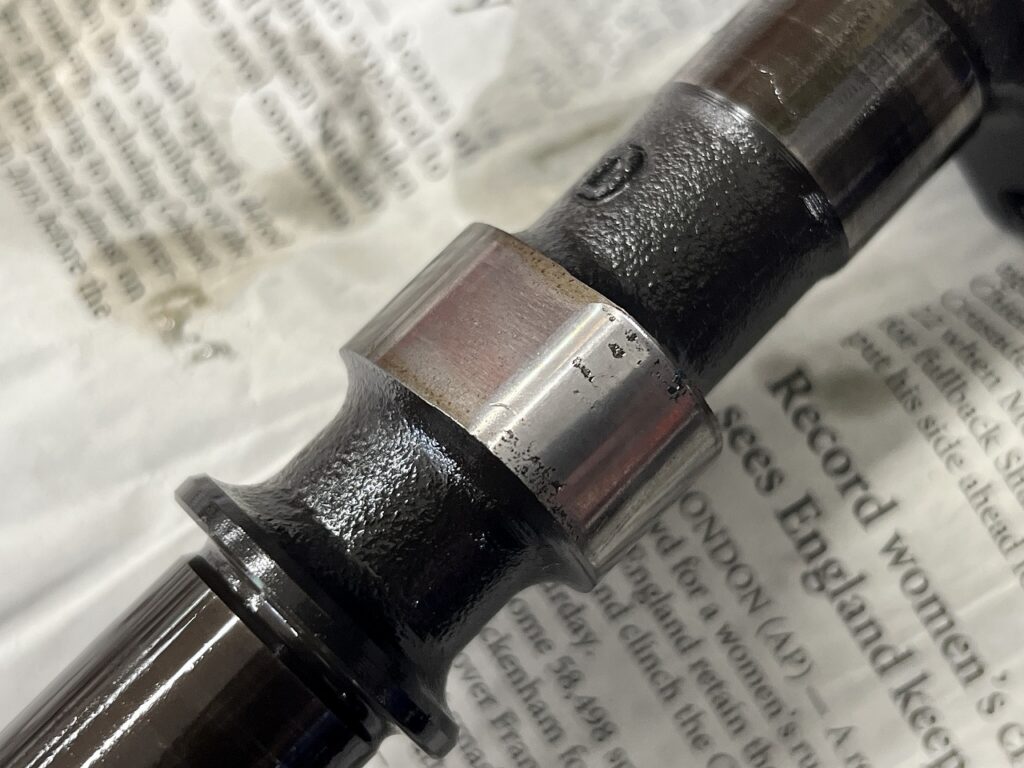
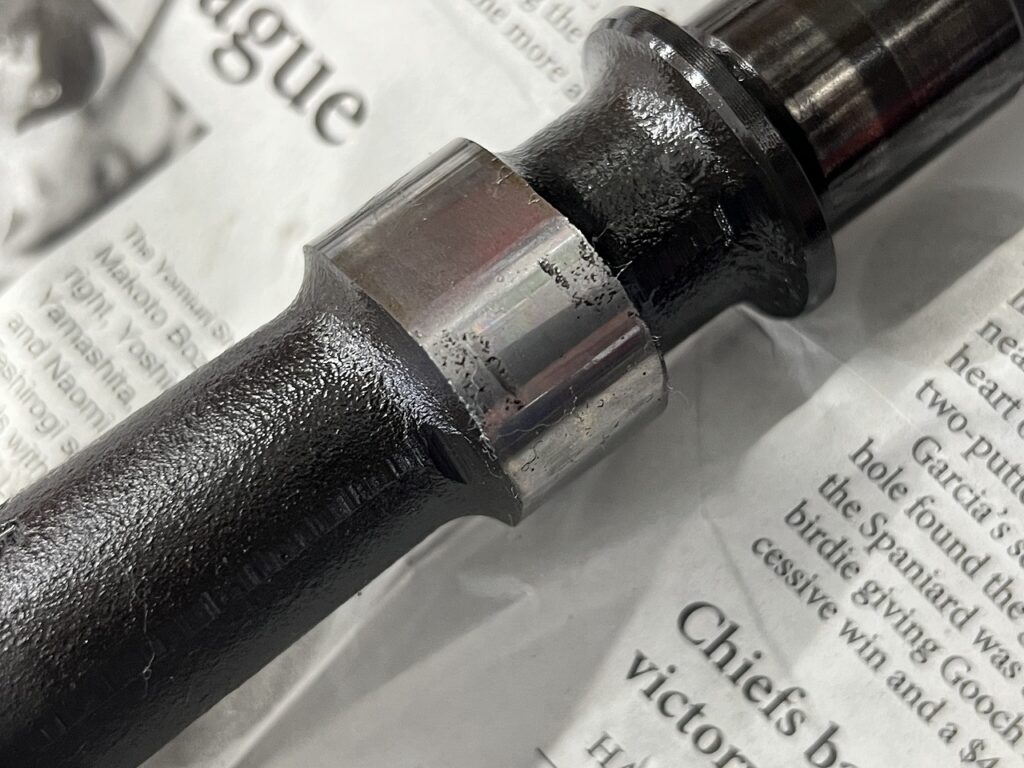
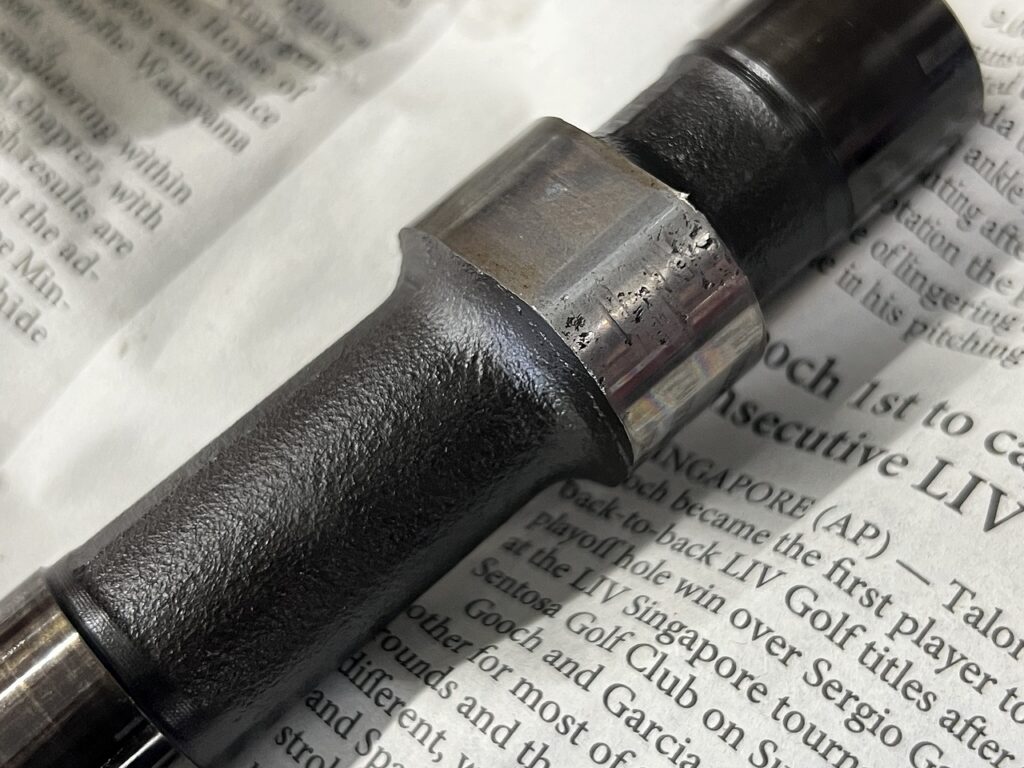
When I dropped the camshaft and checked it, there was scuffing all over, but it was pretty light damage.
“Cam scuffing = instant engine seizure and blow” — people tend to have that extreme image, but it’s not really like that. The lobe just gets worn down, clearance expands, tappet noise increases, and as lift decreases, the engine just “de-cams” (loses power).
… But having annoying mechanical noise come from your engine or losing the original throttle response is definitely not pleasant to ride. While it’s still mild, it’s a point where you want to review oil management and clearances carefully ( `ー´)ノ
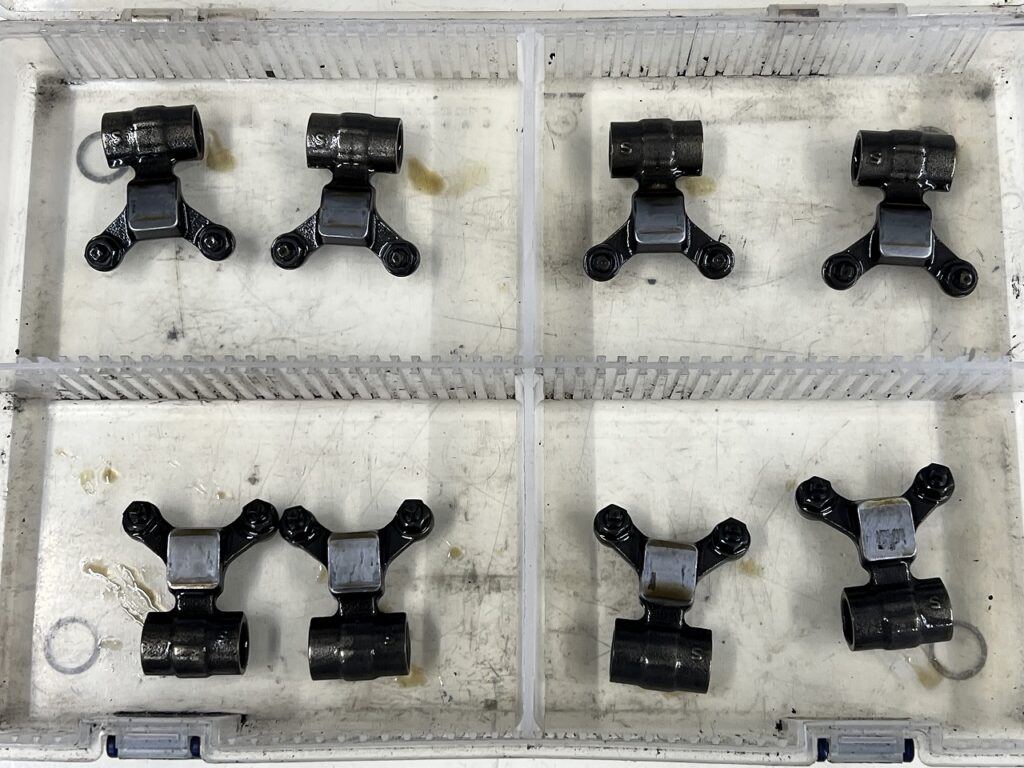
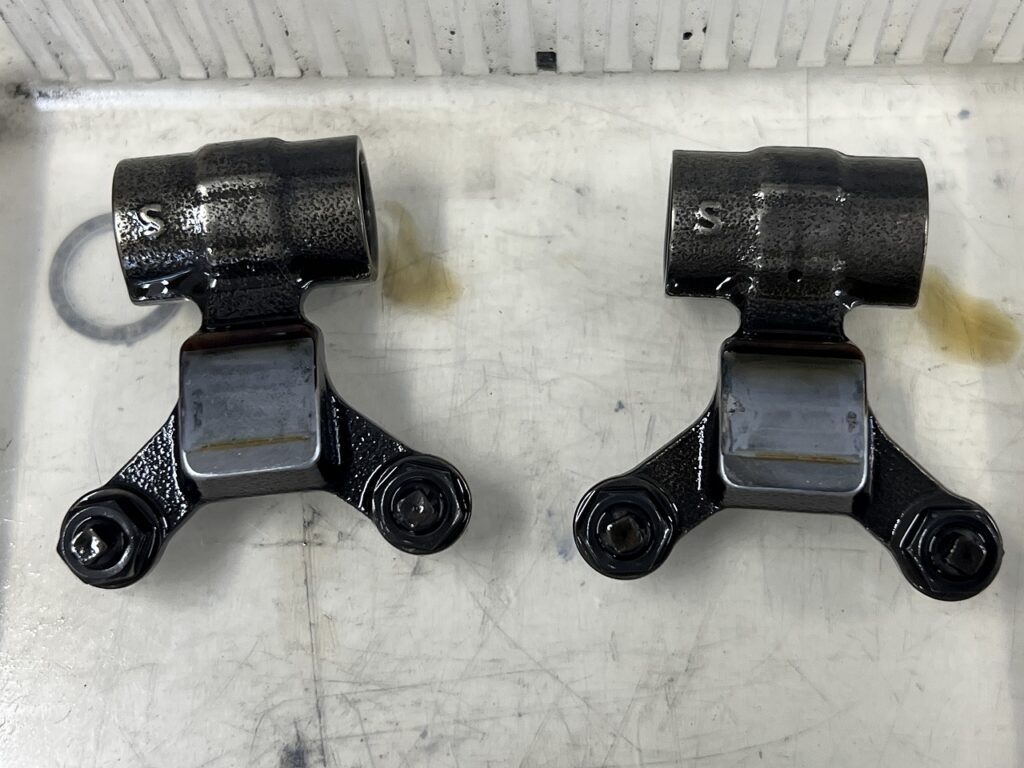
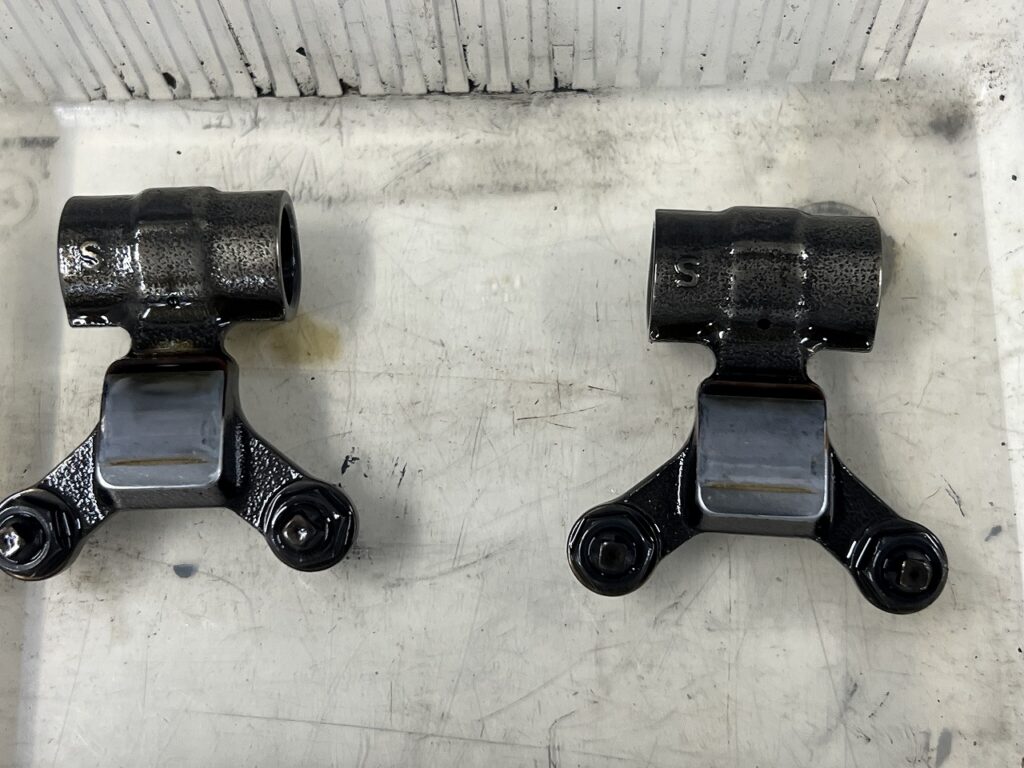
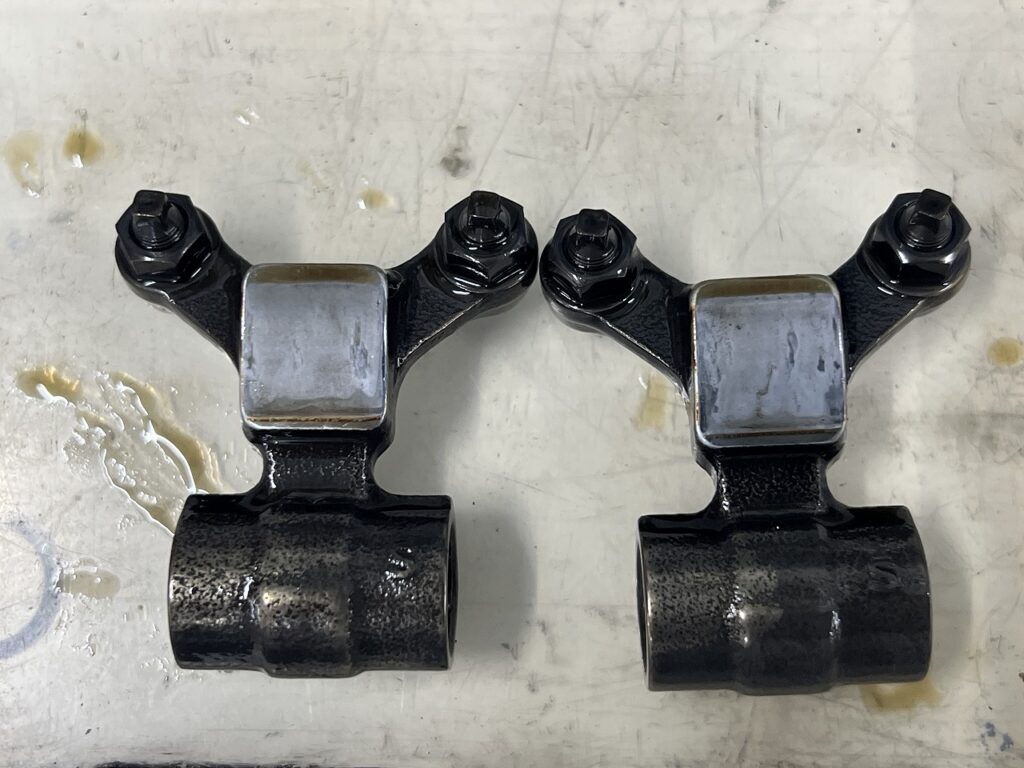
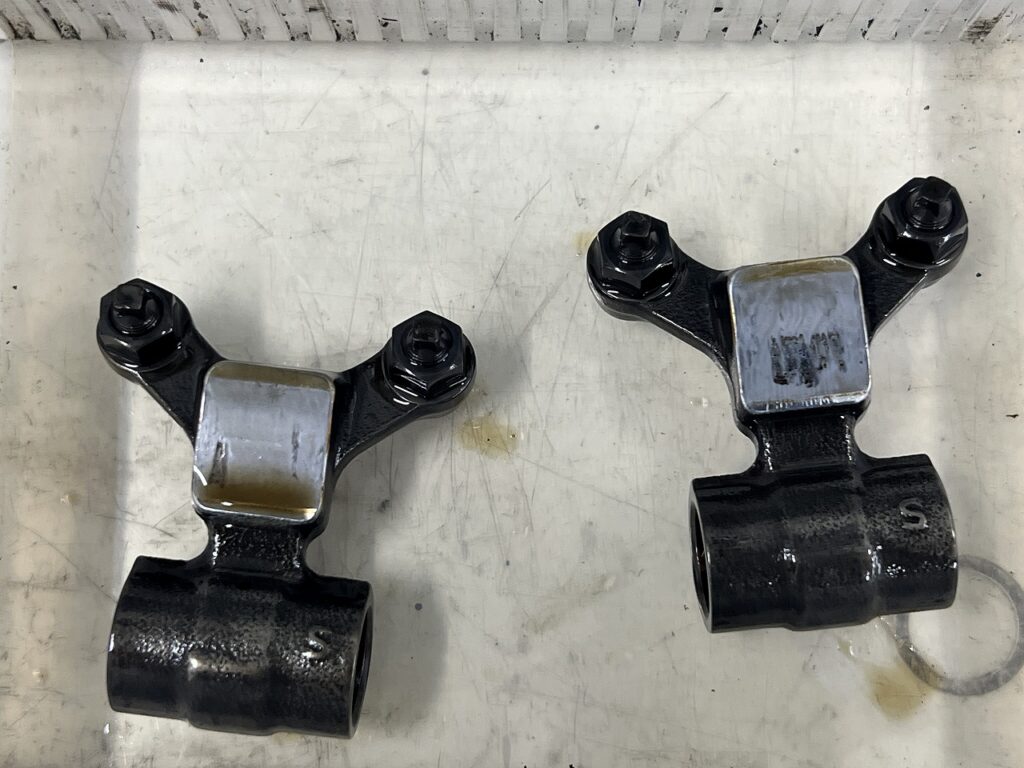
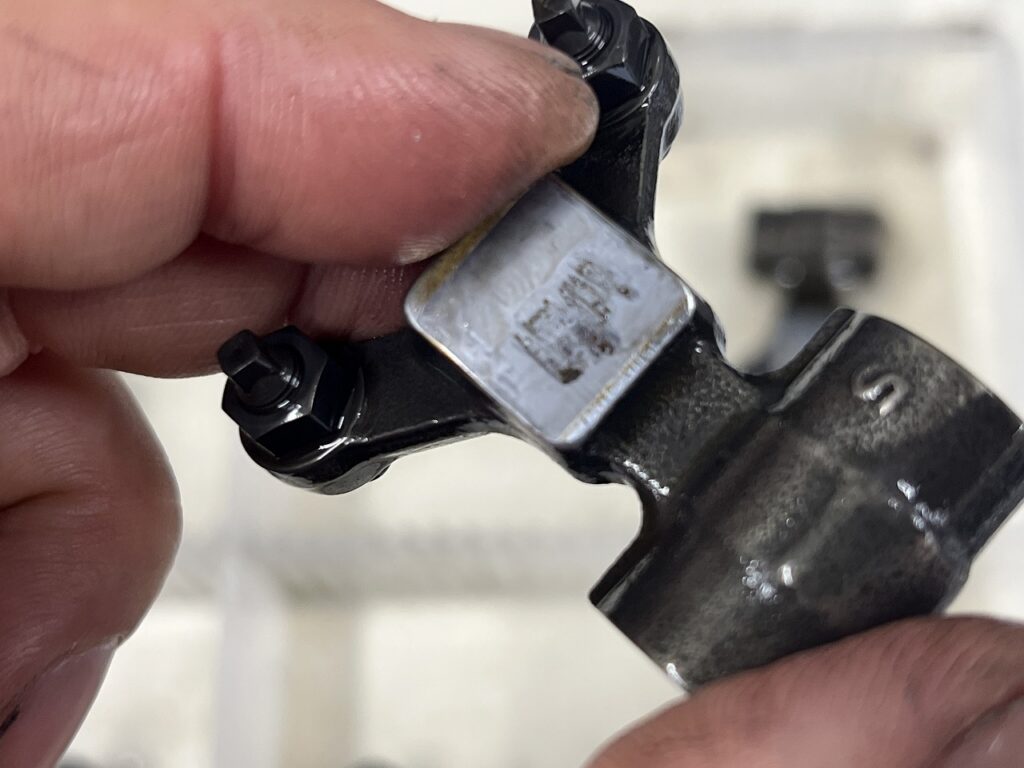
Rocker arm slipper wear is what causes that annoying tapping noise.
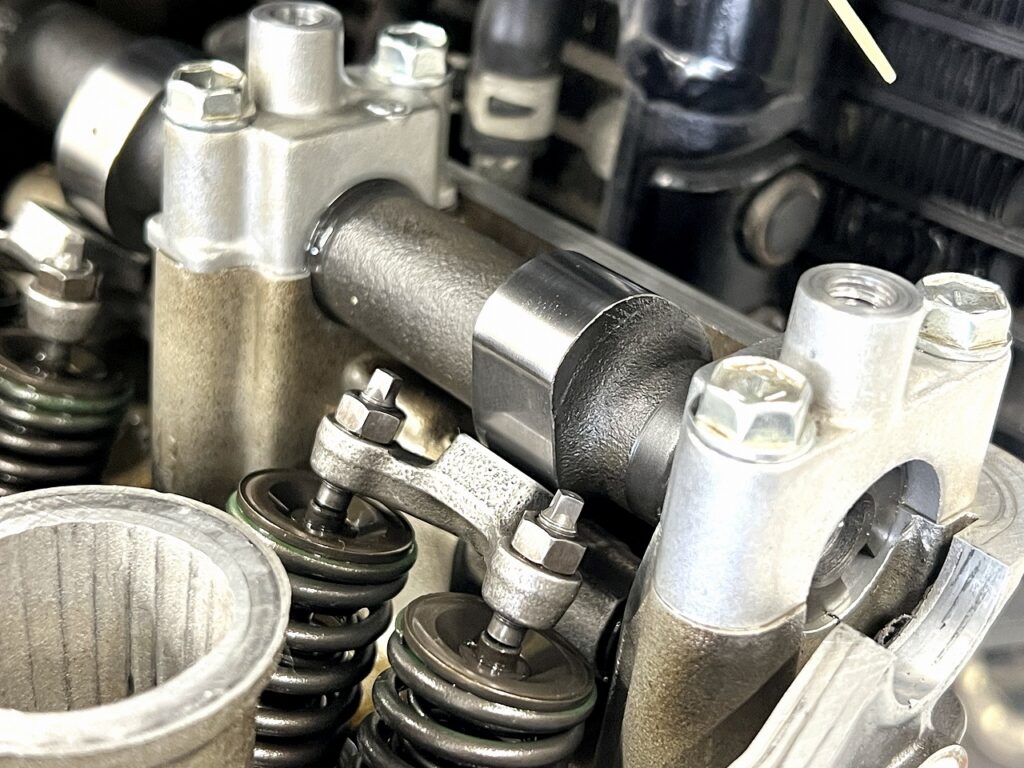
If the camshaft is scuffing, then in most cases the “rocker arm slipper surface” on the other side is also getting scuffed up. Once the hardened surface starts to rough up and wear, wear accelerates rapidly from there and clearance keeps expanding.
The biggest pitfall here is “this wear clearance can never be compensated by normal tappet adjustment” — that’s the thing.
When the slipper surface is wavy or has step wear and uneven wear, even if you slip in a thickness gauge and set it to spec, the moment the cam rotates the contact goes off and you still get “clatter.” If you try to silence it by tightening too much, you end up in a vicious cycle of further grinding the cam lobe. To eliminate the noise at its source, cam and rocker arm must be inspected and replaced (or repaired) as a set — that’s the rule ( `ー´)ノ
Even with the exact same engine type, some people never scuff at all even after 100,000 km.
In the end, it comes down to “how you ride (how you use it)” and “the environment you’re riding in.” In a signal-heavy downtown, heat builds up at idle, and you’re doing stop-and-go repeatedly. Oil pressure hasn’t built up before the next red light… — that kind of scenario is torture for an air-cooled big displacement.
Get the oil temperature up properly and stable, rev it up solidly to send oil pressure, and cool it with airflow. If you can just create that basic cycle, a motorcycle engine doesn’t break that easily. You could say the environment raises the bike. ( `ー´)ノ
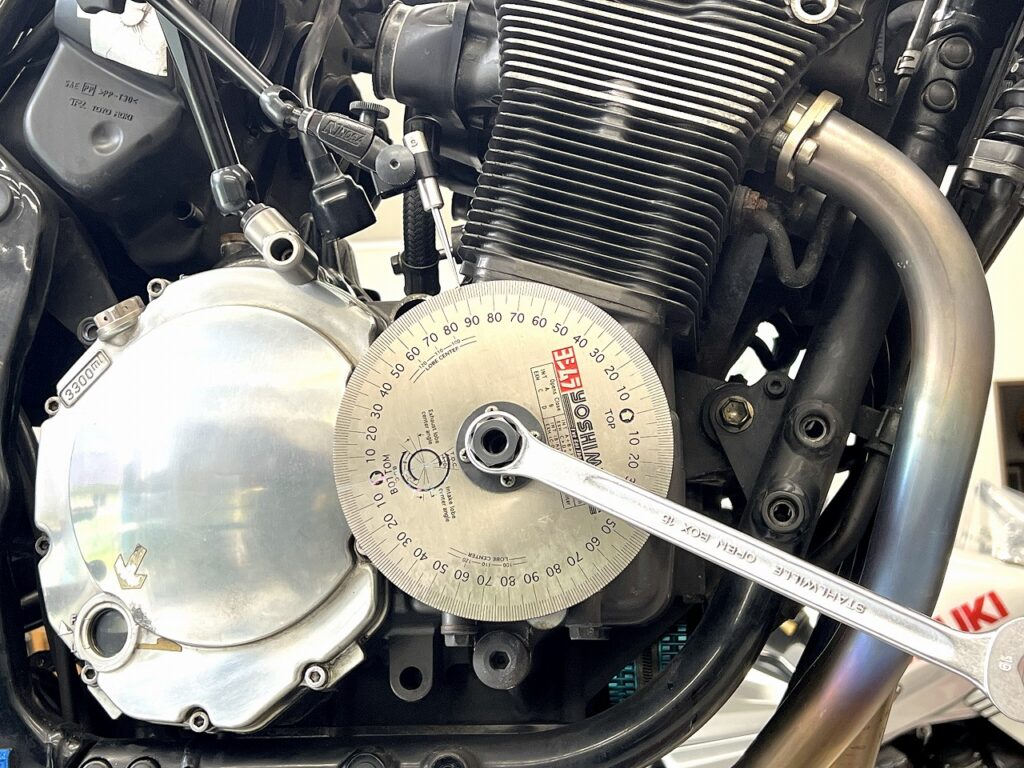
Valve timing adjustment to Yoshimura specs
We’re not aiming for razor-thin clearance where valves and pistons might interfere, so we only check cylinder 4 (or the reference cylinder) for valve timing.
Once you start thinking about cam chain stretch, slack in each part, manufacturing tolerances, and gasket thickness variation, street production bikes are honestly “pretty rough” territory.
… That said! The [long-hole machining] of the cam sprocket is absolutely essential. The stock bolt-on fixed position can easily be off by several degrees, so we use the long holes to dial in the sweet spot precisely. This one step makes the engine’s response and feel transform dramatically ( `ー´)ノ
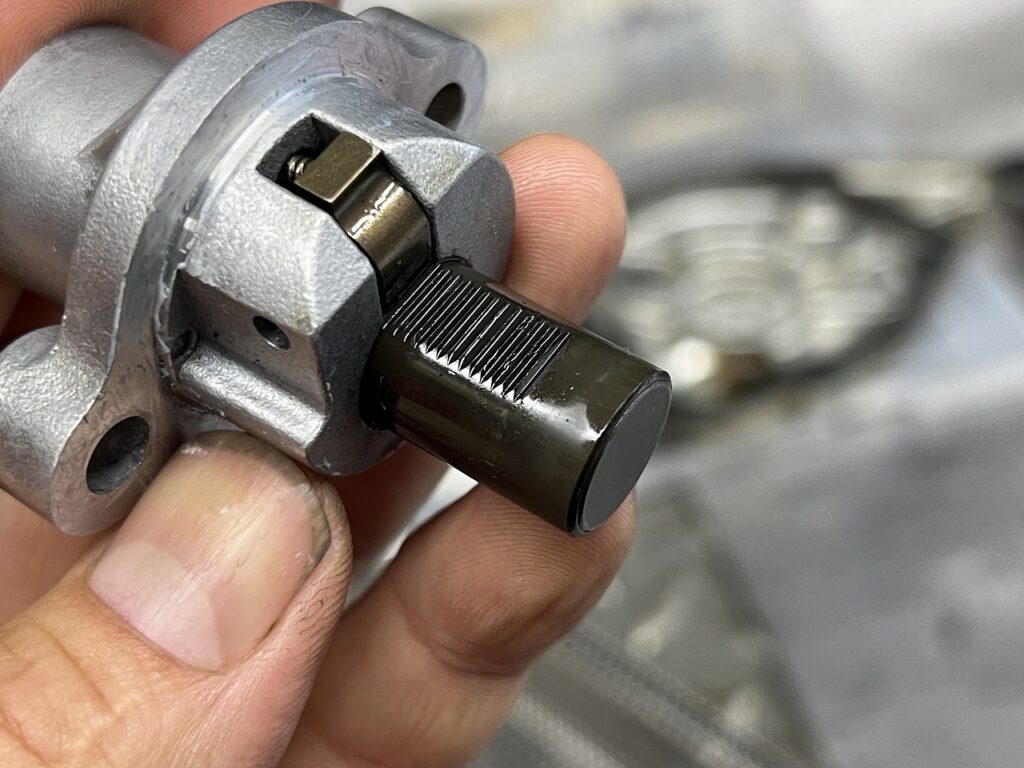
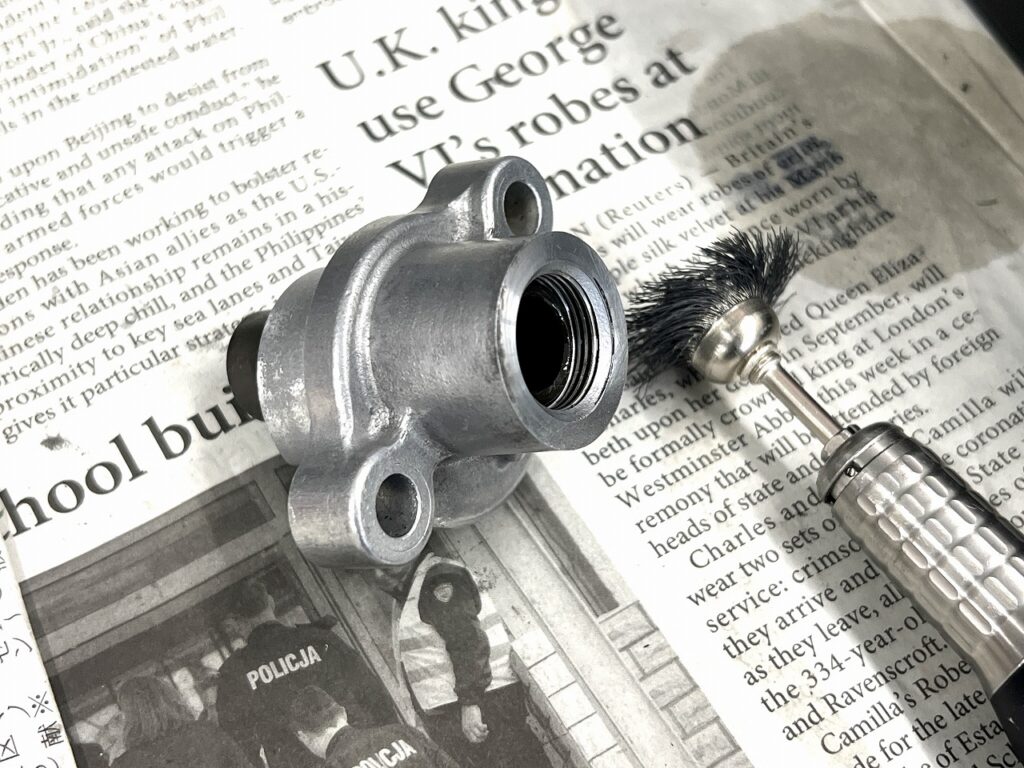
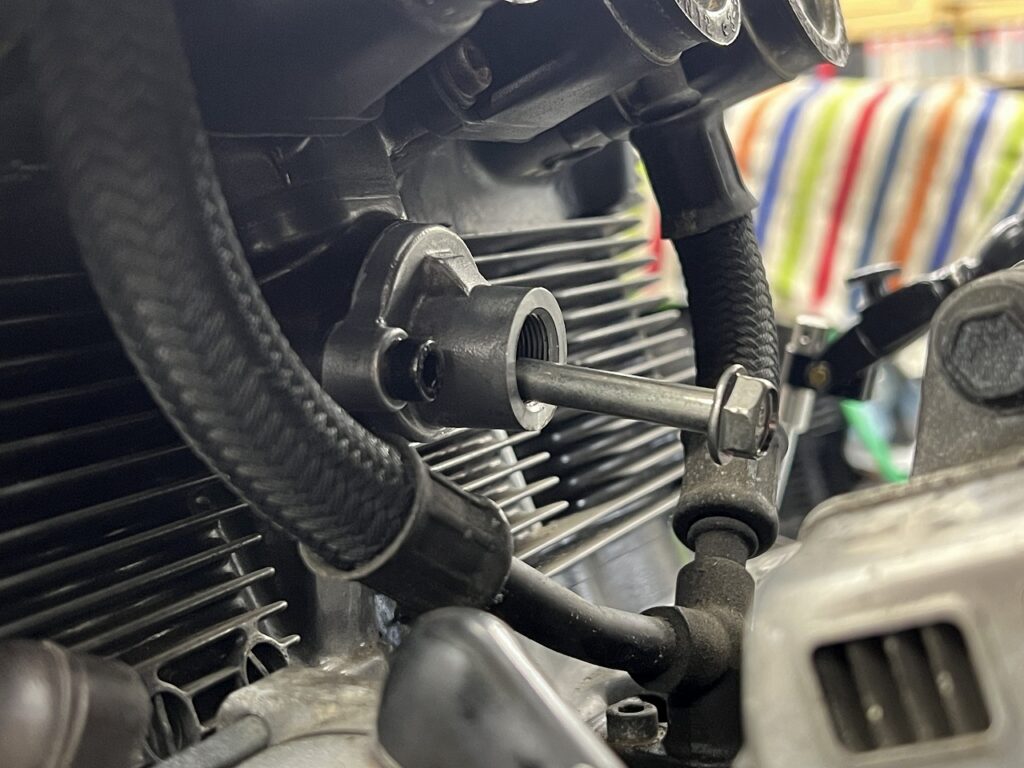
The stock cam chain tensioner is excellent
It’s already pretty small, but newer bikes are even smaller, so it’s amazing. Very simple and sensible design.
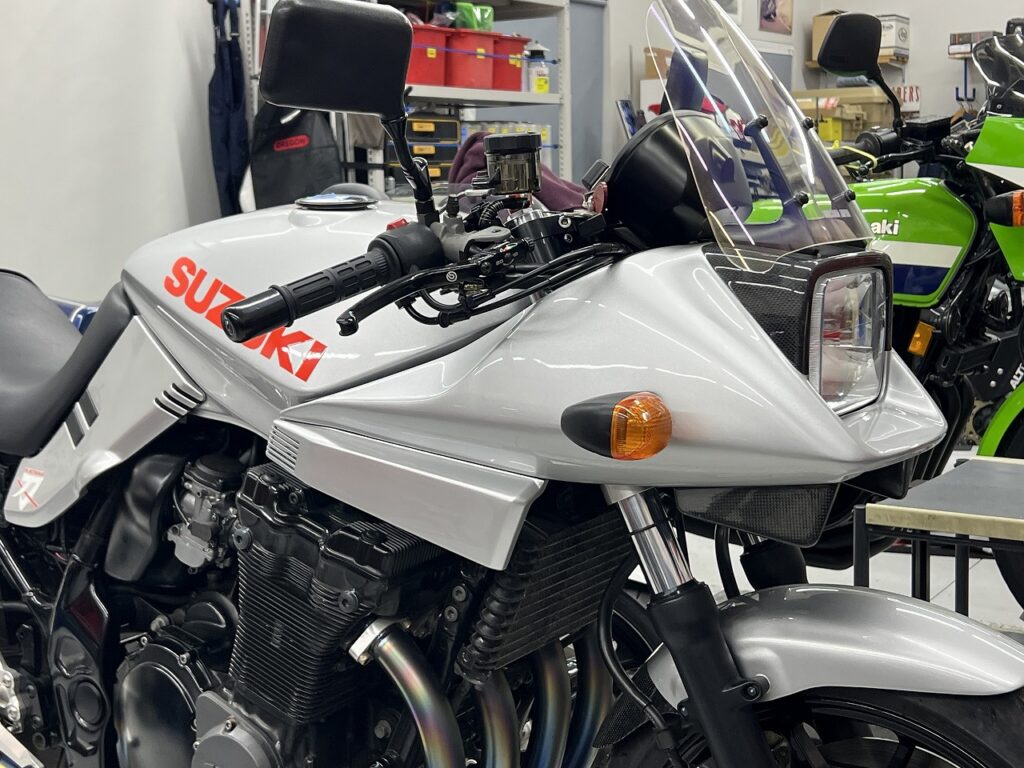
The stock cam chain tensioners on old Z’s and Katanas look unbelievable by today’s standards…
With parts like this, we skip the wet blast because we’re worried about media getting stuck or trapped, and we finish it the old-fashioned way with a wire brush.
Polishing it clean doesn’t increase the bike’s performance or horsepower. Honestly, for me it’s mostly just a ritual.
But when you clean off the dirt and prep the surface, your fingertips can instantly catch cracks, scuffing, or bolt oddities. It’s like a pre-assembly ceremony, and that kind of steady handwork is what settles me most ( `ー´)ノ
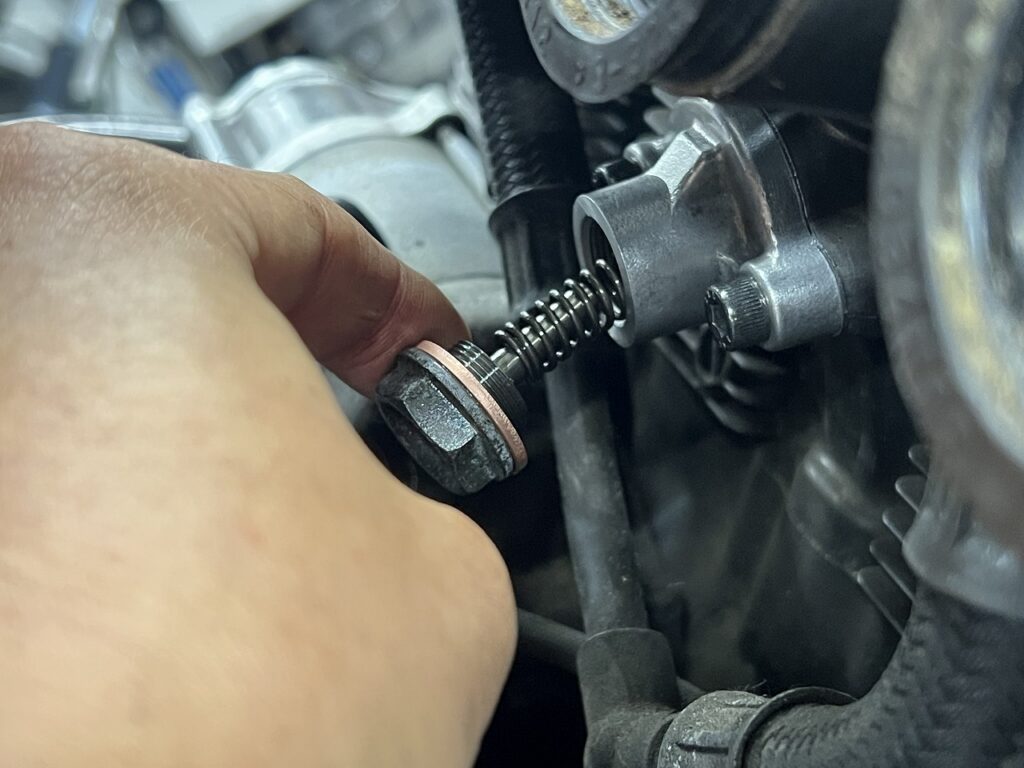
With the auto cam chain tensioner, “hand-assisting the tension” is the safest approach.
Basically the spring pushes it out automatically with a click-click action, but this is a surprising blind spot. If you try to tension it all at once from a fully retracted head-cover-off state relying only on spring force, there’s a risk of “chain skip.” Plus, you can’t push harder than the spring rate allows, so depending on chain slack, you might not be able to push the next notch, and in reality it usually stops at a “pretty loose” setting.
A loose chain means during throttle on/off transitions, the slack lets valve timing wander back and forth. But hand-tighten it too much and you get guide damage or friction hell. “To prevent damage from over-tensioning, the maker’s loose setting is the safest bet” — that design philosophy makes sense, but that’s exactly why the feel-based balance of “another half-notch to one notch” by hand touch becomes critical ( `ー´)ノ
The cover is truly last. We’re doing the cam chain adjustment by hand, so really! The cover is the very last thing.
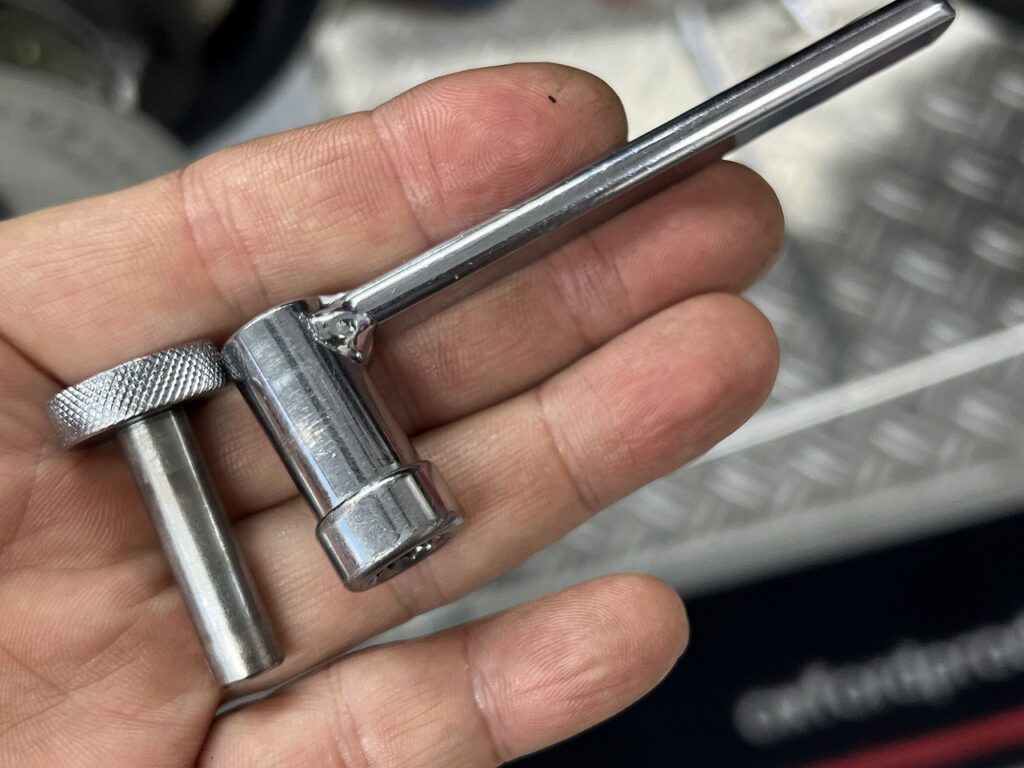
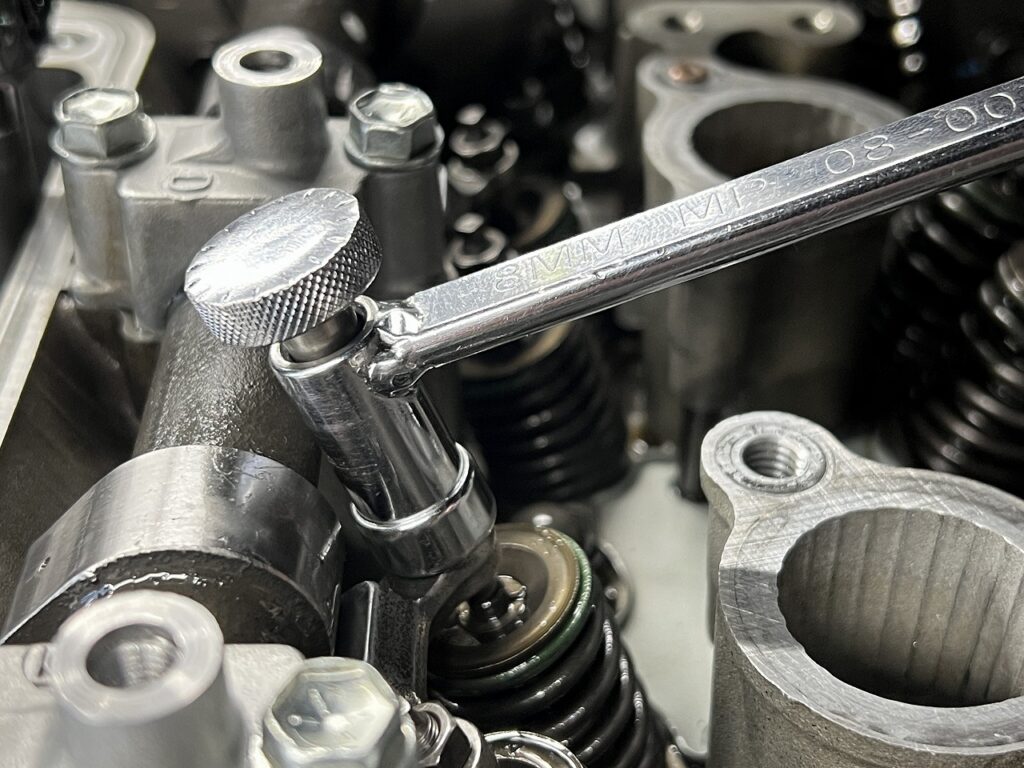
Tappet clearance adjustment tool is Motion Pro
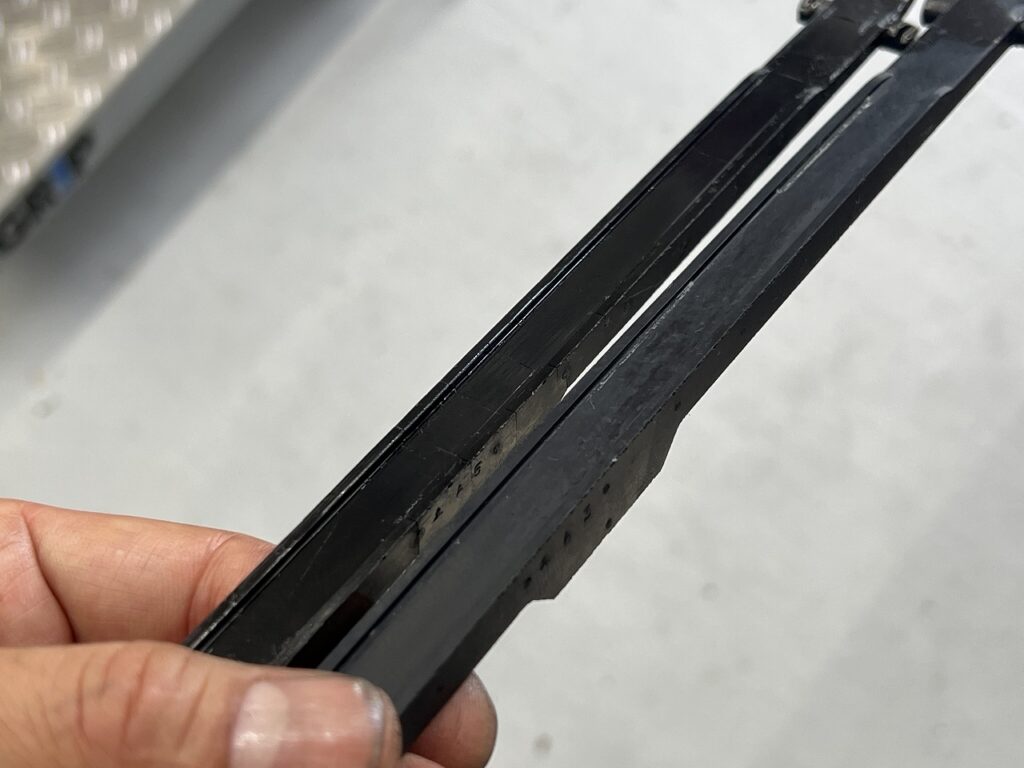
The Motion Pro tappet adjustment tool — this one. It’s really incredibly good…! (※ pretty old model)
Rigidity, perfect size that fits in your palm, and above all, ease of use during work — five stars across the board [☆5].
That annoying little frustration where the adjuster spins with the lock nut the moment you tighten it — “ugh!” — completely vanishes. Once you’ve felt that crisp detent and workability, you can never go back to a regular wrench and tiny screwdriver.
Once you use it, you won’t want to adjust with anything else — it’s a gem ( `ー´)ノ
It’s really the perfect positioning that makes it such a perfect tool.
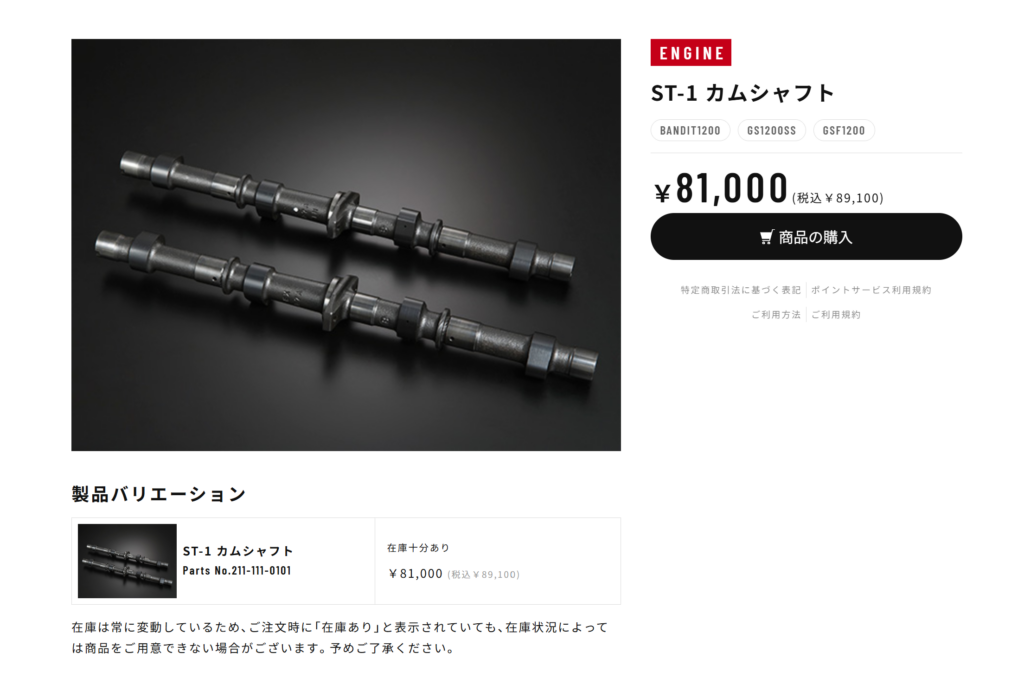
Still time? Still under six figures
I suspect that once the inventory at makers and distributors runs out, we’ll switch to expensive “billet cams.”
Big-displacement four-cylinder camshafts are still available at “under six figures” — this is definitely the last window. The moment the casting dies drop and we move to billet, prices easily jump 2–3x — that’s the industry standard.
If you’re planning to refresh the cam area down the road, don’t hesitate — “secure” one now. “I wish I’d bought it then…” is the regret you want to avoid before it happens ( `ー´)ノ




 ポチップ