Every time I make an invoice, I think to myself, “Parts prices have gone up…” and “Shipping costs add up quietly too…” These days it’s convenient—you just enter a part number on the ordering screen and the price appears in real time—but sometimes I find myself stopping short when I see it. “Wait, a plain damper rubber is 2,500 yen each…? Four of them comes to over 10,000 yen!?” That’s enough to make me think twice. If it’s not sealed, the elasticity is still good, and the condition is fine, then… this time I’ll go with reusing it. *I don’t do anything dangerous! Right tool for the right job.
Honestly, from the shop’s perspective, it would be easier and less risky to just “quote everything new and replace it all at once.” It takes way more work and responsibility to carefully clean and inspect used parts and figure out if they can be reused (of course, we always replace anything that affects safety or is critical to your life!).
But wouldn’t it be way more worthwhile to take those few thousand or few tens of thousands of yen we saved and put it toward good engine oil, tires, and chain—the things that directly affect how your bike rides and how long it lasts? Not everyone has unlimited maintenance money. “If it were my own bike, what would I do?” —that’s always the standard we work by here at the shop.
Reason for the pit stop: The owner mentioned, “The clutch lever feel seems subtly different from usual” and “Sometimes the engagement point seems to shift—there’s a slight discomfort.”
Why sharp senses save the machine: Waiting until it stops working completely is too late. Before a major failure—wire strands about to break, release mechanism running dry or wearing unevenly, clutch housing step wear—there’s always a signal that appears in the rider’s palm as **subtle friction**.
Decoboco’s clutch baseline tuning essentials:
Full-range clutch cable inspection: Check for strand fraying at the ferrule root and high-viscosity lubricant injection through the cable.
Release disassembly and cleaning inside the sprocket cover: Thoroughly wash the mechanical screw release that’s turned to sludge from chain oil and gravel, then refill with extreme-pressure grease.
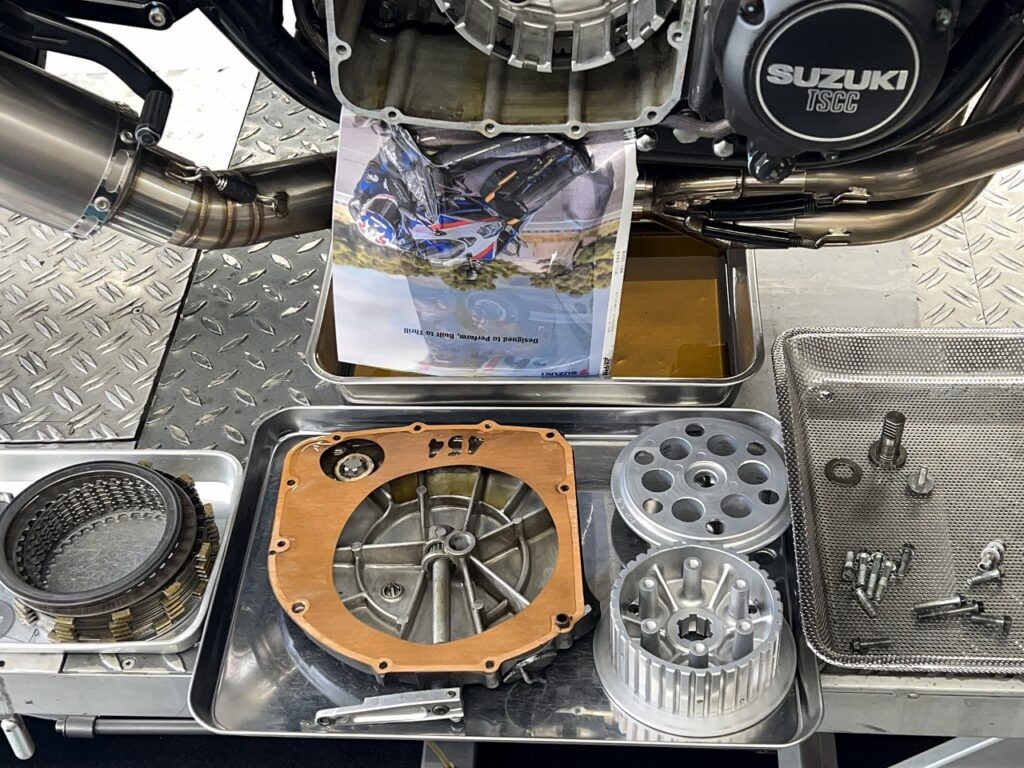
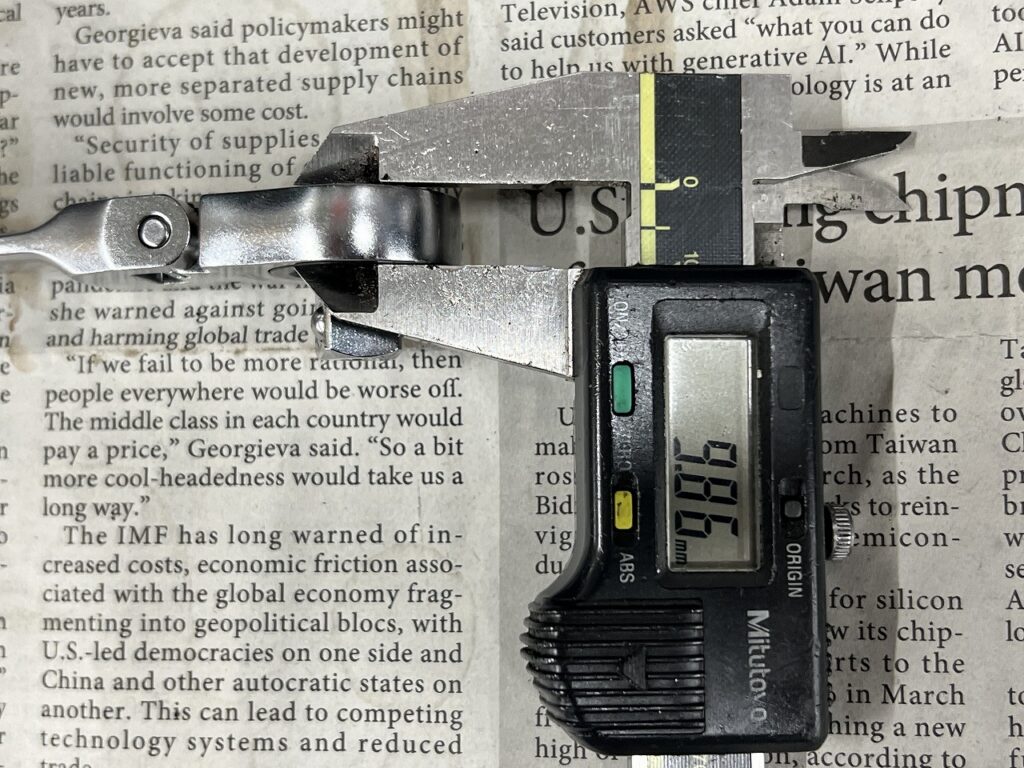
Clutch internal contact inspection: Precision measurement of pressure plate, spring free length, and push rod for bending or step wear.
Shop owner’s note: The sharp instinct a rider feels—”something’s off”—is more accurate than any high-precision tester. The owner made a fine play by not ignoring the discomfort and bringing it in right away!
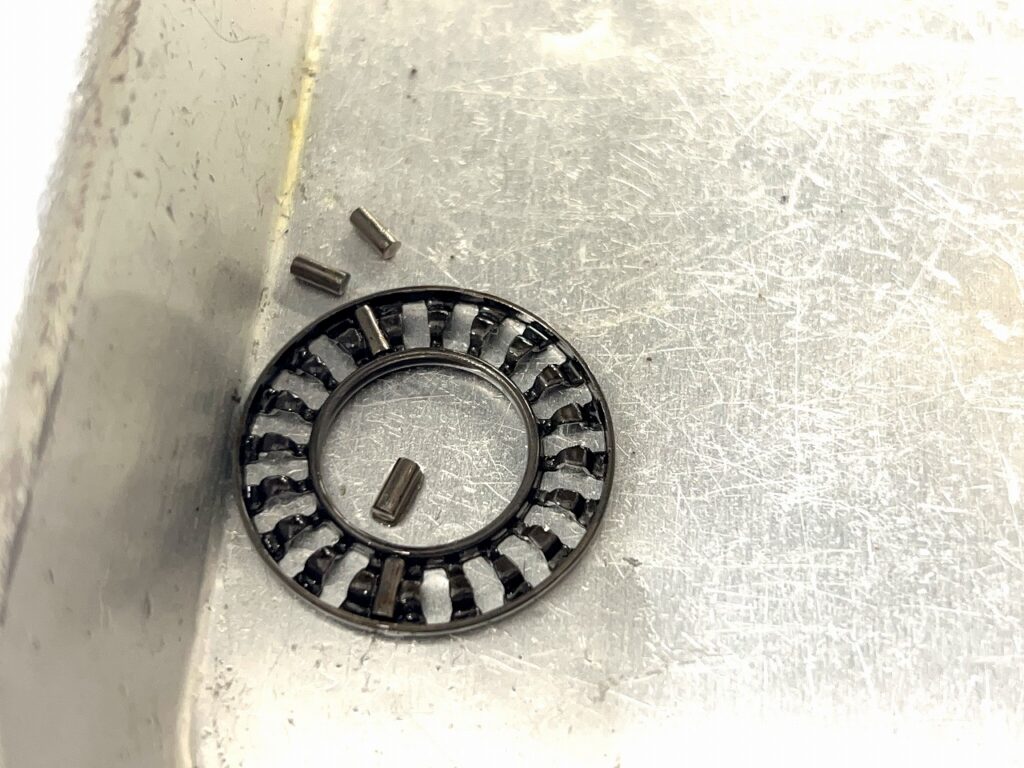
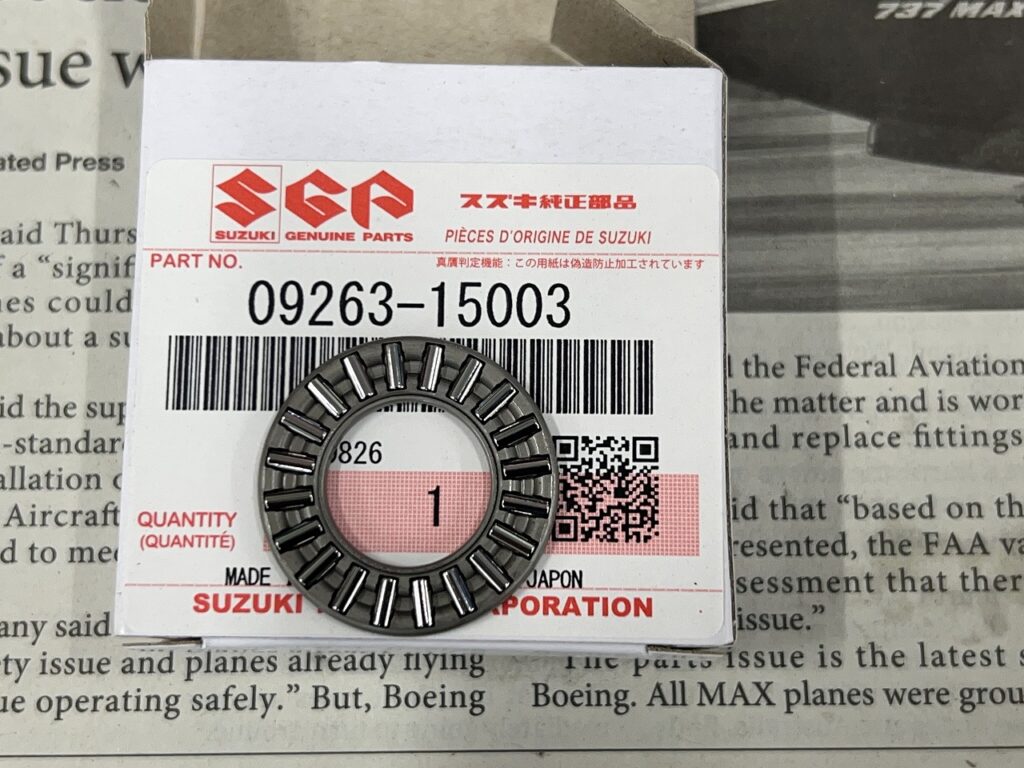
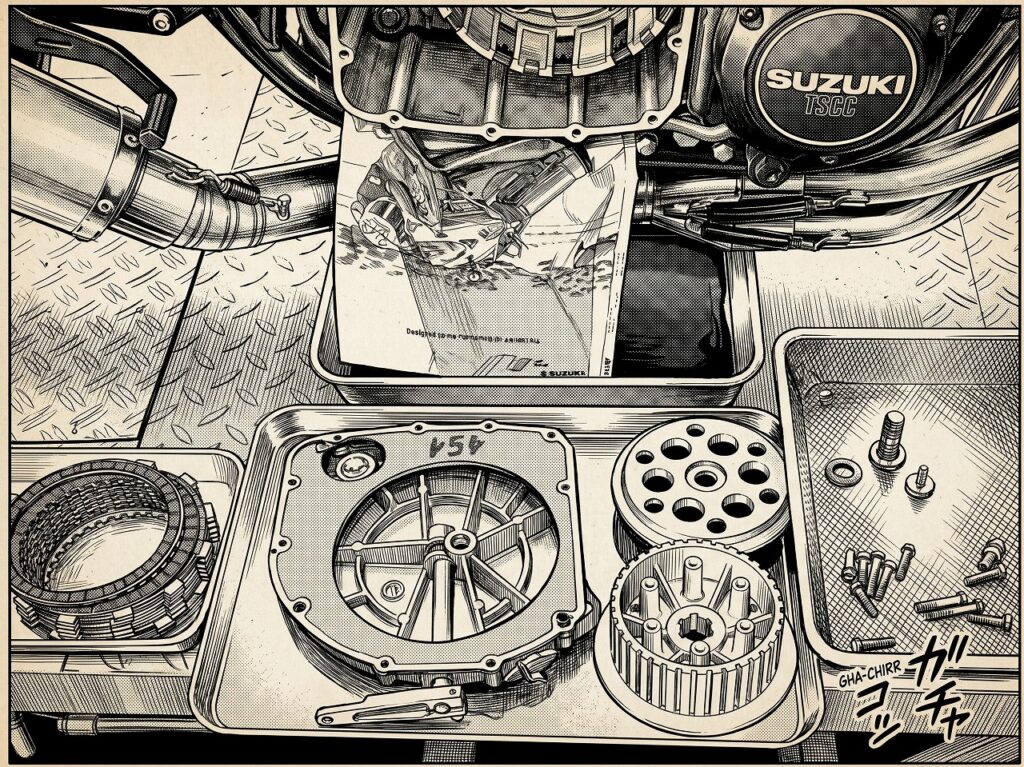
During disassembly, something went clink into the oil pan. I picked it up and instantly knew: “Oh, that’s a bearing roller.”
…Except only three remained ( ;∀;) Where did the rest go? Did they shatter into powder, or are they sitting at the bottom of the oil pan mixed in with sludge as debris…?
It was hanging by a thread—literally on the edge of catastrophe. I’m so glad we opened it up…!
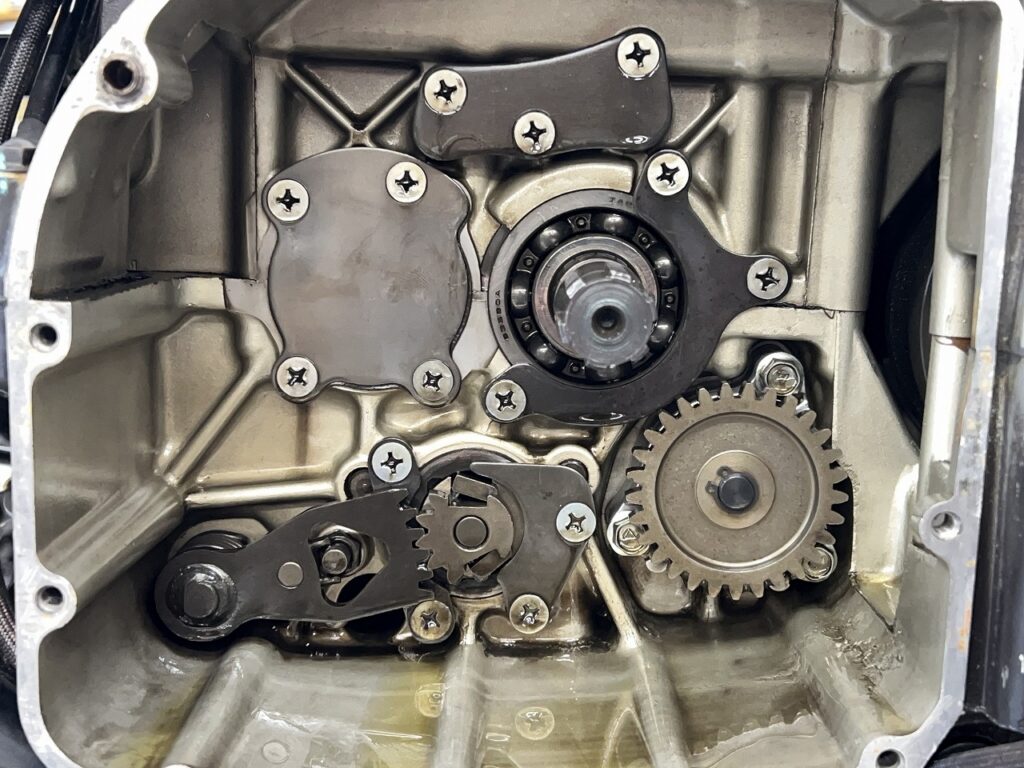
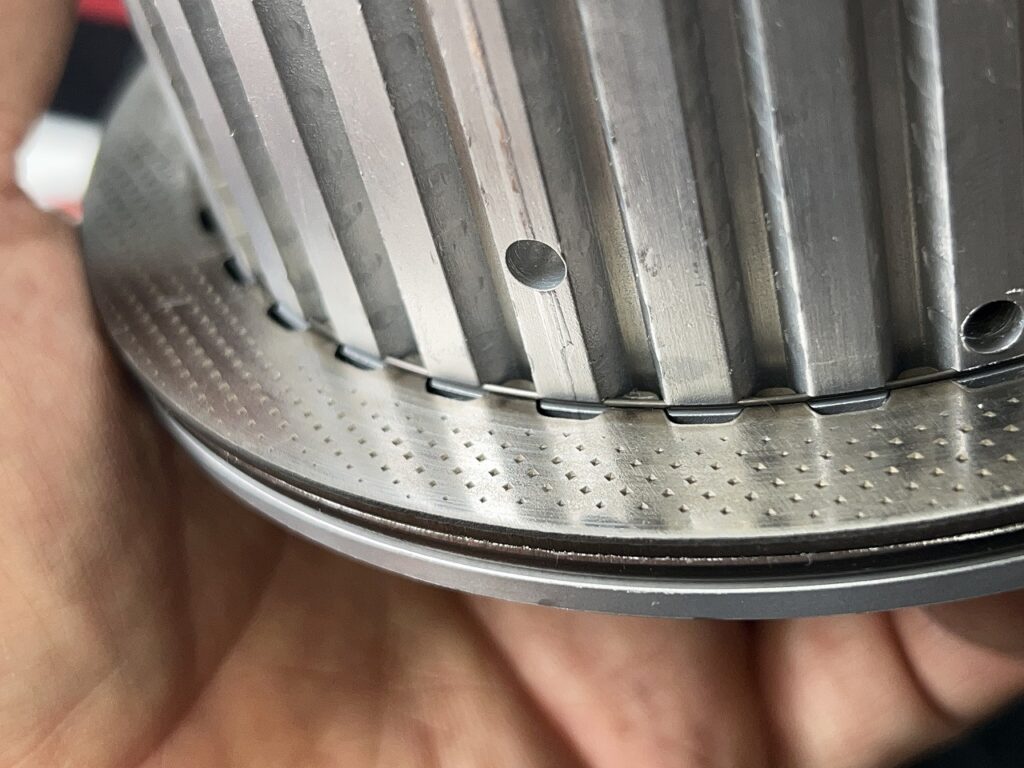
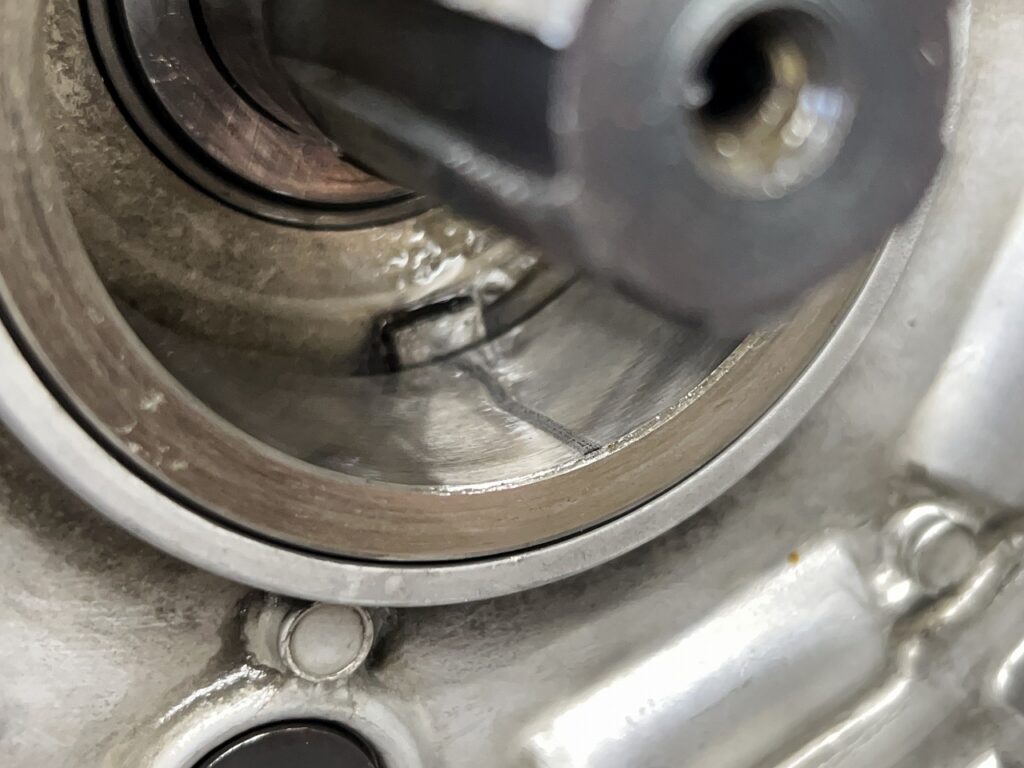
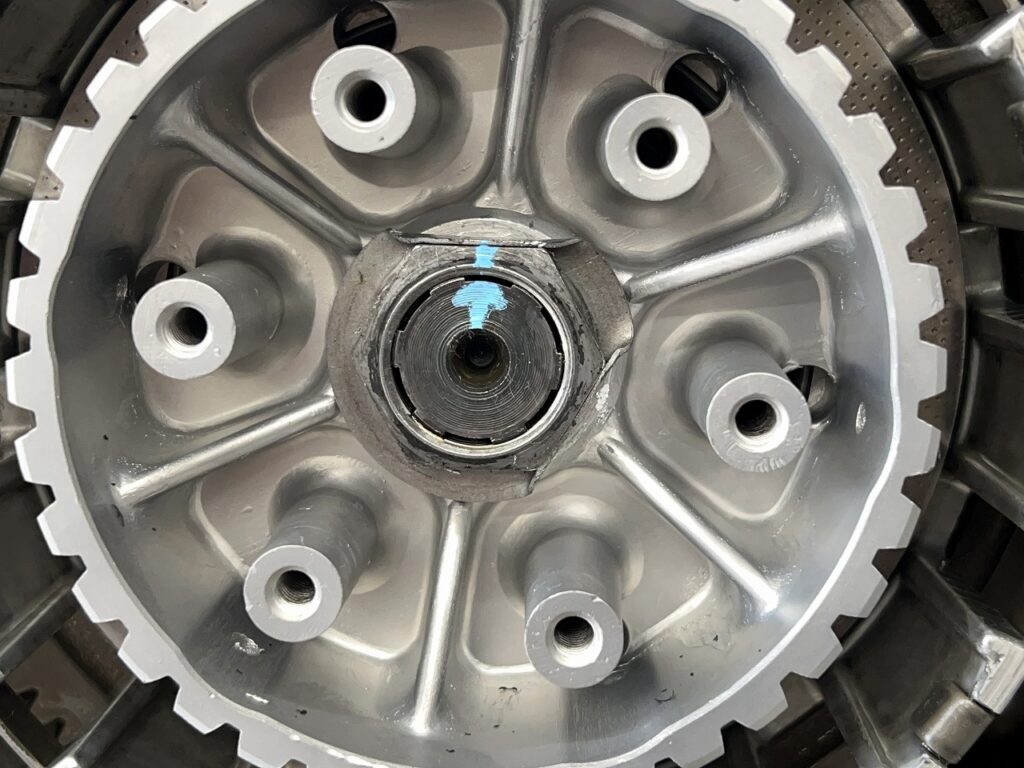
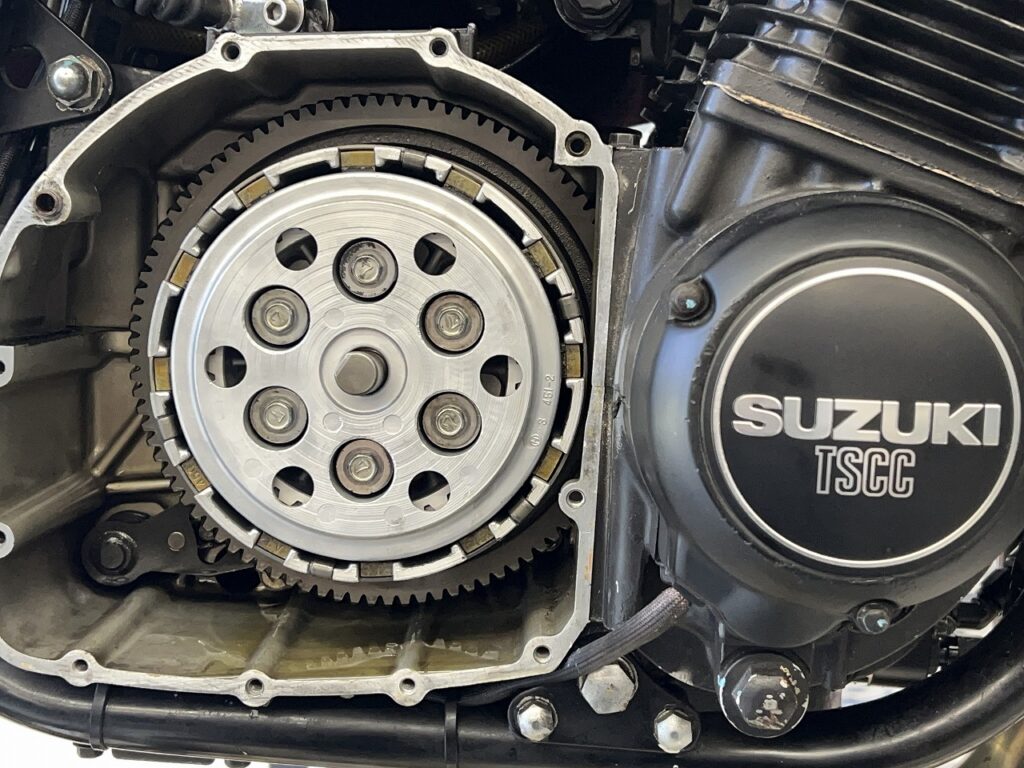
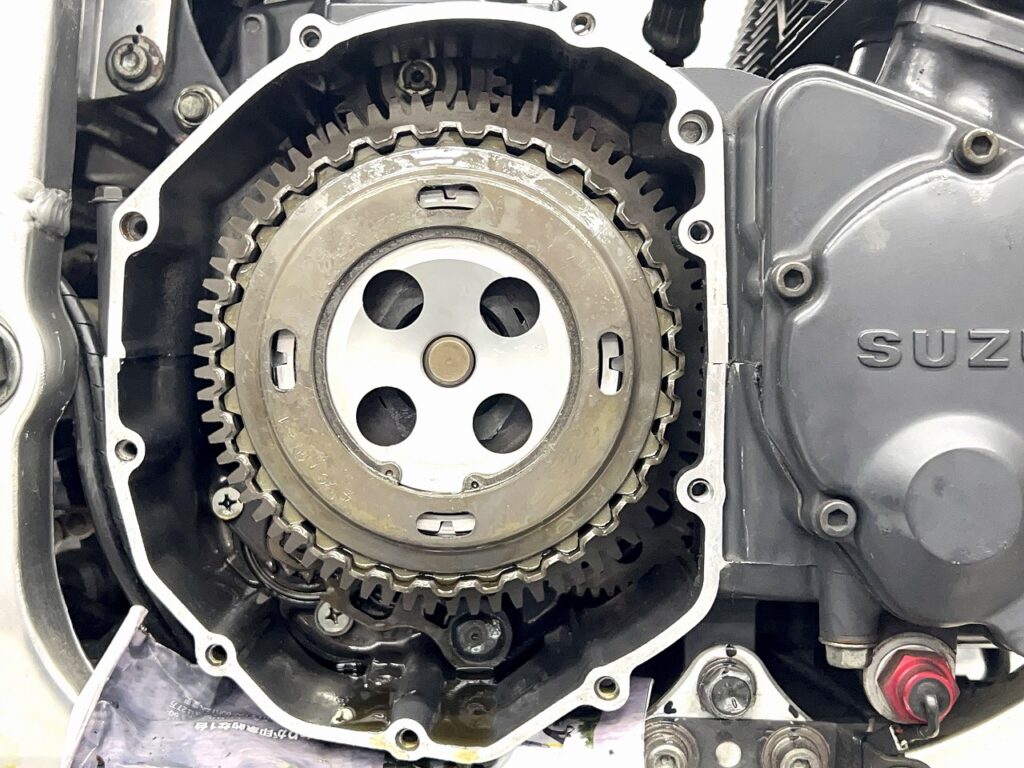
Disassembling smoothly. The Katana and GS have some grooves and uneven surfaces, so watch the part layout carefully.
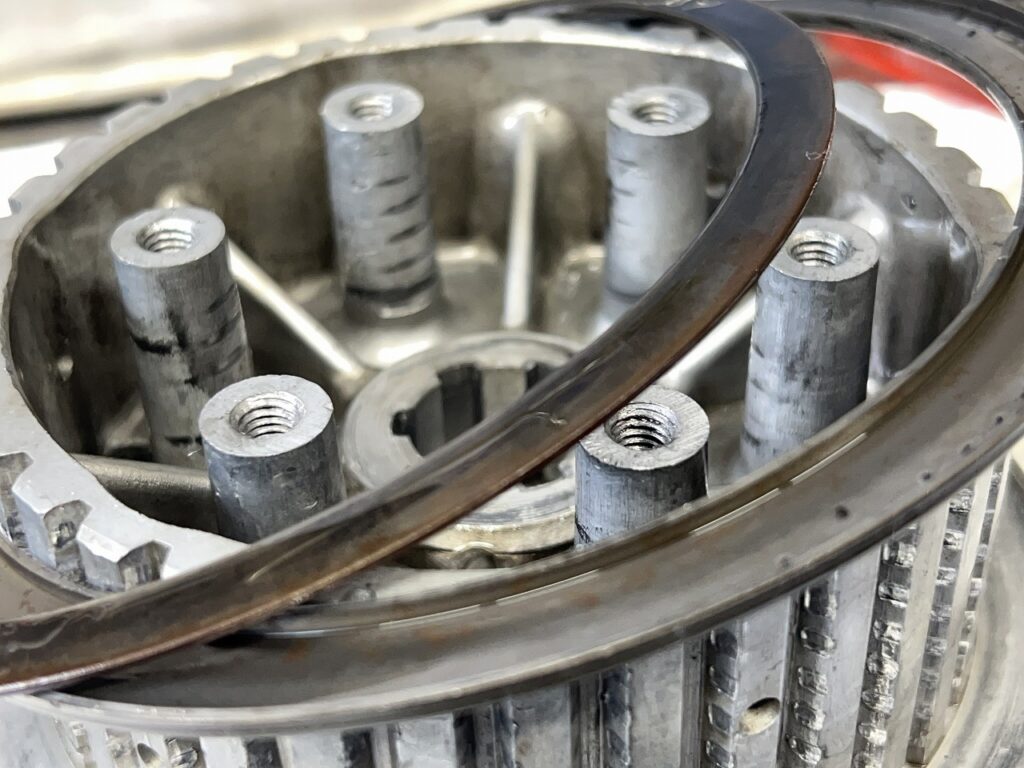
The rear structure is intact
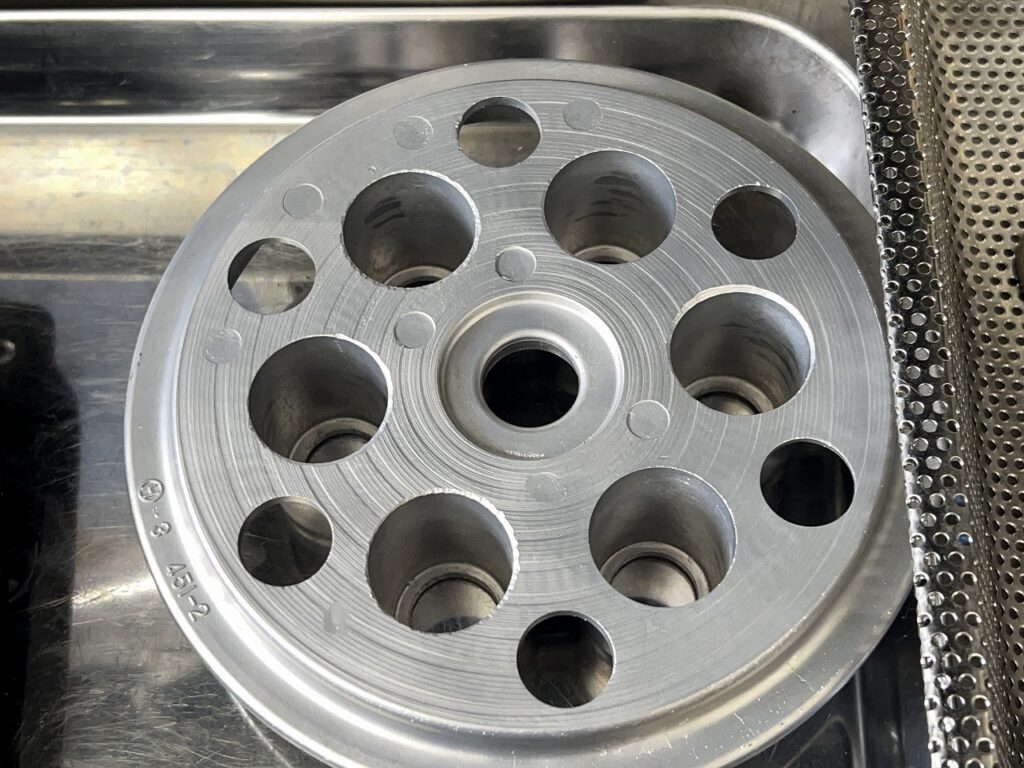
Is this a judder-spring concept? A large flat spring sits inside with tension on the steel plate. The makers were exploring different ideas back then.
The rear side inevitably ends up with these streaks.
Clean and check. Now just reassemble
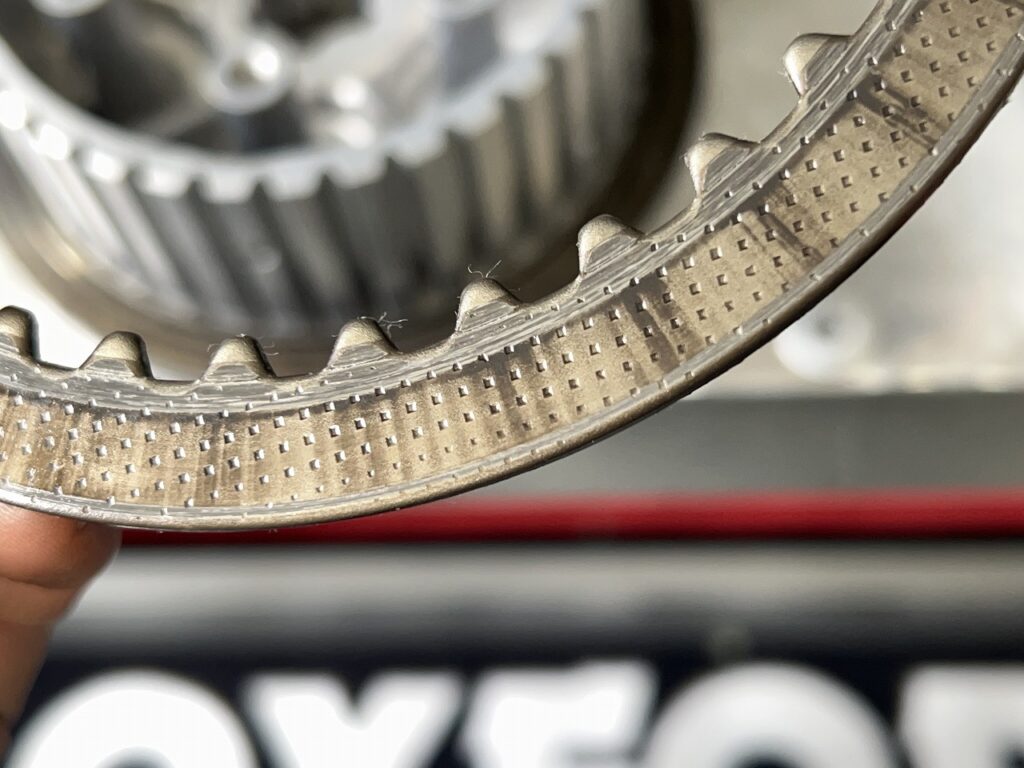
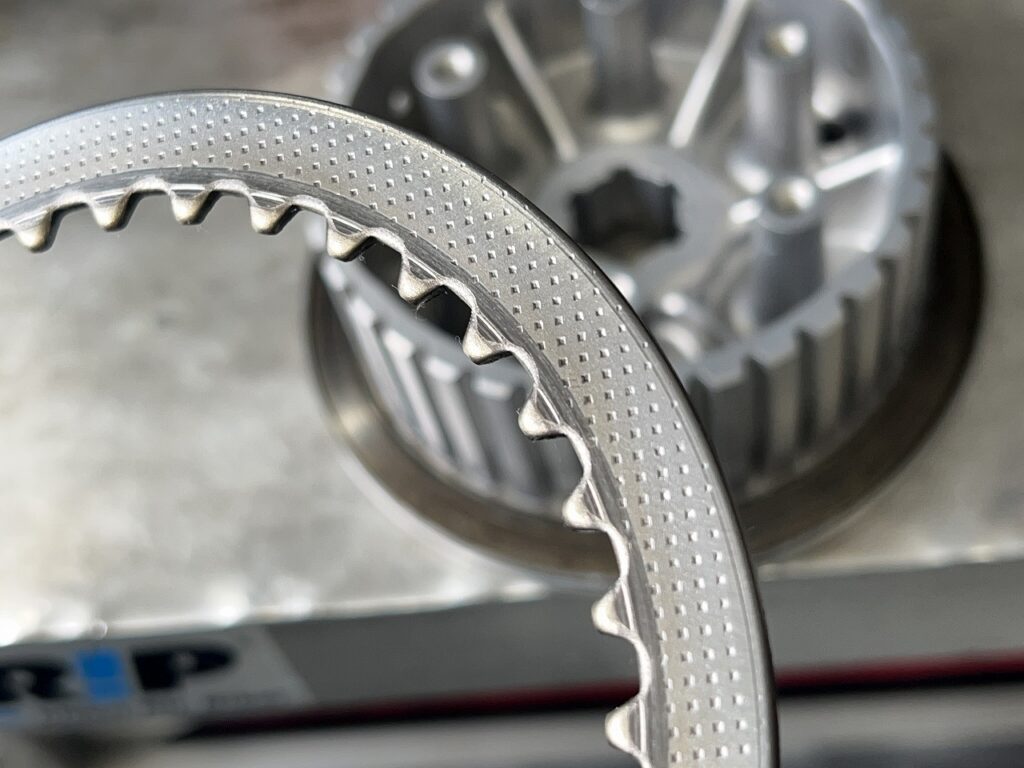
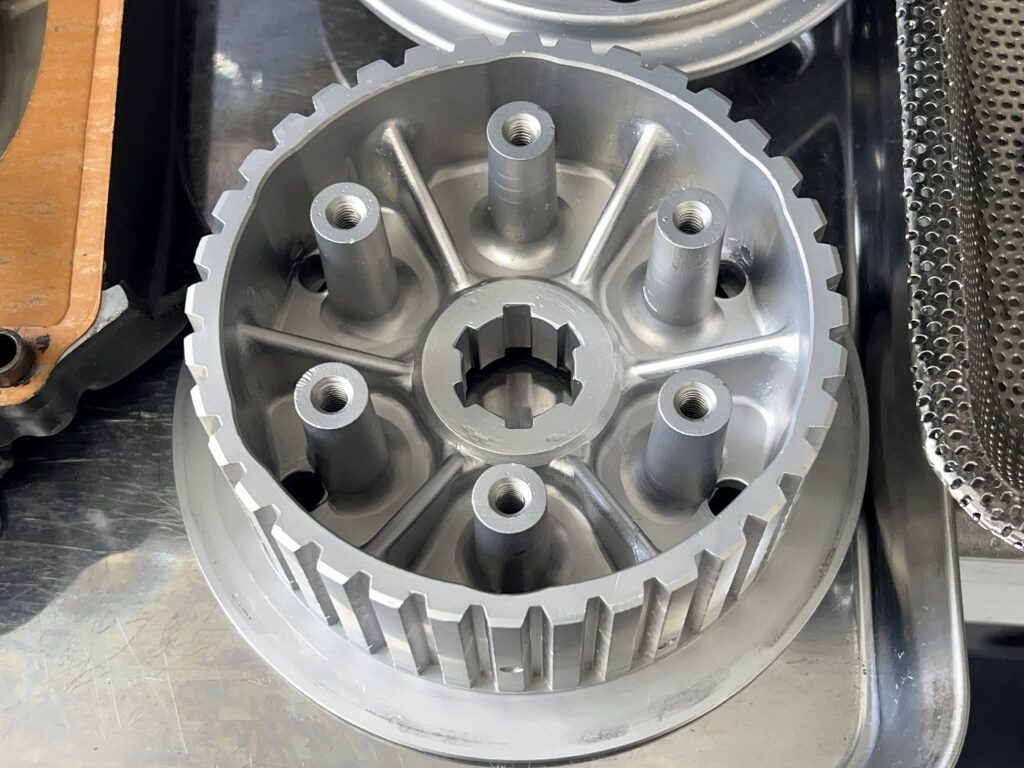
Parts from that era have a lot of play and rough finishes. I gave them a wet-blast finish to clean them up.
The philosophy of wanting to move all kinds of parts easily…is right here. You have to check these uneven surfaces while assembling. Lots of care needed.
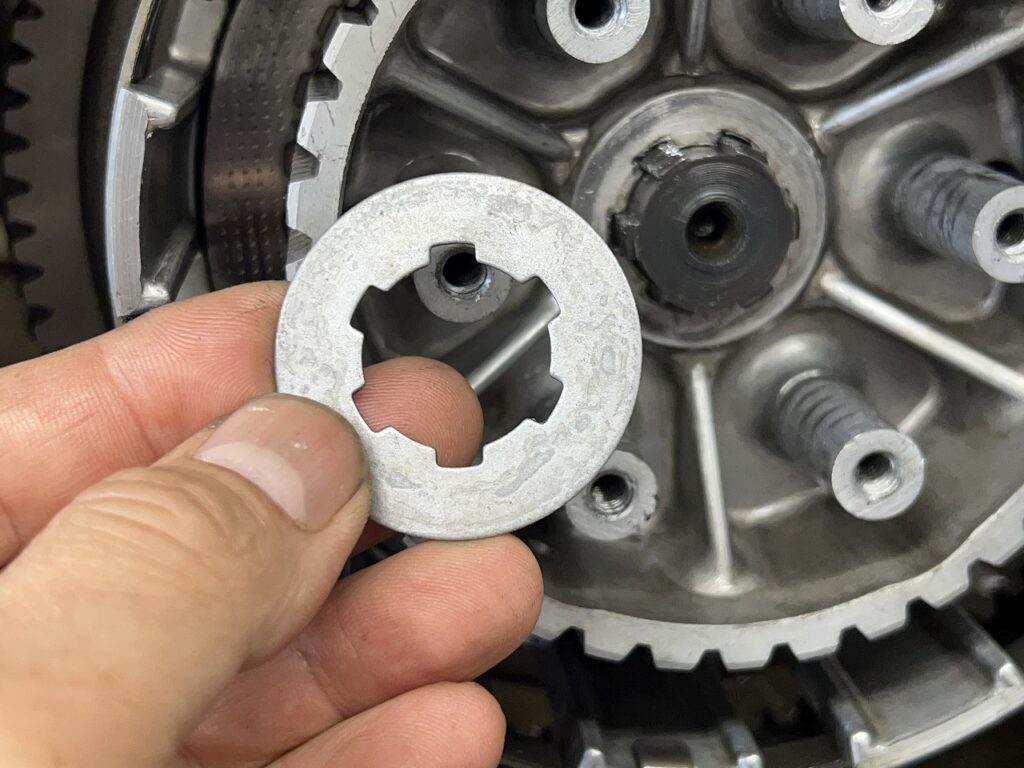
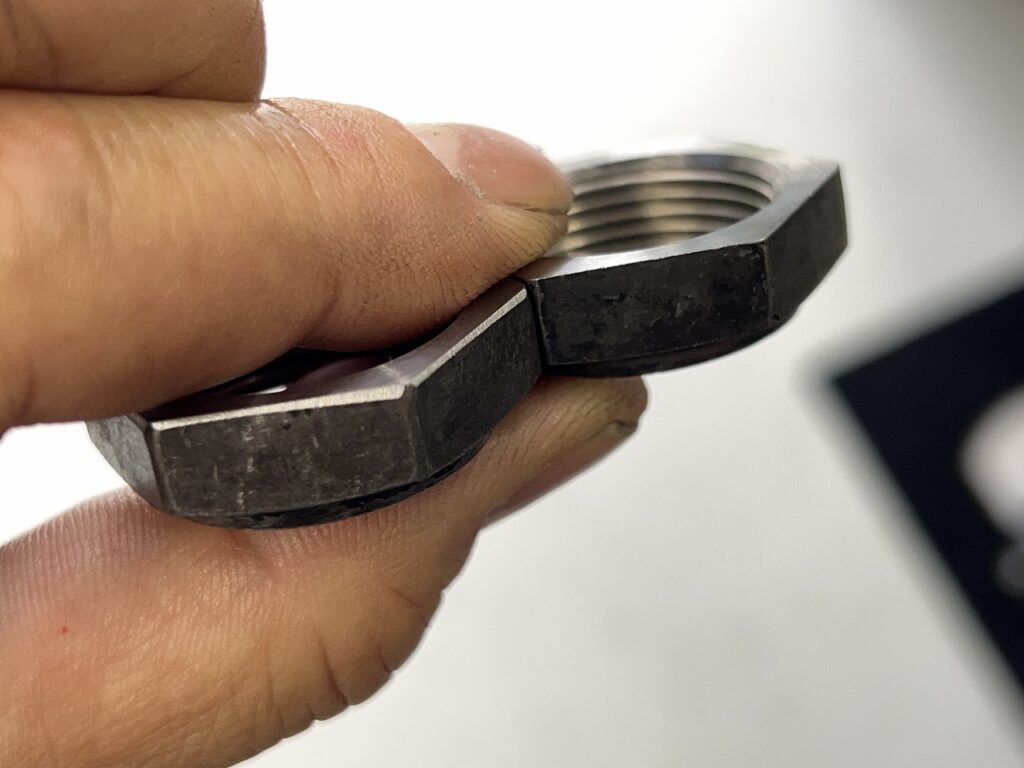
Washers designed not to rotate together—I chamfer them lightly beforehand.
See, the sharp edge tends to bite hard into the mating surface, right? Even with fairly high tightening torque, if the seating surface has weird catching or biting, friction resistance can turn into “uncertain torque that doesn’t match what we aimed for.”
And here’s a Suzuki service manual thing: “…Is this tightening torque really right?” (laugh). It’s not just Suzuki—any maker can have this issue. Blindly trusting the manual numbers is risky. You have to figure it out based on bolt diameter, fastener type, material, and location ( `ー´)ノ
And just like that, lock complete (*´ω`*)
One more worry gone! The heavy work is almost done, and we’re finally seeing the finish line.
One more push—no letting up until the very end! ( `ー´)ノ



 ポチップ
ポチップ