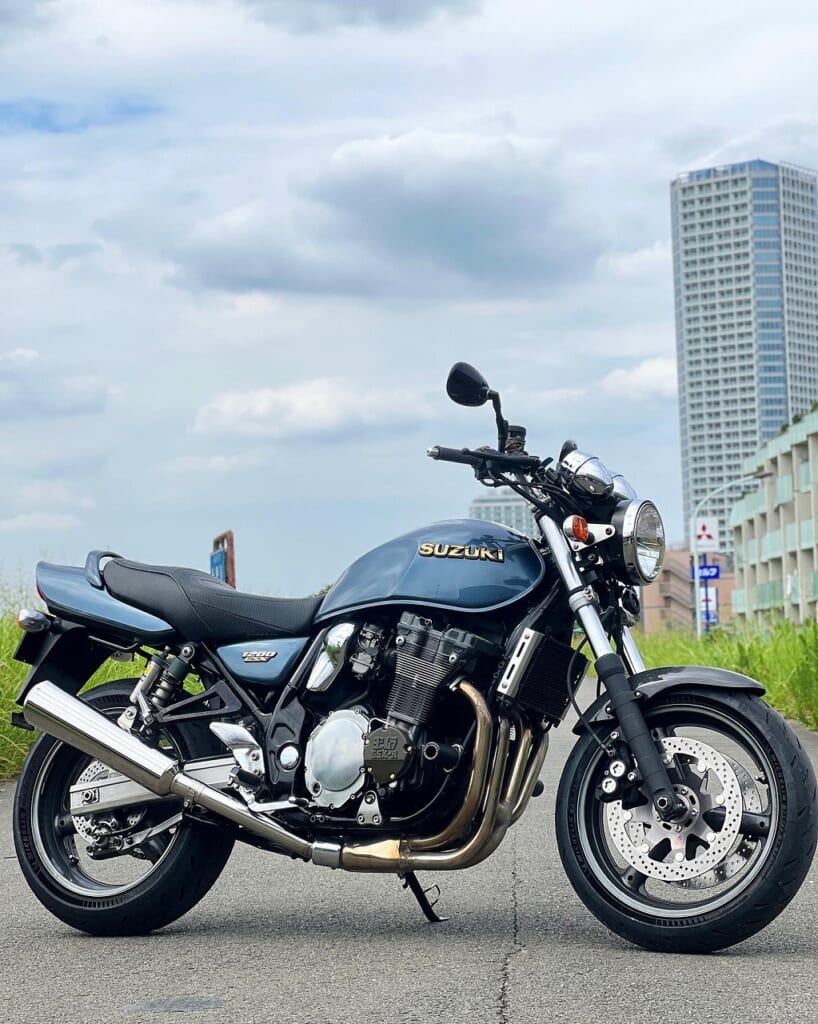
I currently own three (or four) motorcycles.
I can do the work myself, but from my perspective, I think two is about the limit, maybe?
If I plan to keep riding the same motorcycles going forward, I’ll need to prepare for various things.
I’ll restore the CB1100 to stock and dispose of it. It’s a good bike, though.
If it’s old, stock spare parts.
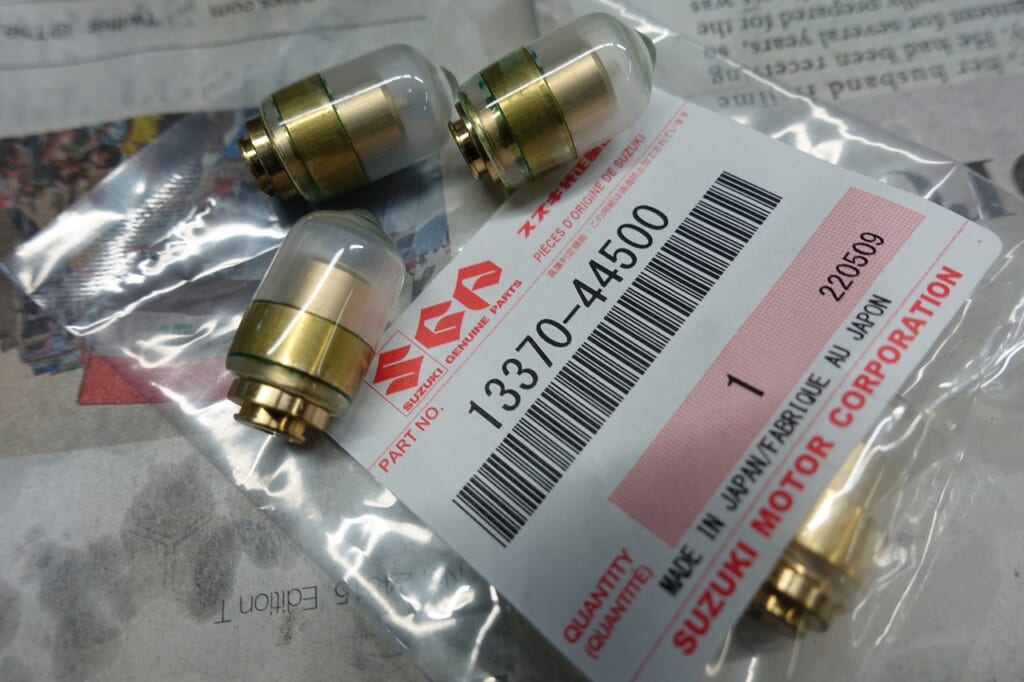
If it’s a motorcycle known as a classic, you might be somewhat reassured.
However,
rare bikes are a different story—you can’t be careless with them (;∀;)
You need to reformulate parts that are called consumables.
Even if you say that, right?
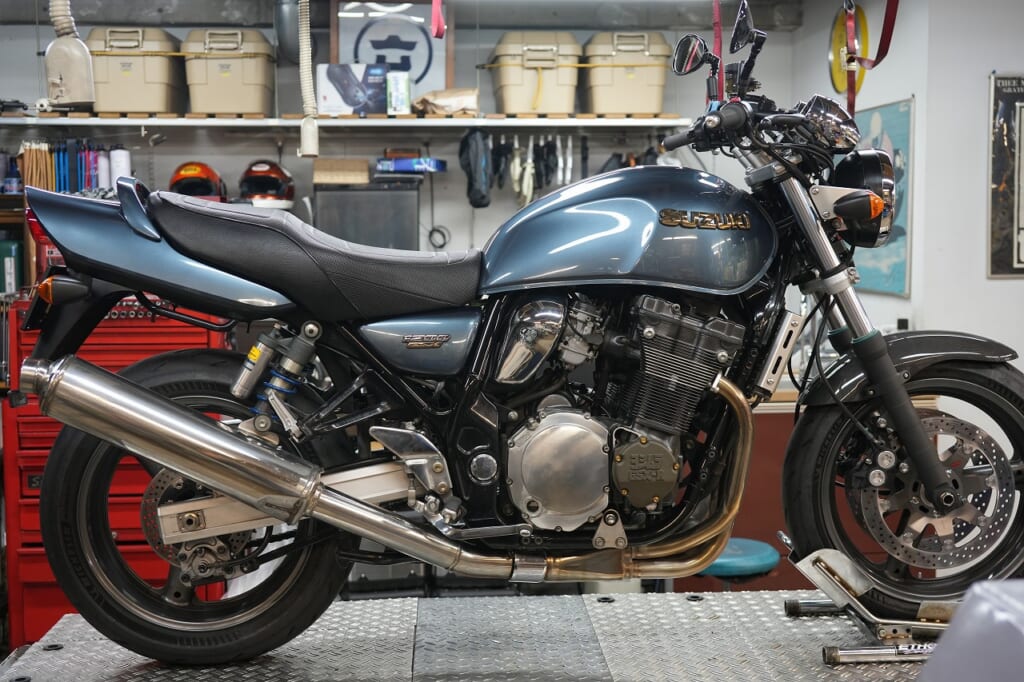
It’s easier to understand when you look at the whole motorcycle.
Things you don’t need to worry about
• Tires
• Chain and sprockets
• Brake pads
• Brake discs
• Brake hoses
• Front and rear suspension (including alternatives)
• Handlebars (including alternatives)
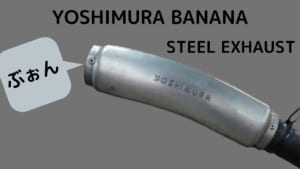
• Muffler
That’s roughly how it goes, I think. It depends on the model, but generally speaking.
Things that could be problematic
• Main harness
• Electrical components—generator, igniter, switches, meter, sensors, etc.
• Fairings
• Seat base
• Engine wear parts (including gaskets, covers, and dampers)
• Carburetor wear parts
• Main key cylinder (preferably with key set)
It’s surprisingly limited, isn’t it?
For electrical components, there are aftermarket Watanabe options and aftermarket switches and meters, so alternatives are available.
The real problem is rubber parts like seals, gaskets, intake manifolds, and hoses.
It’s tough when you want to replace something and find it’s discontinued.
At minimum,
• Head cover gasket
• Engine cover gasket
• Engine damper
• Intake manifold
—you’d want to have these on hand.
If you have room, having a complete set of fairings adds peace of mind, but it does take up space.
However, when you need something, good used parts are hard to find.
Overthinking it is a problem too, but when the time comes, you can’t do anything about parts that don’t exist.
It’s better to keep at least the essentials on hand.
Keep the motorcycle in a condition that meets general standards.
Recently, I’ve been stricter with inspections.
If you go easy on them, they never get fixed. People think someone else will take care of it.
Strictly speaking, if you couldn’t take the bike to inspection yourself and have it pass as-is, there’s a problem.
If the owner doesn’t know about the vehicle and inspection requirements, they won’t understand what’s acceptable.
If the owner’s schedule means the inspection has to be done elsewhere and no one will accept it, that would be a problem. (For the owner.)
Avoid anything too extreme—that’s what I think needs to happen.
Keep the motorcycle in good condition and stock gaskets and rubber parts.
Just doing this makes a huge difference in peace of mind, and since they’re easy to sell if you don’t need them, you can stock them without worry.
*Though prices can skyrocket and cause trouble… and so on.