When numbers come up, we tend to judge them as right or wrong…
Today’s common sense might be tomorrow’s nonsense, you know?
Even as I say that, I’ve never actually checked how much of a temperature difference there is.
I decided to give it a try with a KOSO oil temperature gauge that conveniently lets me capture two oil temperatures at once.
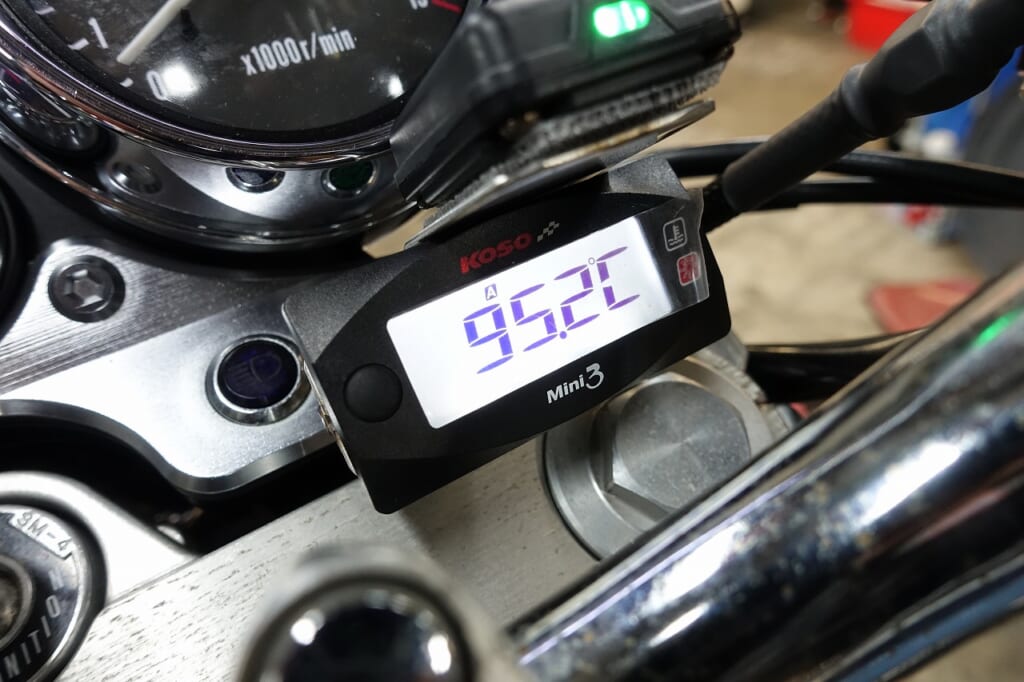
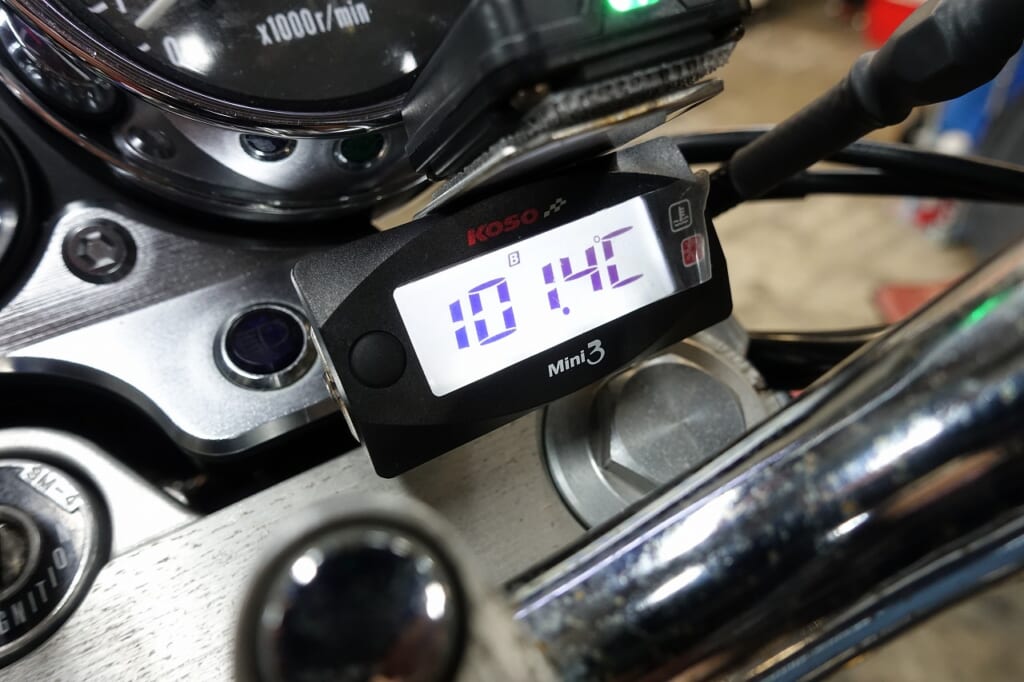
I’ve only checked after the oil temperature rises to a certain point, but the difference was close to 5 to 10 degrees.
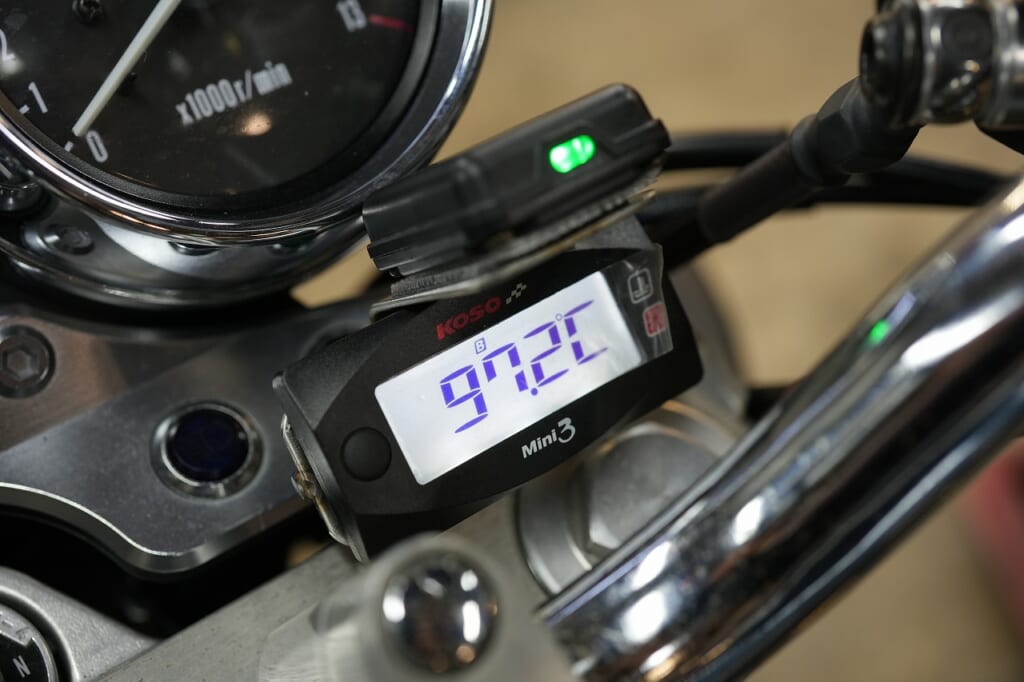
The measurement points are the lower left side of the crankcase and the machined hole in the head cover—kind of like the head and the feet.
The cooler temperature is at the feet (left image), and as you’d expect, it gets hotter as you go up (right image).
Today was fairly cool and I turned the engine off at every red light, yet it still rises this much—that’s a bit concerning.
You can certainly lower the oil temperature by going with a larger oil cooler, but it only works when you’re riding with wind flowing through it. It has no effect at all while idling, and in winter you’ll get overcooling.
• Turn the engine off at red lights
• Make sure wind flows properly through the oil cooler
This is the most effective approach (゚Д゚)
We tend to focus on lowering the temperature, but maybe the real solution is putting in the effort not to raise it in the first place (*’ω’*)