Customers often tell me, “My bike doesn’t have many aftermarket parts available, you know?”
I hear that pretty regularly.
Is that really that important? I wondered about it the other day.
Sure, purpose-built parts are nice. You just swap them in.
But I often find myself thinking—is that really how it works in practice?
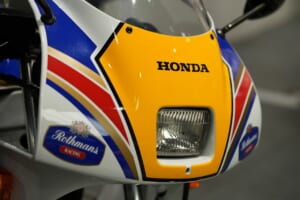
Bodywork is pretty much unavoidable, I guess. It’s one-of-a-kind, and rare bikes have it rough.
What about wheels?
When you work backward, manufacturers often used similar parts.
These days, aftermarket wheels are usually set up by hub for different models, and if you talk to the maker, they’ll often build something for you anyway.
What about footpegs?
Since everyone’s built differently and has different preferences, thinking that the off-the-shelf pegs are the best option might be a big mistake.
There are lots of ways to adjust your position—handlebars, seat, footpegs.
I think you really need to ride and figure out where you want parts to be.
Before spending money, you can try putting foam on the seat or using handlebar spacers to raise things up.
Lowering or dropping things might be a bit trickier, though.
What about the rear suspension?
These days, most shops will build one for you, so you can feel pretty confident.
You can figure out the upper and lower mounting dimensions, spring rate, and free length.
I’ve just scratched the surface here, but honestly, most things can be worked out.
Sure, one-off pieces get pricey, but you get personality and originality.
Kits sold as packages bolt right on—convenient—but they don’t stand out as much, though the price is reasonable.
In the end, if you stop and think about whether you want to improve the bike or just swap parts, you might head in a better direction.
I’m guessing most people imagine bolt-on aftermarket stuff that looks good and performs well—that’s probably the baseline—but it’s trickier than you’d think.