I’d like to proceed with the remaining work.
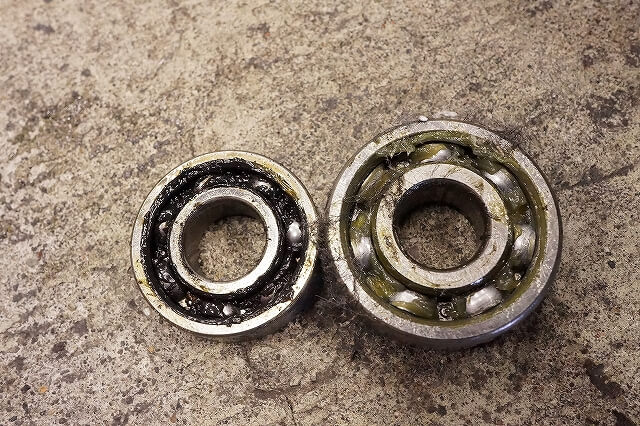
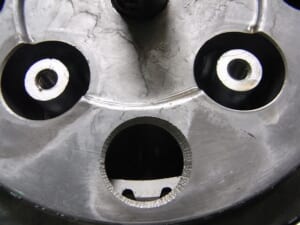
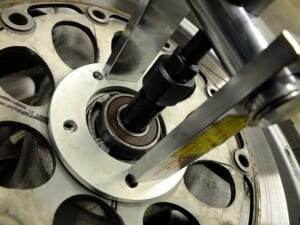
We’ll replace two bearings on the wheel side and one on the hub side. Since it hasn’t been used that hard, the oil condition is good. I think double seals are the way to go for wheel bearings.
I believe the main cause of bearing damage is oil starvation. When bearings rotate, they generate heat and move smoothly, which causes oil to drain away easily. If you’re not going to lubricate regularly, double seals are probably the better choice—the surrounding area stays clean.
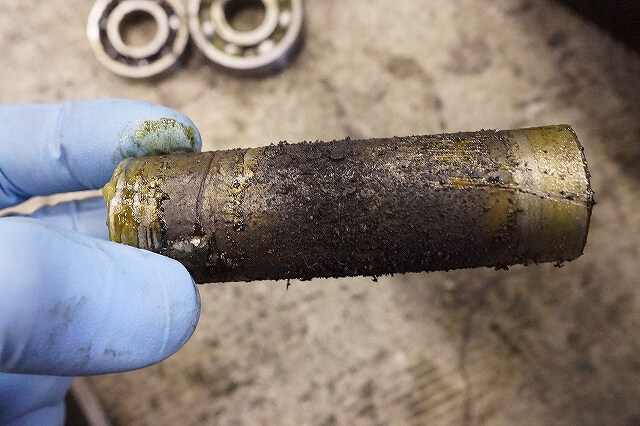
The distance collar is pretty dirty too.
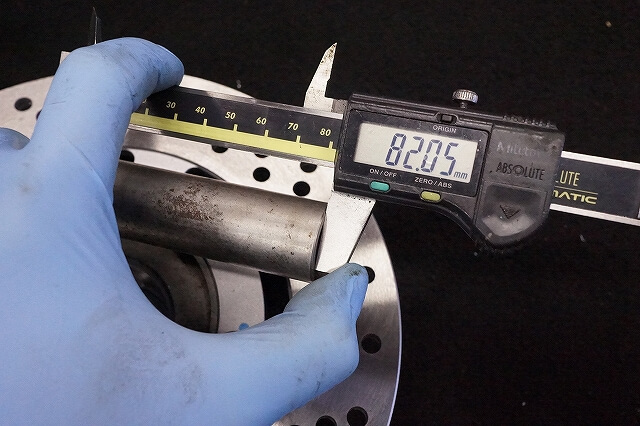
The OEM part is made of iron and built tough—it shouldn’t wear or get damaged easily—but I’d like to know the dimensions. I’m always impressed by the stable, quality finish of OEM parts.
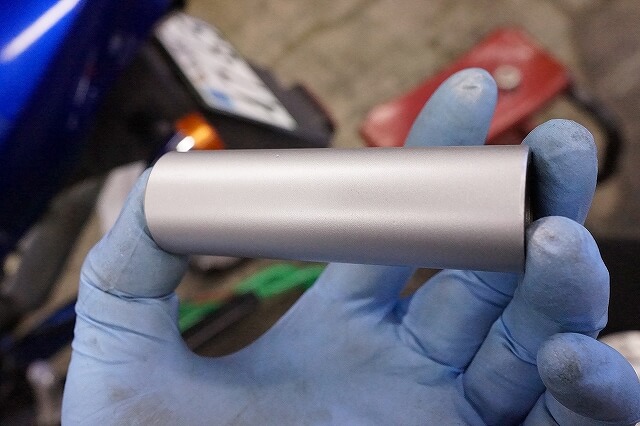
If we’re going to protect against rust, I’ll coat it. Then I’ll record the date and dimensions and put it back in.
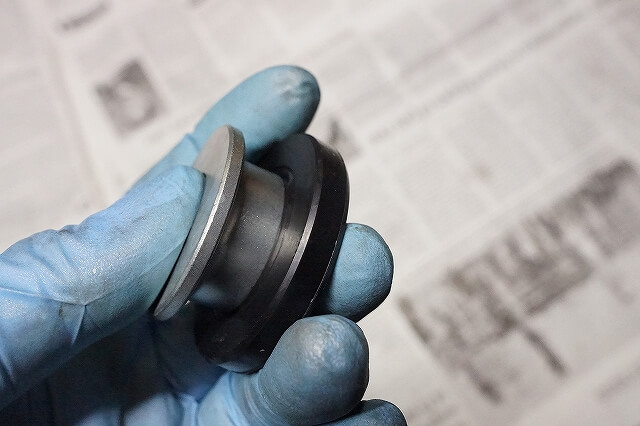
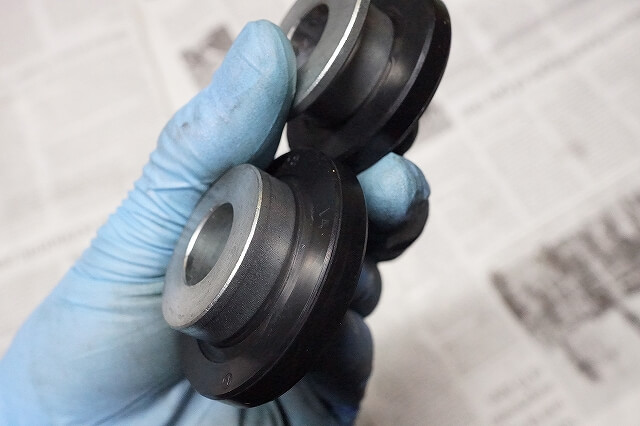
Wheel collar and oil seal. The design is old, I think. Compared to modern ones, the action is very stiff. Without lubrication, it’s so stiff you can barely turn it by hand.
For rain use or off-road bikes, it’s different, but for road use—and we don’t ride in the rain unless we have to—rubber seals on bearings will wear down to just barely hold the collar in place.
Rubber is tougher than you’d think, but ‘wear marks’ mean the seal and collar are wearing down. A stepped collar is really frustrating to see.
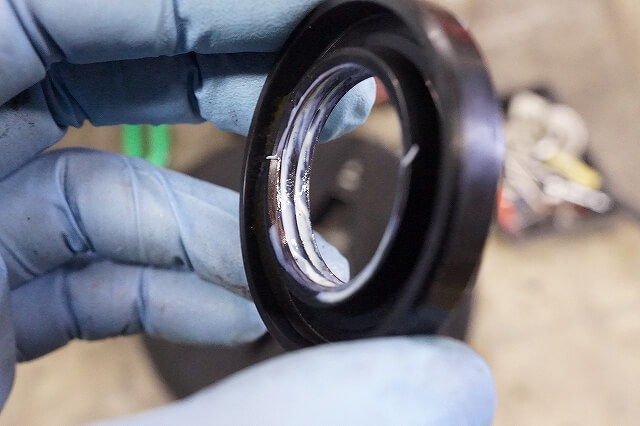
I think it’s good to apply a bit of oil to keep both working smoothly. Something like NC100 that’s easy to manage for degradation, doesn’t string, and doesn’t get sticky—that’s ideal.
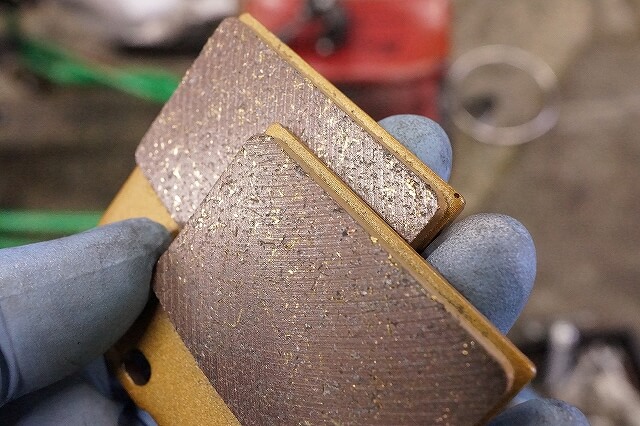
If the disc is new, it’s better not to chamfer the top and bottom edges. It tends to wear in a weird I-shaped pattern. There’s no need to force it. But if the disc has already worn into an I-shape, then the pads only contact top and bottom, so we have to chamfer it. By matching the current condition, we preserve the state.
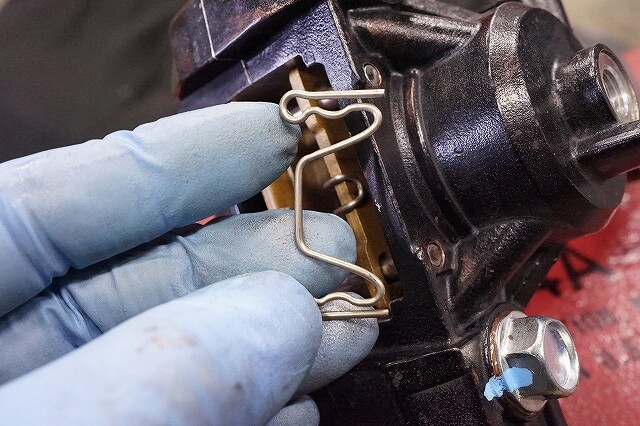
The two beta pins are a hassle, so I’ll put in the later-model pins instead.
For the rear, I think it’s better to install pad springs. I occasionally see bikes without them that have severe pin wear.
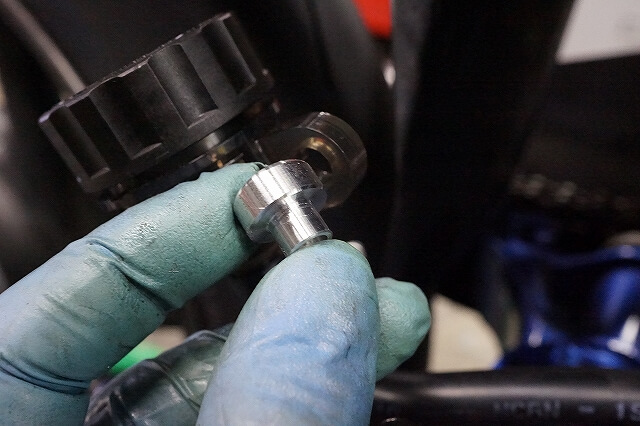
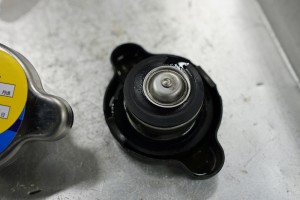
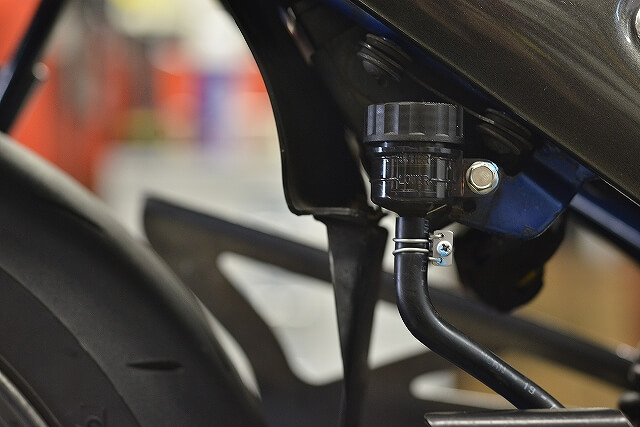
The tank is falling apart, so we need to replace it. Keeping the OEM one as-is wouldn’t be interesting, so we’ll swap it for an H2 tank. The main benefit is improved visibility. You can also see the fluid degradation and dirt condition much more easily, which is really nice. I wish the coolant reservoir could be transparent too.
It contacts the back, so I’ll create a collar on the front. A design where the bolt comes out and the rear collar falls off is a bit disappointing, so making it stepped improves serviceability.
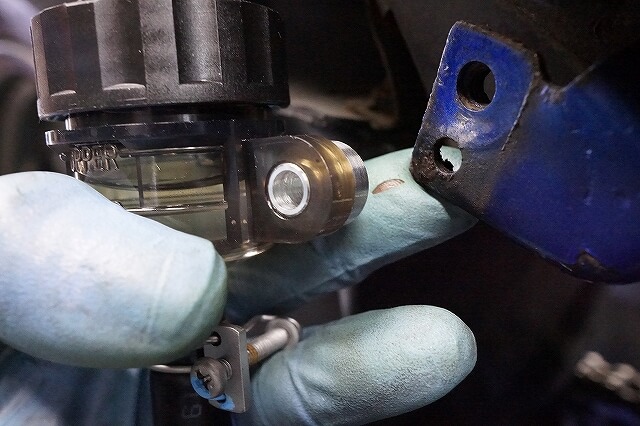
Easy peasy! If you build it up piece by piece, it becomes a really clean, light, easy-to-ride, and cherished bike.
That completes the work.