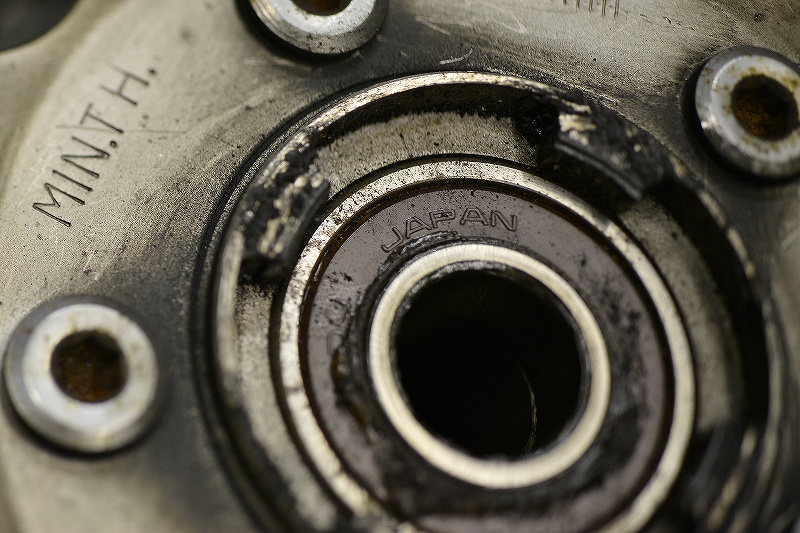
When it’s time to replace wheel bearings: does it feel gritty when you spin it by hand? Is it unusually stiff? You might not encounter symptoms that severe very often.
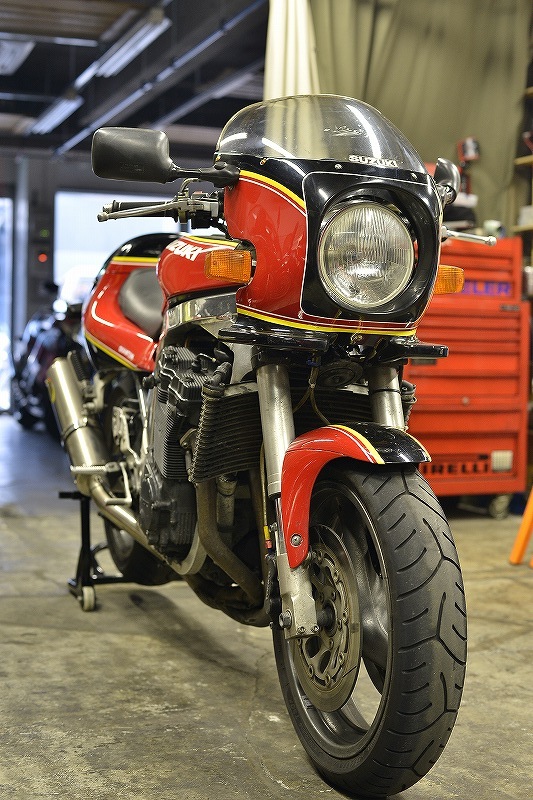
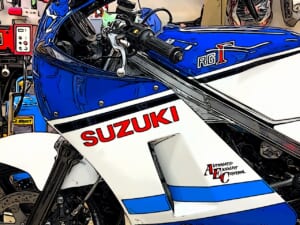
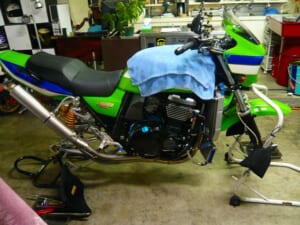
This is a GSX-R1100 that recently passed inspection.
The requests included inspection, wheel bearing maintenance, fork oil, Newtech oil change, clutch release overhaul, speedometer check, and Brembo master cylinder installation, among other work.
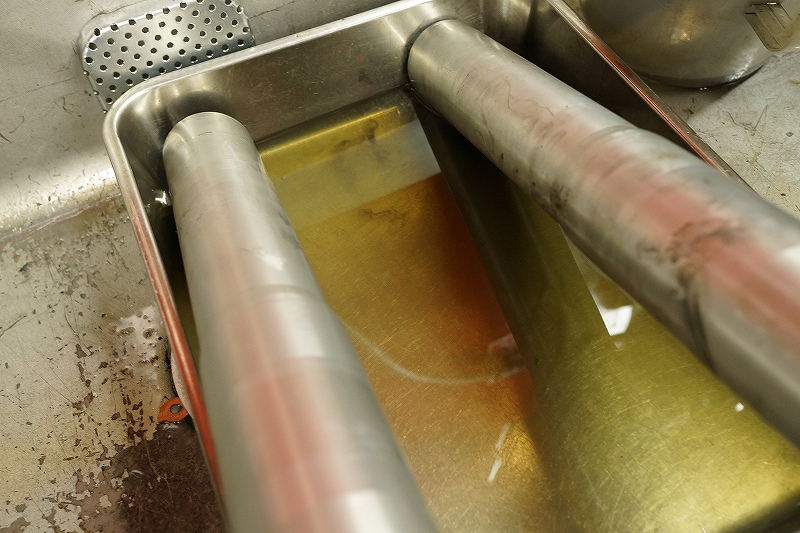
The fork oil is clean—I was relieved to see that. We’re filling it with ASH fork oil.
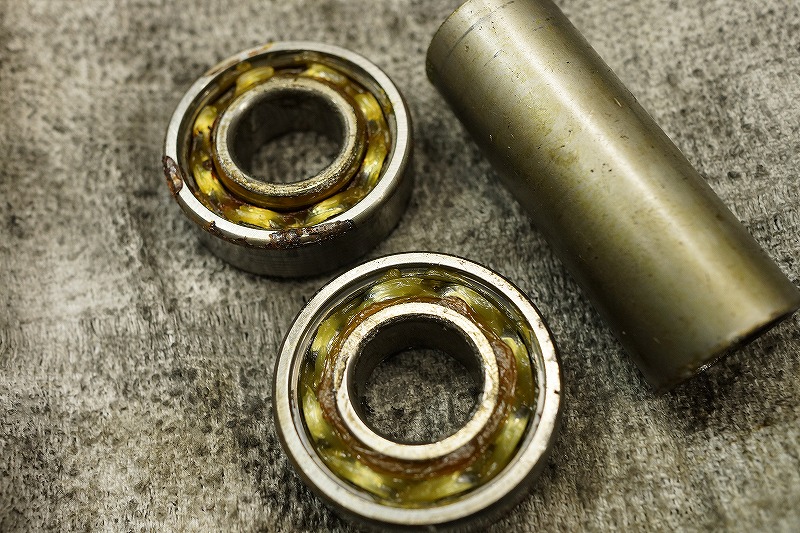
First and foremost, the secret to longevity is making sure the grease doesn’t run dry.
Once the lubricant is depleted, failure can come surprisingly quickly.
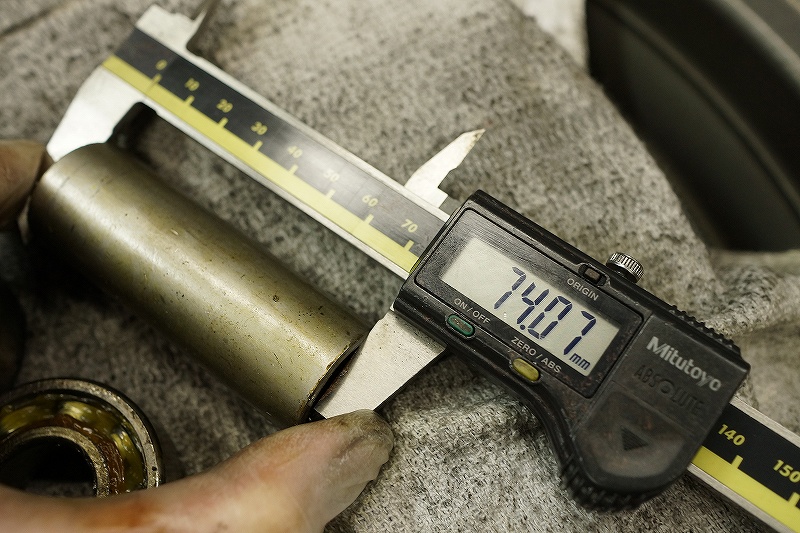
The distance collar finishes with pretty good precision, so if measurement reveals any issues, adjustment is essential.
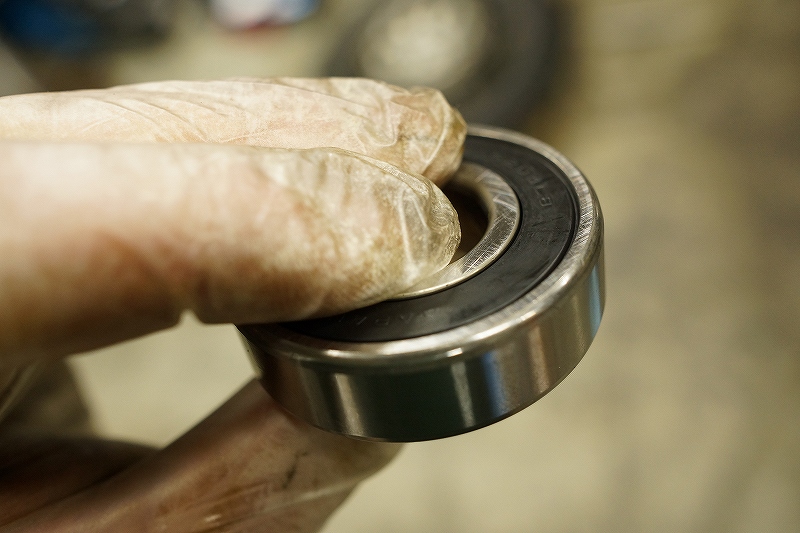
If you feel the play between a new bearing and an old one, you’ll be amazed at the difference. That’s play from wear on the race and balls.
Be aware that some racing wheels are precision-engineered to increase play in their bearings.
Even on stock bikes, large bearings inside the sprocket hub take considerable load and can end up quite loose.
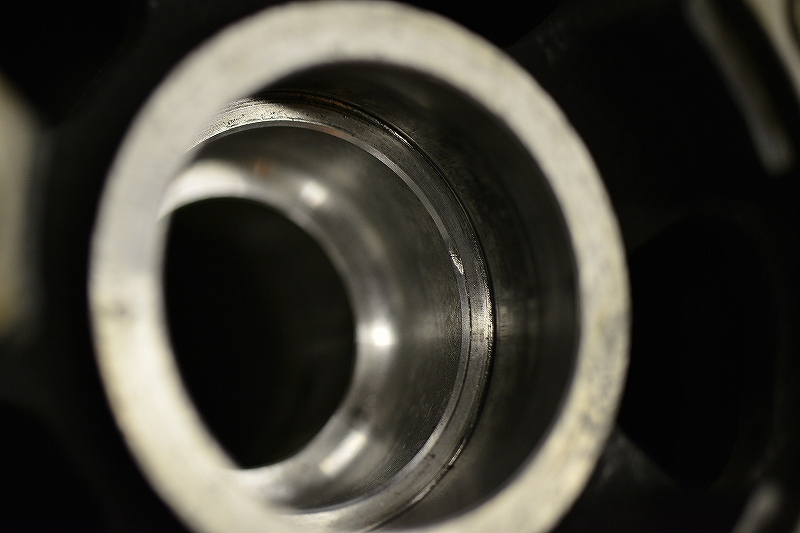
Different manufacturers have different standards for the direction of press-fitting, so consult the manual.
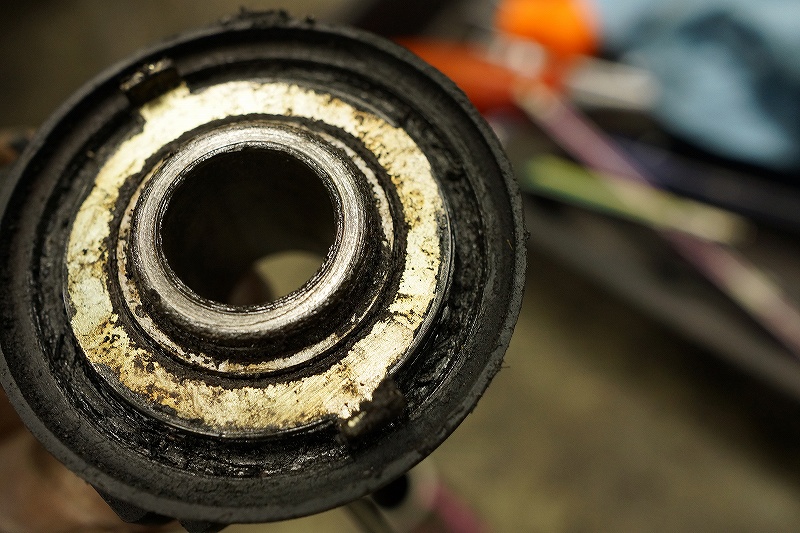
Everything is covered in grease everywhere. It serves no purpose and just looks messy and dirty.
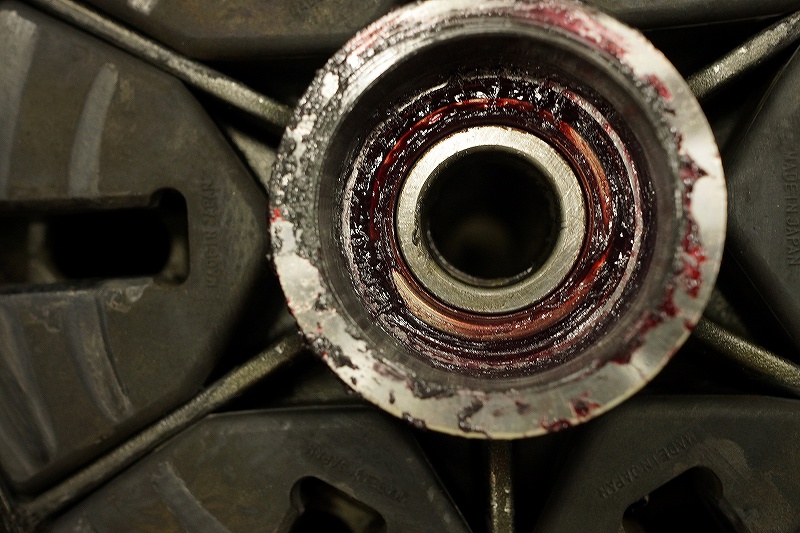
With so much grease, it’s a lot of work to wipe it all away. Let’s stop wasting lubricant.
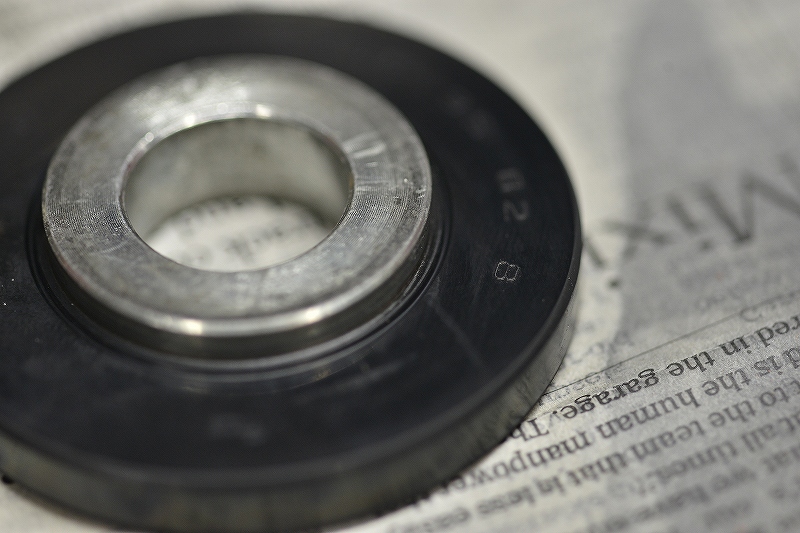
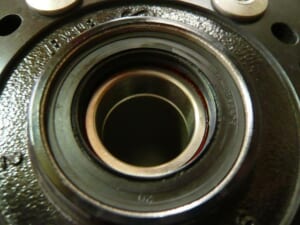
Try spinning this by hand to check it—you’ll be surprised how stiff it turns.
You might say that’s what seals do, but this seal isn’t meant to prevent liquid from flowing out from inside.
It serves multiple purposes: waterproofing, dust protection, and maintaining the race.
Modern bikes have really excellent seals these days.
Of course, we fit the bearing after breaking in the race to keep the race from wearing down unnecessarily, and we use it that way. Small improvements add up to great results.
Replacing bearings doesn’t automatically give you 100% performance.
With wheels, there’s adjustment room provided by the distance collar.
Using that adjustment room to install the bearing in its sweet spot might lead to better results.
Of course, once break-in is complete and the race is seated, that’s when you get the best performance, and that good condition should last a long time.