Replace the pads, change the fluid,
change the fork oil,
and change the engine oil.
All the fluids get replaced.
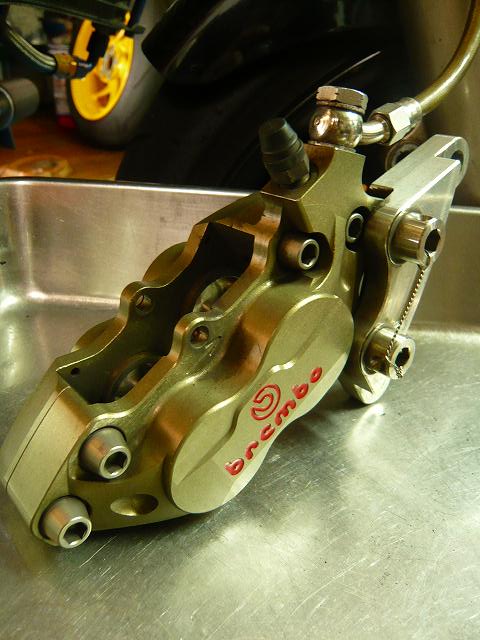
It’s caliper cleaning time.
It’s a tedious job, but doing it once in a while is a good idea ☆
Just cleaning doesn’t cut it, I think.
There’s a big difference between people who clean frequently and those who only clean when they change pads ☆
For frequent cleaners, "neutral detergent" and such should work fine,
but most people only do it ● when they change pads.
For really dirty ones, we clean them with alkaline detergent and hot water.
Since it’s powder detergent, you can adjust the concentration ☆ If you make it too strong, the paint will thin out, so be careful.
Don’t soak them.
If you think it’s really dirty, hot water is faster.
Boiling water will burn you, so something comfortably warm is best.
Do one caliper, then do the other one.
Note: Some people remove both pads and squeeze the master, letting fluid drip everywhere.
First, make sure the outside of the caliper is really clean.
And clean the piston and rotor escape grooves too ☆
A toothbrush works, but a cylindrical brush is pretty handy.
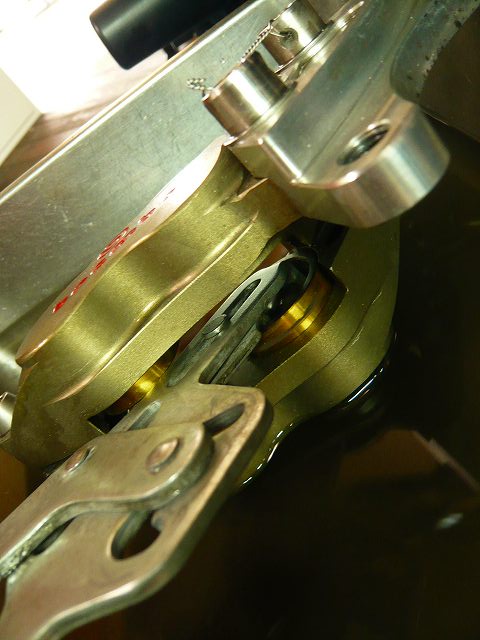
Once you’ve finished cleaning everything, squeeze the master to push the piston out a bit and wash the piston again.
There’s still debris on it.
For the parts you can’t see, gently rotate the piston with a piston tool—the back side tends to accumulate a lot of debris—
so please clean it thoroughly.
Inspect the piston visually. Even aluminum or titanium pistons can lose their surface treatment and develop step wear,
which is bad ☆
For iron or plated pistons, remove any rust. Wet sandpaper works, but it’s very soft,
and brass brushes are sold, so gently remove the rust ☆
Some people do endless air blowing to dry, but that’s a waste of time—just wipe it with a clean cloth.
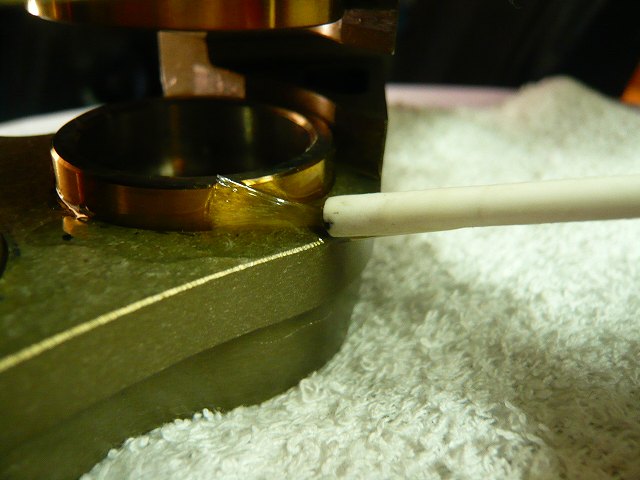
Then lubricate the piston with metal rubber to establish contact between the piston and seal, and work it back and forth.
All four won’t move at once, so keep pushing out the stuck spots and retracting to establish contact
and break them in. Moving and working them in really helps!
If the return is light and smooth, that’s good. If the return isn’t smooth, you’ll probably need a seal replacement and
caliper body cleaning.
Wipe off the metal rubber thoroughly, and cleaning and working are done ☆
Don’t soak the pads in water—use air blowing or a dry toothbrush to remove dust, then chamfer the edges.
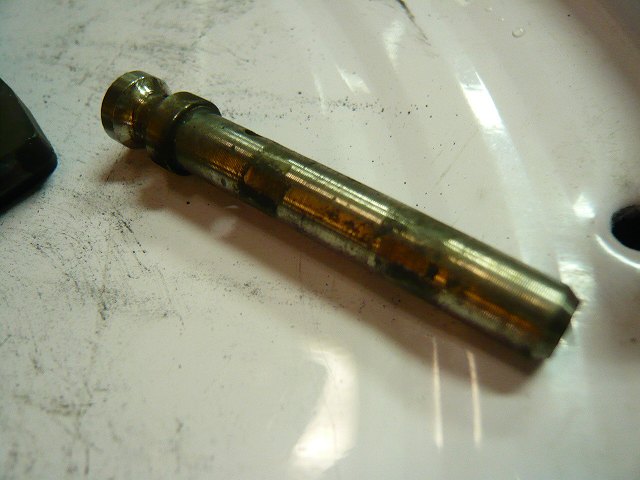
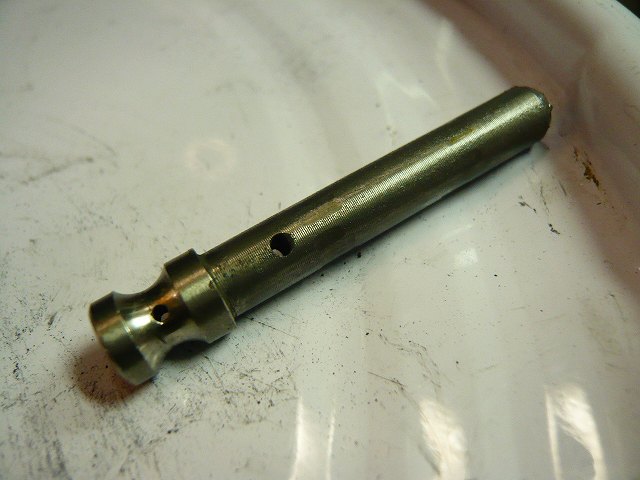
Next, check the pad pins—they wear surprisingly fast, so replace any with severe step wear.
If it’s just dirt, polish them and apply a thin coat of heat-resistant grease for rust prevention.
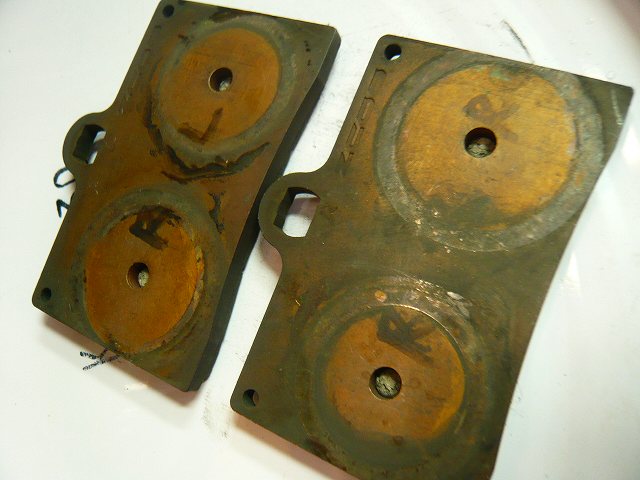
Pads are a pair, so put them back in the same spot ☆
Can’t remember which goes where? For dual-diameter piston calipers—
look at the back and check the piston push marks, and you’ll see right away ♪ You can mark it with a marker too.
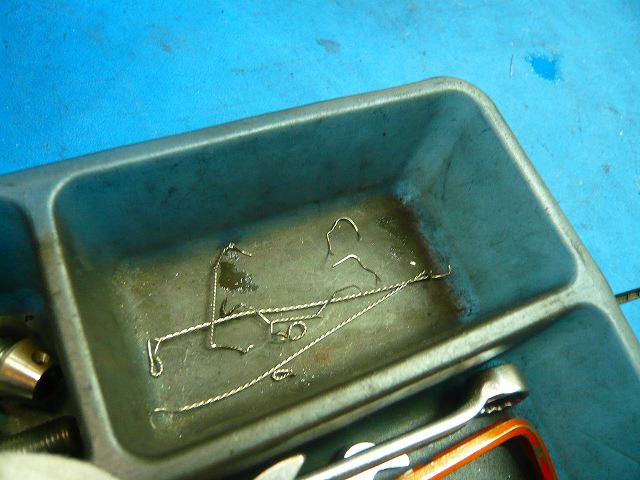
Leaving cut wire rings on the ground is really inconsiderate ☆
Even if you blow them away or lose them, always pick them up and throw them away.
This stuff actually causes flats.
Then reverse flush, clean the rear, change the fluid—
and cleaning the rotor with brake cleaner makes it even better.
Man, what a tedious job…
Since it’s brakes, be careful and do it if you can.
Check first, check second ☆ It’s dangerous.
Yum.