Caliper cleaning, pad pin, piston check & lubrication, pad beveling, fluid replacement
Diaphragm check.
Brake calipers have many inspection points.
Pad pin.
The pad pin hooks the pad and guides it along its path (in the piston’s direction of travel).
The pad is held in place before and after it enters.
Here we check the pad pin for wear (no step wear), clean it, and apply a thin coat of molybdenum grease.
(On calipers that see very heavy braking use, the body itself wears down, so this needs checking.)
Next we clean the body and then clean the caliper piston.
If the iron piston has surface rust, we clean it off, washing all around it.
There are parts of the body edge that aren’t visible, so rotating the piston helps here (requires tools).
If the seal is damaged, there’s a risk of it protruding, but that means the seal is degraded—a problem.
So replace the seal.
Contact marks form between the caliper piston and body, so rotating it helps even out those contact points.
(This is something a brake engineer from a certain B-brand taught me.)
Once thoroughly cleaned, apply a thin, even coat of metal rubber and work the piston in and out.
Squeeze it a few times and it should come out smoothly, and return smoothly by hand (never use tools to push it back)—and you’re done!
Bevel the pad, install it in the spot you removed it from, and you’re finished.
Sometimes people plop the pad in and lose track of where it goes, but nowadays they’re different-diameter four-piston calipers, so if you look closely you can see the piston
marks are different sizes—that’s how you check. (Ideally, do this as a team.)
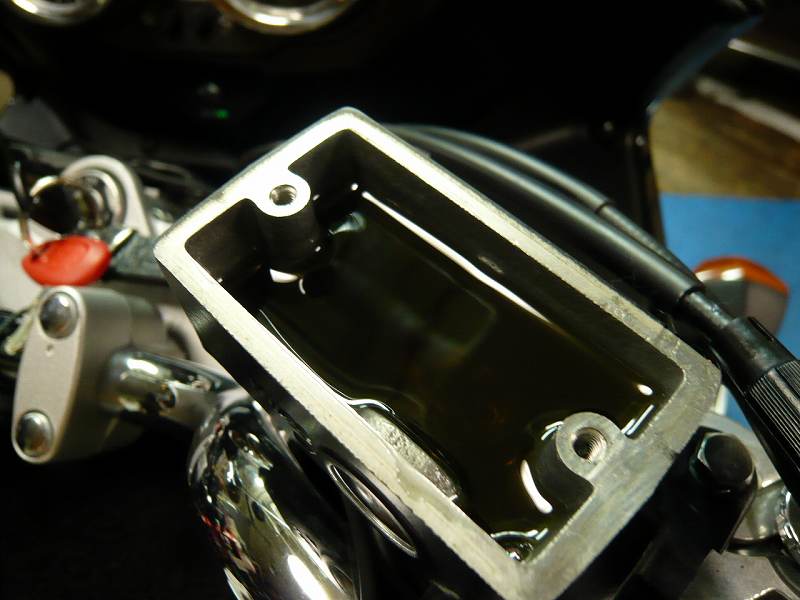
Once both are done, replace the fluid. Suck out the fluid in the cup with a vacuum, then use tweezers and
paper towels to wipe the inside.
Pour in fresh fluid and bleed from the bottom—done.
Fluid tends to stay in the nipple area, so if you don’t do this right, it’ll seep from the nipple threads.
This is just residual fluid, so be thorough.
I could explain everything, but to keep it brief, we service the bike this way and
also check the spark plugs, air cleaner, synchronize the carburetors, and adjust the idle.
You’ll definitely feel the difference in how smoothly the bike runs and how stable the engine is.
Nyorori