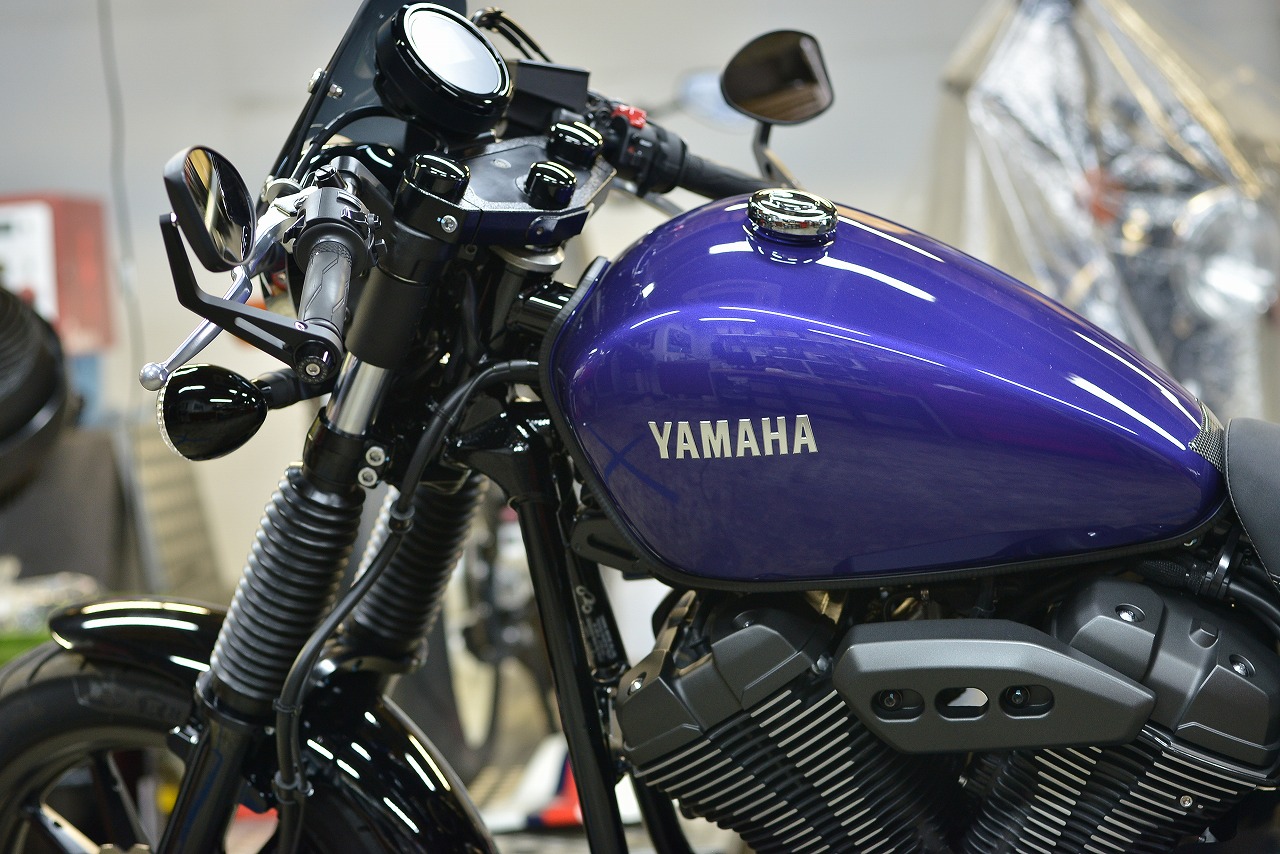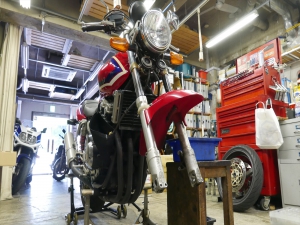
MT-01 Deco-mainte request. Since we have limited time, we’ll just work on the front end for now.
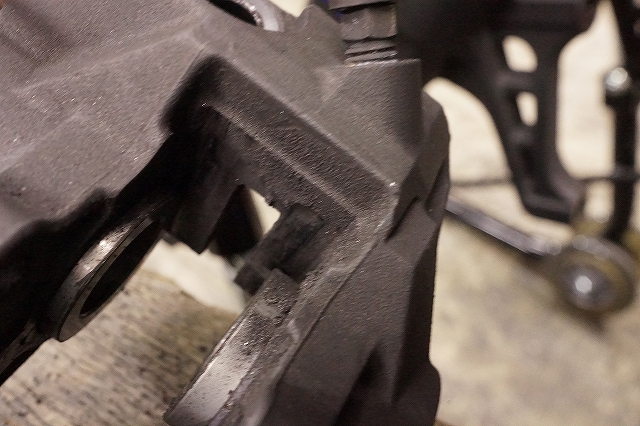
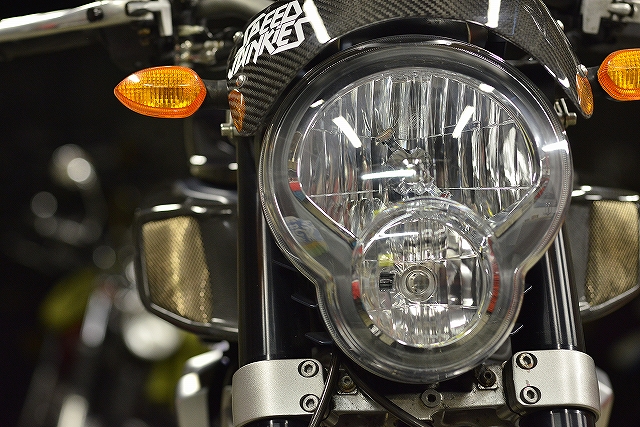
The ZEISS lens has mediocre autofocus. I really want a compact camera these days.
Starting with caliper cleaning. Quite a bit of dust has accumulated.
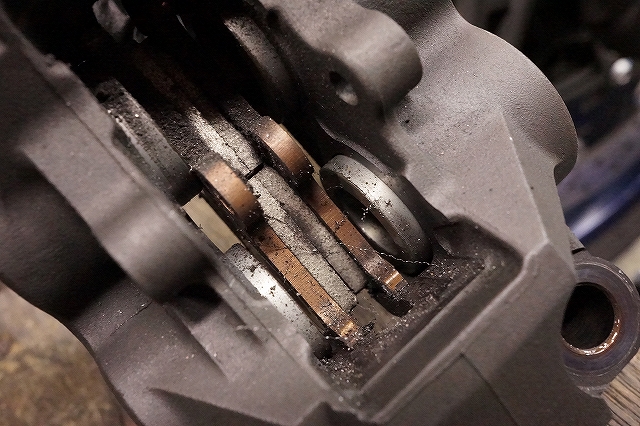
Both left and right have debris that looks like cut glass. Did you use a drill nearby?
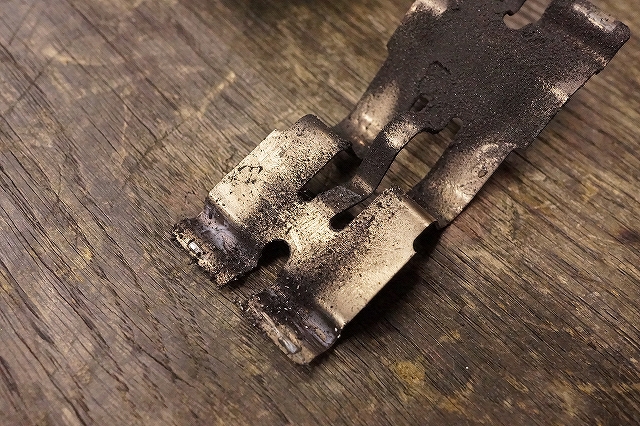
The contamination looked like this. The piston operation seems to be in excellent condition.
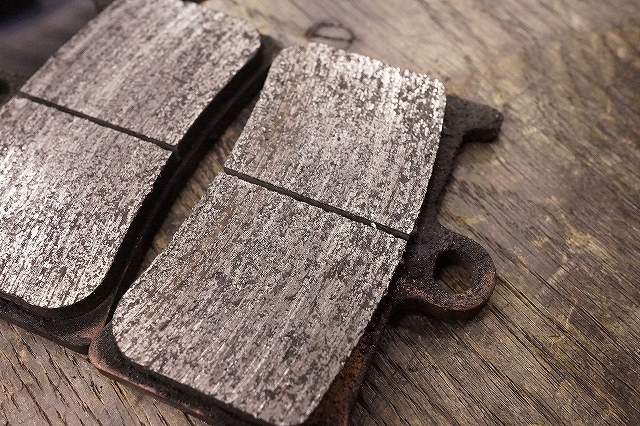
After replacing the pads, the handling became heavier. Indeed, they were just replaced.
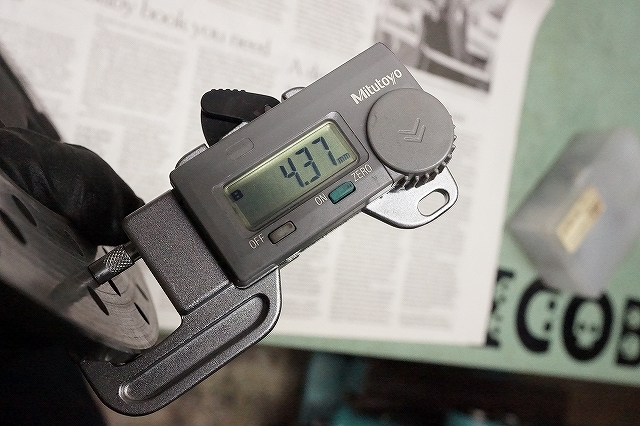
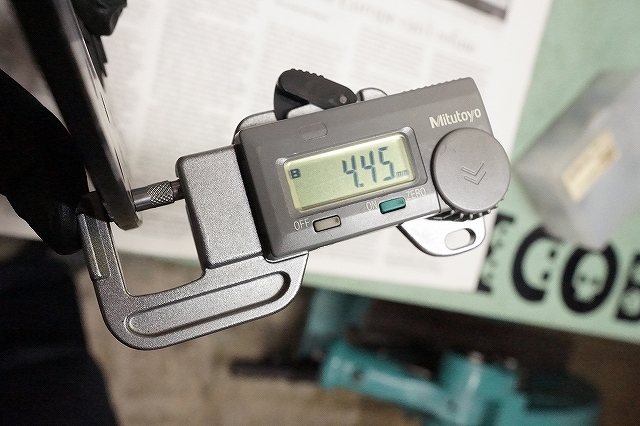
In a rough measurement, as the brake disk wears, its thickness varies depending on location.
That’s natural since the speed differs.
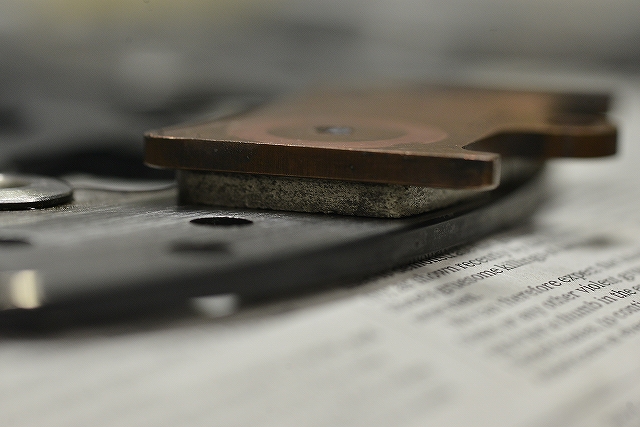
And the disk surface doesn’t make full contact. There’s always excess material top and bottom. As the disk wears, a step develops that causes problems.
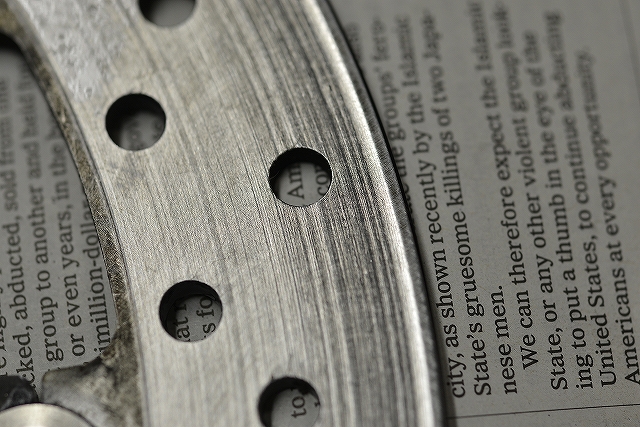
There’s a noticeable step that anyone can see. When you use new pads on a worn disk, they don’t make face-to-face contact. I think it’s best to adapt to the current condition.
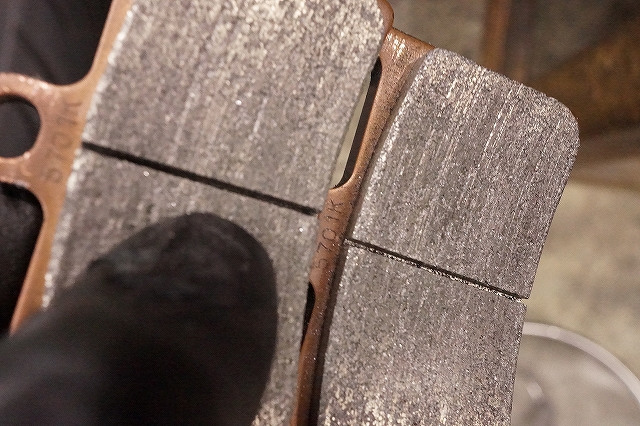
With new-to-new, we don’t chamfer, but with new-to-worn, adapting to the current condition helps the pads bed in faster. I’ll just slightly reduce the top and bottom edges. If we remove too much, the disk’s step wear becomes severe, so matching the current state should reduce any odd feeling.
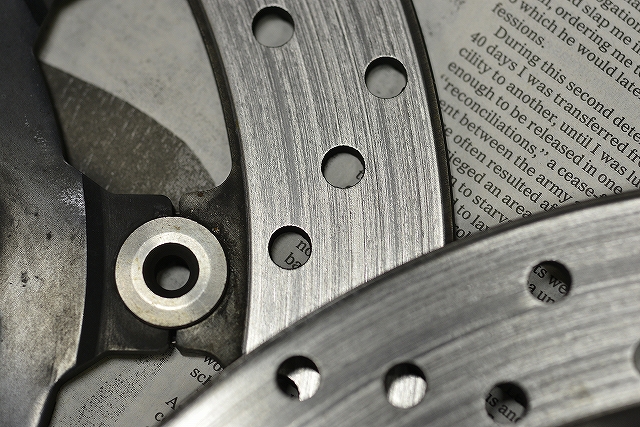
We’ll check while replacing the disk bolts. It’s quite rough.
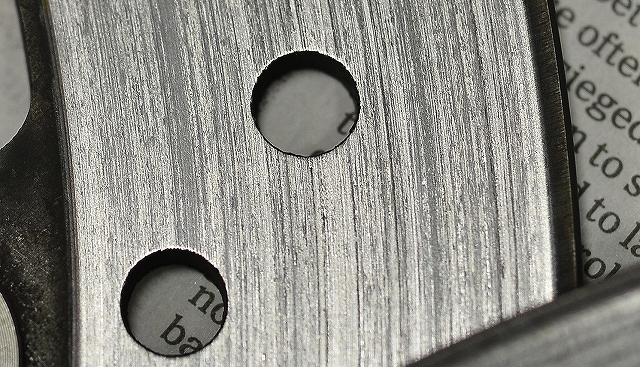
Here’s a 1:1 view. Unfortunately, it looks like lathe work.
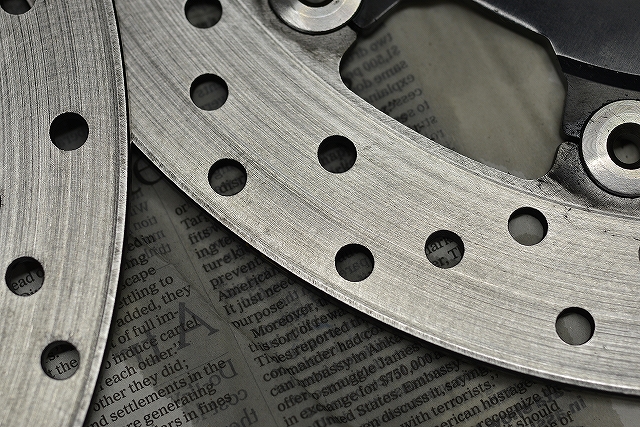
I lightly polished the face. We didn’t go deep enough to expose the honing marks.
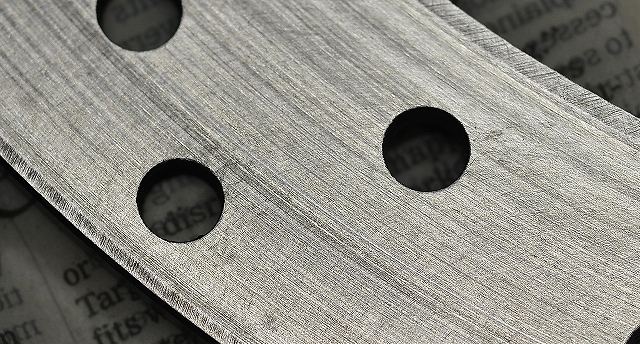
Here’s a 1:1 view. It’s much calmer now. We stop here since there’s no end to it.
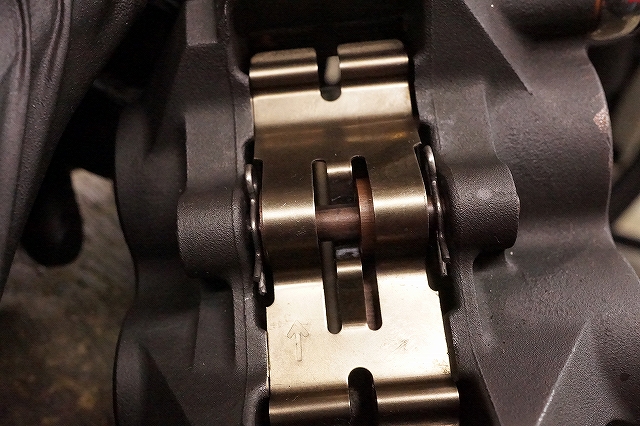
Whenever possible, install the retainer pin pointing upward. Even a 1% increase in safety is important.
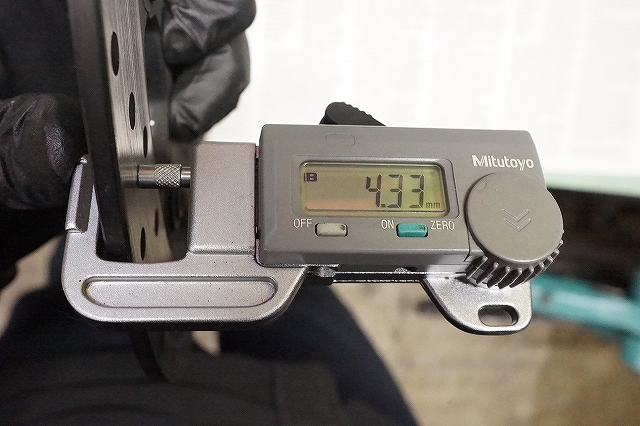
After polishing. We didn’t measure the same spot, but overall thickness is probably around 4/100 of an inch.
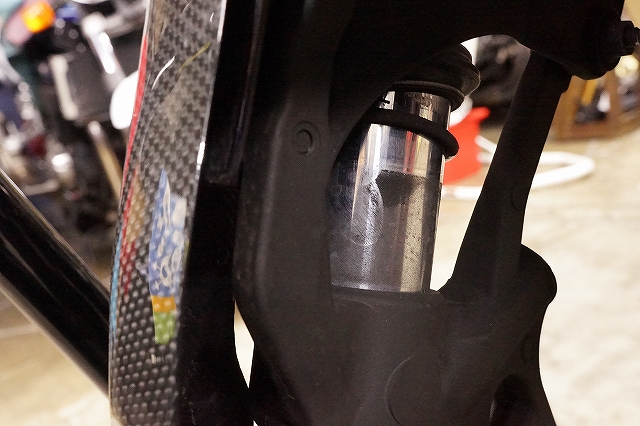
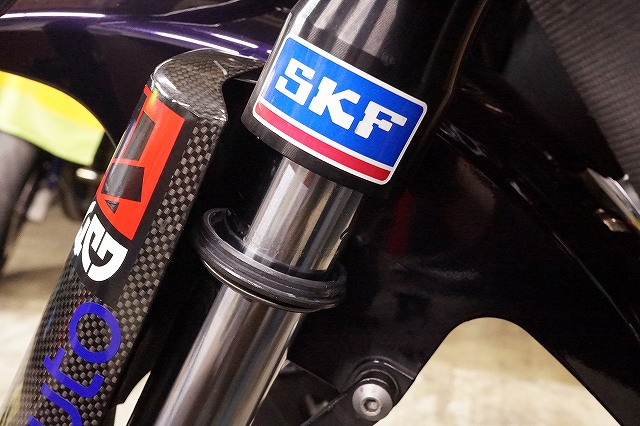
Inner tubes last much longer with just a little oil and cleaning.
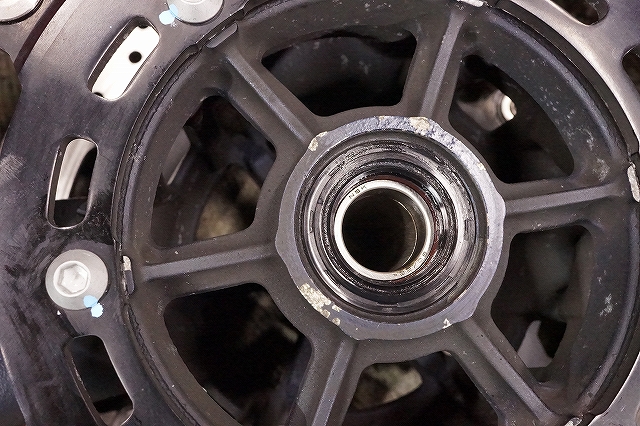
The wheel bearings are fine.
That’s all for today.