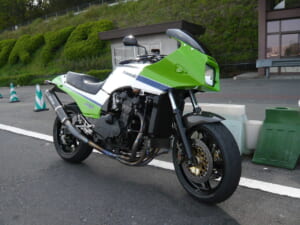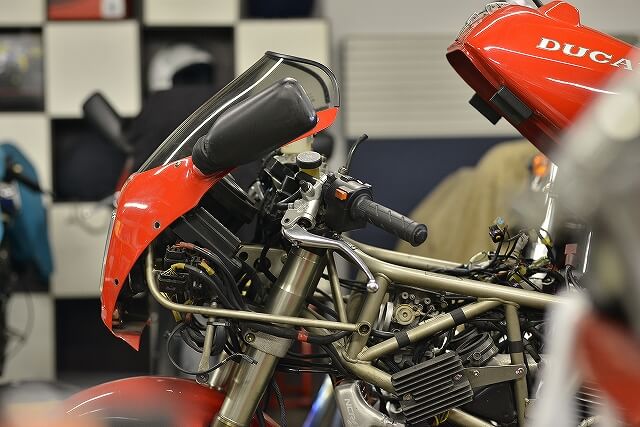
Basically, we don’t accept any work on foreign bikes. The reason is parts availability, whether manuals exist, and the concern that special tools will become essential as we progress.
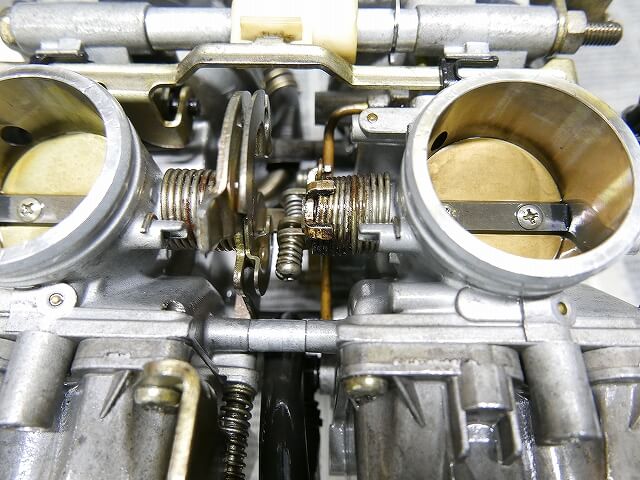
This is a BST downdraft carburettor that we’ve never worked on before.
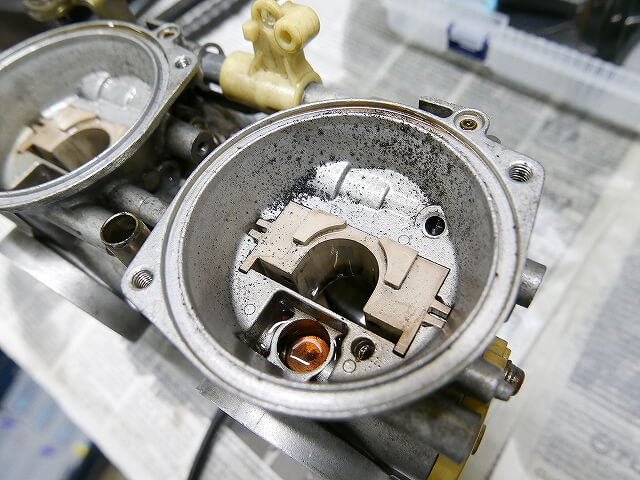
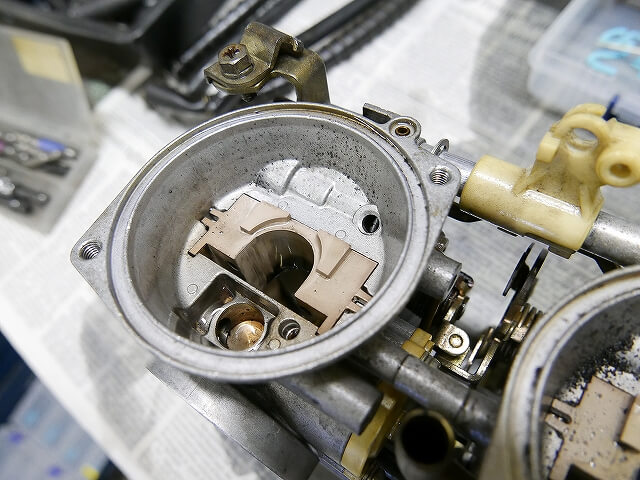
There’s a lot of debris in here, isn’t there? I wonder what it is.
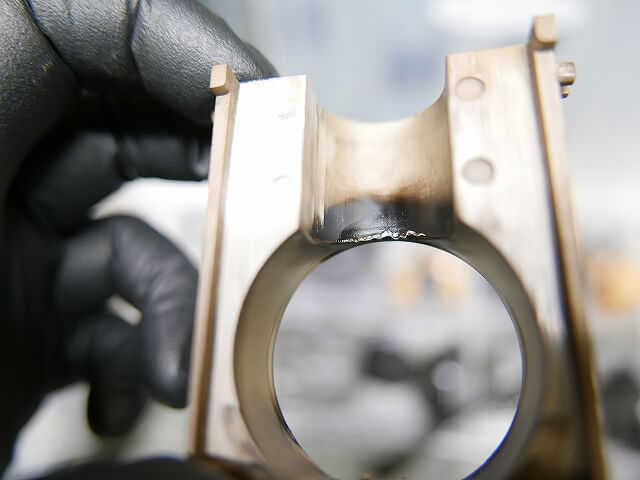
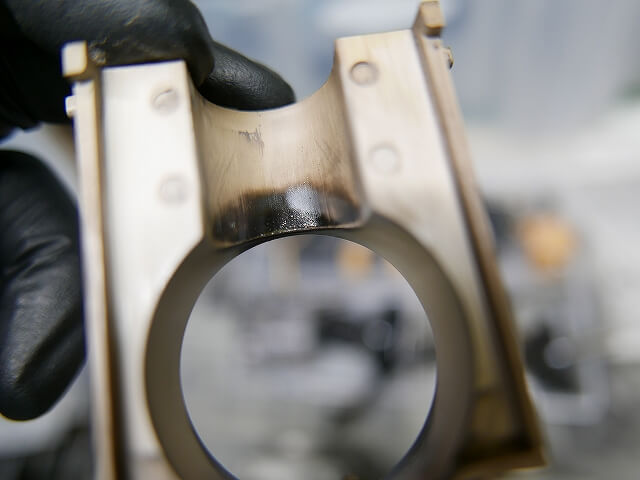
Some of it’s melted a bit…
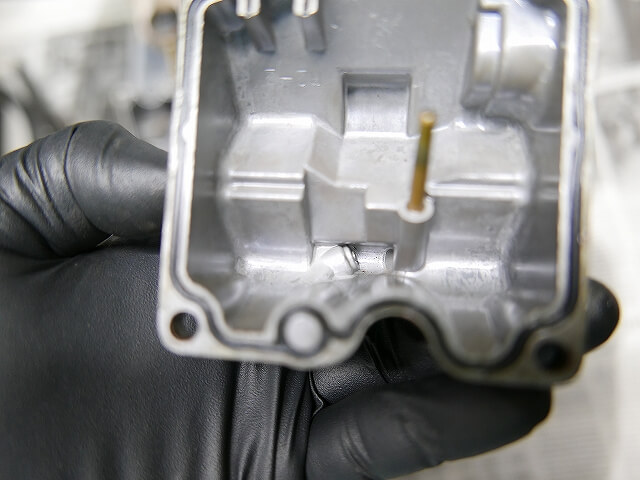
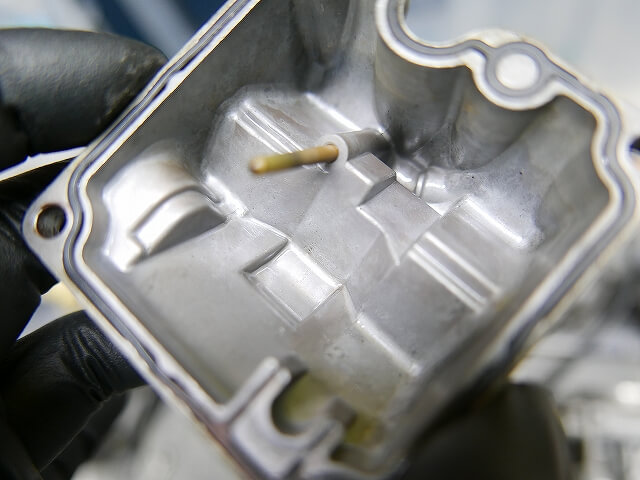
The float chamber is in good condition with no rust.
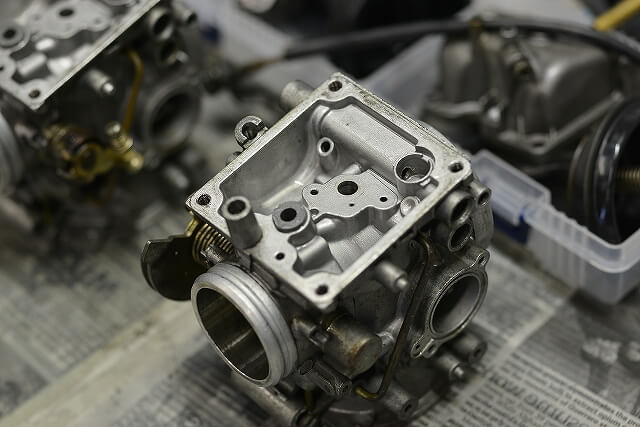
Since polishing isn’t necessary, we’ll leave the shaft in place.
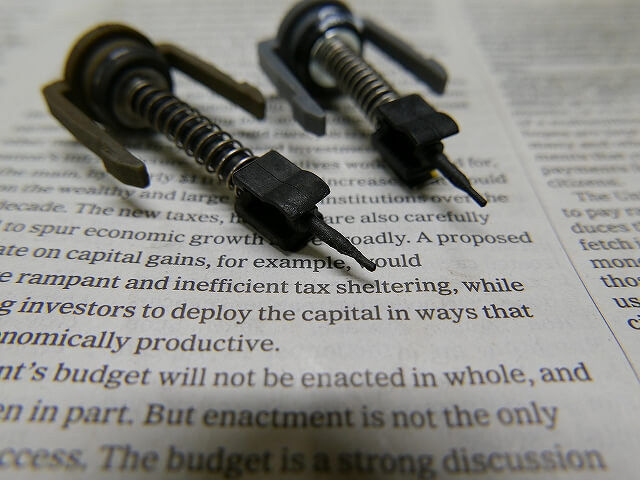
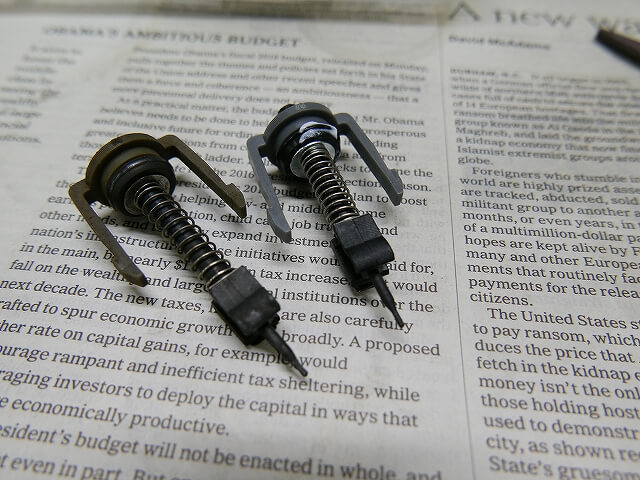
The starter valve has a shape we’ve never seen before. And it’s plastic…
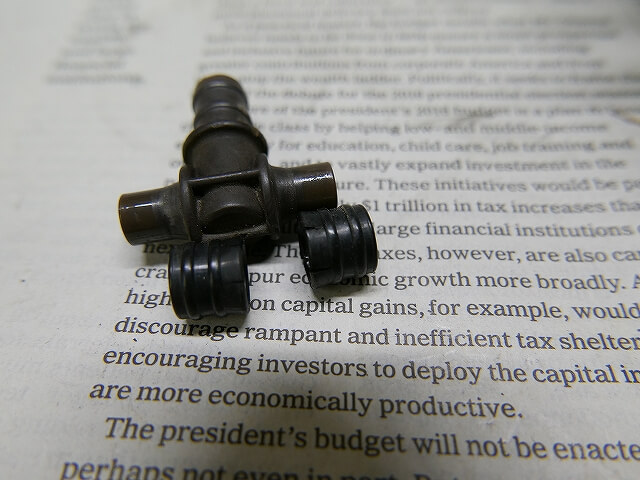
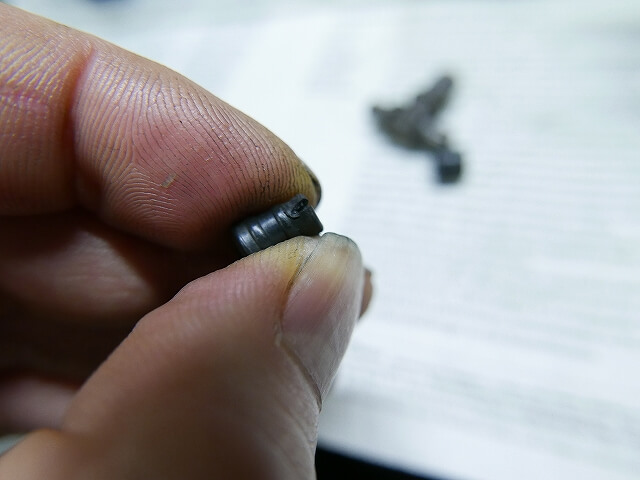
This is the fuel joint section. It’s cracked. This is where the O-ring connects, so it won’t directly cause a leak, but of course it needs to be replaced…

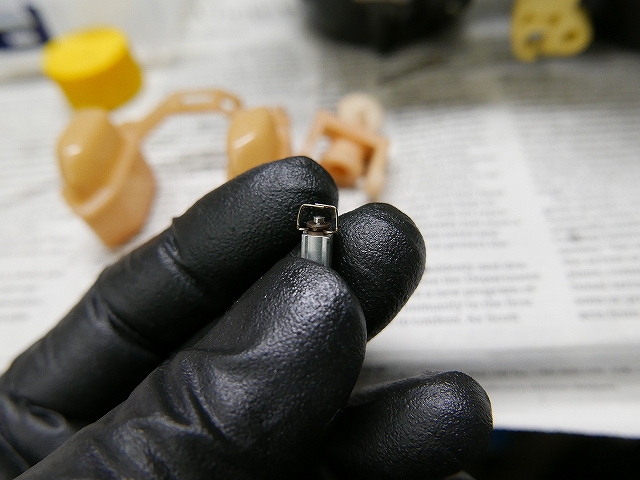
We don’t replace the float valve very often. We keep using it as long as it hasn’t worn down to a step, or if the spring action on the pin inside the float arm isn’t acting up.
But we do need to check it. Overflow is sometimes caused by the float valve, but I think it’s more often something else.
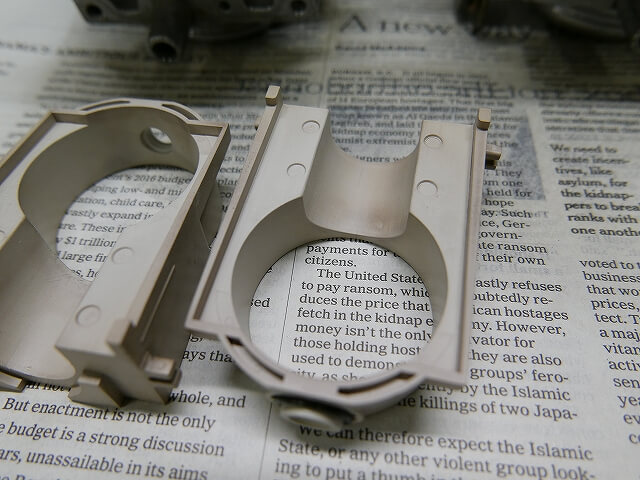
The plastic can be polished too. It came out nice and clean.
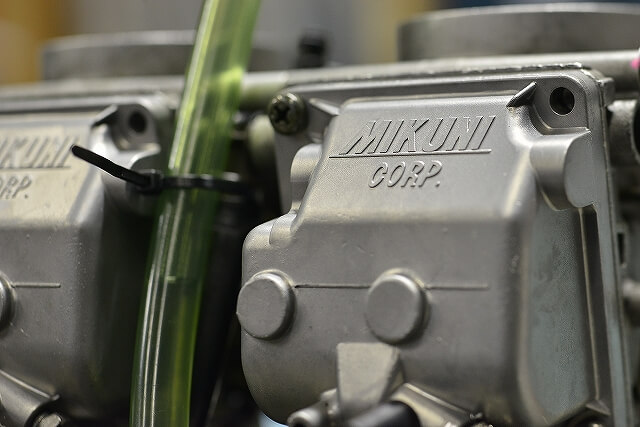
We also polished the float chamber. We checked the fuel level and adjusted it left and right.
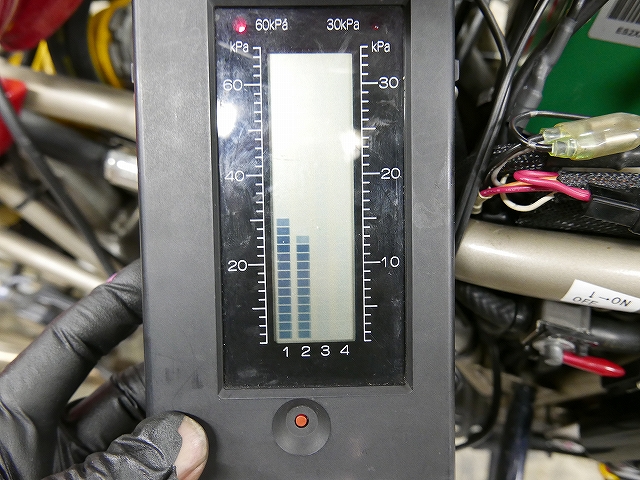
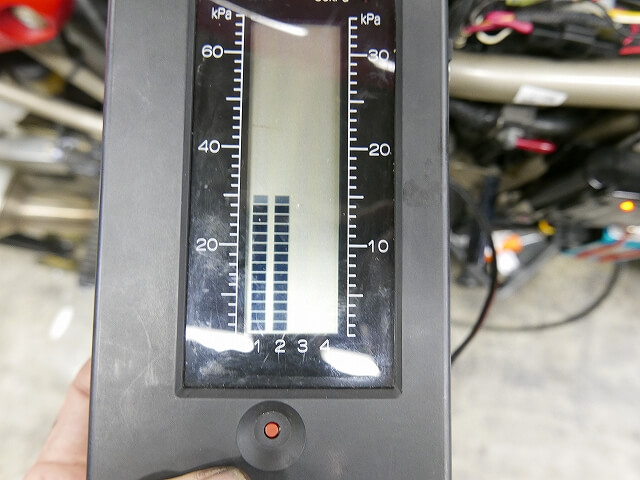
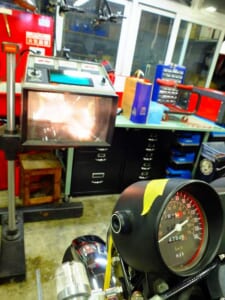
Let’s synchronize them. During adjustment, the front bank was leaking current and it hurt.
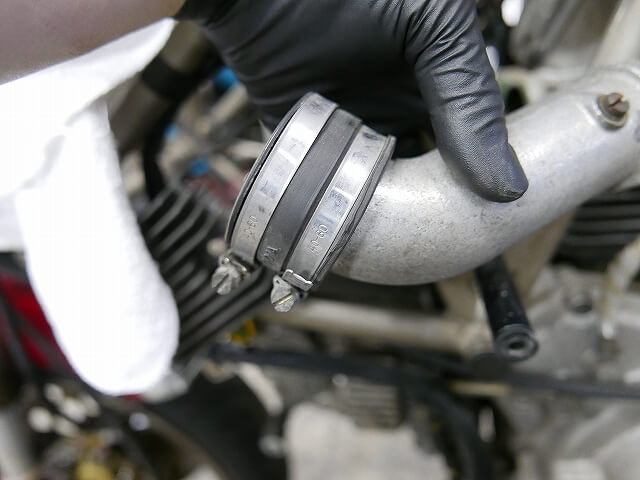
We’ll also replace the intake manifold.
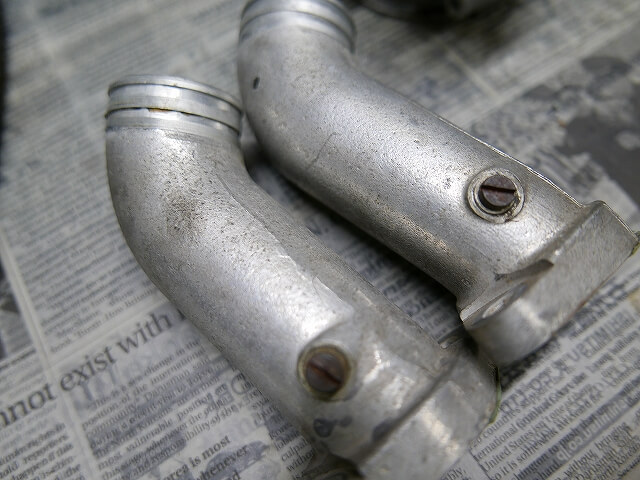
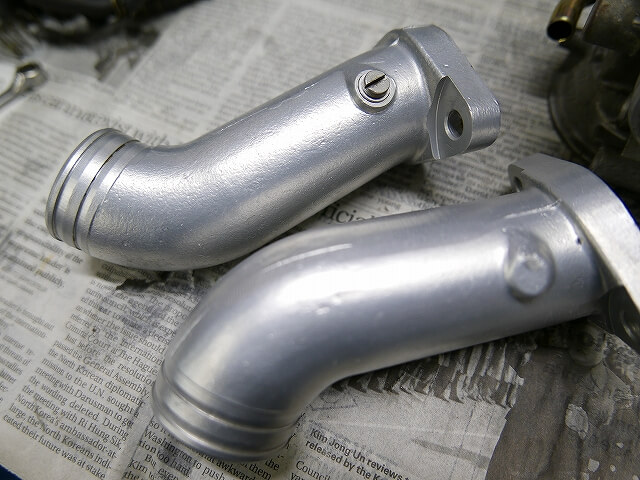
We’ll clean up the fine details too.
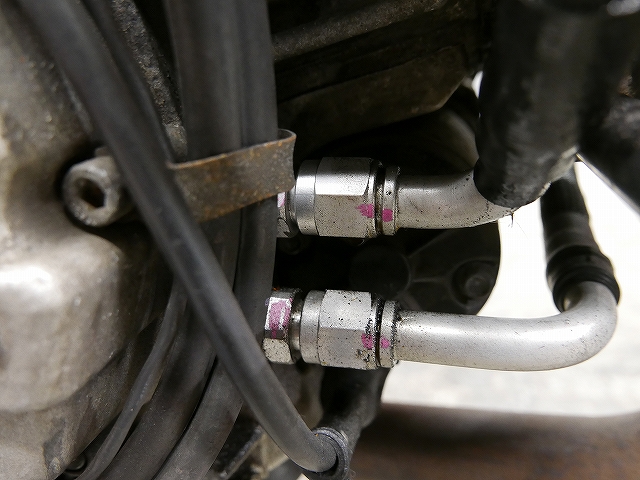
No looseness or cracks, but the line is slightly oily.
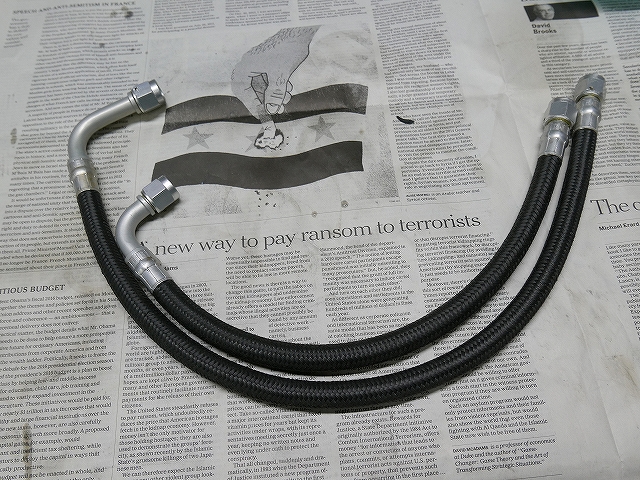
I have a new one on hand, so I’ll give it to you. I’m glad I didn’t throw it away for once.
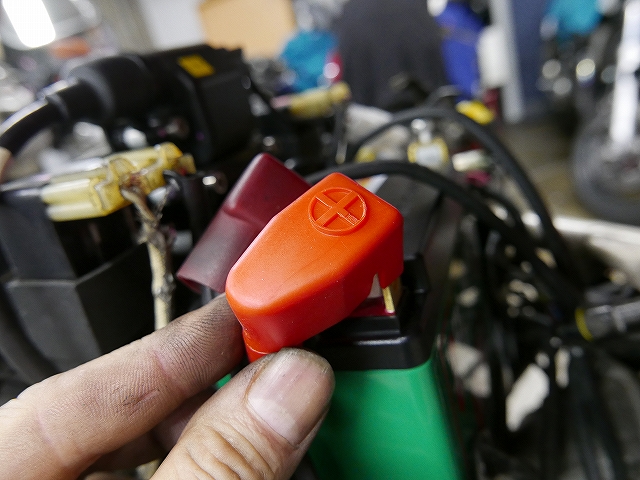
The battery positive terminal is some odd original part, so we’ll swap it for an angled one. If you take the battery positive lightly, the bike can catch fire easily, so you need to be careful.
After that, we’ll take it for a test ride and it’s done.