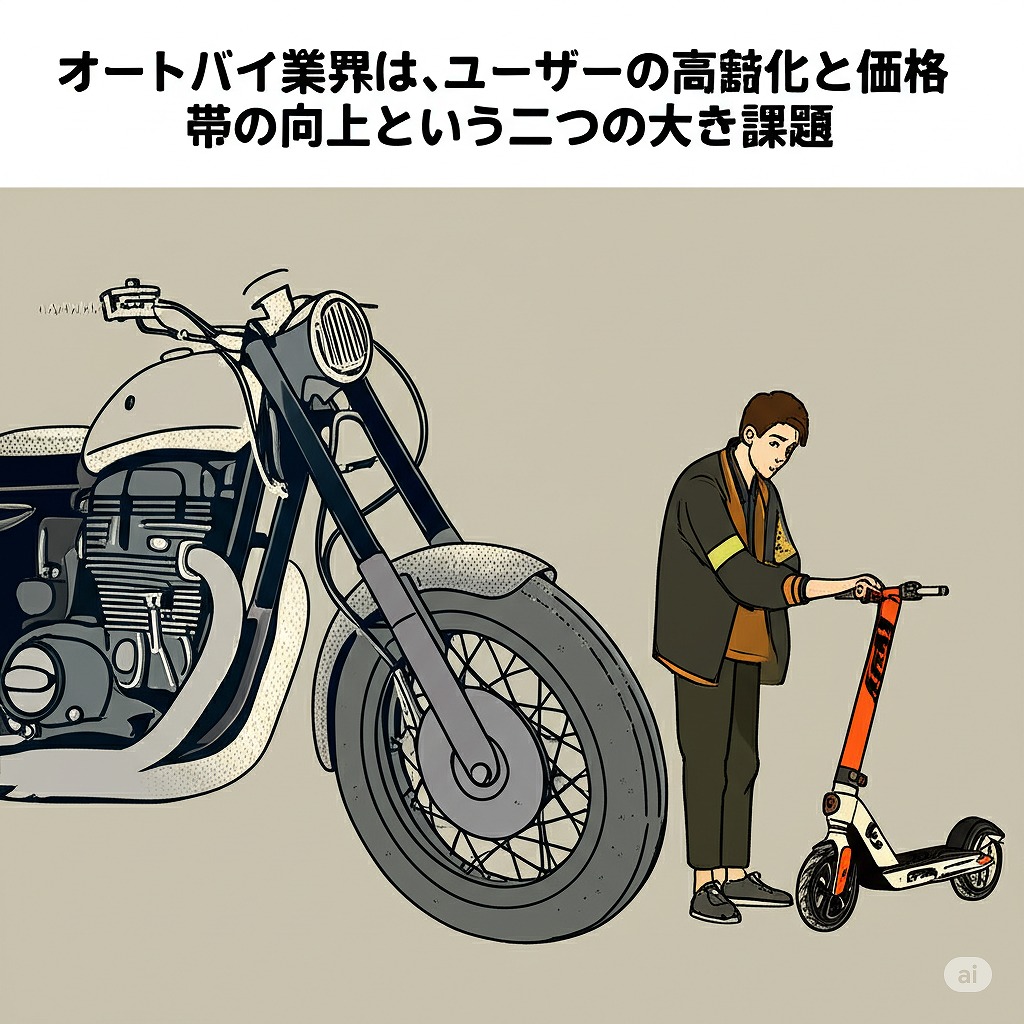
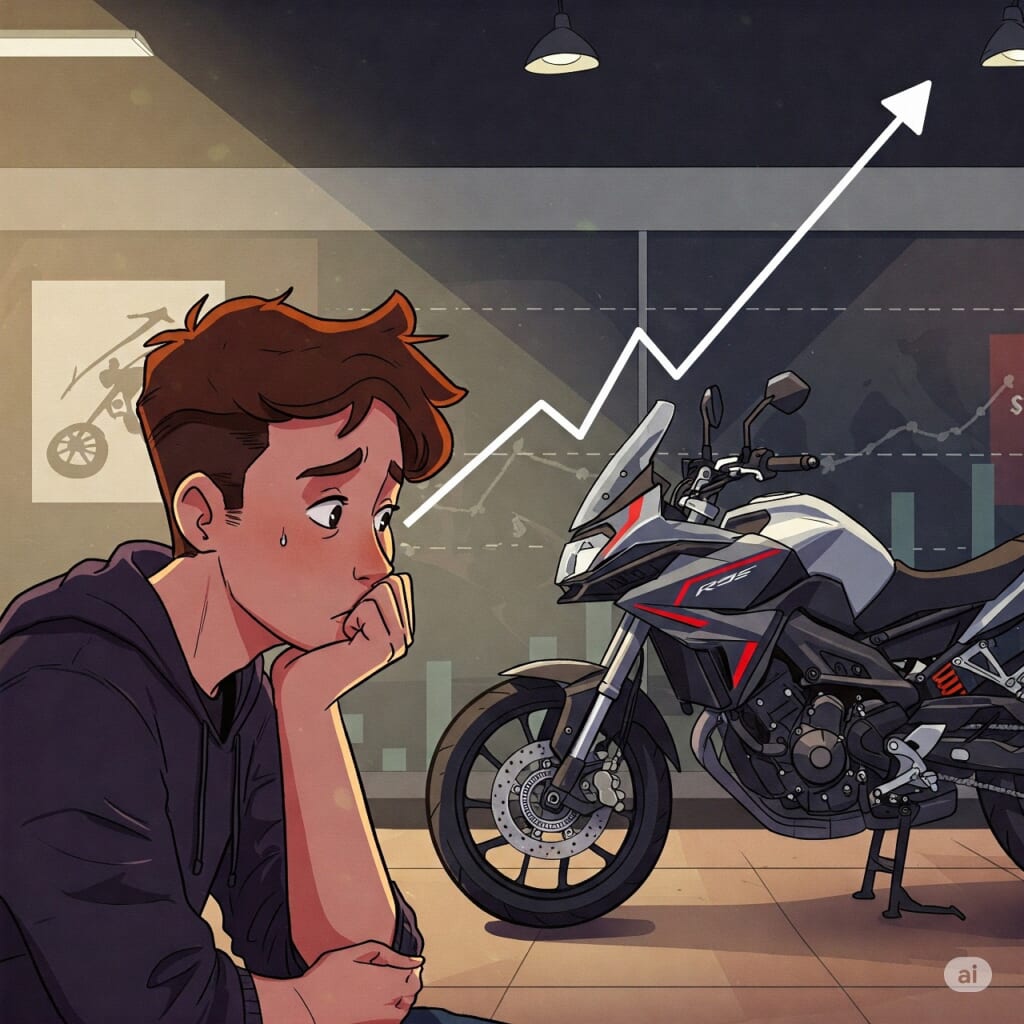
Japan’s motorcycle industry today faces two major challenges: aging users and rising price points. The situation for attracting new riders in their teens and twenties is considered extremely difficult.
The motorcycle industry needs to think ahead five to ten years and take action accordingly. Over the past few years, it seems the world has undergone significant game changes. Both talent and management take time to develop. I believe we need to work steadily on this now.
According to surveys by the Japan Automobile Manufacturers Association (JAMA), the average age of motorcycle users in Japan is on an upward trend,
and the proportion of riders under 40 remains at a low level. This suggests that the generation that experienced the motorcycle boom of the past is now the center of the market, while younger riders are increasingly turning away from motorcycles.
Impact of rising price points on younger riders
In addition to soaring new motorcycle prices, well-maintained used bikes in the secondhand market are also trending upward in price.
This becomes an additional barrier for economically constrained young riders to purchase a motorcycle. When you factor in the cost of obtaining a license, the initial investment hurdle is certainly not low.
Factors behind younger riders turning away from motorcycles
The decline in motorcycle interest among younger riders can be attributed to the following complex factors.
Economic reasons: The cost of the motorcycle itself, maintenance expenses (insurance, taxes, gasoline, maintenance costs), and parking fees become a burden.
Diversification of hobbies: With the increase in easily accessible entertainment like smartphones, games, and social media, motorcycles are less appealing.
Safety concerns: Opposition from parents and anxiety about the risk of traffic accidents.
Barriers to obtaining a license: Training costs and time requirements.
Changes in lifestyle: Population concentration in urban areas has increased public transportation use, and values regarding personal transportation have shifted.
Future outlook and countermeasures
To overcome this situation, the industry as a whole will need to implement the following measures.
Development of low-price models for younger riders: Introducing attractive entry-level models that reduce economic burden.
Proposing new value: Reducing maintenance costs through electric motorcycle adoption and providing new riding experiences using connected technology.
License acquisition support: Providing training cost subsidies and license acquisition programs for younger riders.
Safety awareness activities: Promoting motorcycle safety and reducing concerns.
Community building support: Providing spaces where young riders can interact and share the joy of motorcycling.
Expansion of rental motorcycles: Increasing opportunities to experience motorcycles before purchase.
Even in 2025, it seems unlikely that these challenges will be quickly resolved. However, if each manufacturer and related organization actively implements countermeasures, there remains a possibility of gradually rekindling younger riders’ interest and increasing new users.





 ポチップ
ポチップ