During maintenance, I discovered stiffness in the caliper piston.
Given that we don’t know when parts will stop being available, deciding on an immediate OH is definitely the right call!
So that’s how we’re getting to work MAX( ゚Д゚)
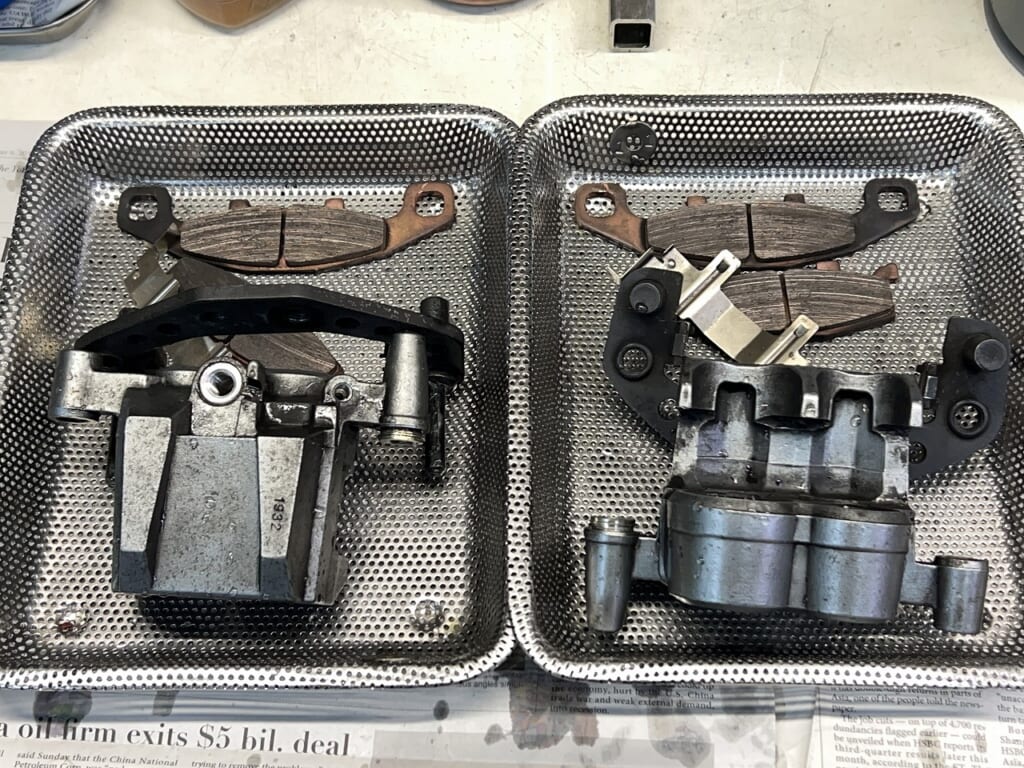
First, we’ll work on the front.
We cleaned it the other day, so it’s in nice condition. (Please forgive the grime from age.)
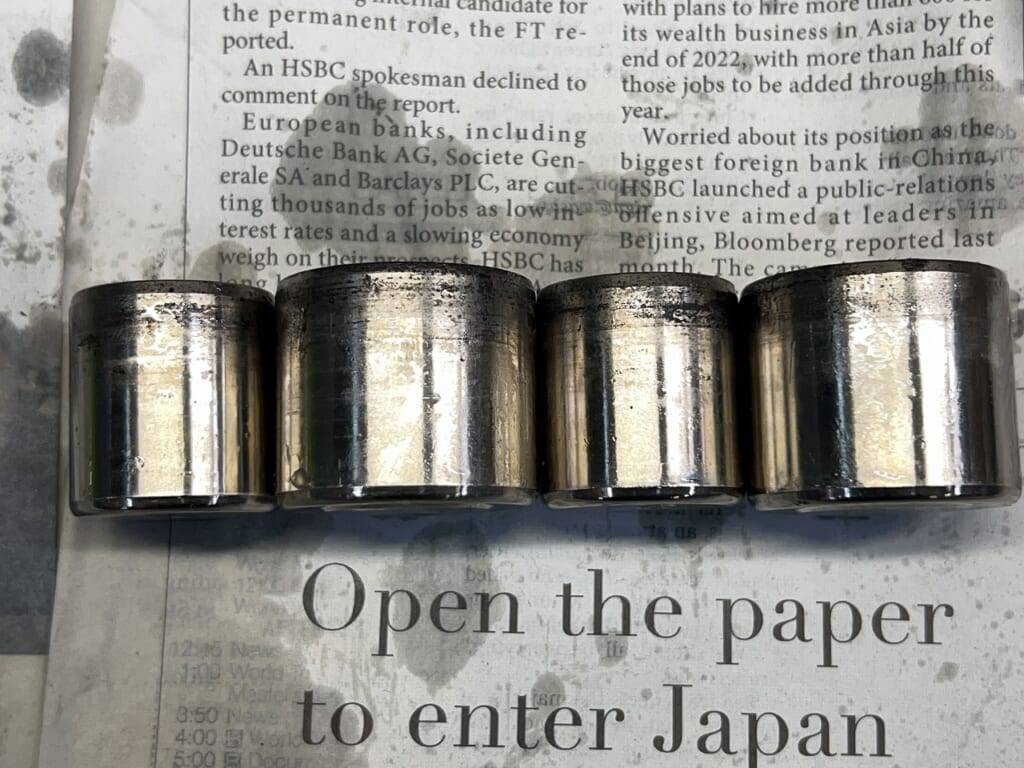
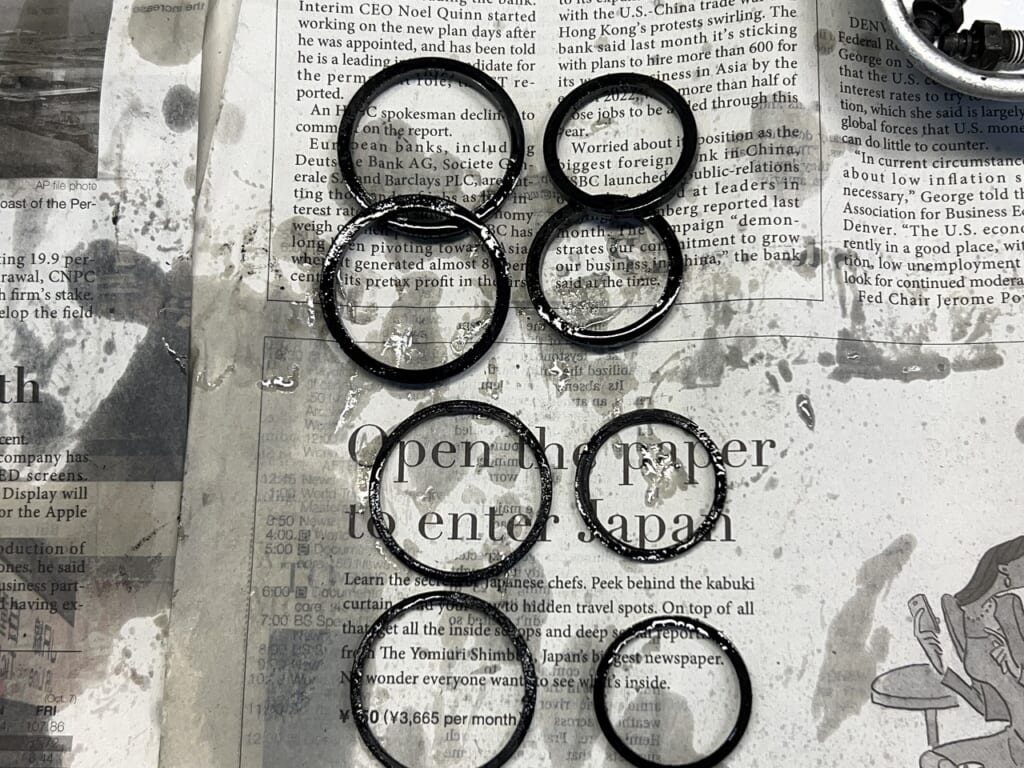
If the caliper piston is available as a part, let’s just replace it.
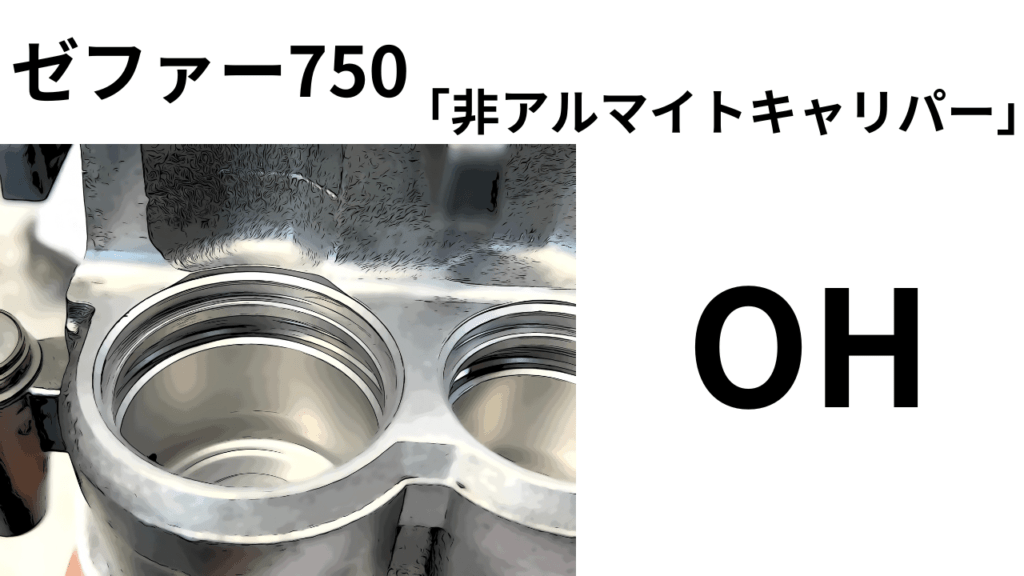
This time? Again? There’s rust showing too…
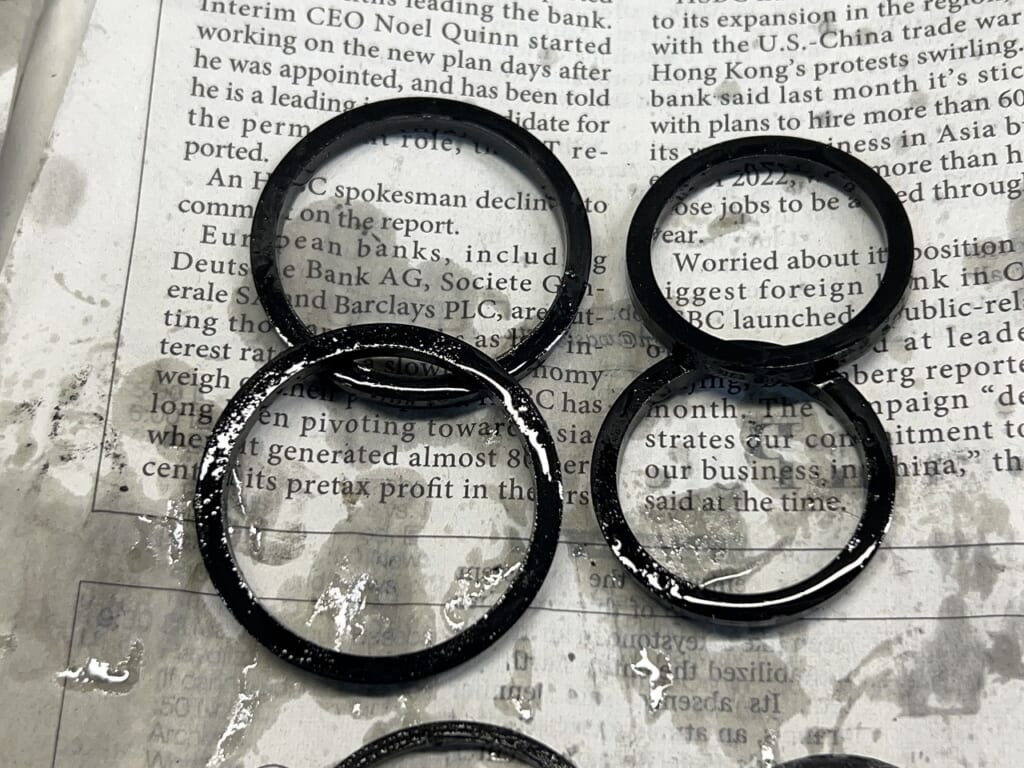
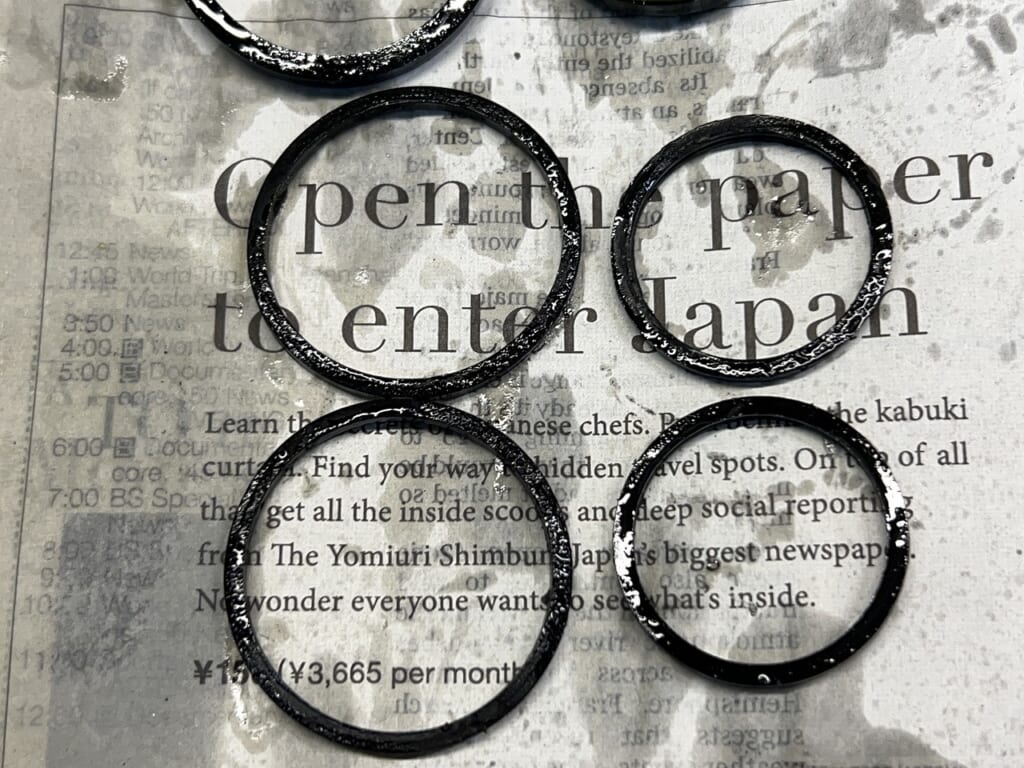
The dust seals showed no deformation, but the seals themselves are just “hard.”
Like an “old tire,” if you will. That’s why the return isn’t working well.
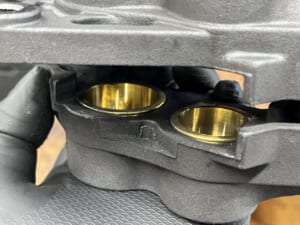
Brake Caliper
The “extension” is hydraulic, so no matter how stiff it is, it will extend and push.
But the “return” depends on the seal’s flexibility—the rubber is absolutely critical.
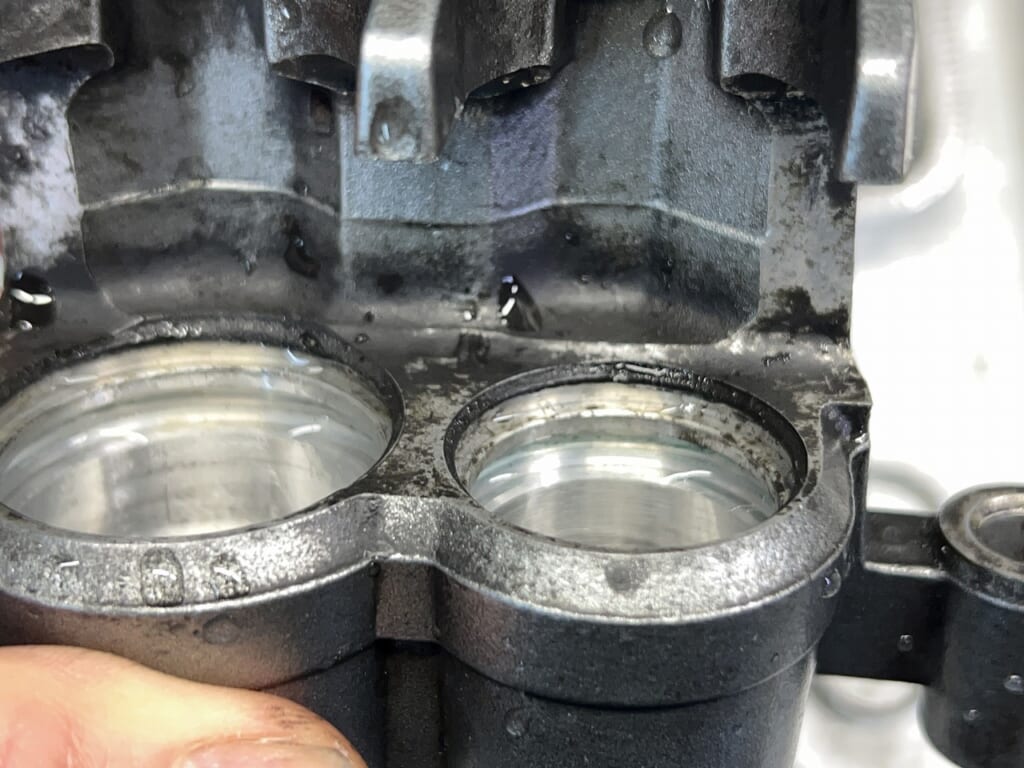
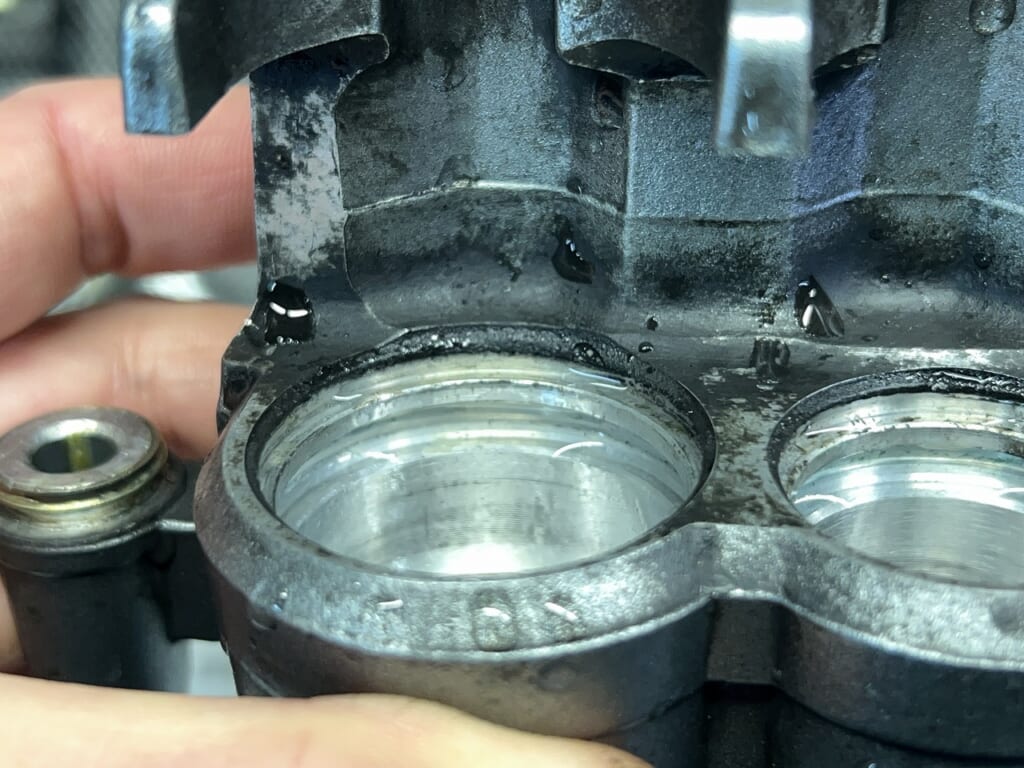
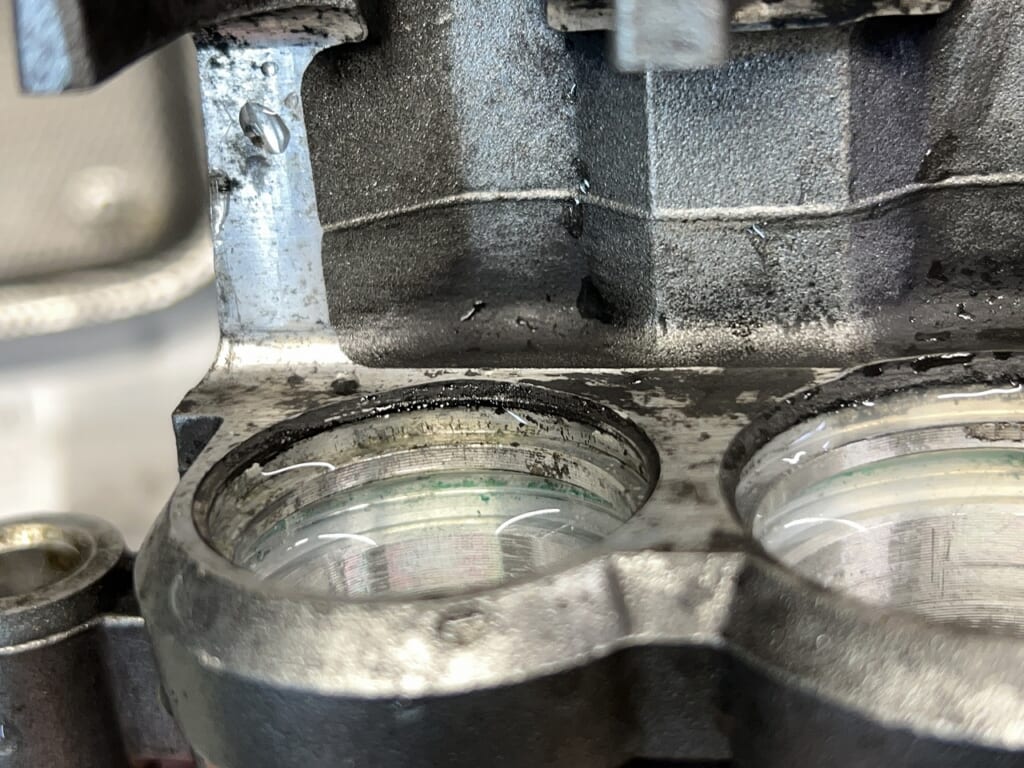
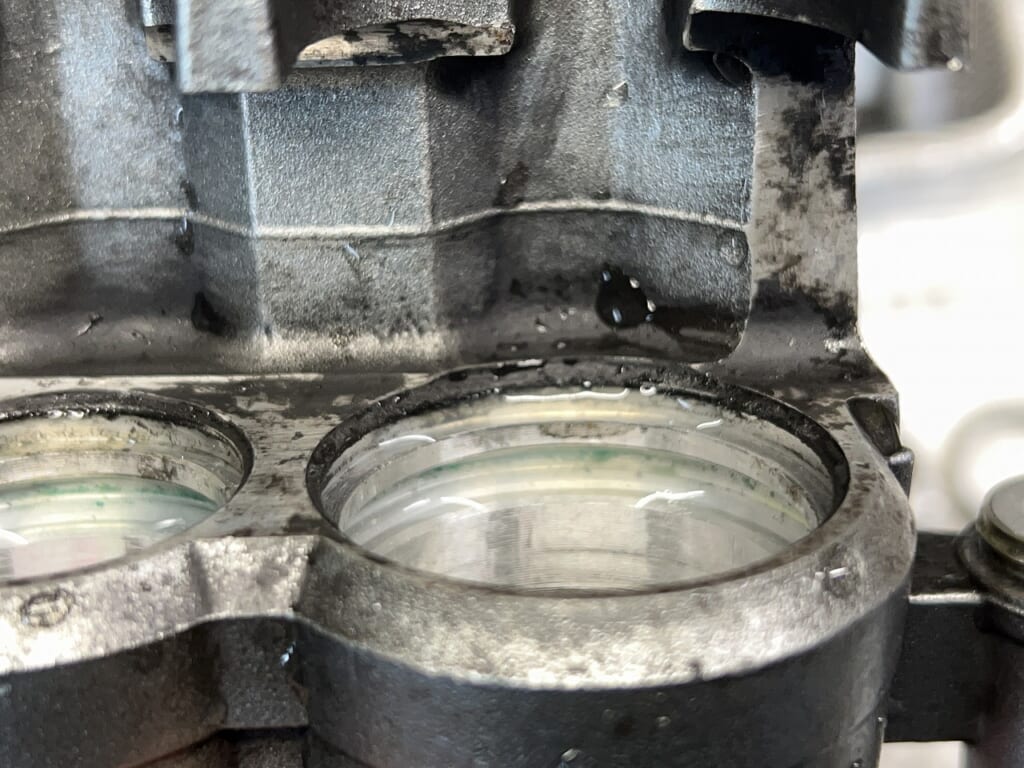
First OH at 70,000 km (a bit late?), but…
There’s hardly any debris buildup at all. It really makes you appreciate regular maintenance and fluid changes!
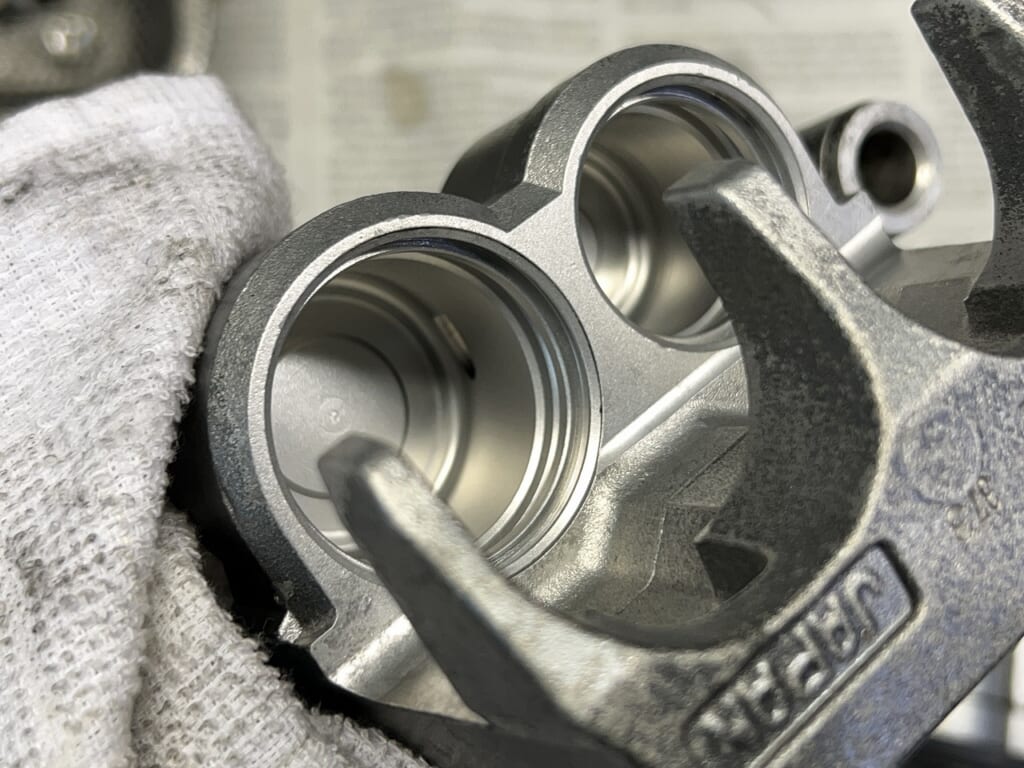
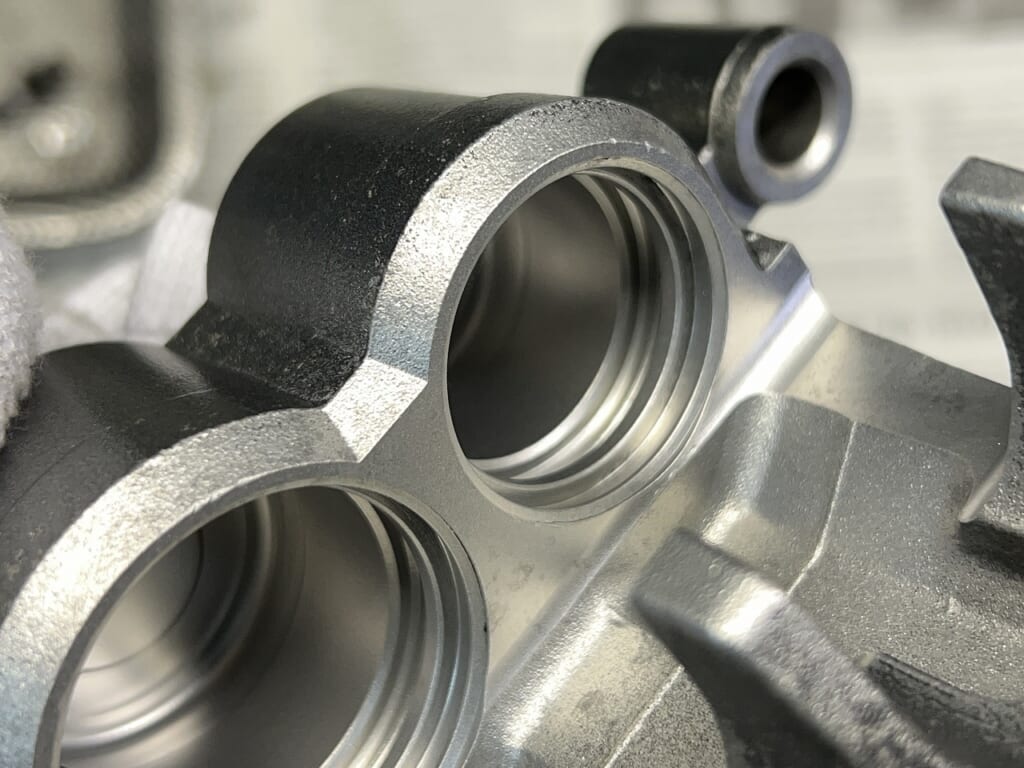
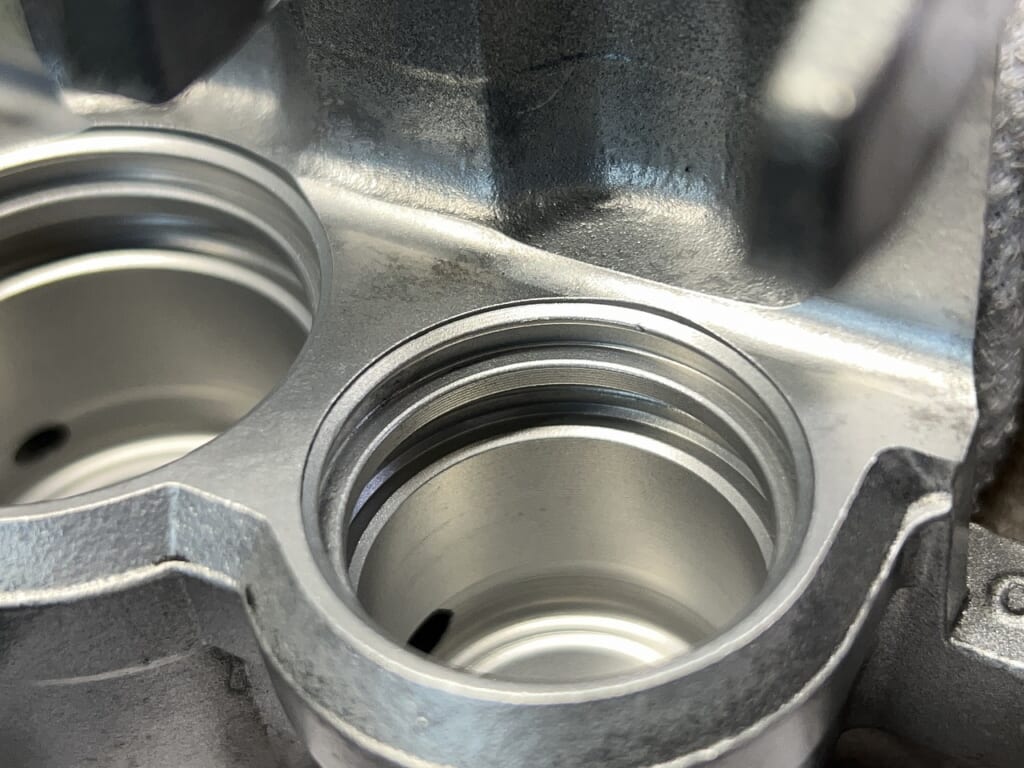
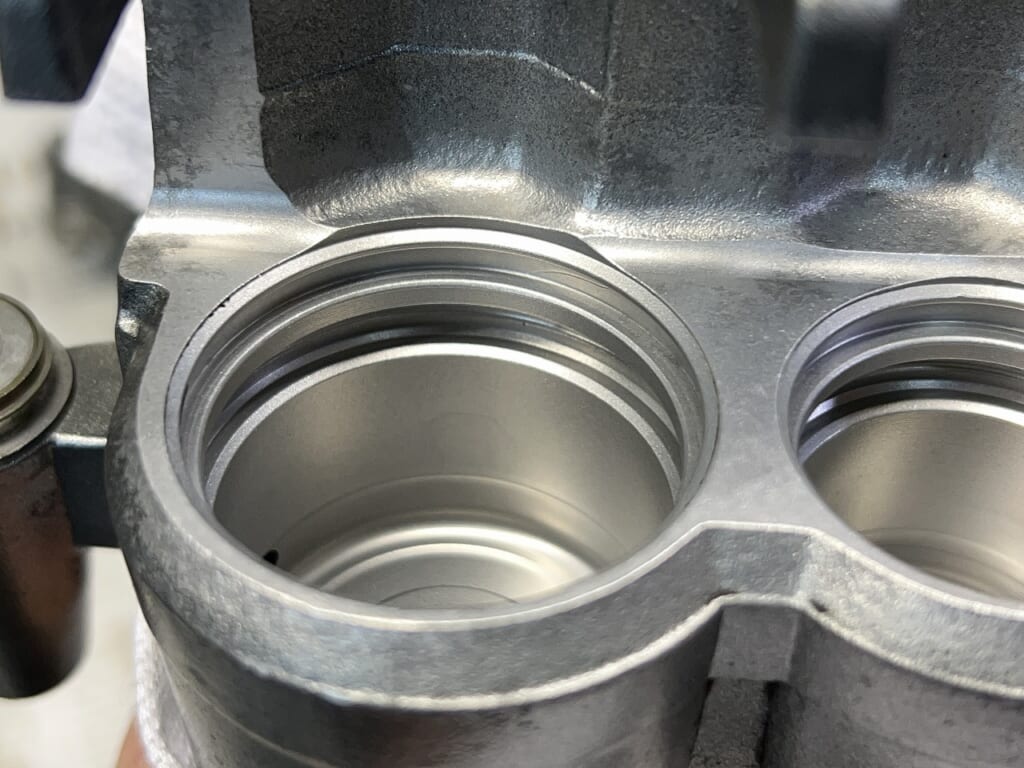
We finished it like this, “beautifully”…
You can’t get this kind of finish just by hand polishing.
It all comes down to “equipment.”
How efficiently and reliably you can finish directly impacts profit.
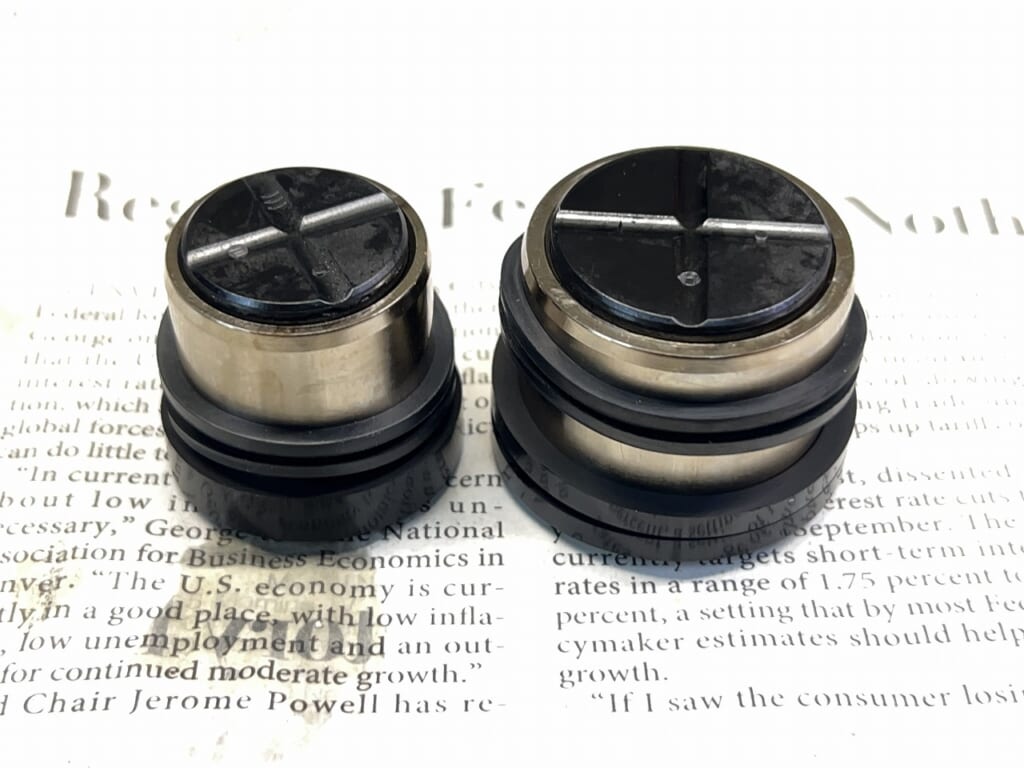
Always inspect the caliper seals and pistons carefully.
Pre-work inspection is “one of the important tasks.” If you want to proceed reliably, “tap that stone bridge!” That’s all there is to it.
*Steady and sure is what works best.
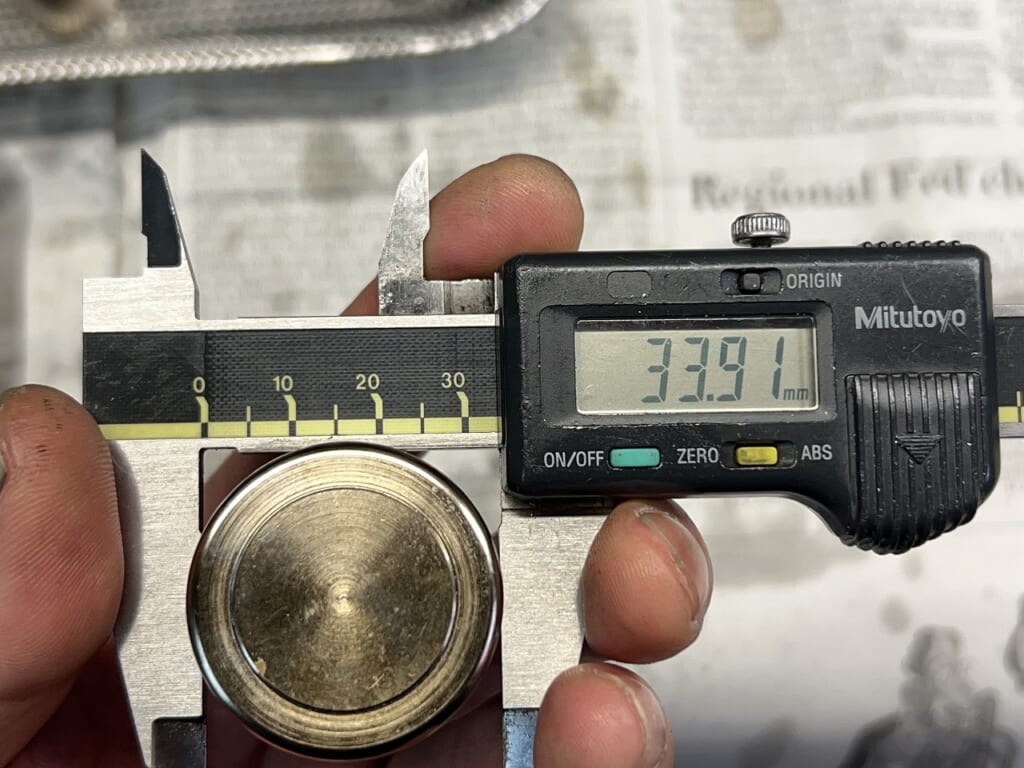
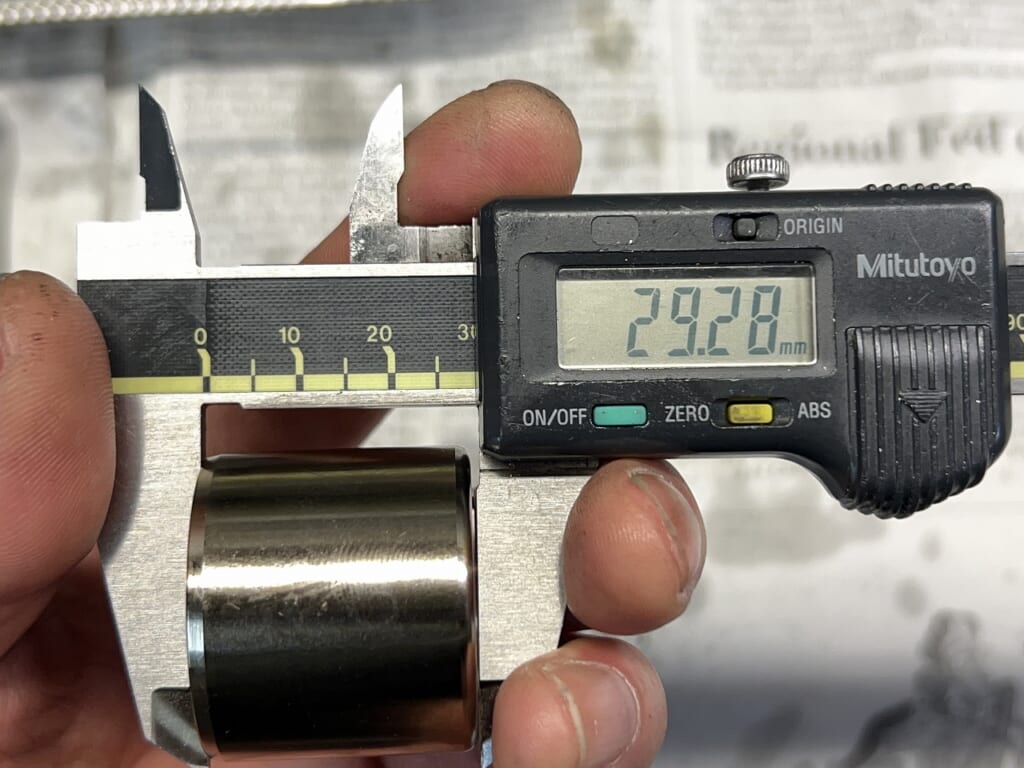
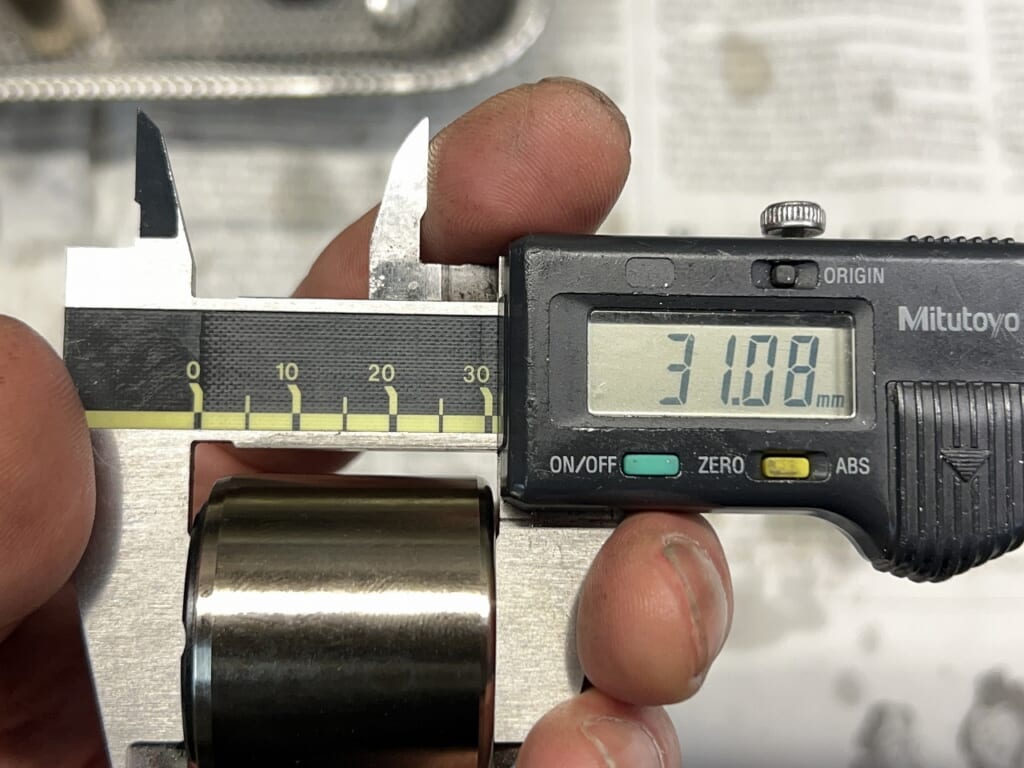
The larger piston diameter is about 33.91φ*29.3MM, and with the backing ring it’s about 31.08MM.
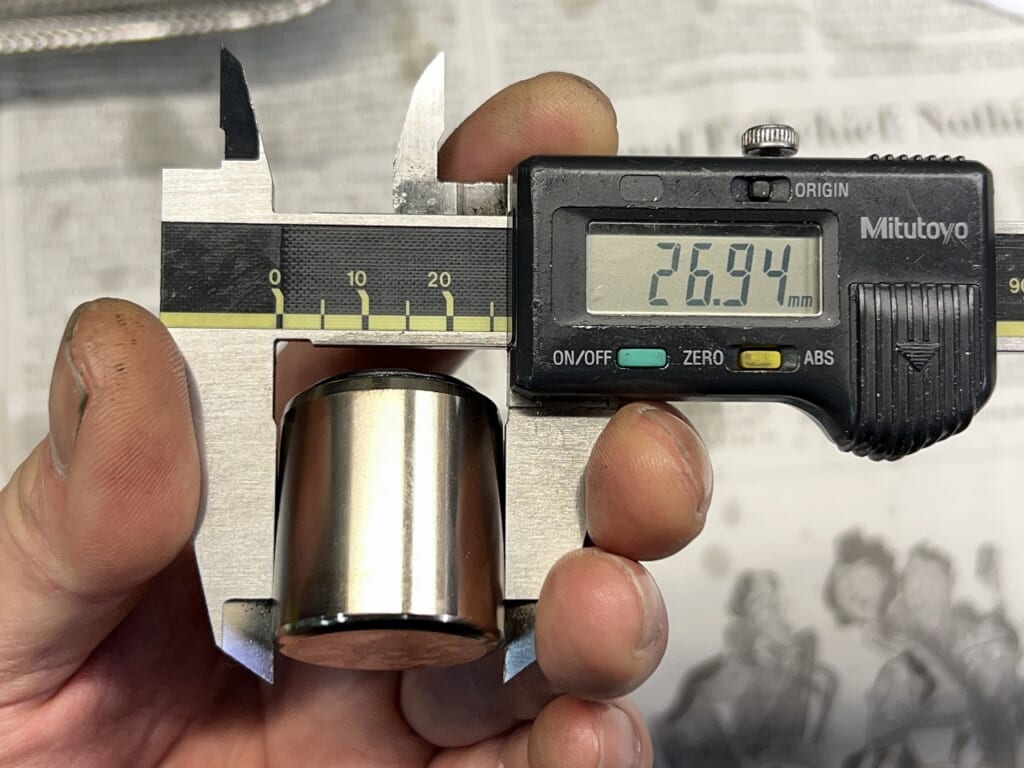
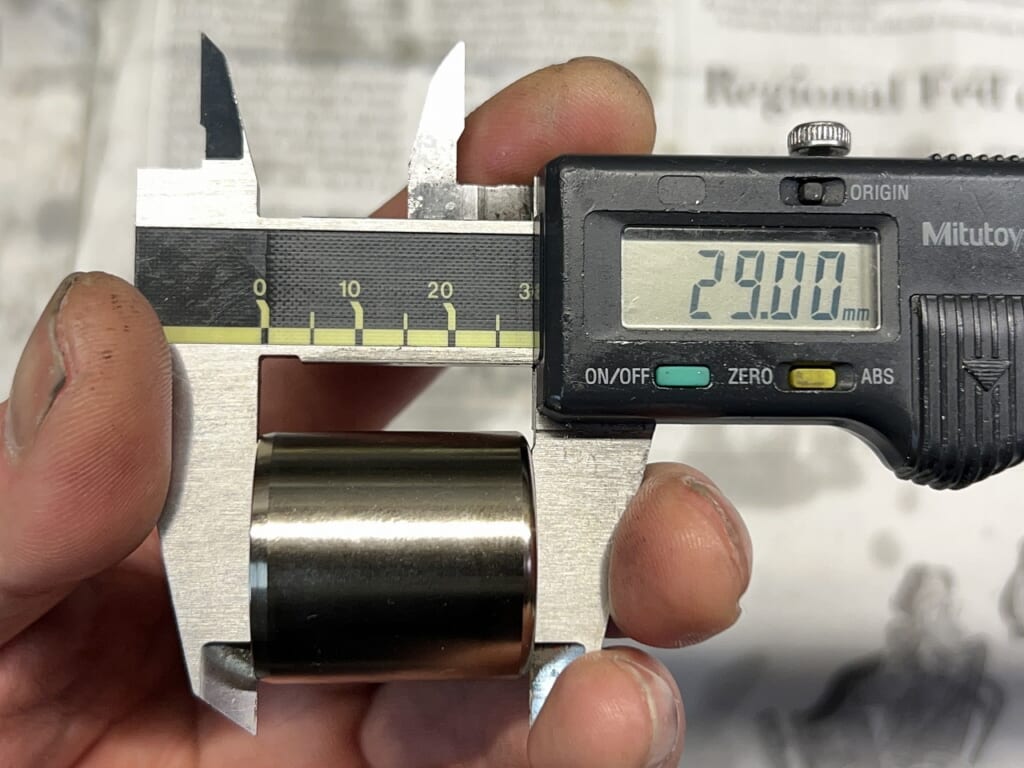
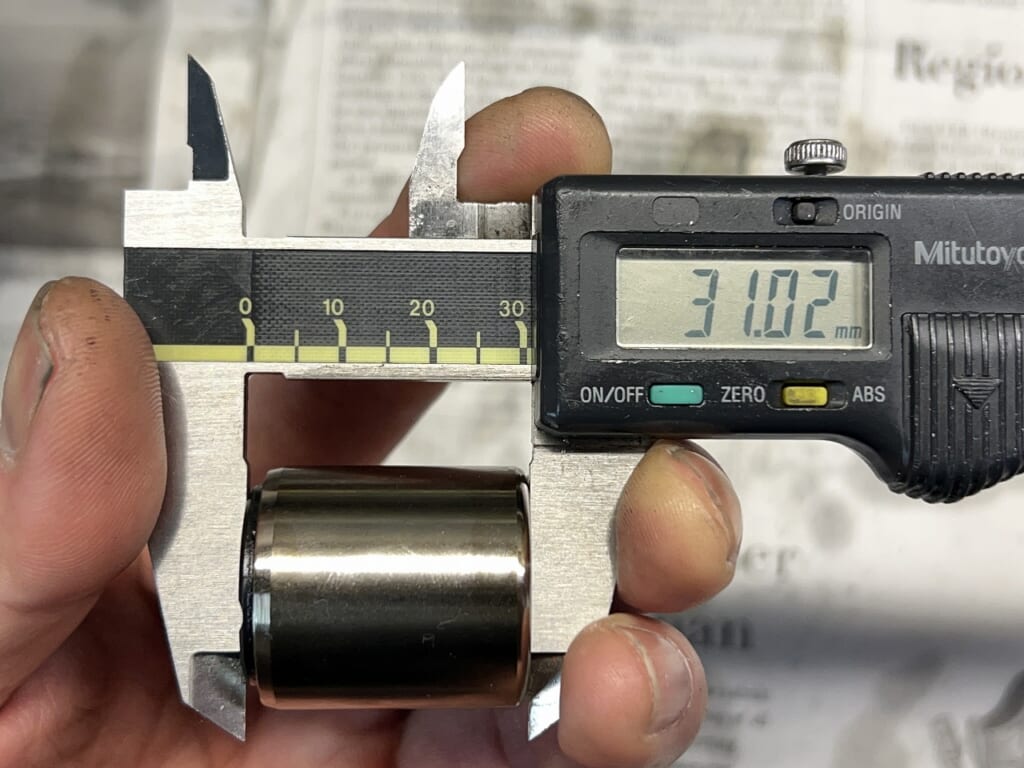
The smaller piston is 26.94φ*29MM, and with the backing ring it was 31.02MM.
Feel free to use this for parts swaps.
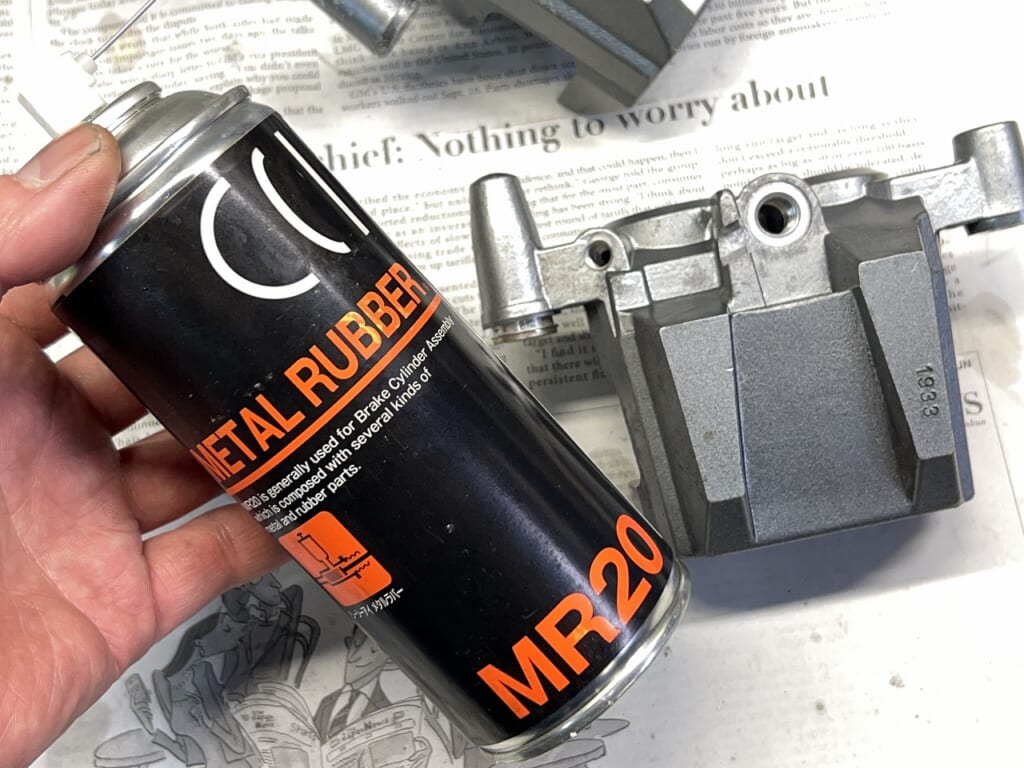
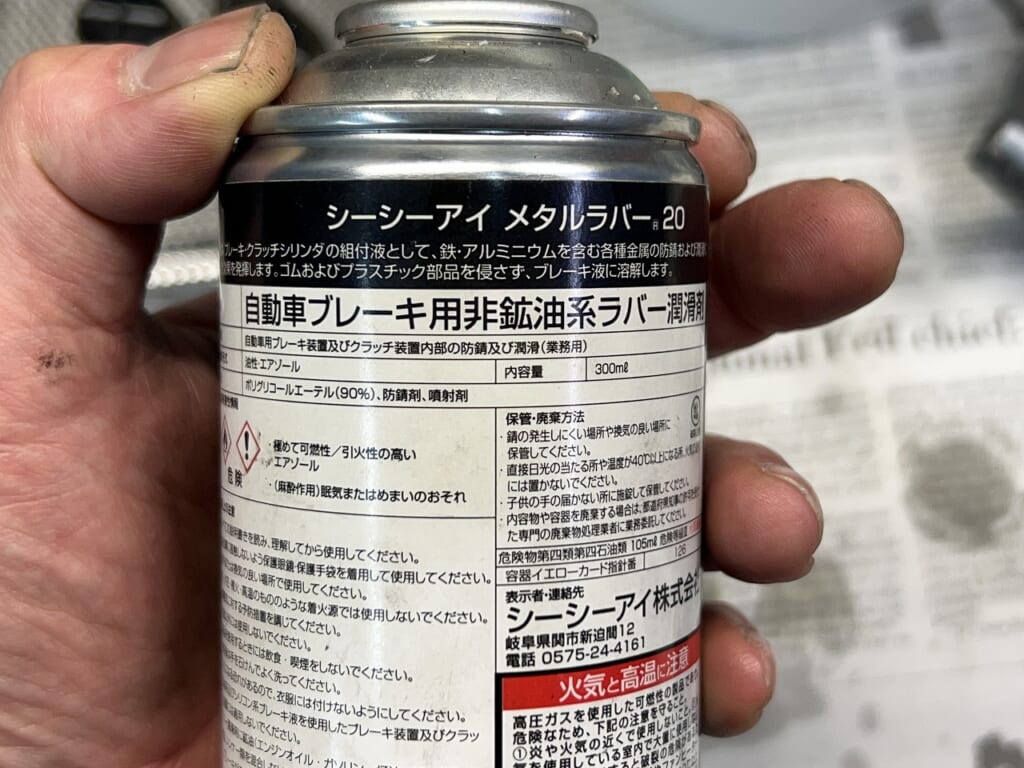
Brake OH Essential Chemical “CCI MR20 Metal Rubber”
Once you use it, almost everyone gets impressed ( ;∀;).
Did the piston really move this smoothly before?
“I wish the stock calipers would turn into Brembo!” I don’t think that’s an exaggeration.
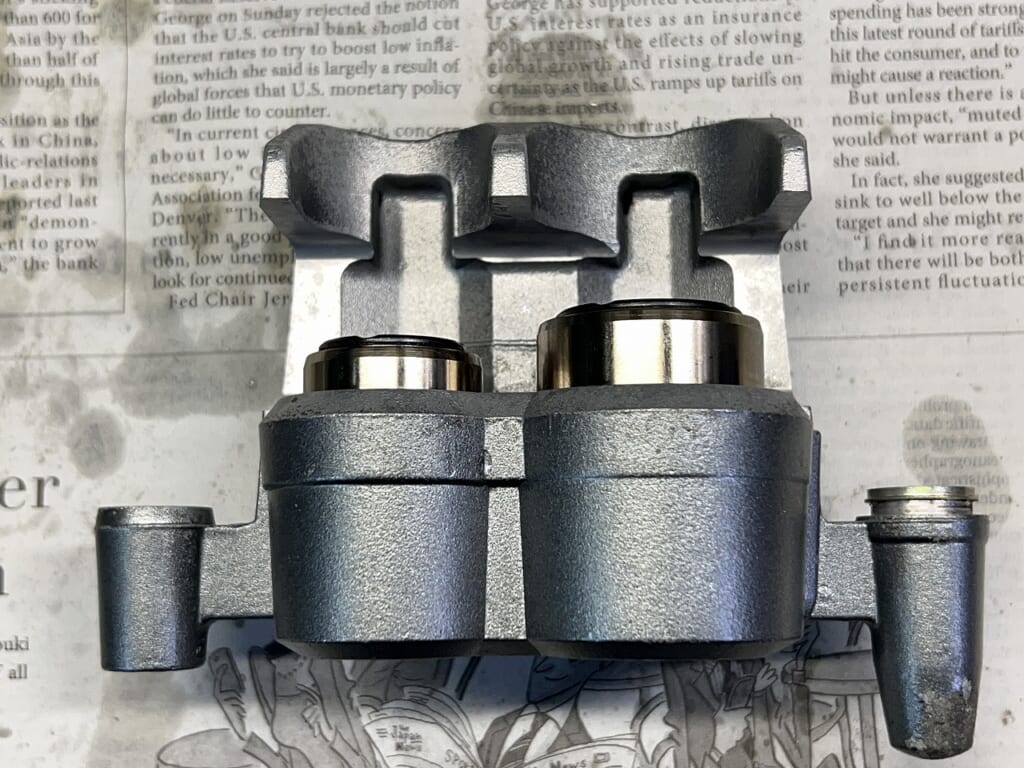
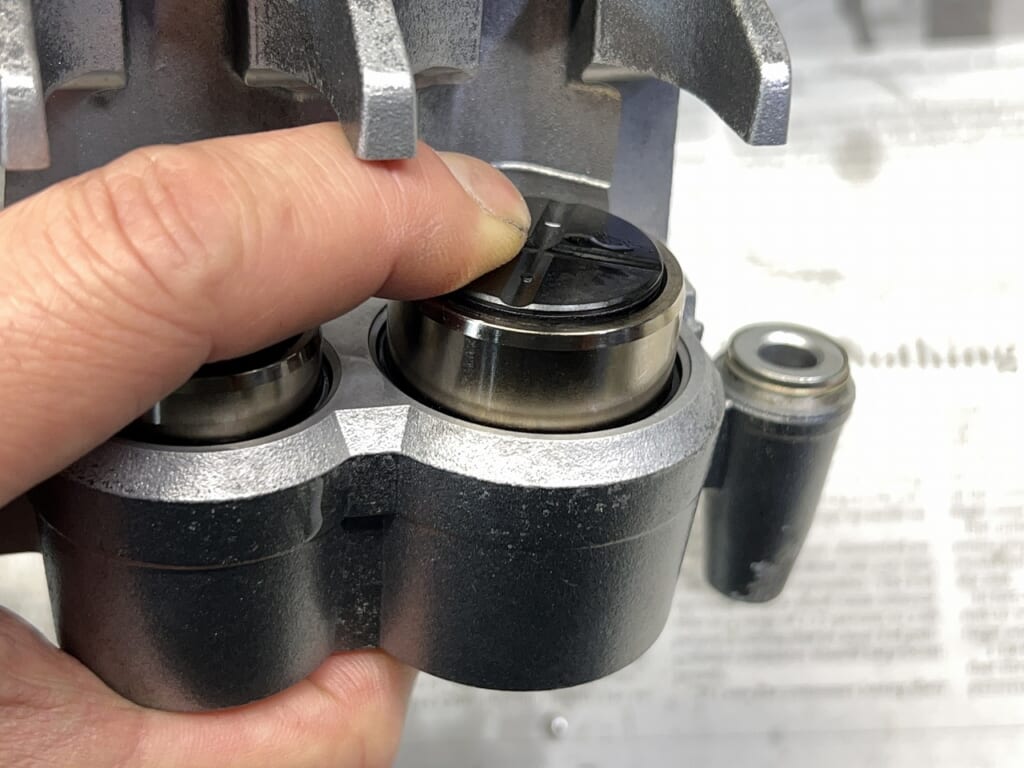
In the disassembled state, “you can push the piston back with your finger.”
Caliper OH is just inspection/cleaning/applying Metal Rubber and reassembling.
There’s no trick or technique involved.
But come to think of it, “parts you can’t touch” aren’t there a lot of them?
With hidden technique, “making it divine is the method?” There’s that aspect too…
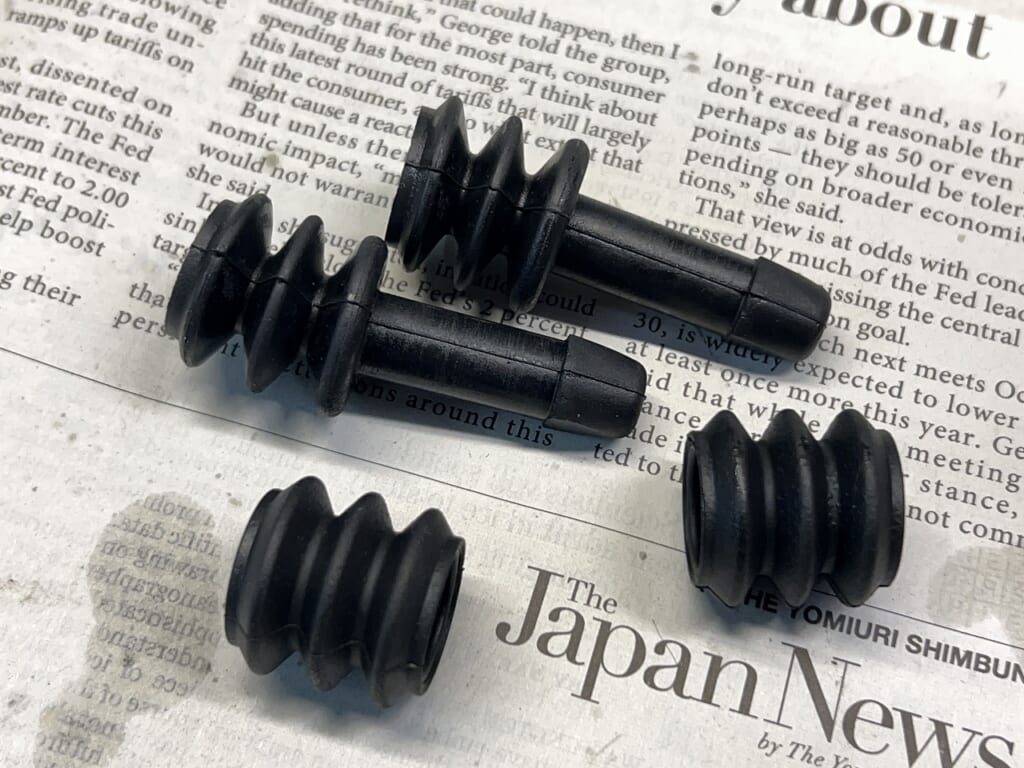
The boot is the second heart of a single-piston caliper—it’s super important
Especially “the one with the pin” is critical.
The pin slides inside this, so “cleanliness,” “smoothness,” and “flexibility” are absolutely essential.
When this gets stiff, “everything feels stiff.” That’s the only impression you get.
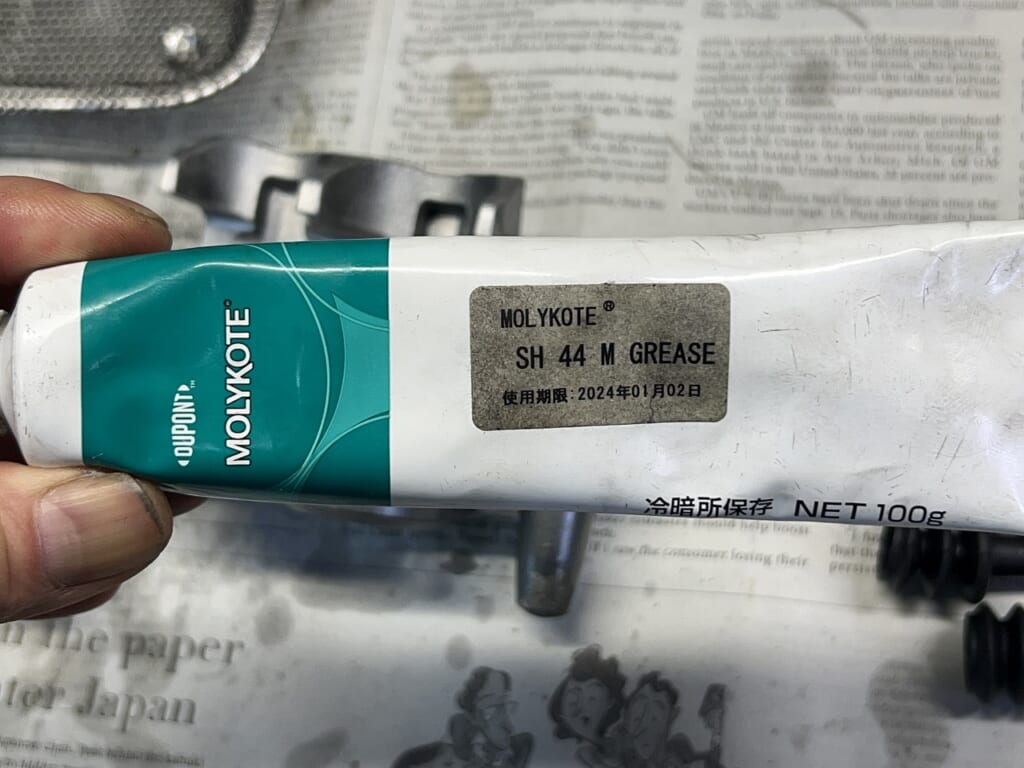
For the boot, “Molykote silicone grease” works really well.
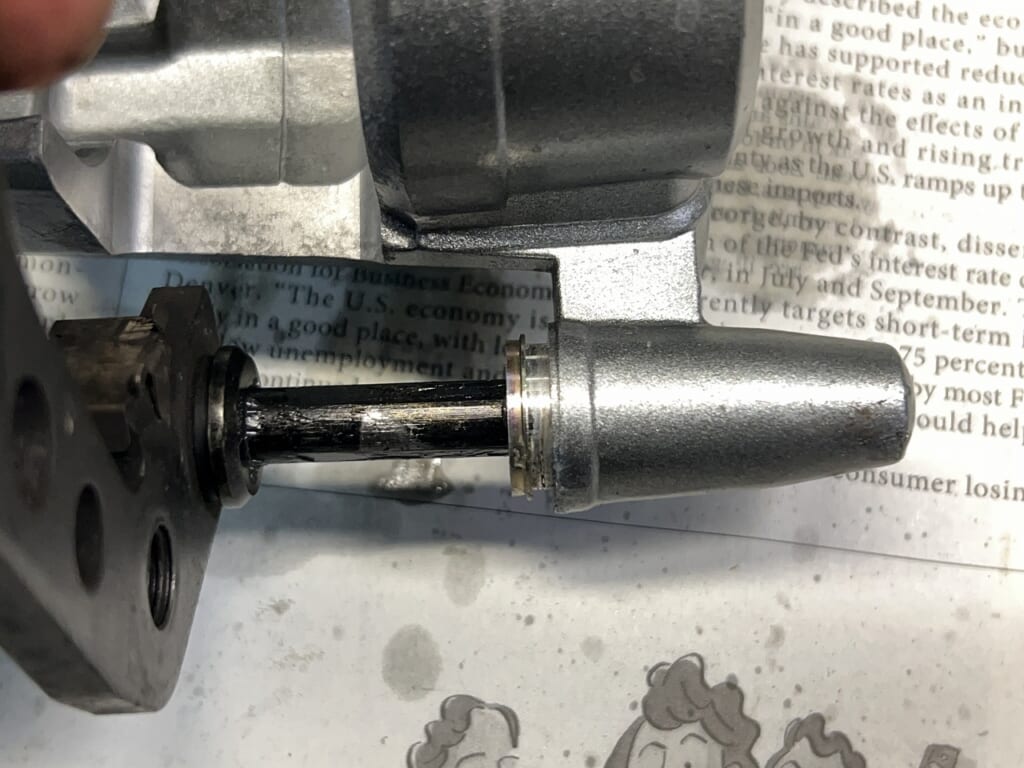
Testing individual operation is essential. If “it won’t go in or feels stiff, that’s abnormal.”
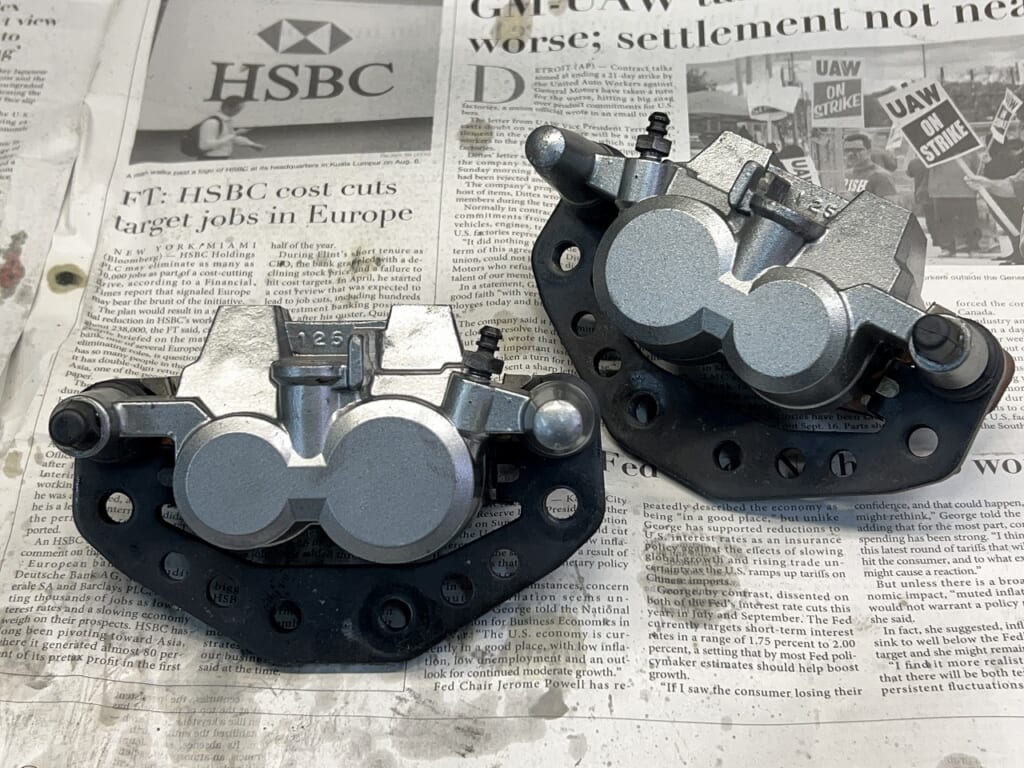
And that’s how the front caliper is complete.
To be continued (*’ω’*)
( ゚Д゚) Here’s what I introduced this time~


 ポチップ
ポチップ
 ポチップ
ポチップ