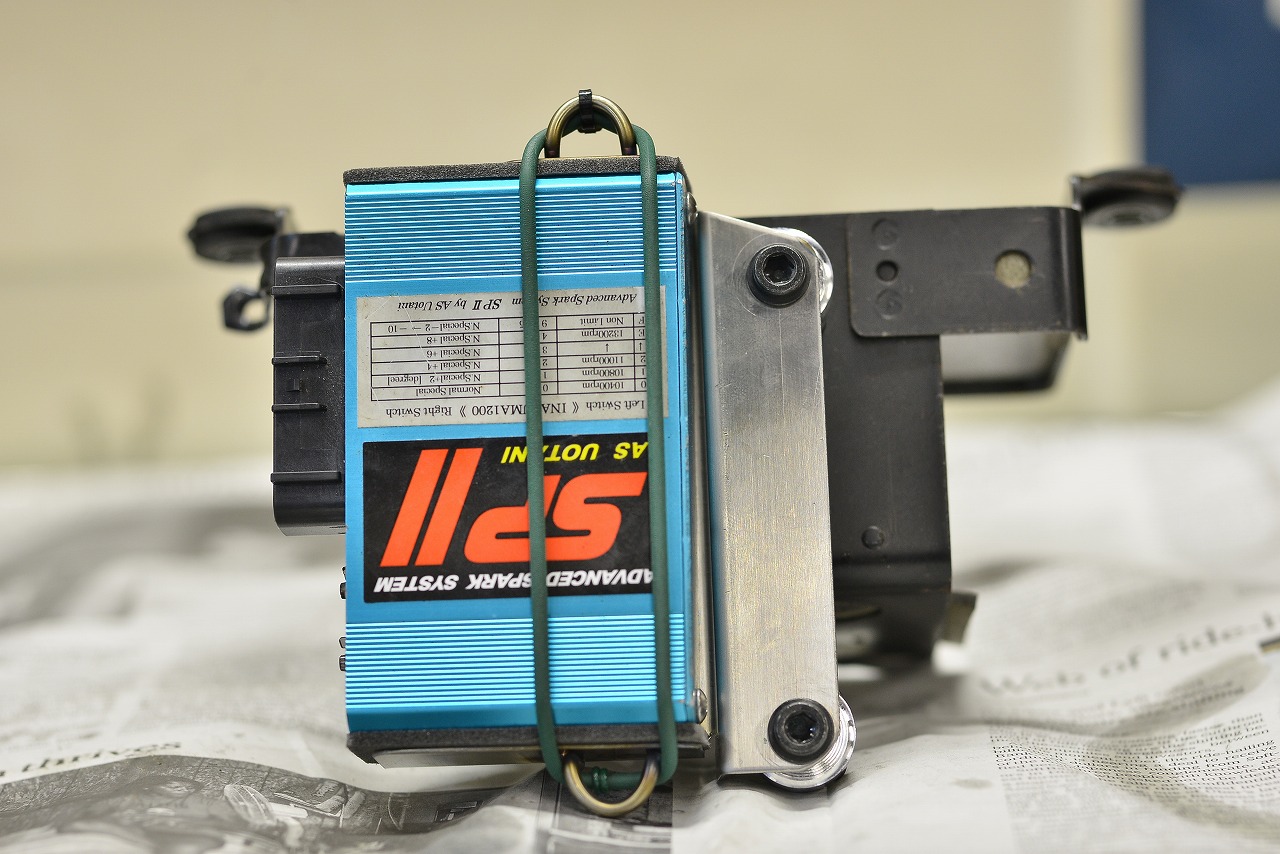
Let’s give that carburettor a good cleaning.
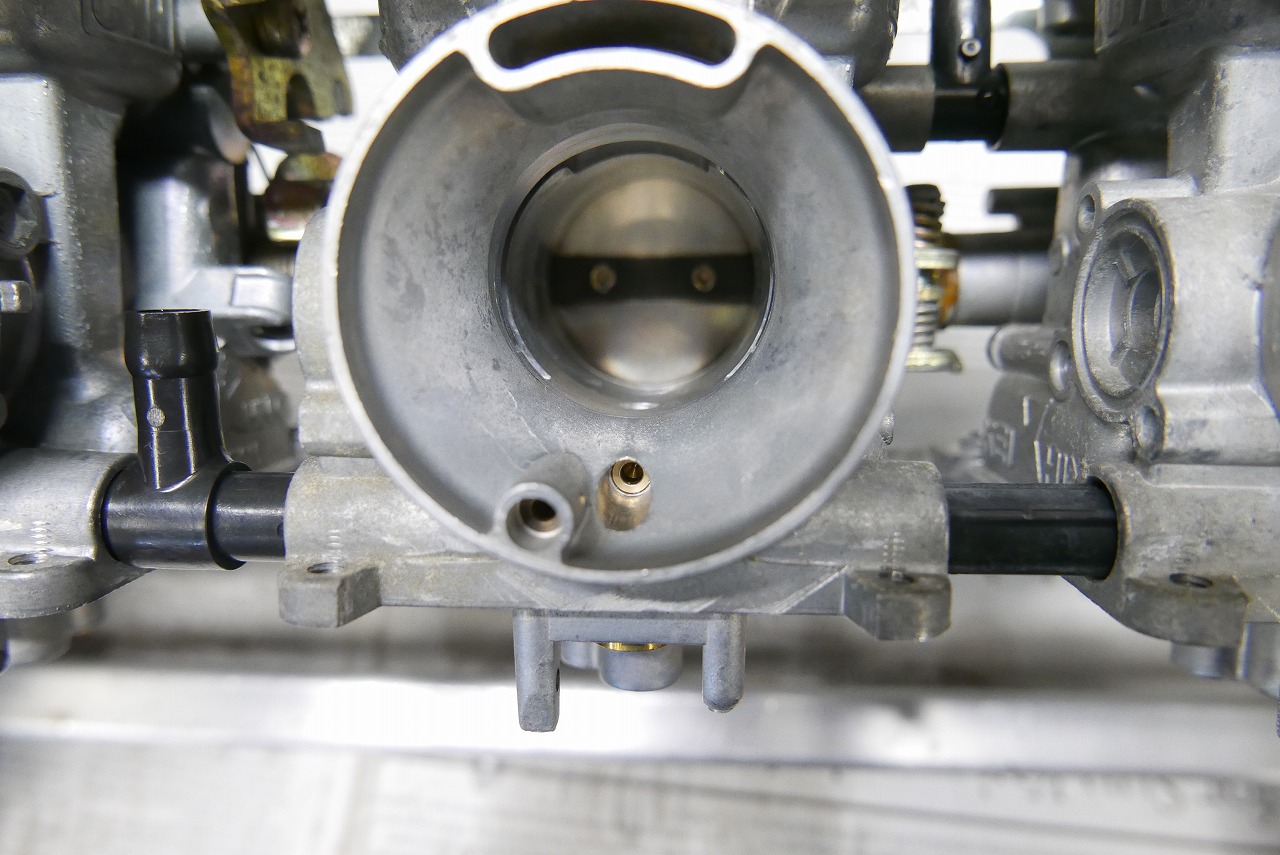
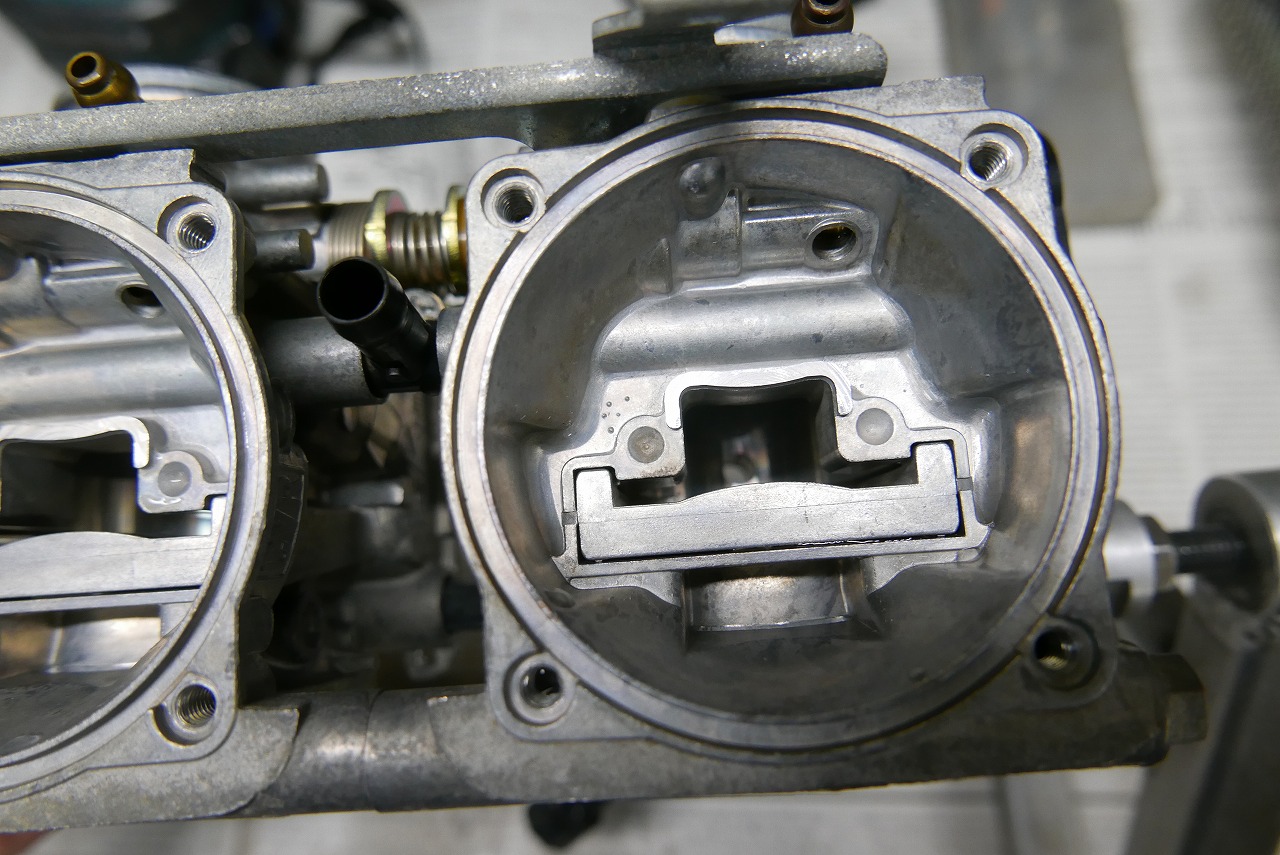
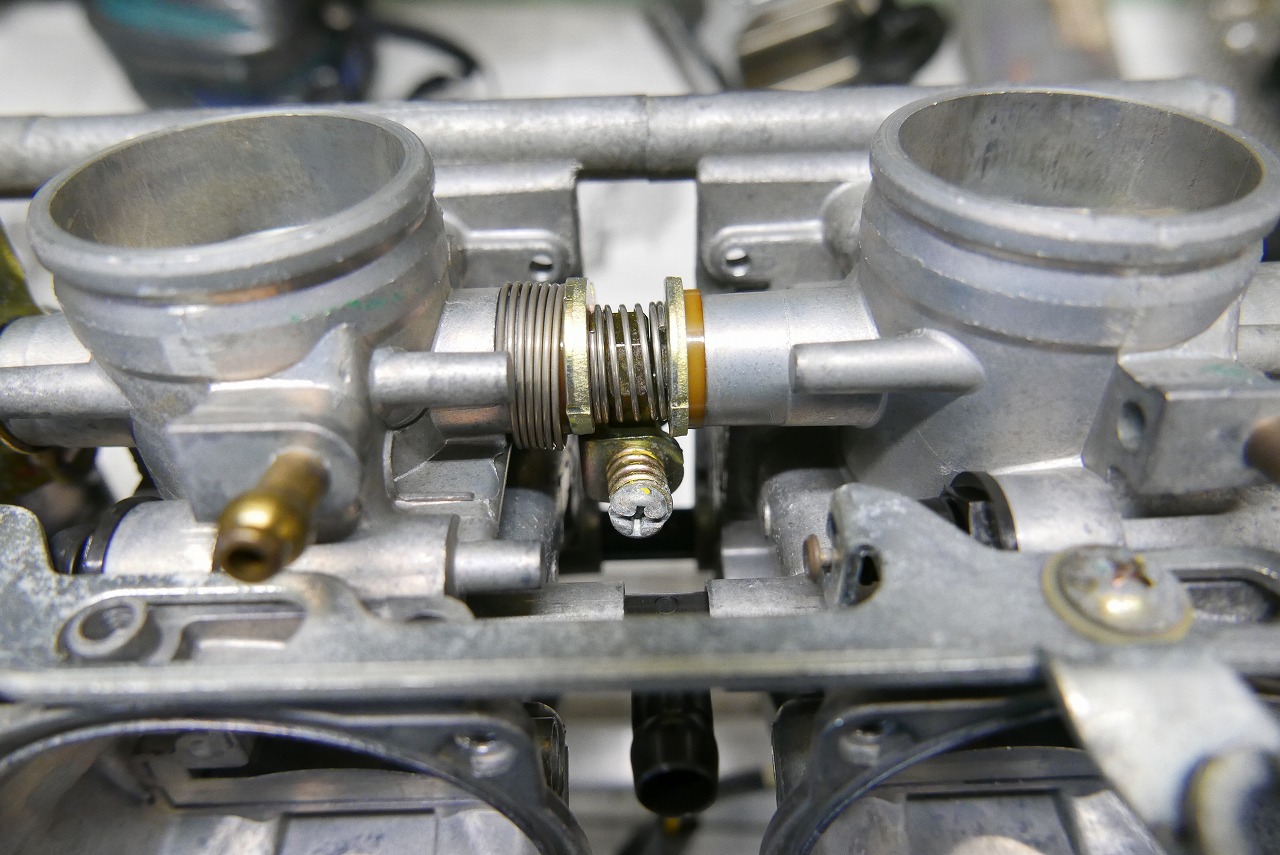
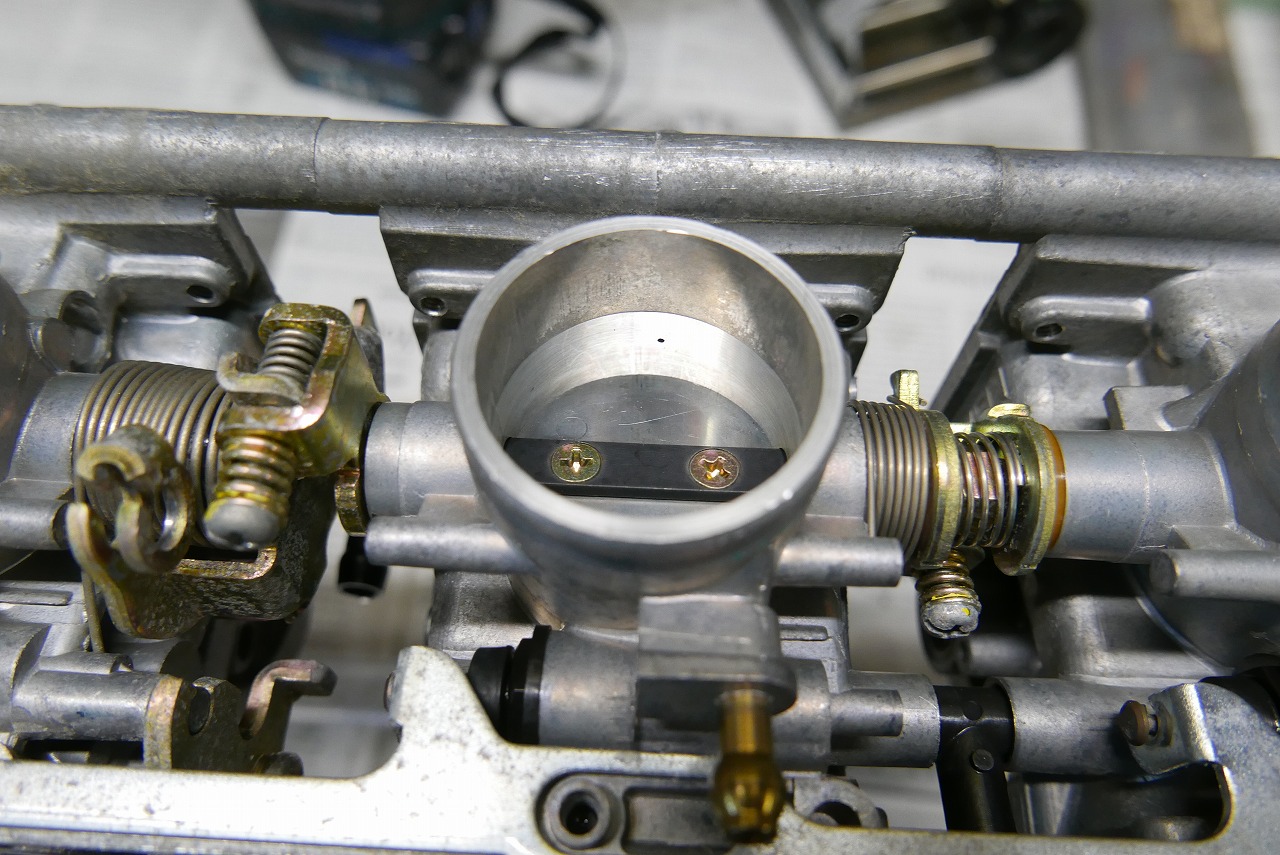
Since this is OEM carburettor maintenance, we don’t disassemble all four carburetors completely—it’s a different maintenance menu. Can we call it an overhaul? Or can’t we? I wonder what the right term is.
We scrub it thoroughly and it comes out pretty clean.
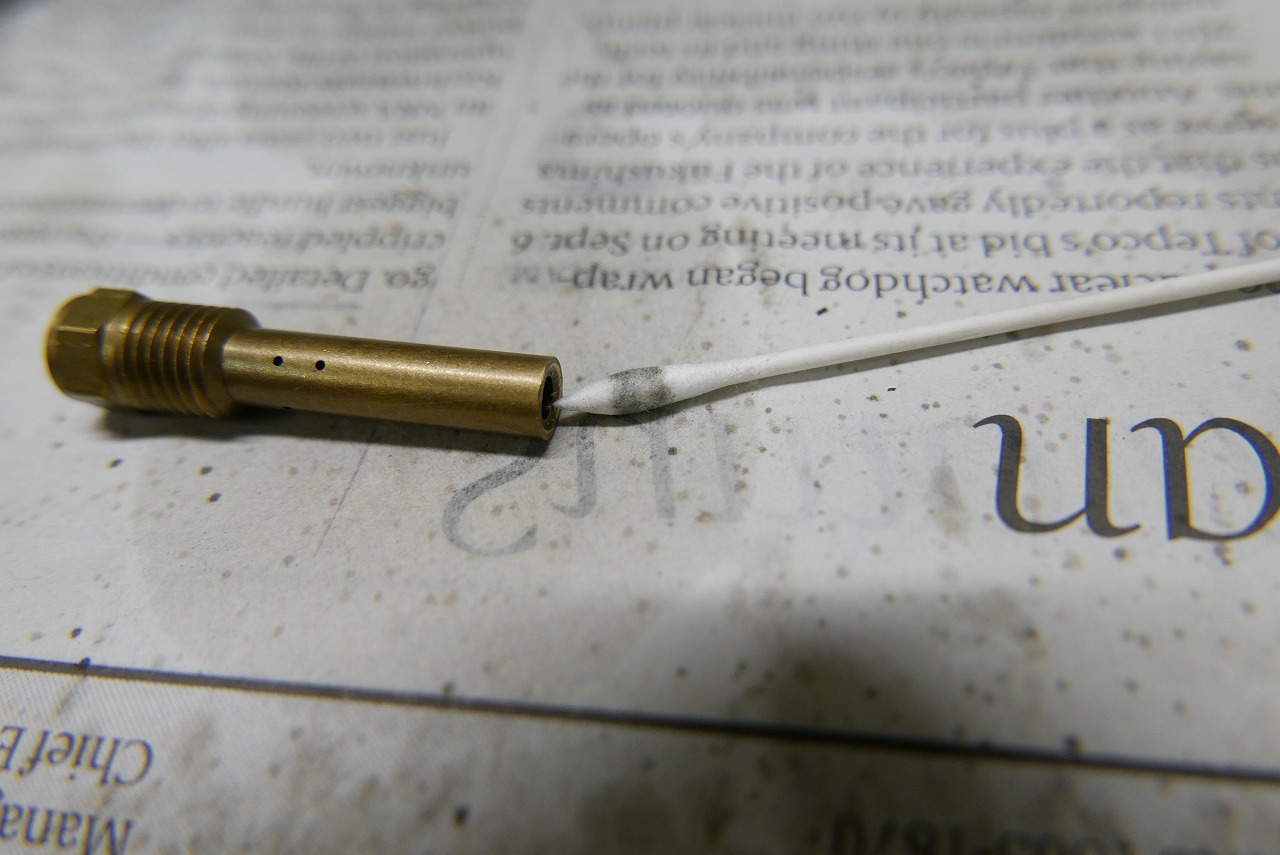
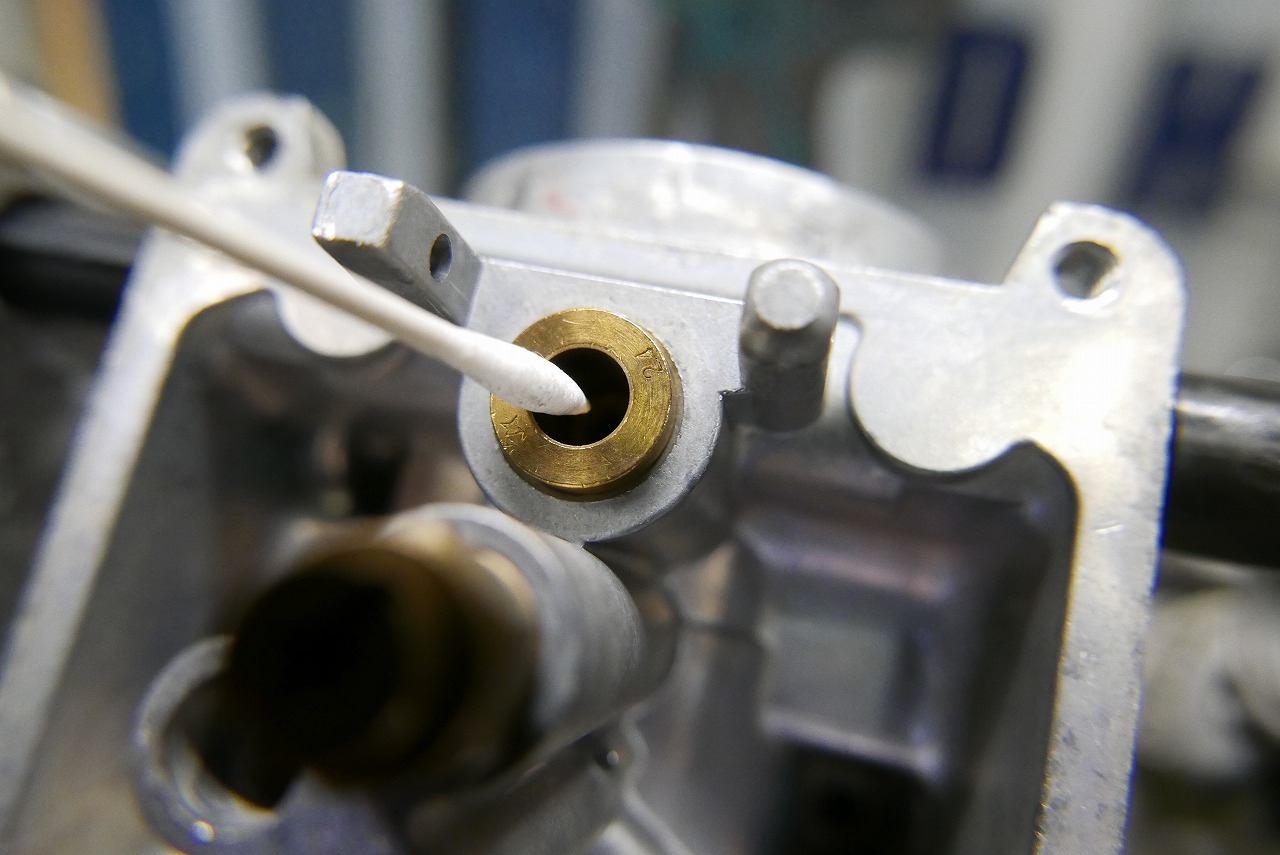
Carburettor cleaner and wash oil, then air blow! Whoosh.
One more step: scrubbing with a thin cotton swab often reveals there’s still more gunk hiding in there.
Whether it makes a real difference is debatable, but with the mindset of “it’s the thought that counts” and “what goes around comes around,” hopefully no problems pop up.

The float valve shows no wear. The spring is snappy, the barrel has minimal wear, and the rubber tip still feels good—reassuring. We’ll reuse the basics.
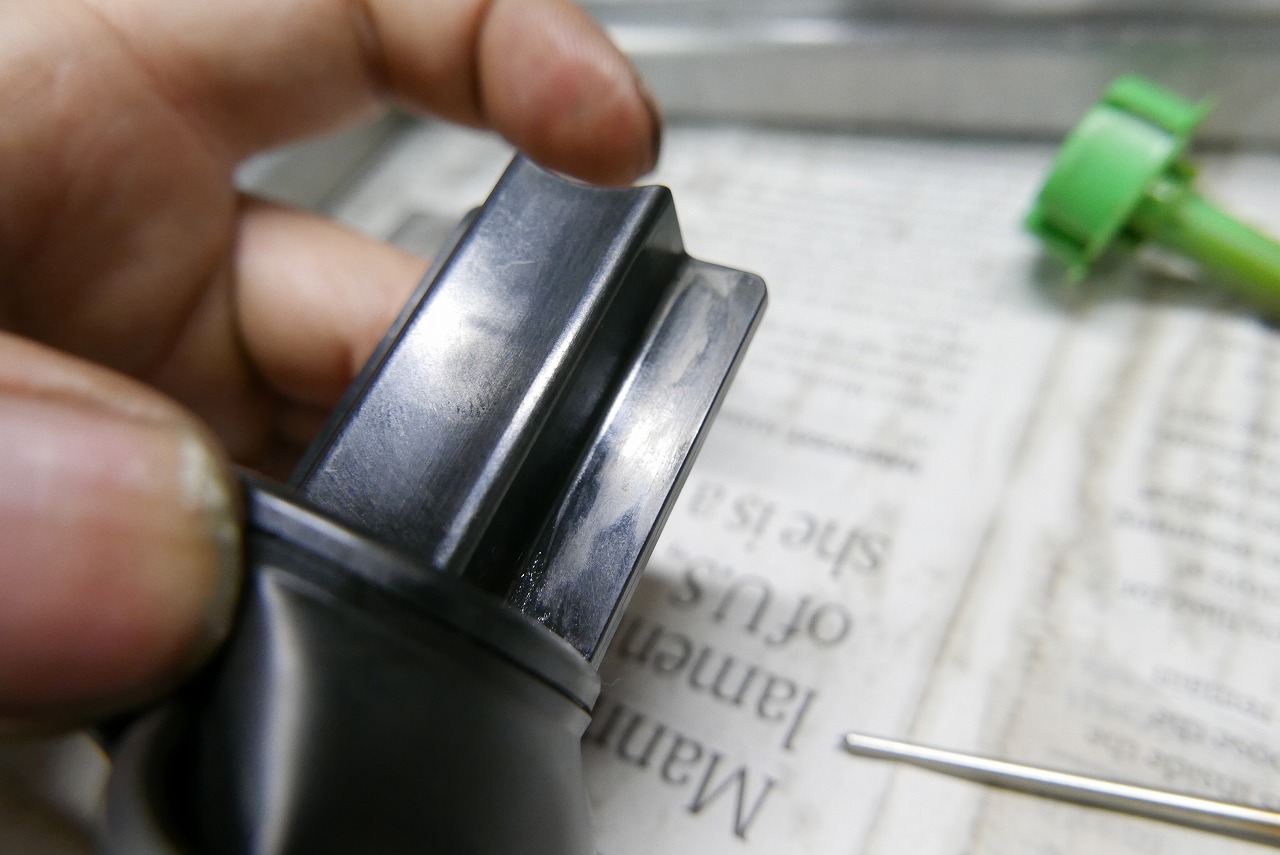
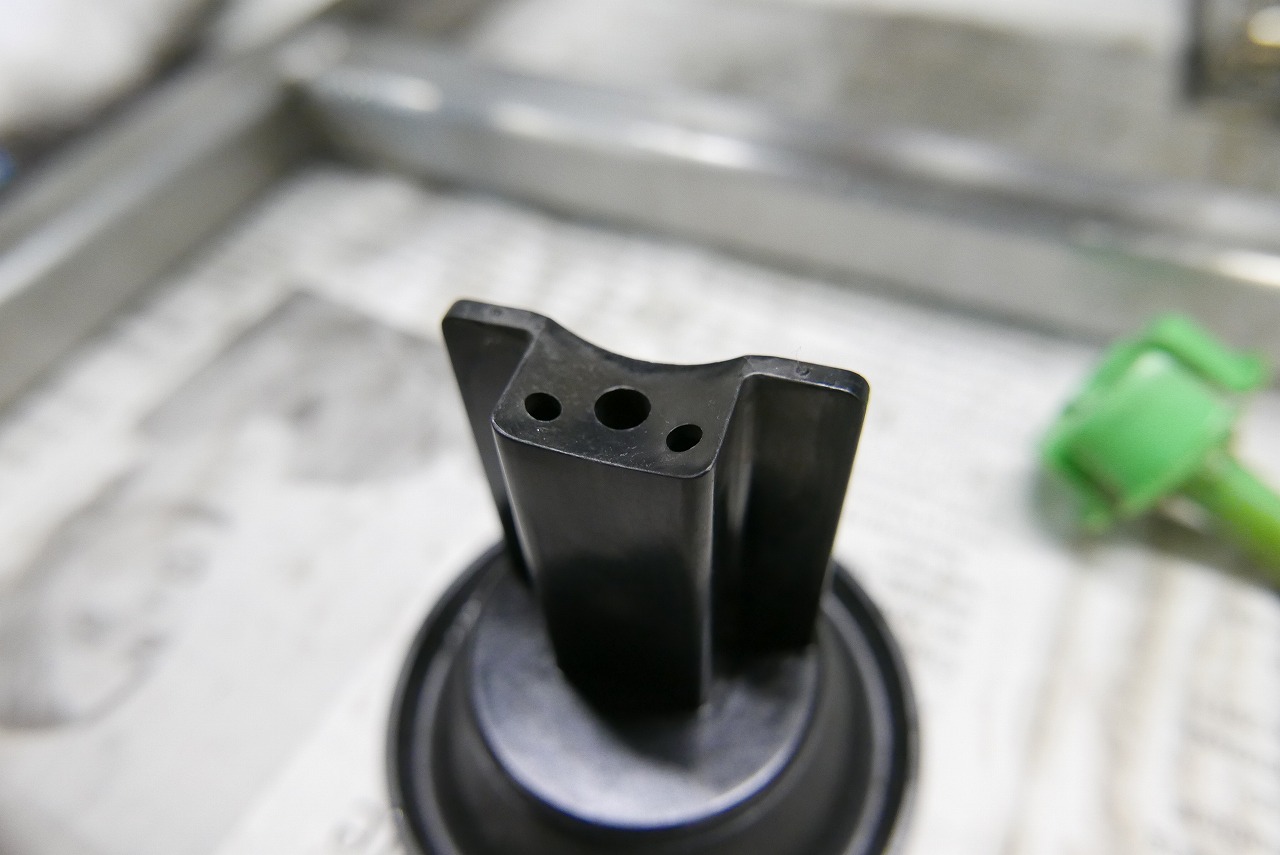
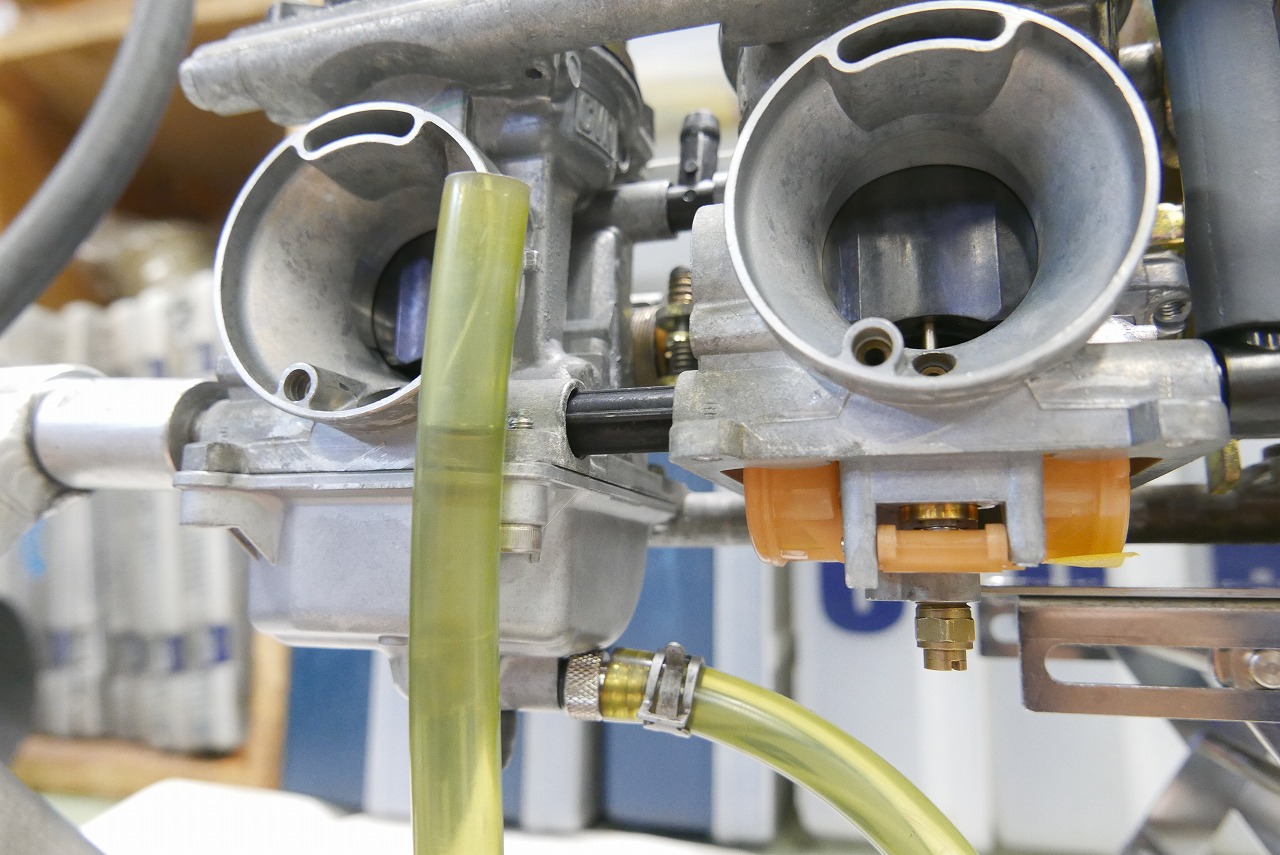
I keep thinking these carburetors are Keihin—they really are. The body shows minimal wear and is in good shape. I’d say CVK carburetors have pretty solid durability.
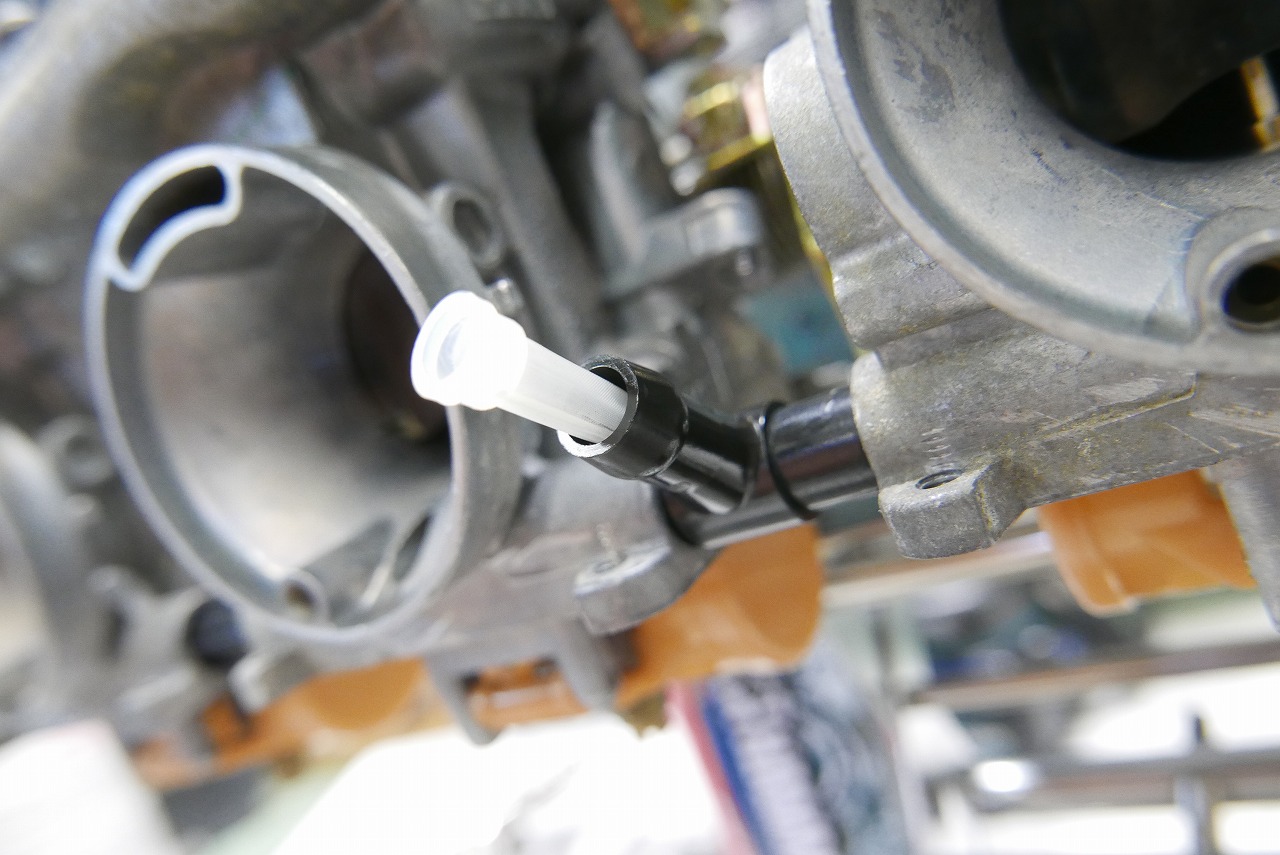
We install a filter, so I’ll put this one in. If you’ve got heavy rust, skip the filter (it’ll clog and restrict flow).
If it doesn’t slide in smoothly, warm it gently with a heat gun and it’ll pop right in.
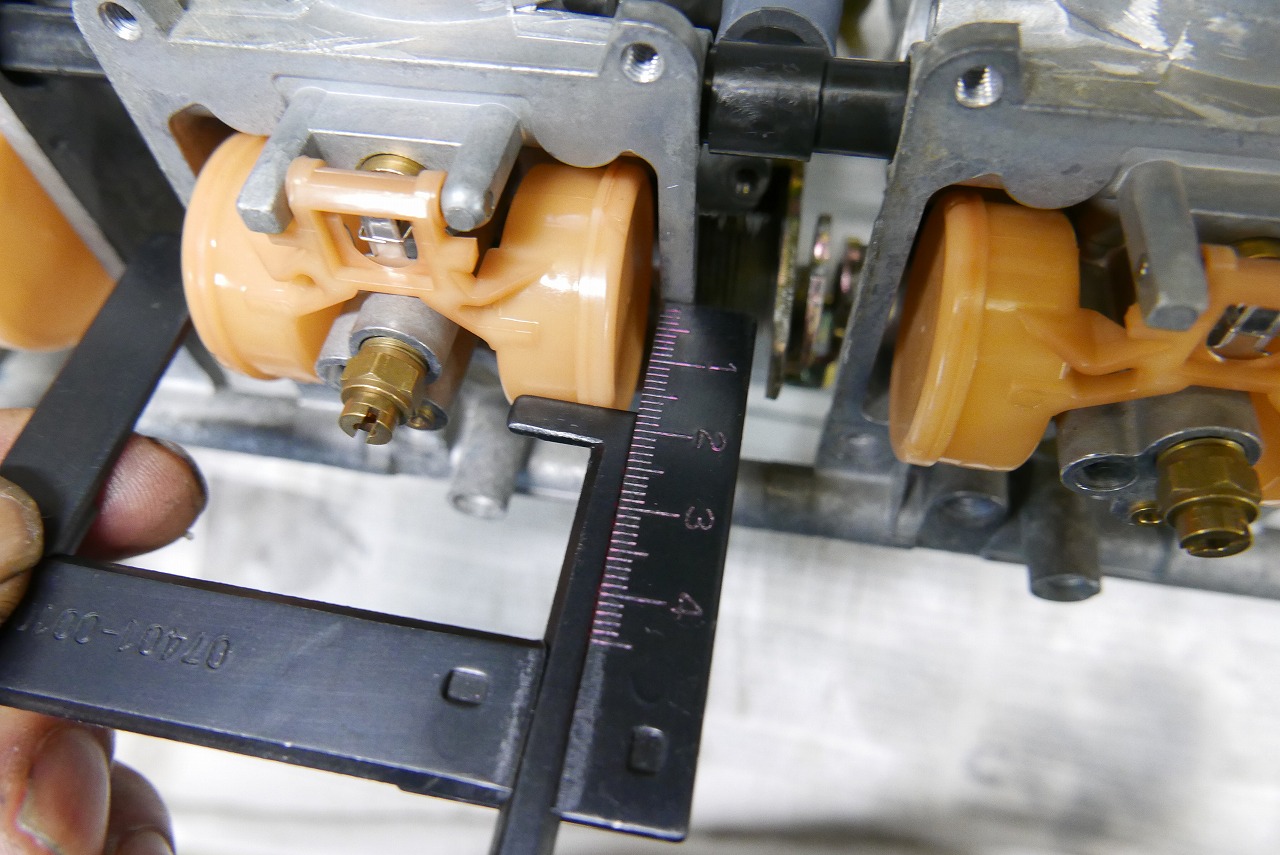
This carburettor has a float support post—reassuring (though standard). With this type, you often don’t need to check the actual fuel level.
But still, I worry, so I do a quick check. For some reason, #1 always runs about 4mm high no matter how many times I check it.
Most models don’t have actual fuel level specs in the manual. I use a method where I check the actual fuel level against the standard float level, note it down, and apply what I learned next time.

I dig in and check—and that solves it.
It’s a really rare thing.
When we transfer gasoline from a portable fuel can (which you should never fill anywhere but a gas station) to the carburettor fuel tank, and then through new hoses to the carburettor, there’s a chance a tiny bit of debris gets in.
It’s better for both the customer and me to minimize the chance of problems as much as possible. Overflow is one thing, but a gradual fuel level rise combined with a vacuum petcock can leave you running rough without noticing it right away.
That’s why I check the actual fuel level.
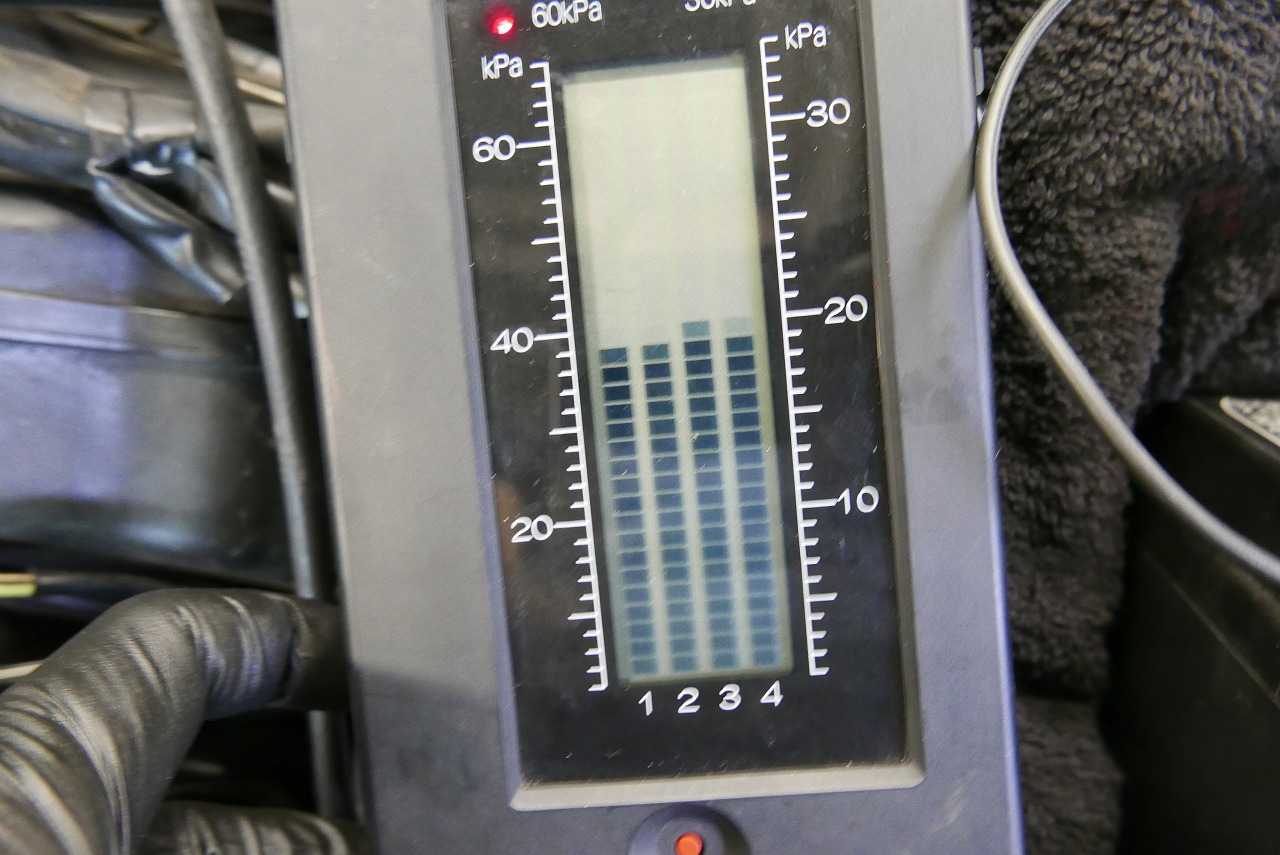
After that, we sync the carburetors and we’re done.