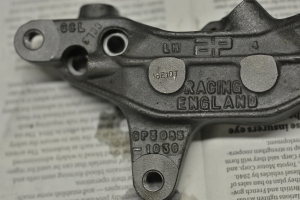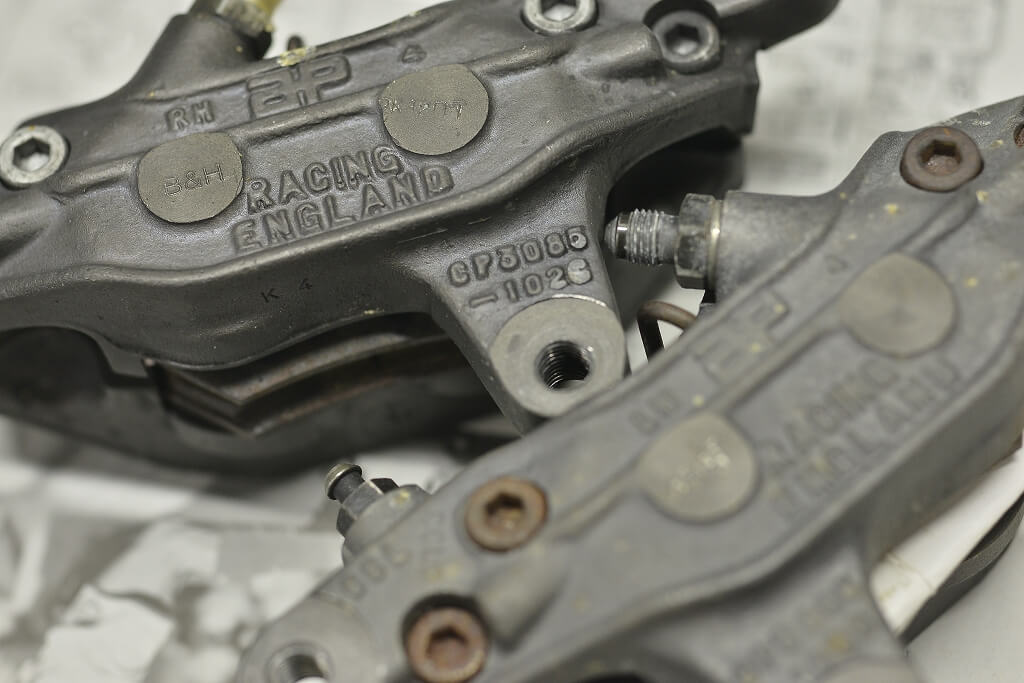
We’ve decided on the CP3369 for the front caliper.
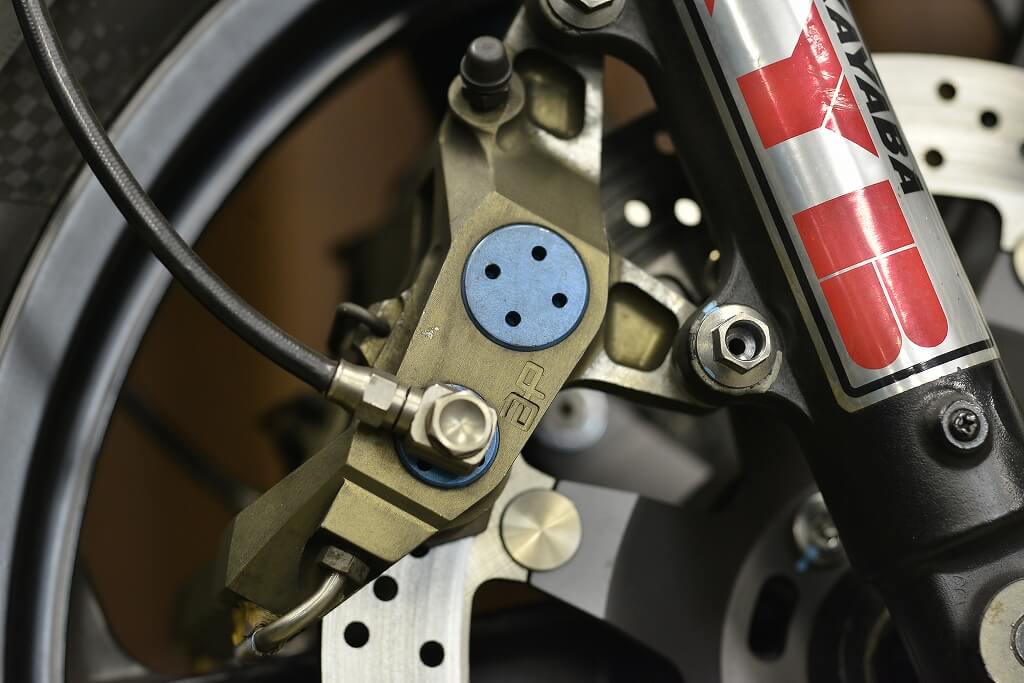
When it comes to selecting a brake caliper, here’s how we think about it…
• Repair kits and OH (overhaul) are available.
• There’s a wide selection of brake pads.
• Mounting pitch, weight, and compatible rotor diameter
• The design makes you happy when installed.
• Repair kits and OH are available.
This is really important—if seal rubber parts aren’t available, you’re in real trouble.
From what we’ve seen during inspection, each manufacturer uses different rubber materials and interference fits. We can research the body dimensions, but rubber is quite tricky.
Brembo seals are really good. It’s amazing how they seal so well with that mysterious interference fit. AP, on the other hand, seals quite firmly, so it feels a bit stiff.
• There’s a wide selection of brake pads.
With Brembo and Lockheed, most manufacturers make pads. You can dial in the bite soft or hard. You get to choose the feel you like.
If there’s only one supplier, that’s tough. Nothing’s harder than a one-off consumable part.
• Mounting pitch, weight, and compatible rotor diameter
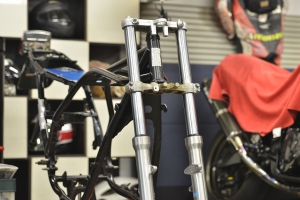
There’s compatibility with the fork you’re using, so think it through carefully. If you use a wide-pitch caliper on a narrow-pitch bottom case, the look is unbalanced. Don’t buy and regret—consult first.
We’ve seen cases where using an obscure caliper meant the support fabrication cost more than the caliper itself.
Going from a stock-equivalent four-piston to an aftermarket four-piston and fitting a cheap thin support is also a tough call.
• The design makes you happy when installed.
Performance and design both matter. You want to polish it. When it’s something you want to photograph, working on it and maintaining it is fun.
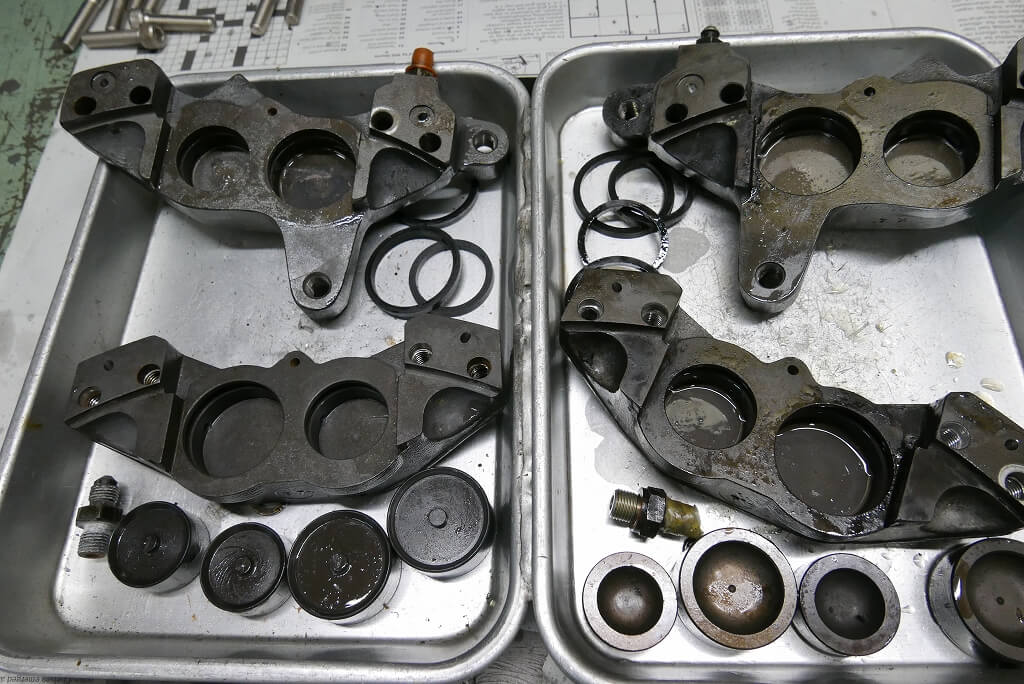
First, we disassembled it—
Now I’m wondering why we only ordered one caliper seal kit for one caliper… Anyway, we cleaned it and prepped it.
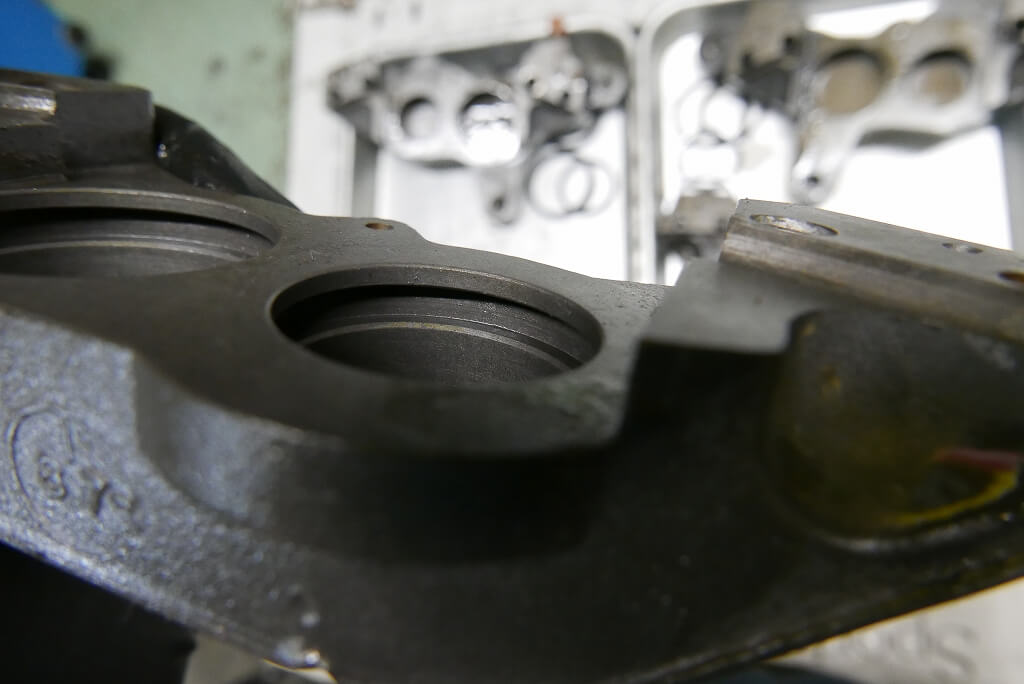
It’s an anodized caliper, so it’s in nice condition.
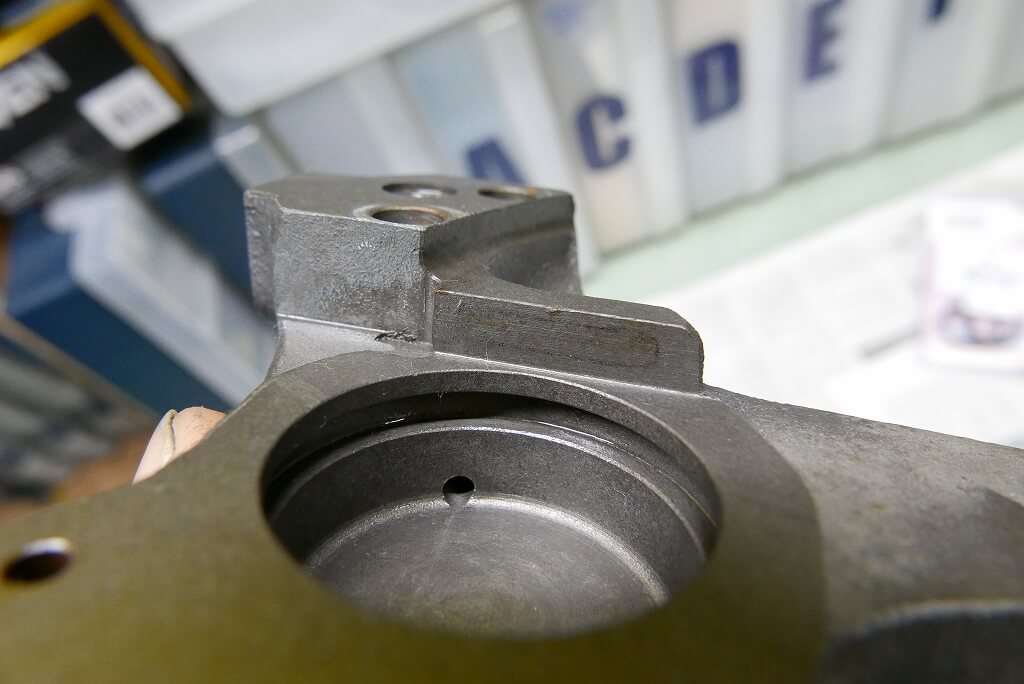
What matters is wear in the front-to-back direction. The brake pads are basically held by the body. The pad pins are just there to prevent loss.
When they’re used hard, the body wears down, so you need to watch for that. *Though we don’t see many that are worn that badly.
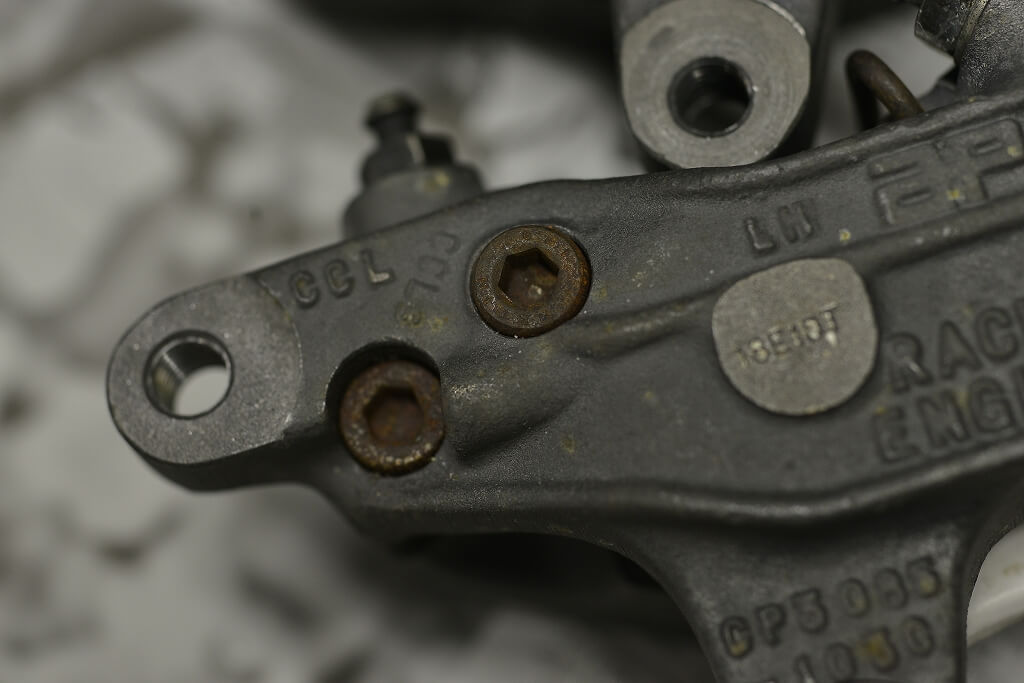
The bolts are rusty and sad—we’ll clean them up with nickel-plated bolts.
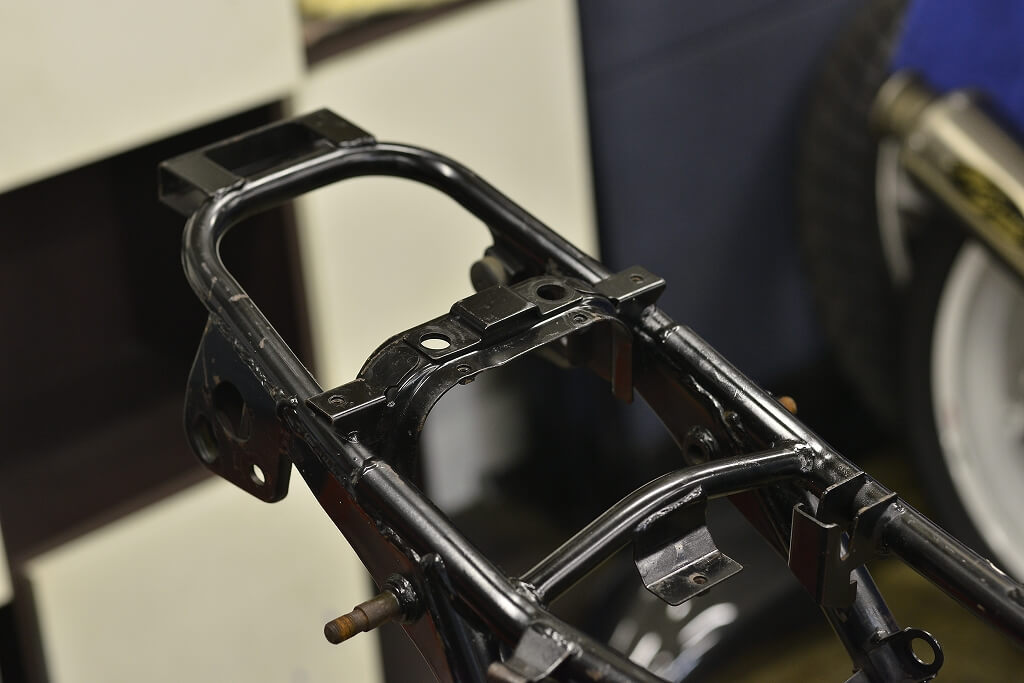
And now for the concept to make it MK2-spec.
Welding would be faster. But whether you’re fitting a round tank or a square tank, it’s probably better not to touch it.
We hear it all the time:
“Carelessly welding here and there, cutting willy-nilly, and then regretting it later.””
It’s a tough call for the customer or whoever’s requesting the work.
Nowadays, with the internet, you can get a pretty good sense of what the final result and quality will look like.
But there’s a lot that photos can’t convey, so it’s important to think through various things on your own.
For example:
• Steering lock is super tight
• No handlebar lock
• Riding position is harsh
• Controls are heavy or stiff
• Engine won’t start/dies/floods/stalls.
Just one more issue and you don’t want to ride it anymore.
A Japanese sword’s sharpness always needs maintenance. But there’s something nice about an axe—a bit rough, but you know it won’t break.
We think the best finish is one that fires up easily with a casual “let’s go,” doesn’t break, and never gets boring to look at.
But expecting a custom bike to have the same reliability as a factory original is a mistake. The time and cost involved are just too different.
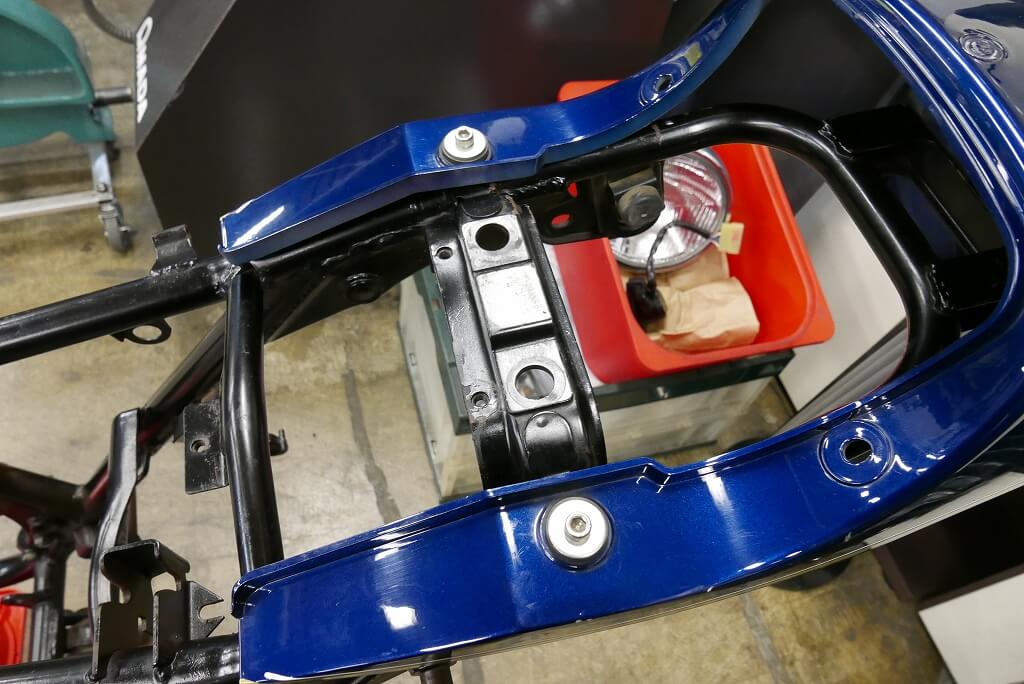
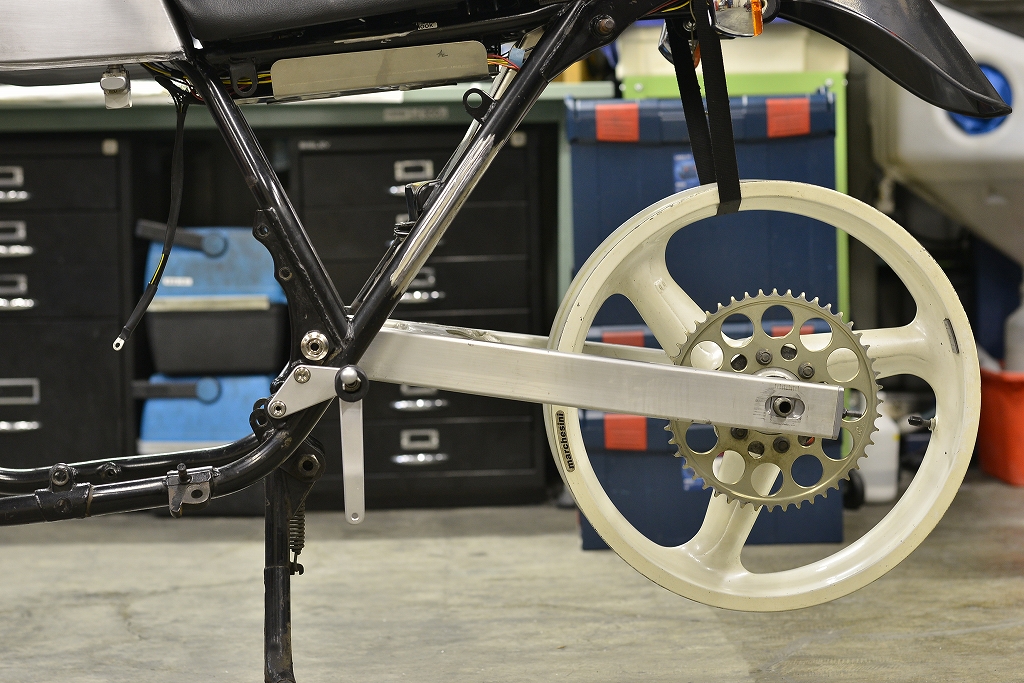
Got off track there. Probably the position is the same, but the tail light bracket mounting point is different.
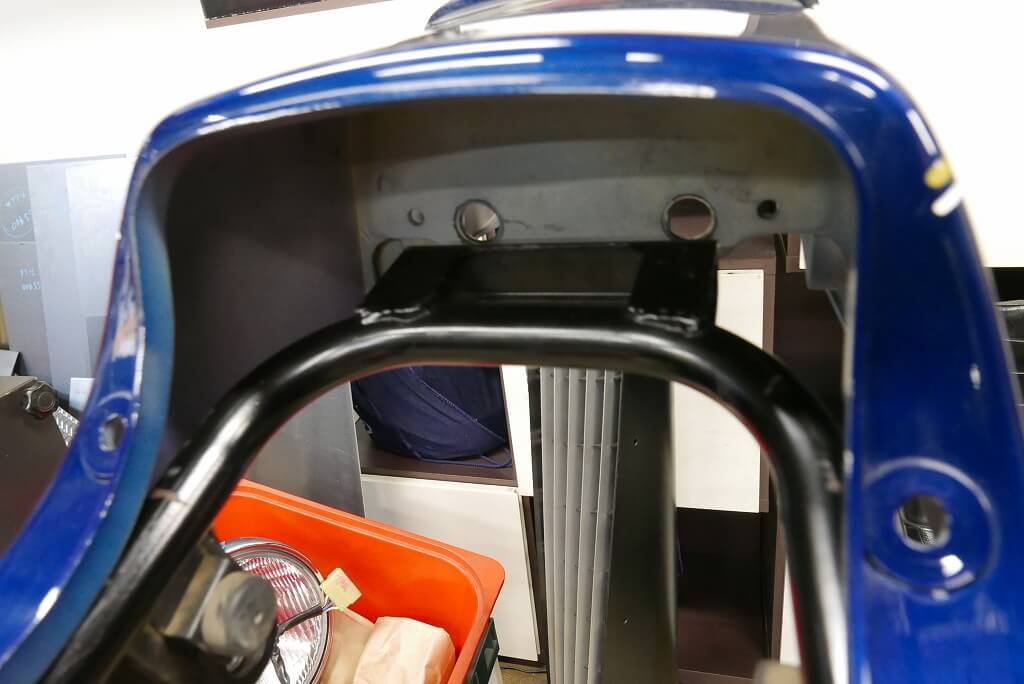
Going through that wall and up there… it’s a bit of a hassle.
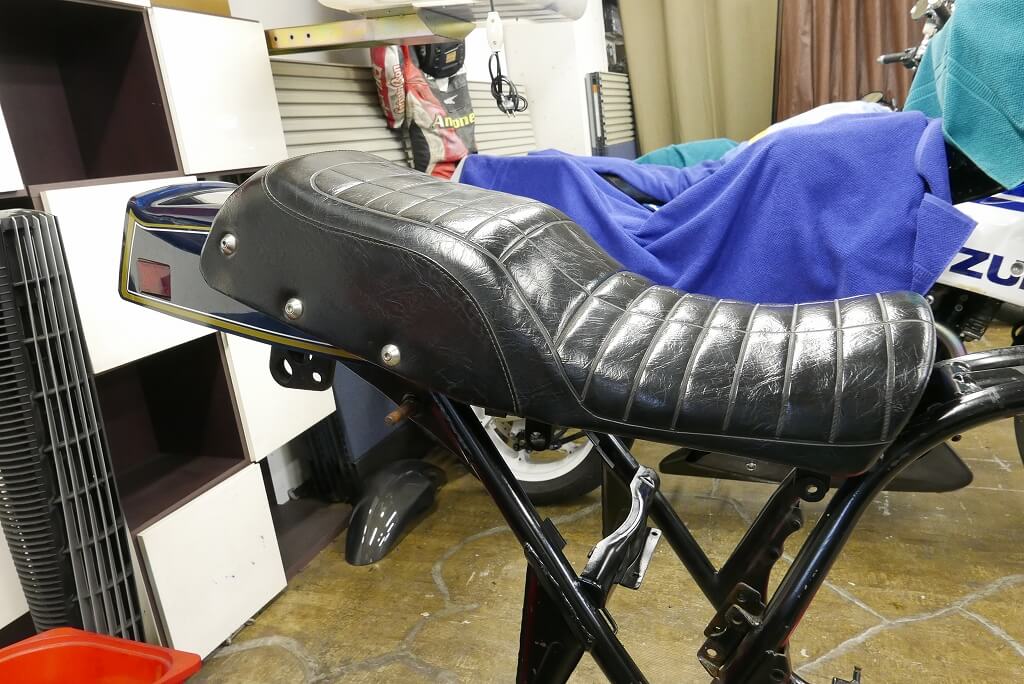
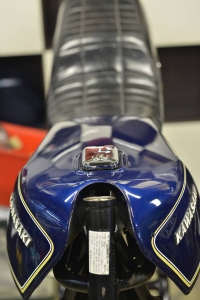
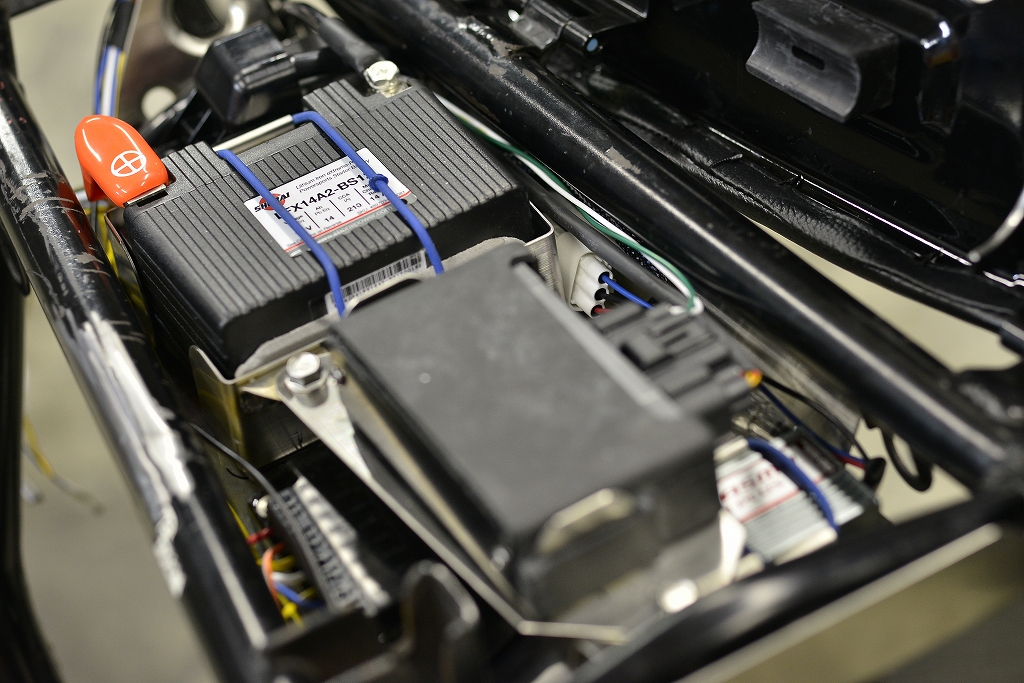
For the seat mounting, we’ll probably leave the frame alone and cover it with a seat base or support. We borrowed an FX1 that’s in for inspection.
* Please have customization done at a custom shop.
We don’t do customization at our shop.