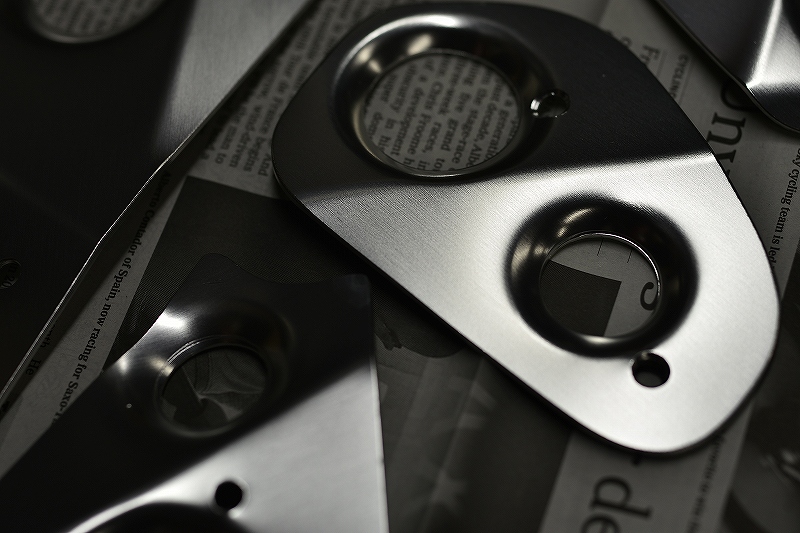
Once aluminum parts are finished being machined, applying surface treatment like anodizing will keep them looking great for much longer.
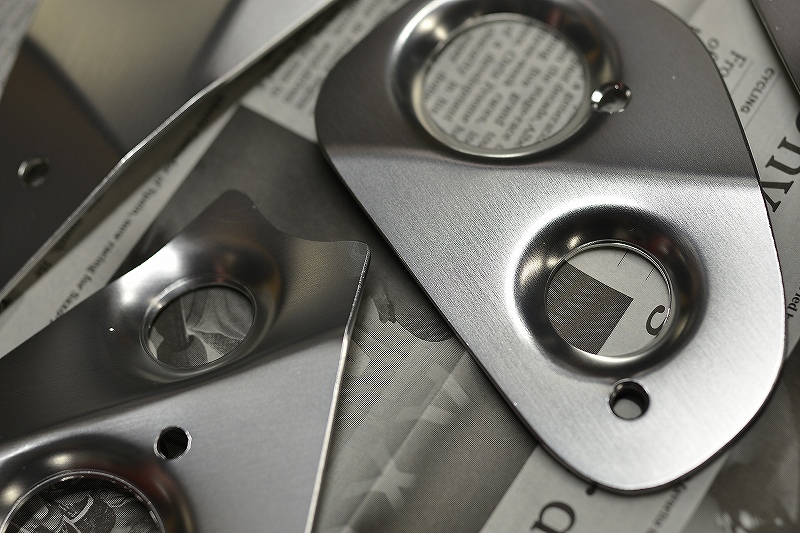
Anodizing comes in many varieties—colored, hard coat, and lubricious types, among others.
Why do we recommend treatment? Because the fresher the surface right after machining is complete, the better the finish turns out.
If corrosion sets in and the surface becomes pitted and uneven, you’ll need to polish and buff it out, and there’s a risk of uneven coloring.
I think it’s better to do the treatment than to skip it.
If there’s a chance of breakage or cracking, we may need to repair it with welding, so there are rare cases where we don’t do the treatment.
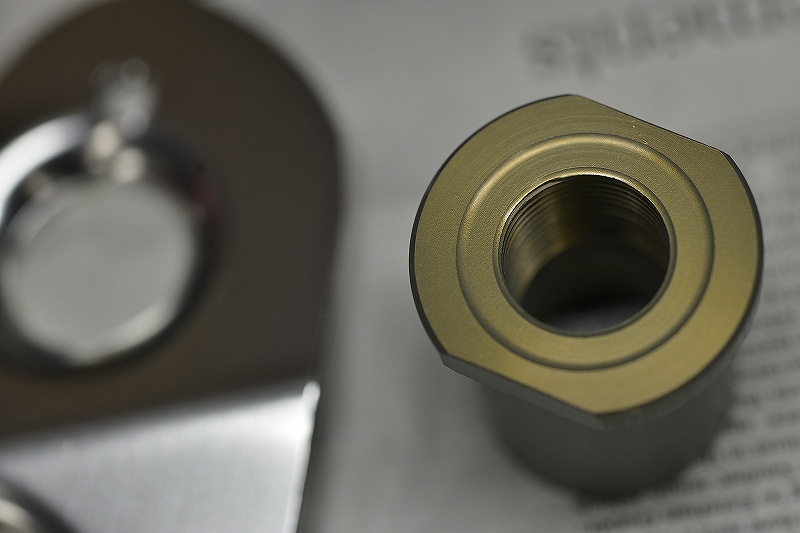
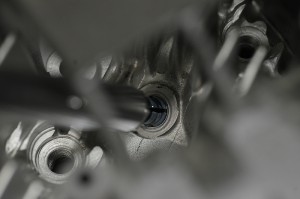
We went with hard coat anodizing for the axle nuts. Since this is a high-traffic area—removed and reinstalled frequently during tire changes and fork service—we chose hard coat to improve wear resistance.
And I really like this color too. You can add color on top of hard coat anodizing as well.
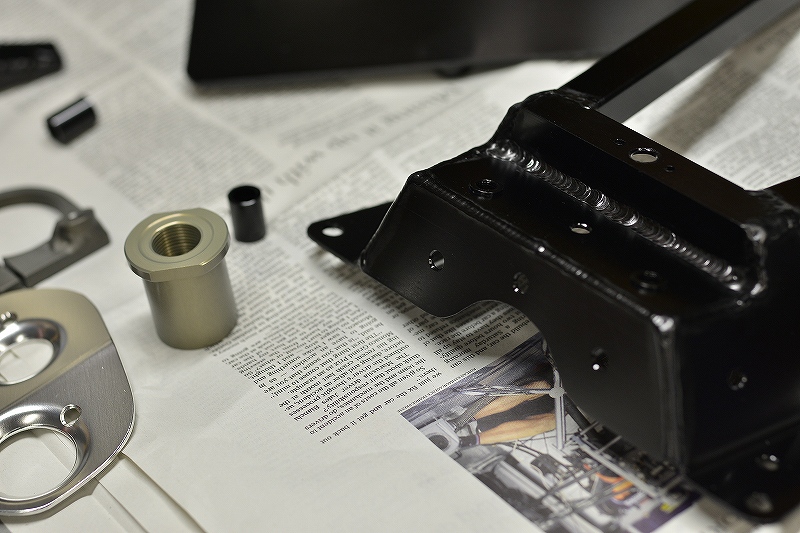
Colored anodizing is available in both matte and glossy finishes. However, whether you get your desired color depends on the base material and its composition.
Even the same black can look quite different depending on which colors the anodizer has in stock.
If you want a specific color, painting is more reliable, but it’s vulnerable to impact and scratches. That said, touch-up pen repairs are possible, and even after re-machining or welding, a good paint job can hide a lot.
Colored anodizing is only about 50µm deep at most, so the underlying material shows through in the color, making touch-up repairs obvious. Plus, you lose conductivity, so you need to strip more anodizing during welding, making it harder to hide repairs.
It’s a matter of choosing the right tool for the job, but it’s definitely a tough call.
Please note that we do not accept requests or consultations for anodizing alone. We’re on track to have it ready by next weekend.