Introduction: The Background of 1980s–1990s Bike Price Surges
In recent years, used prices for Japanese motorcycles manufactured in the 1980s–1990s have skyrocketed, creating what might be called a “vintage bike boom“ (Get your hands on an iconic 1980s bike! 〖Before the price surge turns them into ‘legends’〗 | WEB Young Machine | New Motorcycle News). Legendary 1970s models—such as the Kawasaki Z1—already trade for several million yen, sometimes exceeding 12 million yen, becoming ultra-premium collectibles. Meanwhile, 1980s models are steadily appreciating and are predicted to eventually reach valuations comparable to 1970s bikes
Given the above context, I’ll organize 1980s–1990s Japanese bikes recognized for high asset value by type—”Naked (Street),” “Racer Replica (Two-Stroke),” and “Superbike (including homologation models)”—to provide a structured overview. For each model and series, I’ll explain the reasons for price surges, market trends, which years and specs have become premium, and factors affecting asset value such as originality and parts availability.
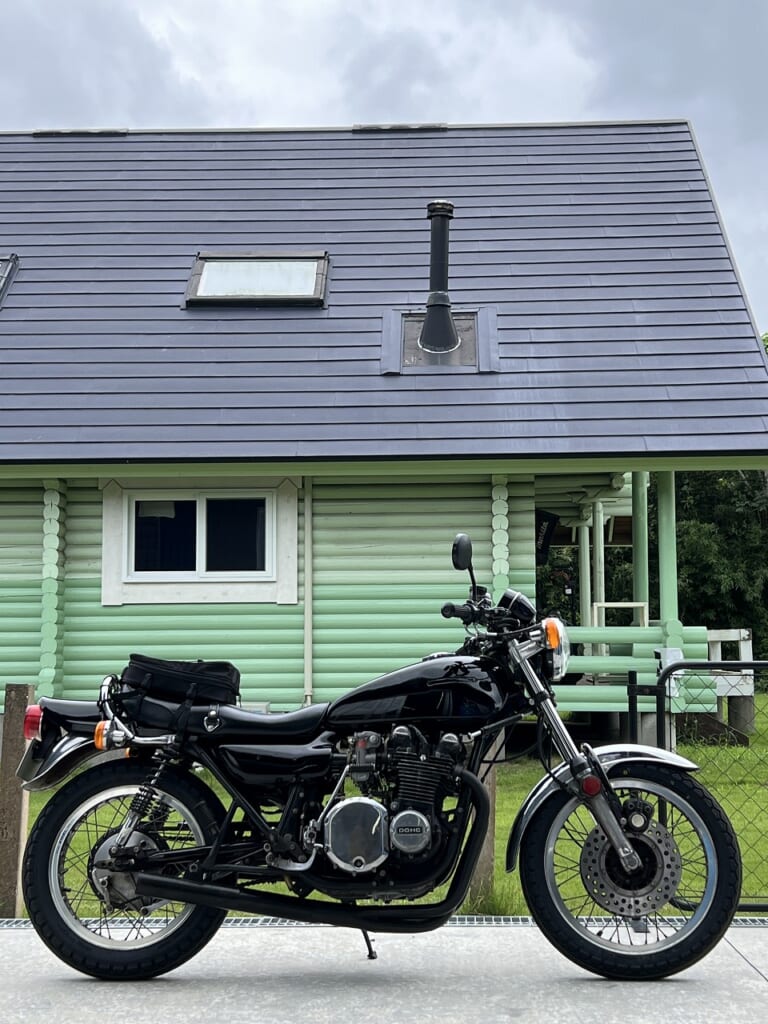
An air-cooled four-cylinder 400cc naked classic. It ignited the domestic 400cc vintage boom and was hugely popular with young riders. Often used as a base for modifications, so completely original examples are extremely rare. As the Kawasaki Z1/Z2 became unobtainable, the Z400FX is being re-evaluated as “the next Z-series within reach.”
From worthless in the 2000s to now averaging over 3 million yen. Well-preserved examples trade for 3–5 million yen.
Honda CBX400F (1981–83)
Air-cooled inline-four, 400cc. Bearing the “CBX” nameplate with its high-revving engine and stylish design, it became a sensation. Popular with street racers of the era, surviving examples are scarce. A symbolic model of Japan’s vintage bike value surge.
Around 2000: ~500,000 yen → 2010: ~1.5 million yen → 2025: 4–6 million yen. Among domestic 400cc models, it commands top-tier premium pricing.
Honda CB-F Series (CB750F/CB900F, etc., 1979–83)
Large-displacement naked bikes with air-cooled DOHC four-cylinder engines. Boasting a glorious racing pedigree—including consecutive wins in the European endurance race “Bol d’Or”—they represent 1980s Honda. Recently, Honda itself unveiled a “CB-F Concept,” bringing renewed attention.
Well-preserved 750F examples exceed 1 million yen; 900F is even rarer. The model gained fame as the protagonist’s bike in the youth manga *Bari Bari Densetsu*, and prices are on an upward trend.
Kawasaki Zephyr Series (400/750/1100, 1989–07)
Launched in the late 1980s as the spark that ignited the neo-classic boom. Wearing the styling of the air-cooled Z, it became a hit at launch. Now, over 30 years later, it qualifies as a vintage bike. The Zephyr 400χ (Chi), the last air-cooled 400, is particularly sought-after. Many examples are modified, so completely stock examples are rare.
New price: 400cc = 530,000 yen → Current: Over 1 million yen common. 750/1100 are also seeing strong re-evaluation, with 750 averaging 1.5–2.7 million yen,
and 1100 often exceeding 2 million yen. The 2007 final model in fireball color commands a premium.
Suzuki GSX1100S Katana (launched 1981–) ※ Includes GSX750S Katana
A legendary model that debuted with a revolutionary sword (Katana) design by a German designer. Its shocking styling at the time earned strong collector interest, and the 1100cc version enjoys significant domestic and international demand. The 750cc version was marketed primarily domestically.
Around 2000: ~400,000 yen → Current: 3–5 million yen surge. The 750 commonly exceeds 1 million yen. Suzuki’s recent launch of a new Katana has kept the model in the spotlight and prices stable.
Yamaha VMAX1200 (launched 1985)
A power cruiser with a V-four 1200cc engine. The VMAX, designed for acceleration, became a sensation at launch and gained popularity through parallel imports. Though produced over a long period with decent numbers, it maintains a unique market value thanks to cult following.
Prices have been gradually climbing. Early models in good condition reach 1.5–2 million yen. Its distinctive niche has passionate collectors, and future asset potential is noteworthy.




 ポチップ
ポチップ