Pattern 1: For SNS posts (a tone that conveys the raw reality of the shop floor and respect for fellow craftspeople)
Today’s musings (‘ω’)
The work that gives a bike shop the best “rate” (profit margin, time efficiency) is actually consumable parts and component replacement maintenance. Not major repairs or one-off custom builds. Repairs have to deliver a guaranteed result, and custom work always hits unexpected walls once you open things up. There’s a real world where you ask yourself, “…what’s that work worth per hour?”
In such a harsh environment, keeping the shop afloat means somewhere, somehow, “compromises” and “trade-offs” have to happen—and I understand that painfully well. From a technician’s perspective, “low fixed costs and plenty of workspace” is an overwhelming advantage. Without that, the only way to survive in the city might be to “spin at maximum RPM, working without sleep” around the clock.
I’m not cutting corners out of malice. Whatever the results, I don’t casually trash fellow craftspeople grinding it out at the edge—because I know painfully well how hard and exhausting it is.
Today’s intake system & discontinued carburettor deep dive log
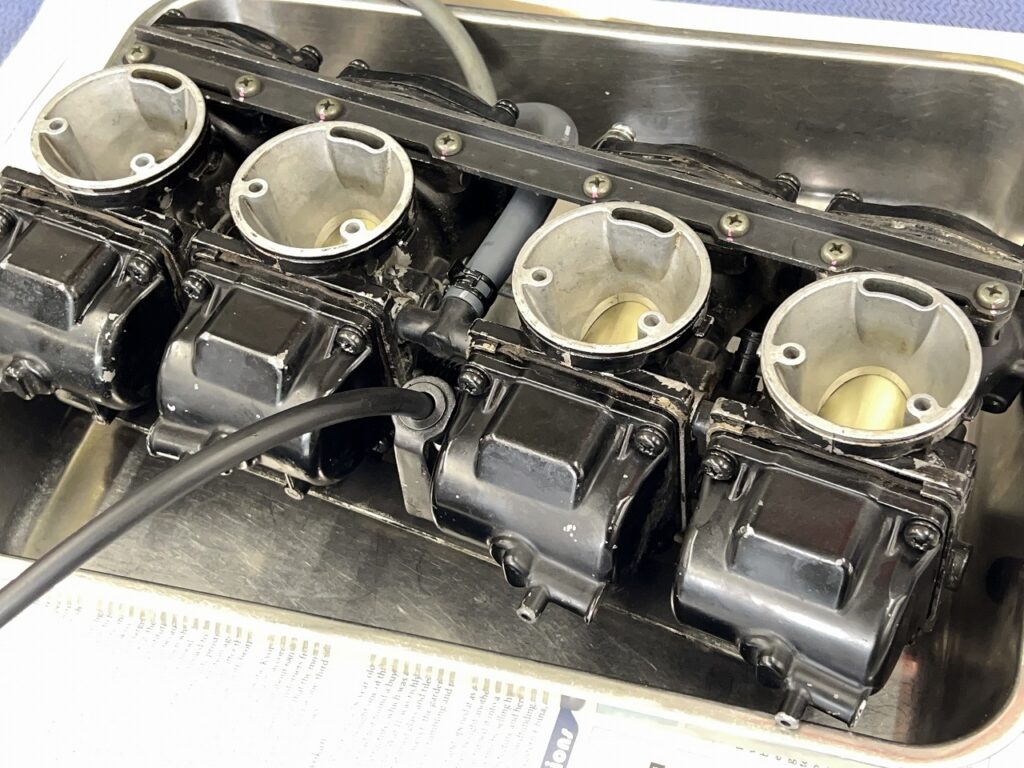
Star carburettor:Mikuni BS34 negative-pressure carburettor
The “mysteries and walls” we hit:
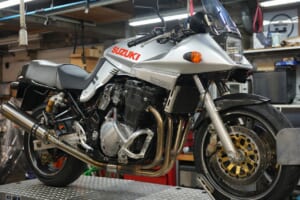
The legendary BS34, adopted on countless classics like the Z1000J/R, Z1100GP, GSX1100S Katana, and XS650.
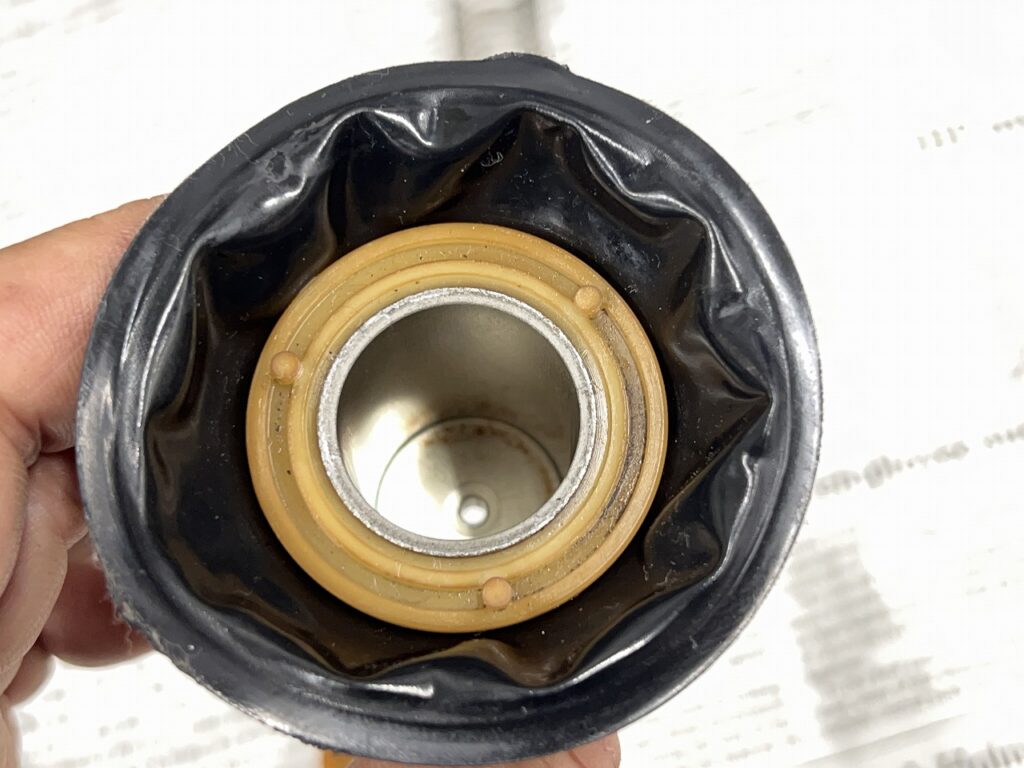
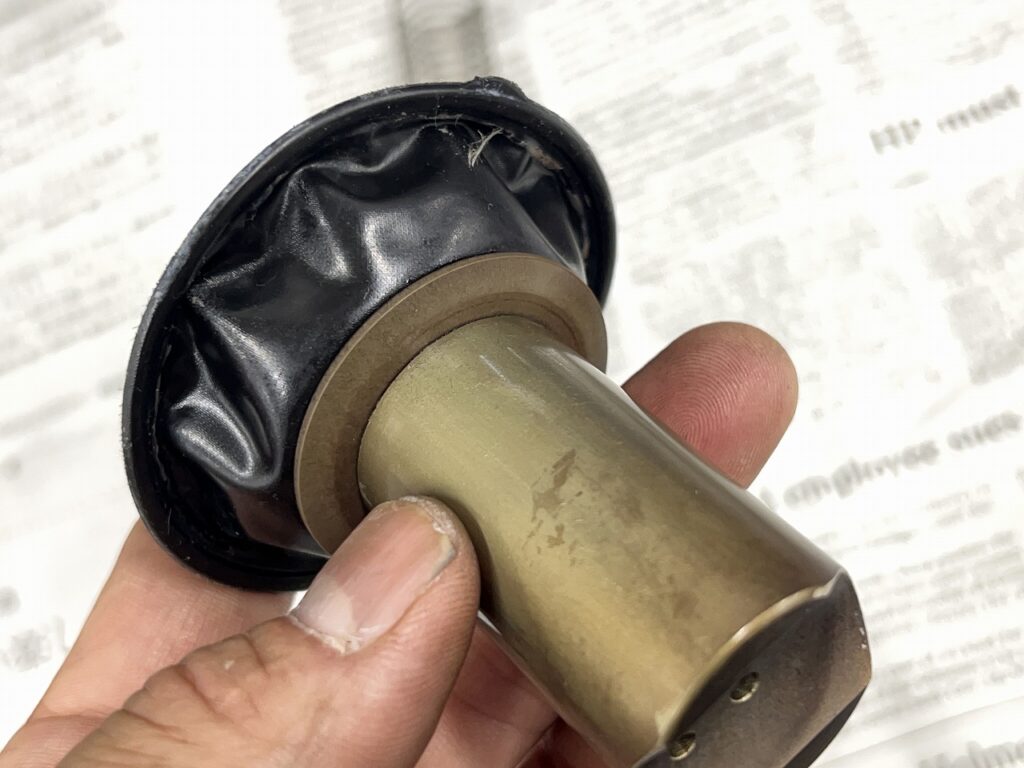
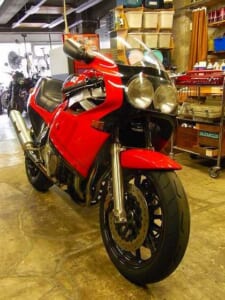
You’d think “all BS34s are the same,” butthe GPz750F’s vacuum piston and diaphragm have unique specs—differences in bore diameter, negative-pressure port shape, and ear geometry!
The OEM piston assembly was discontinued long ago. When sourcing aftermarket rubber alone and replacing it, miss these dimensions and you’re asking for airtightness leaks and malfunction.
Decoboco’s diaphragm substrate tuning essentials:
Resin piston groove cleaning and burr removal: Completely remove old rubber residue and smooth the groove edges.
Stress-free press-fit with silicone lubricant: Using a plastic spatula, seat the rubber evenly all around with zero twist or offset.
Negative-pressure chamber top cover airtightness test: Post-assembly slide test and complete-seal assembly confirming zero negative-pressure leakage.
Shop owner’s note: The heart of a negative-pressure carb is the diaphragm’s “suppleness” and “airtightness.” Don’t give up just because parts are unavailable—dig into the structure, dial in the substrate, and a 40-year-old carb will recover its sharp response in ways that’ll surprise you!
It’s completely stock, but the cold-start is terribly difficult. This time, I decided to dig in and really work through it without looking away.
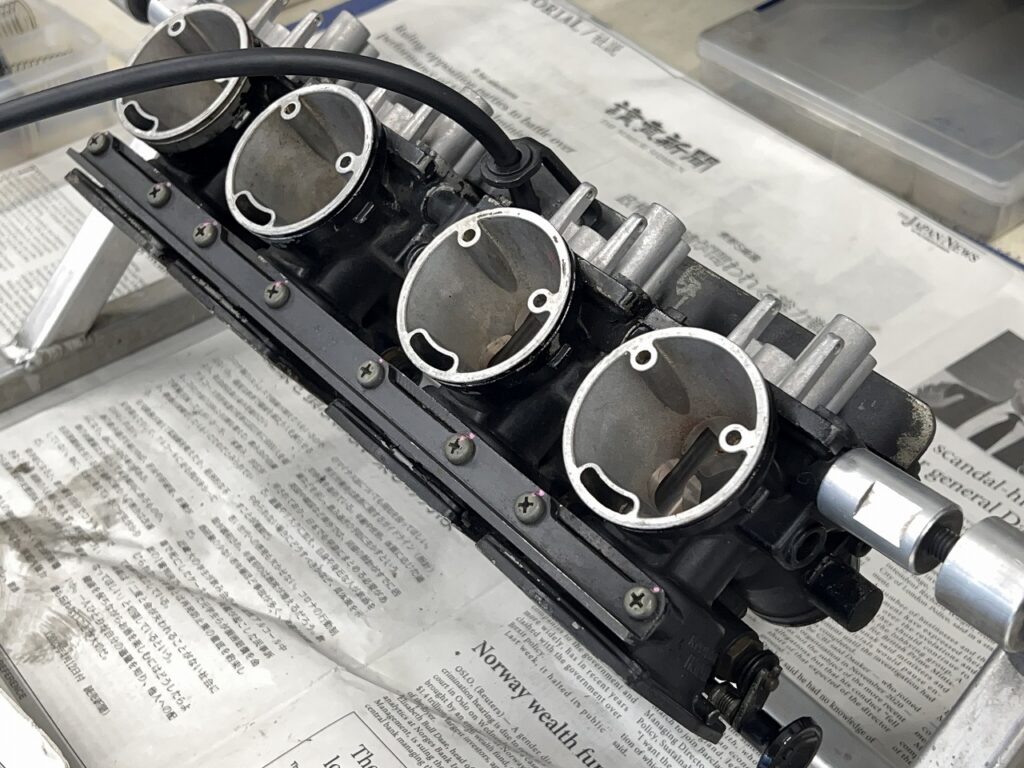
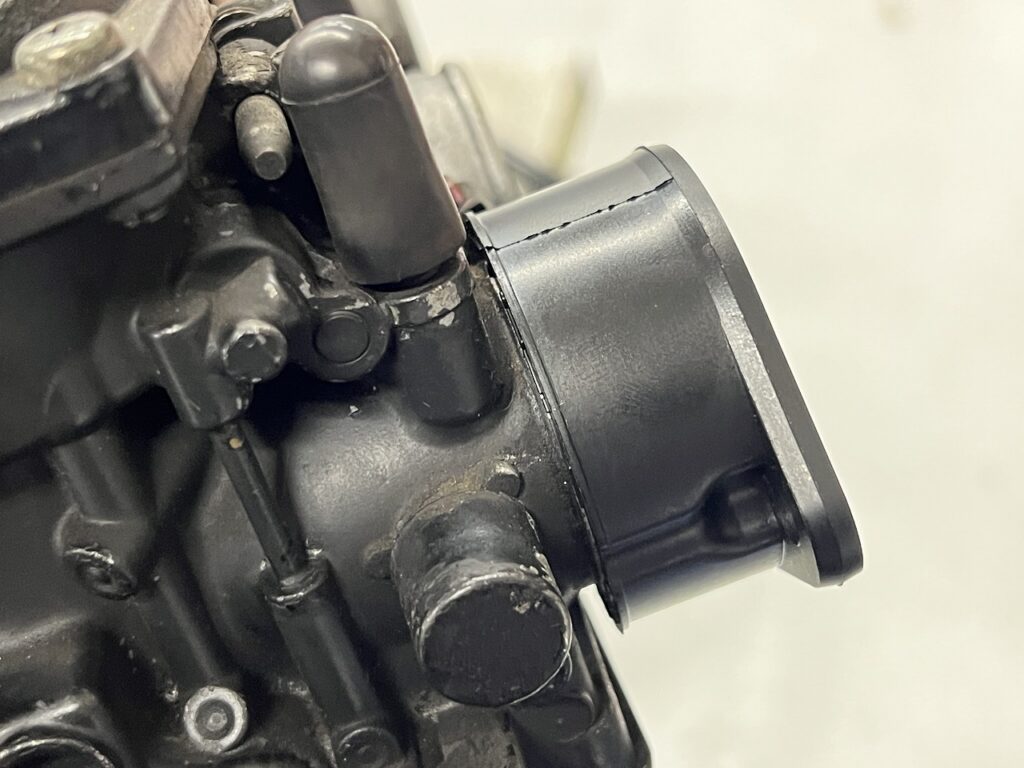
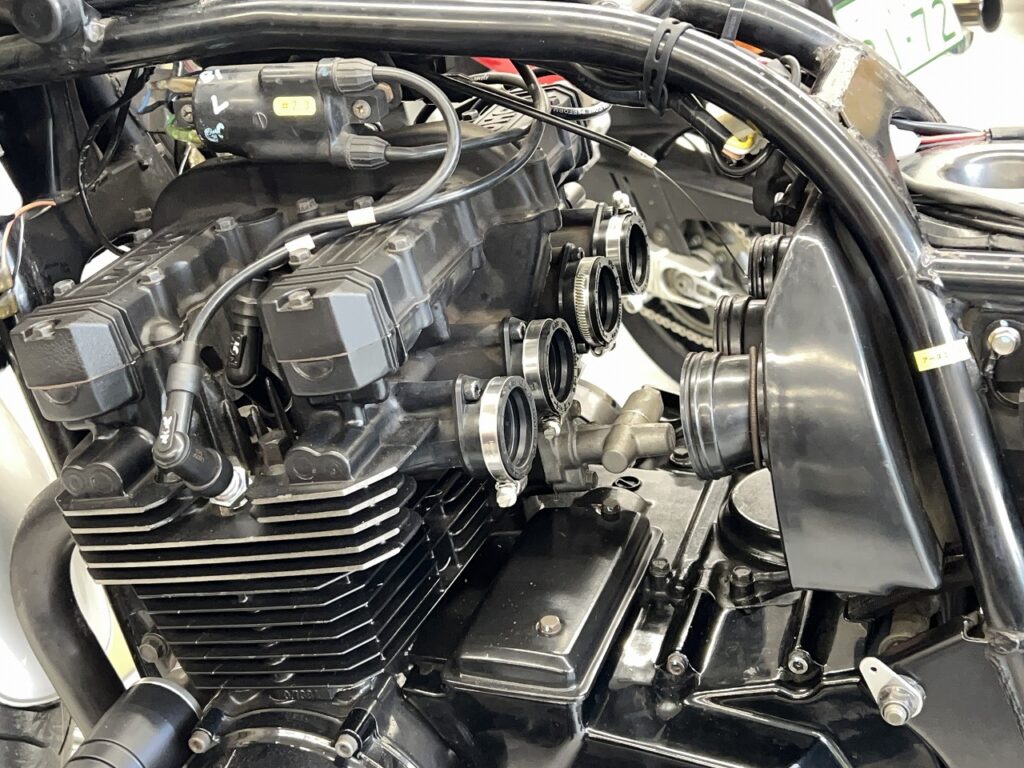
I checked the carb once before, but I’m resetting it again this time. The intake manifold was swollen from gasoline, so I replaced it with a fresh one.
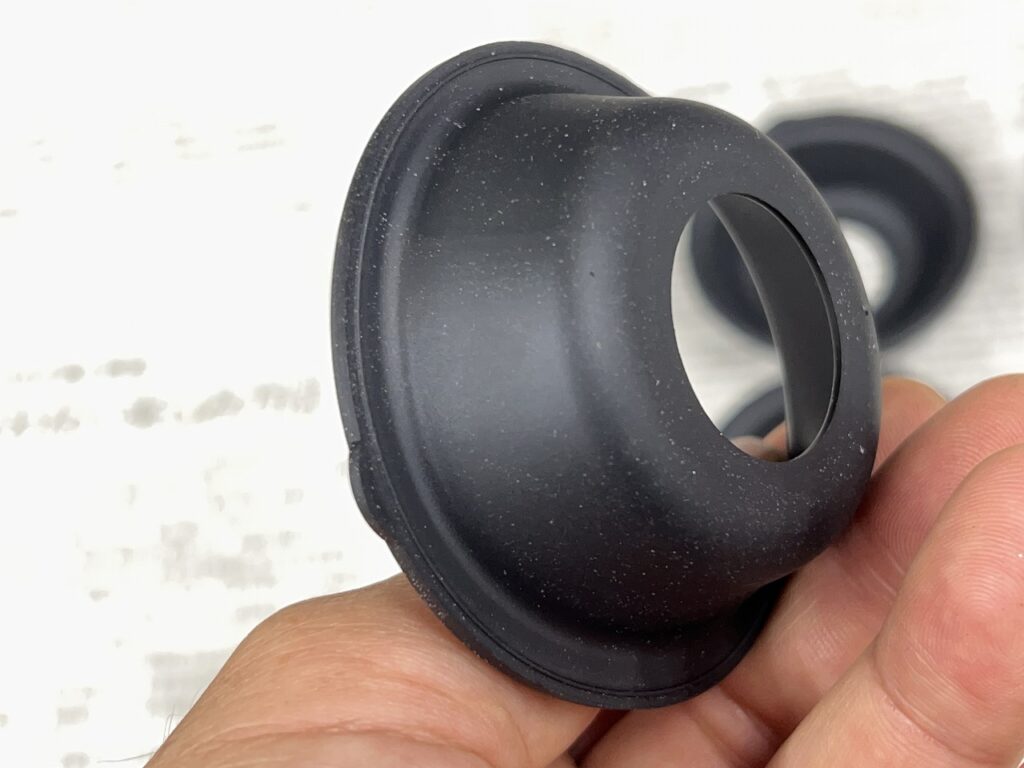
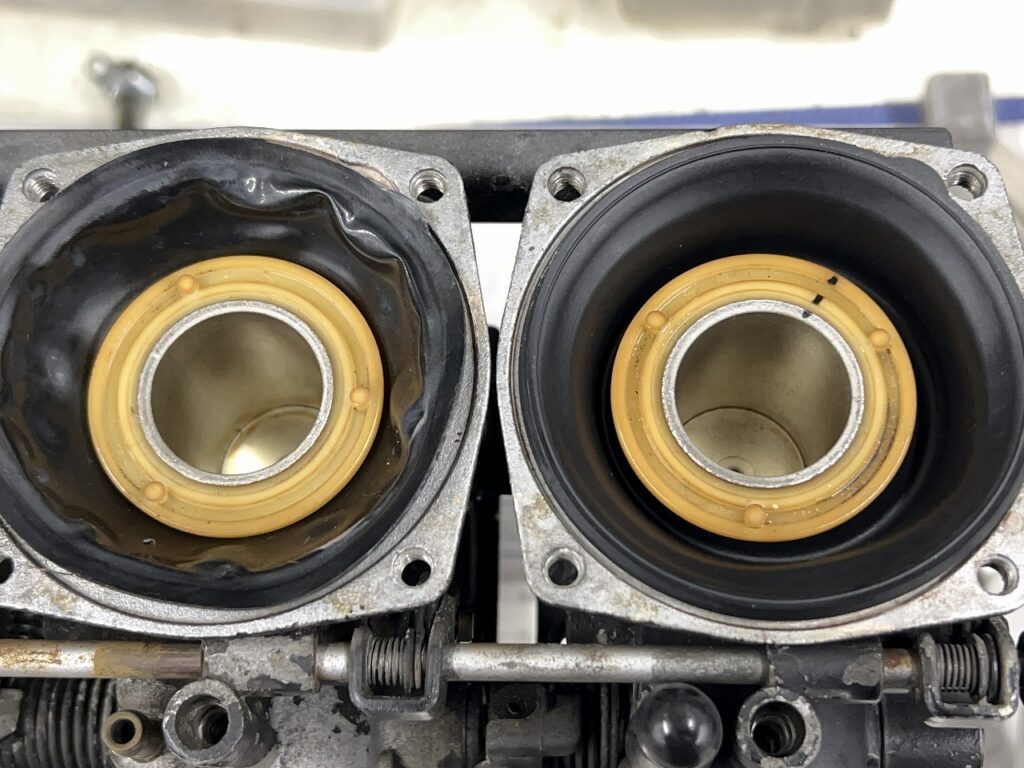
Reset even the small details. The shriveled diaphragm gets a new lease on life with an aftermarket replacement.
The shine and luster are completely different. There might not be huge changes overall, but there’s no downside to keeping things in good shape.
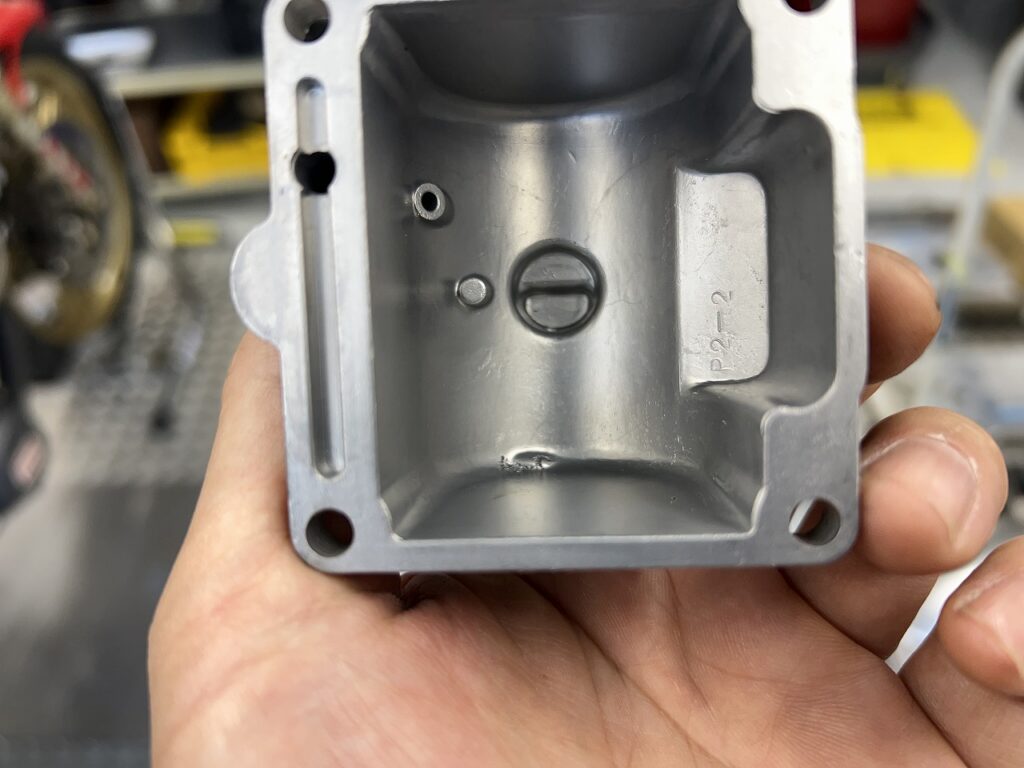
I finish the float’s inner walls with a wish-granting wet blast.
A carb set with an air cleaner box is a hassle
Nowadays, clear-file removal is a bit easier, but it’s still a pain, honestly.
The weather wasn’t great, so there was no chance for a test ride. I kept at it—maybe ten times?—pushing until things got worse. All that effort paid off: the cold-start is now flawless, a feeling worlds apart from before. The “why is it like this when it’s stock?” question that haunted me“bad is bad”
now feels like it could go anywhere.
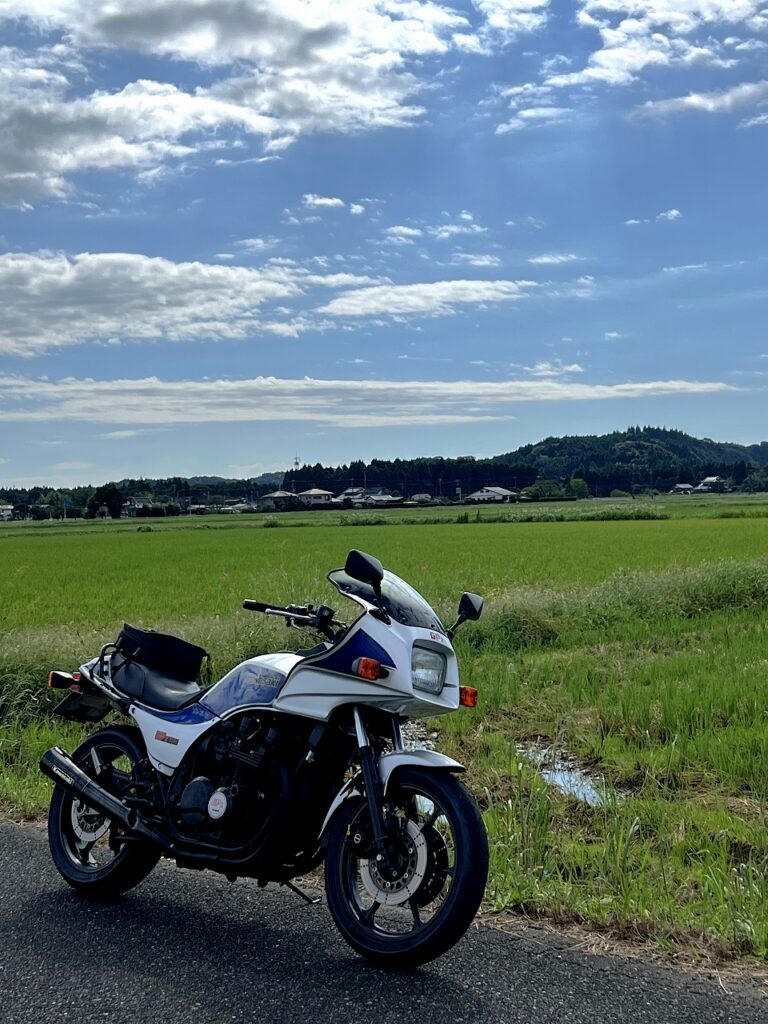
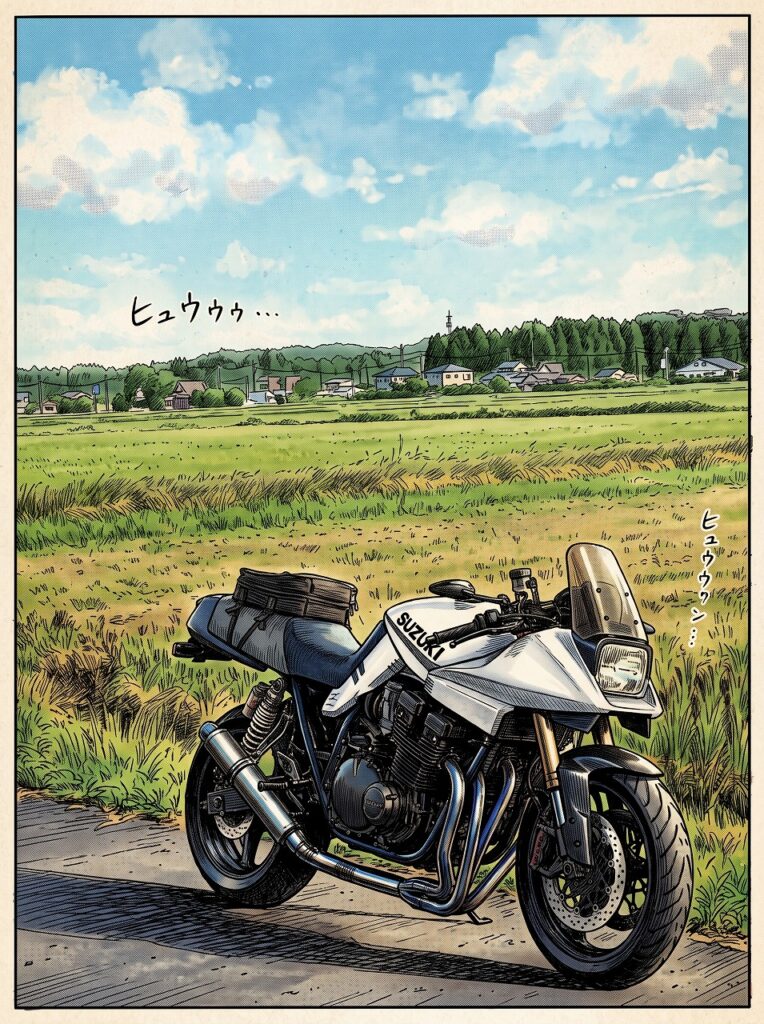
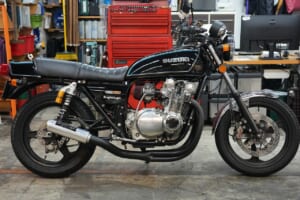
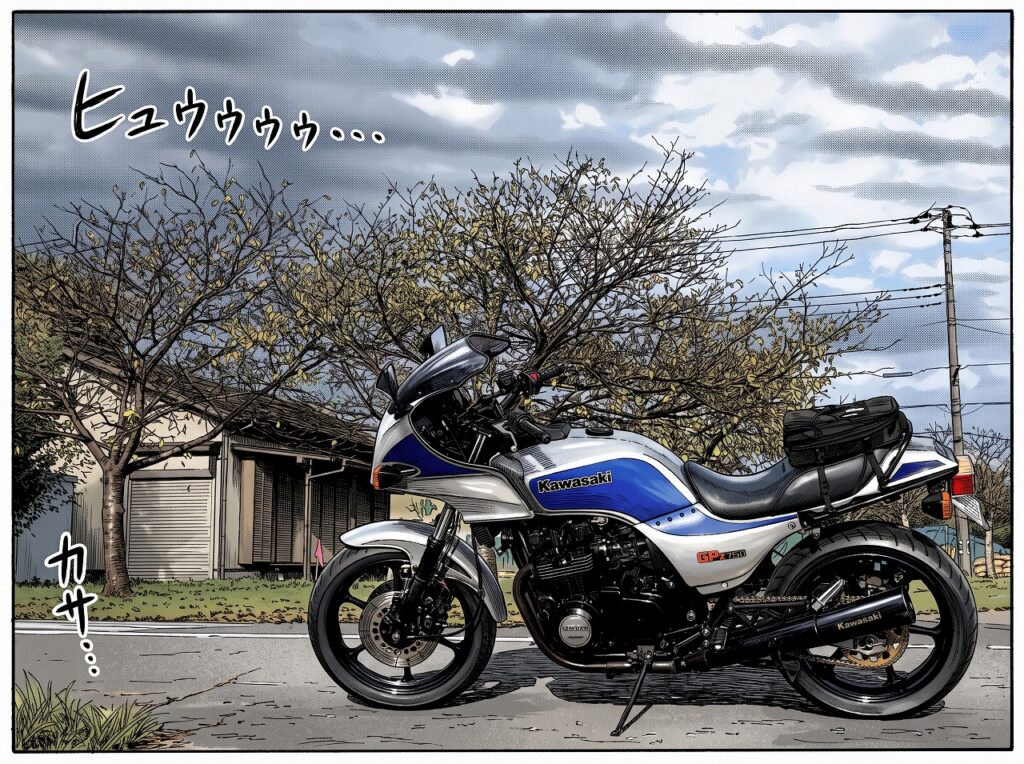
Nearly stock beauty and excellent feel
The wheels and master/rear suspension have changed, but it’s mostly stock. A 4-cylinder with dual pipes is really well thought out—so easy to ride.
The overall feel has improved and cold-start is now solid. The starter clutch slip and various other areas have all been refined. Everything worked out, and I’m happy (*´ω`*).




 ポチップ
ポチップ