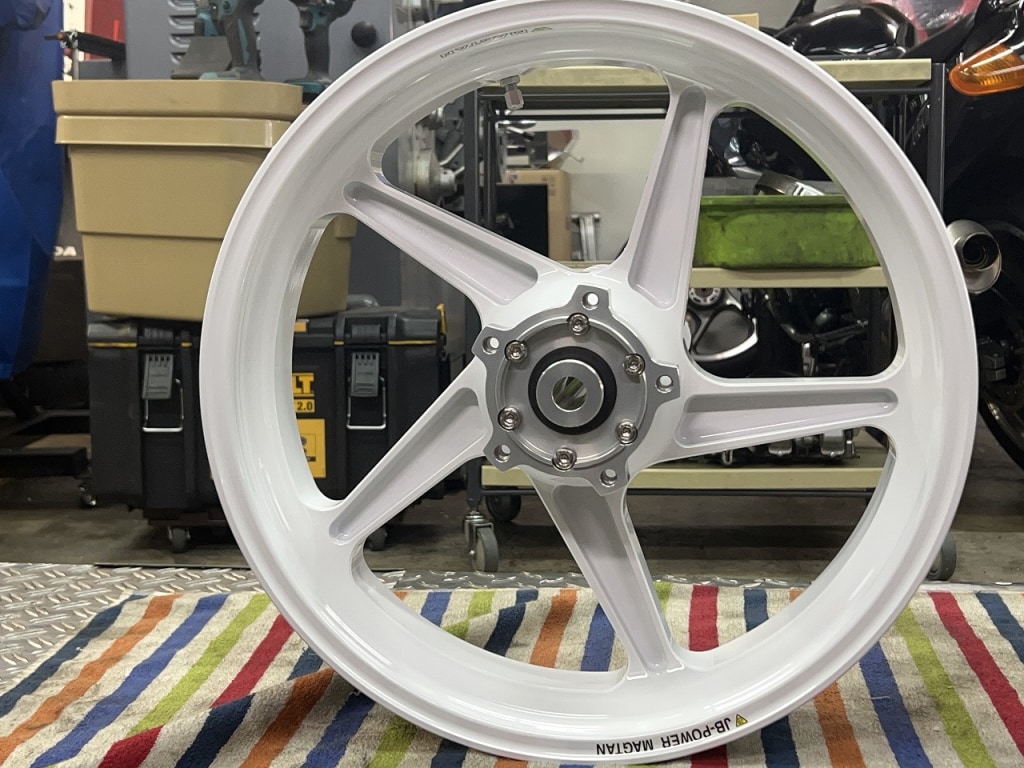
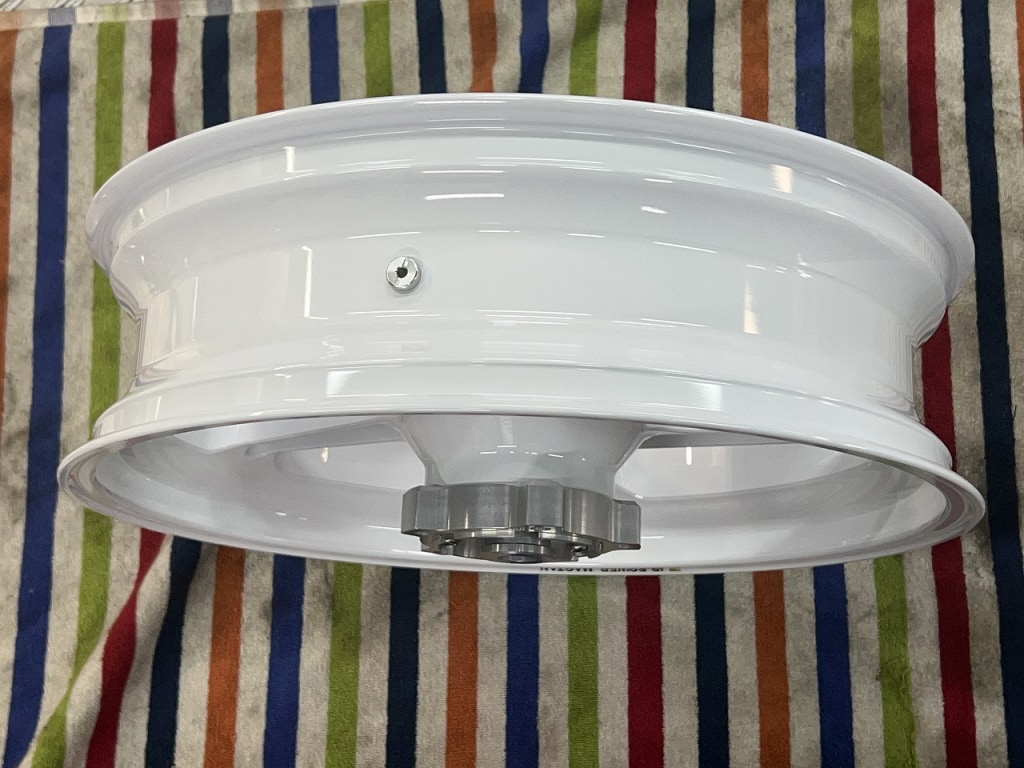
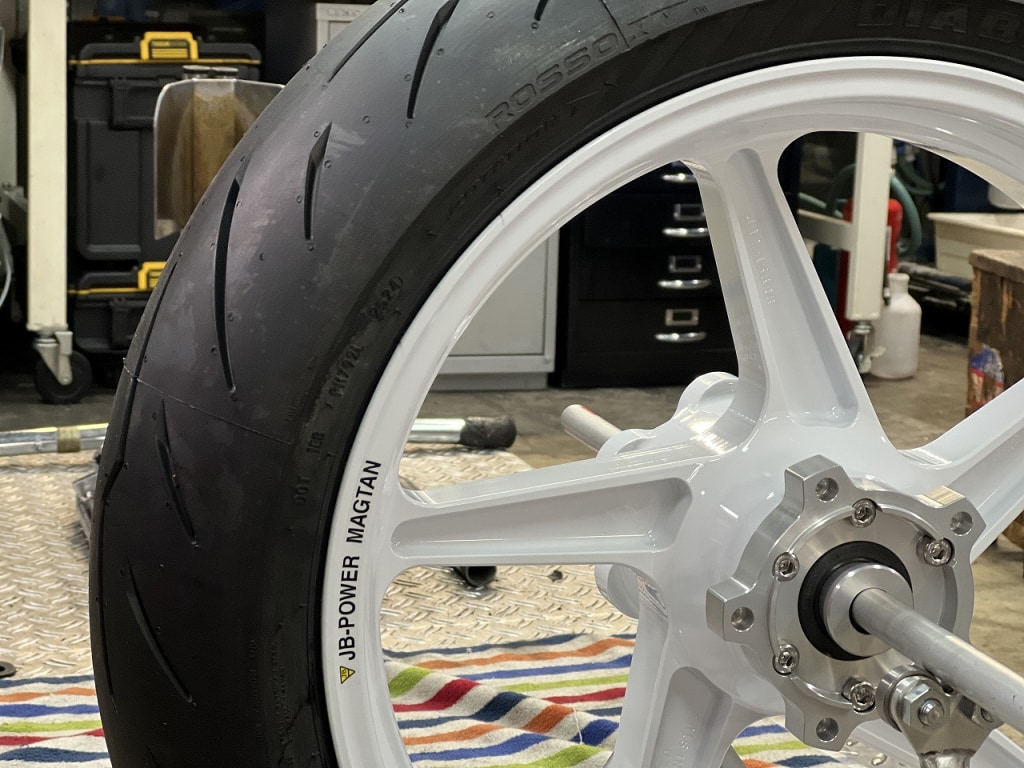
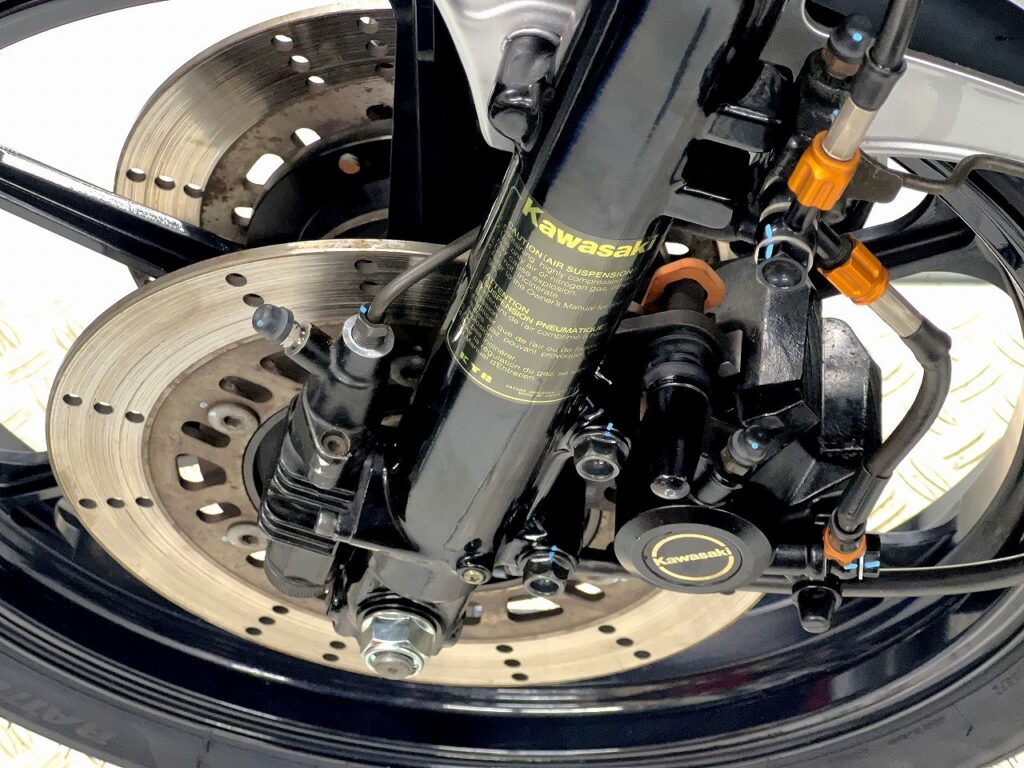
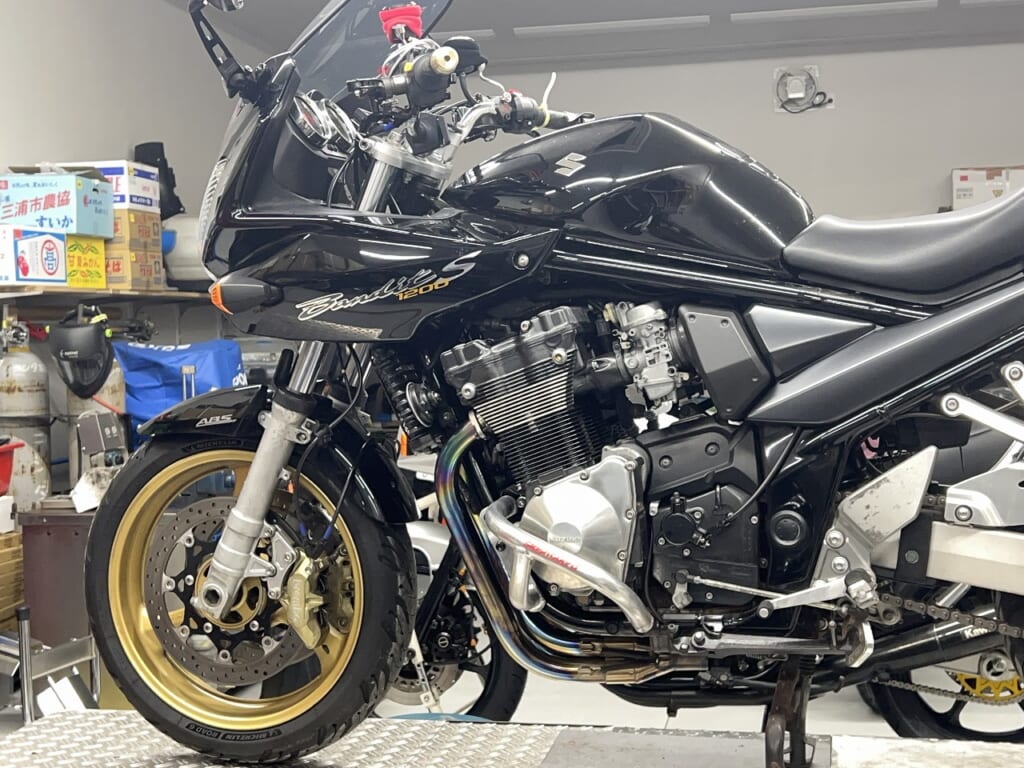
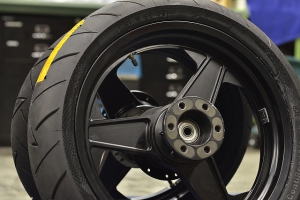
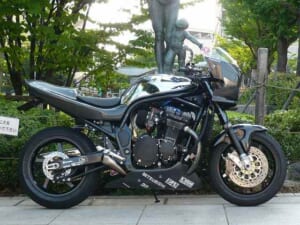
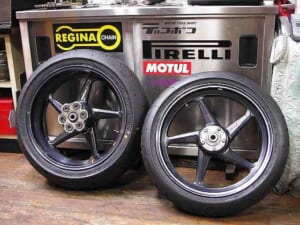
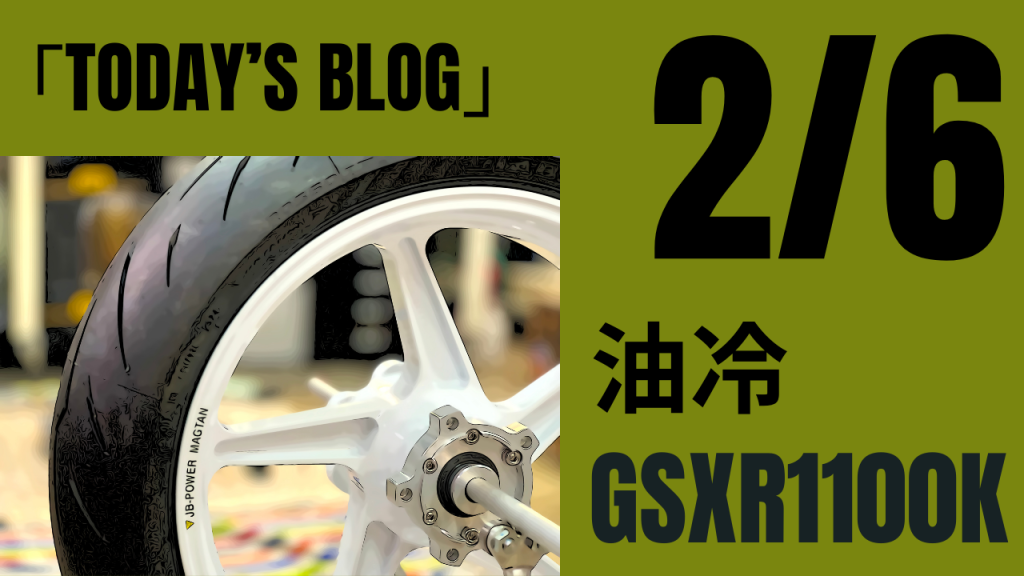
The design evokes Marchesini’s 5R and looks really sharp on it. The inside of the ribs is a bit tricky to clean, but the owner is meticulous so that shouldn’t be a problem.
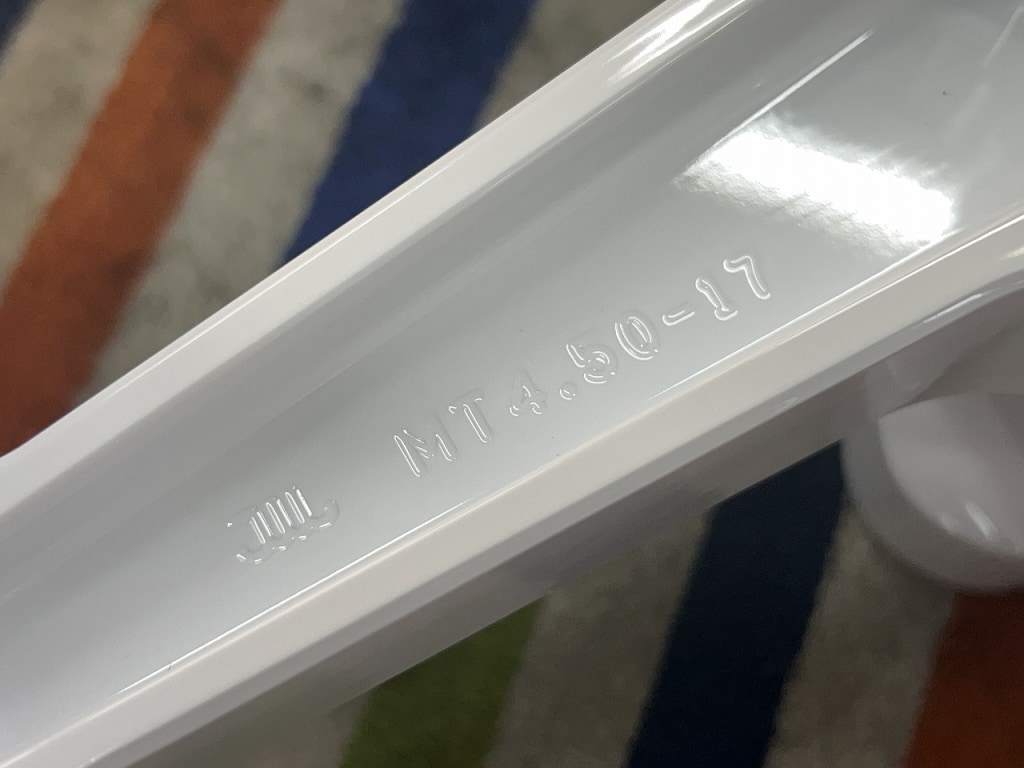
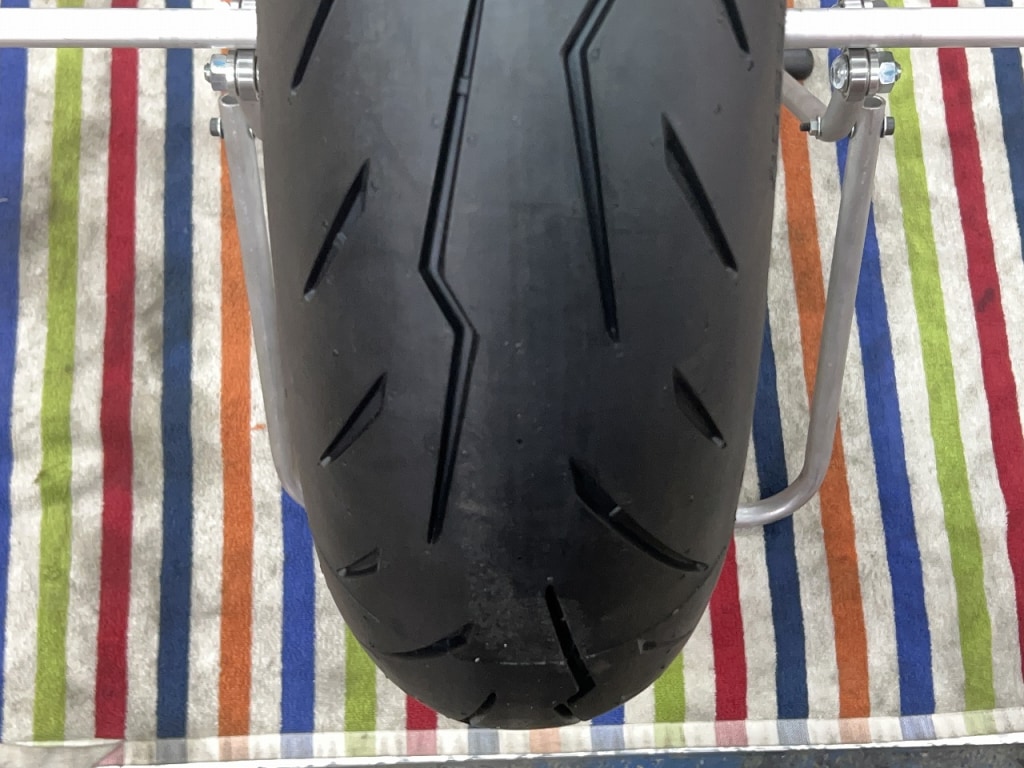
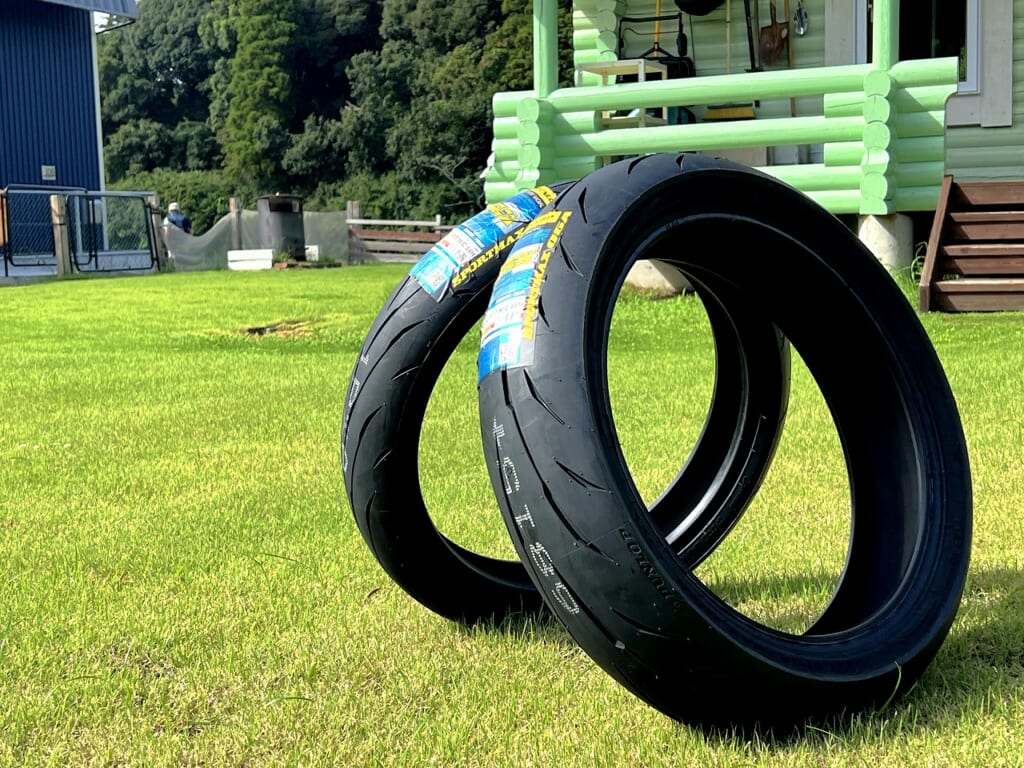
The rear wheel is the same 4.50-17 size as the GSXR 1100K. Surprisingly, this narrow size handles really lightly—you can ride it like a 400cc. It just feels like thinner tires transmit more feedback to the rider.
At 4.50-17, that’s a 160/60-17 size, and there are tons of options. No shortage of tire choices / slightly more affordable tires / light, fun handling
It’s a bit niche, but I think it’s worth trying this size. The trend these days is to go bigger and bigger, but there’s real value in thinner tires.
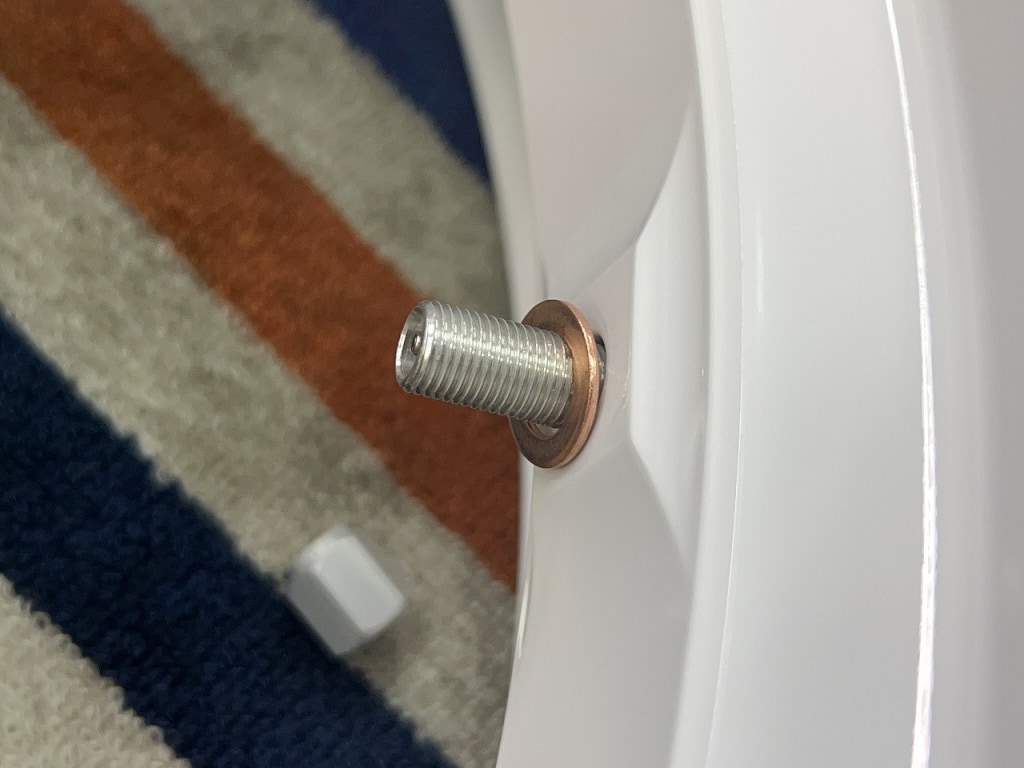
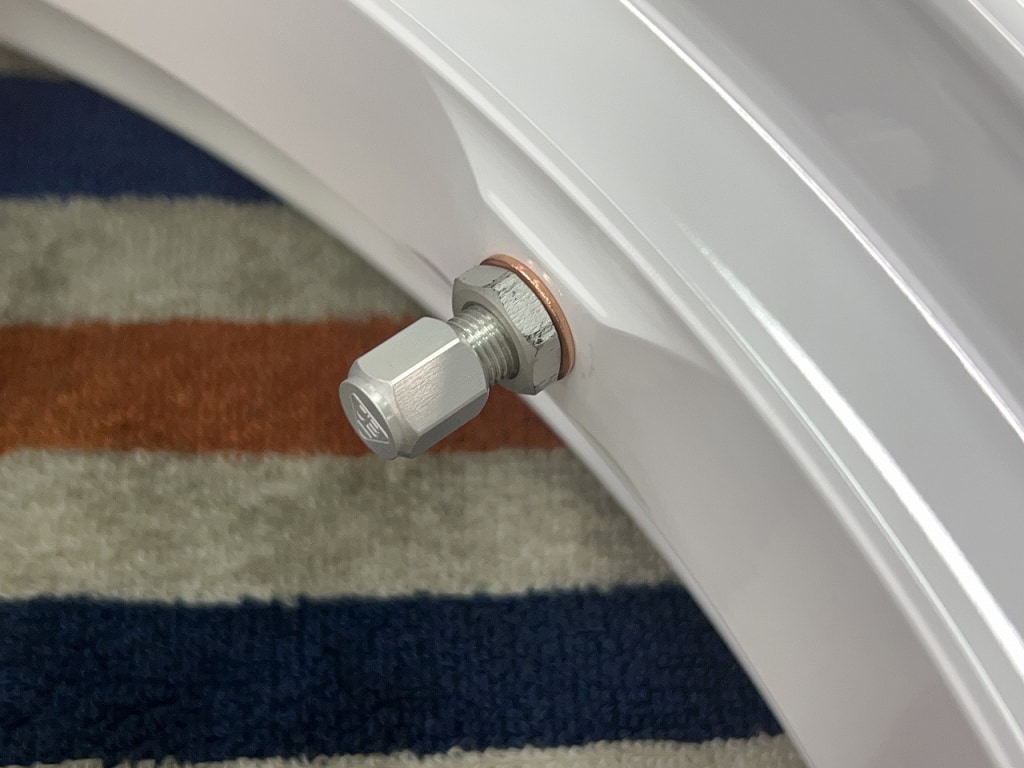
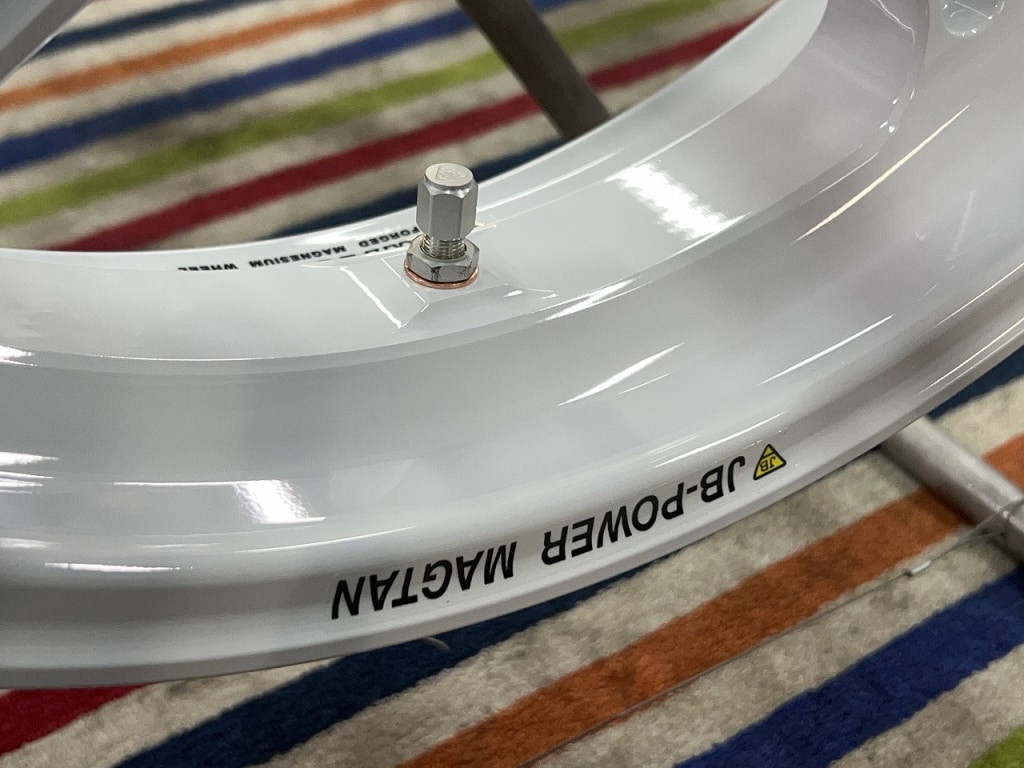
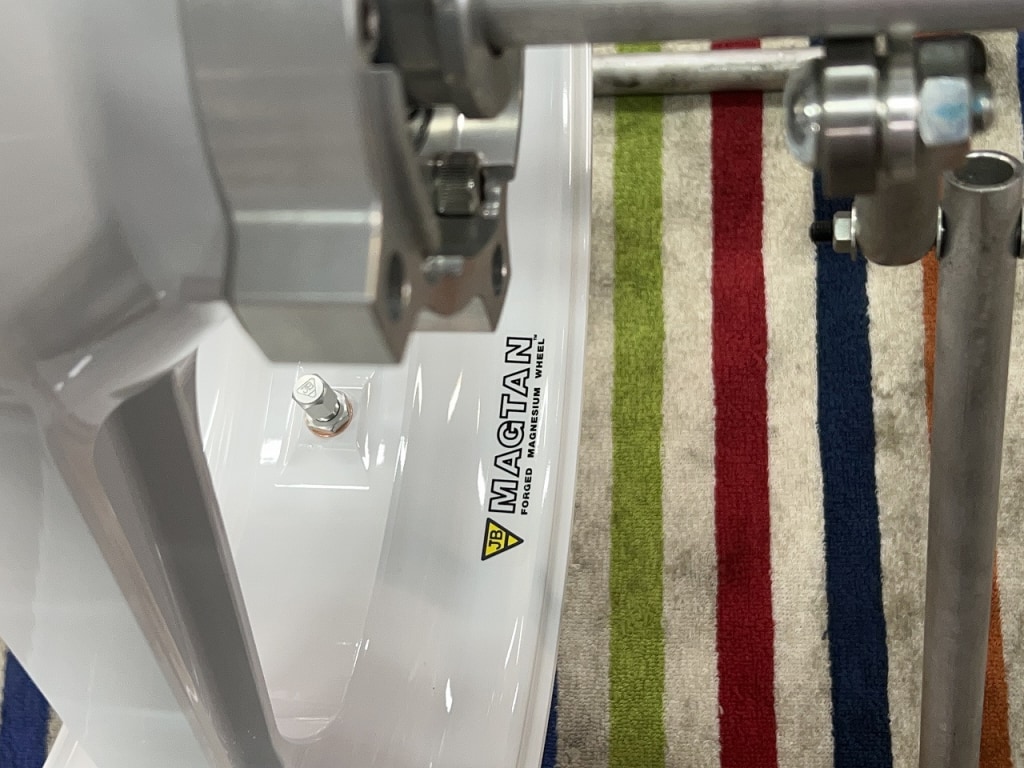
I’m in the camp that puts a gasket at the base of the air valve.
The threads are cut, so it’s not really about preventing leaks. It’s more about using a soft material as a washer-type element, and a copper gasket works just right—it doesn’t damage the wheel.
Aftermarket wheels almost always have the air valve as the heaviest point.
Aftermarket wheels are well-balanced, so the air valve ends up being the heavy point. When changing tires, it’s good to check the wheel’s “heavy point” on its own before mounting the tire.
*With stock wheels, if you don’t check the heavy point and just align the tire’s light point with the air valve, the balance can get really messed up, so watch out. (If there are lots of balance weights, that’s usually the case.)
Brand new wheels are seriously nerve-wracking.
That’s it for the tire mounting. Work is piling up and we’re running behind, so we’re moving right along.


 ポチップ
ポチップ