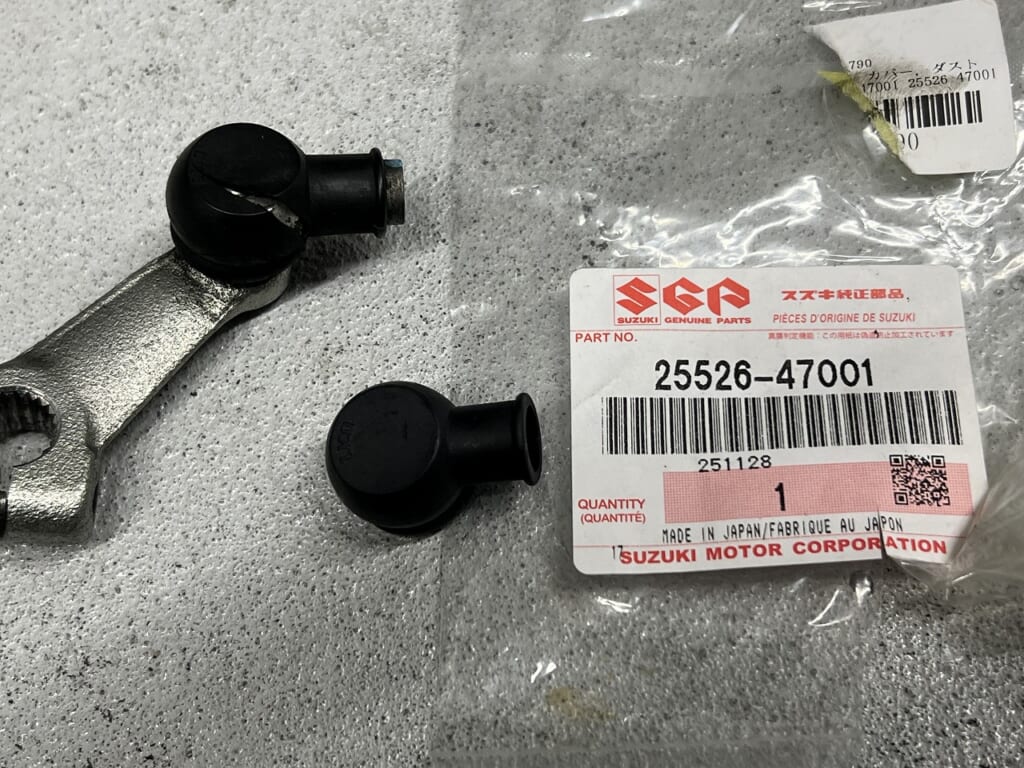
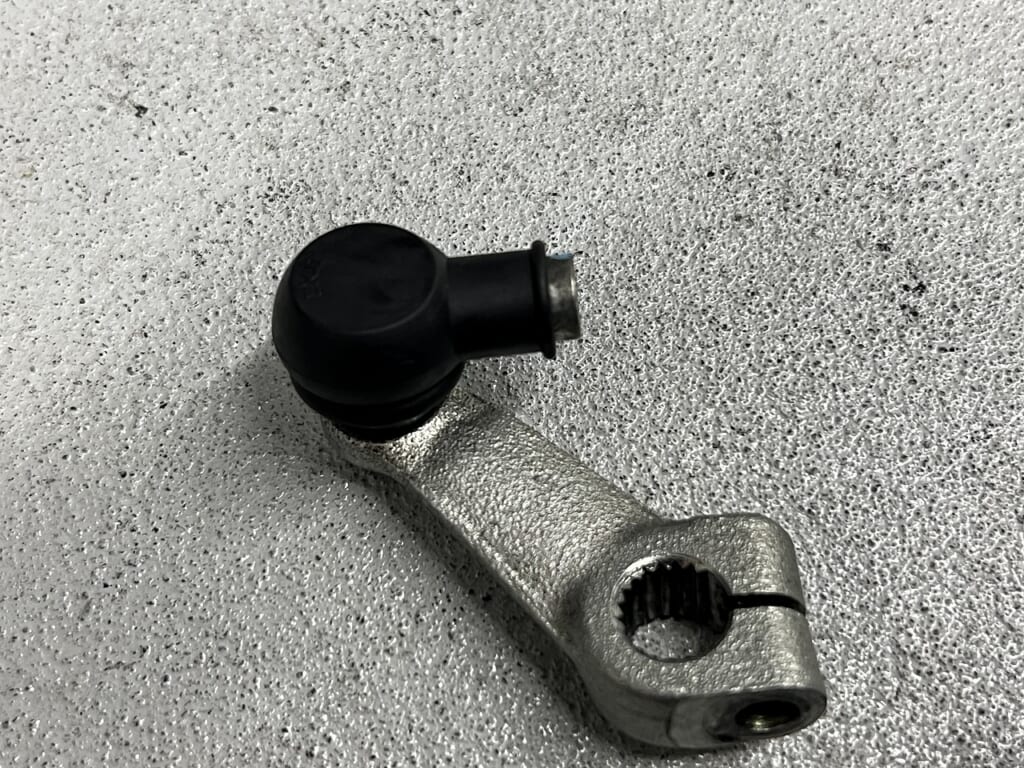
I’m only a third-class chisel user, so I rely on love and momentum to hammer it out. The trick is… no mercy.
By the way, Honda’s version of this part is more reasonably priced. Suzuki 59345-13E00 ¥460 Honda 45203-MG3-016 ¥255
There are countless examples like this. The difference comes down to where you source the parts. If you save money on these small things, you can invest in other upgrades. *This is especially common with carbs, forks, and brakes.
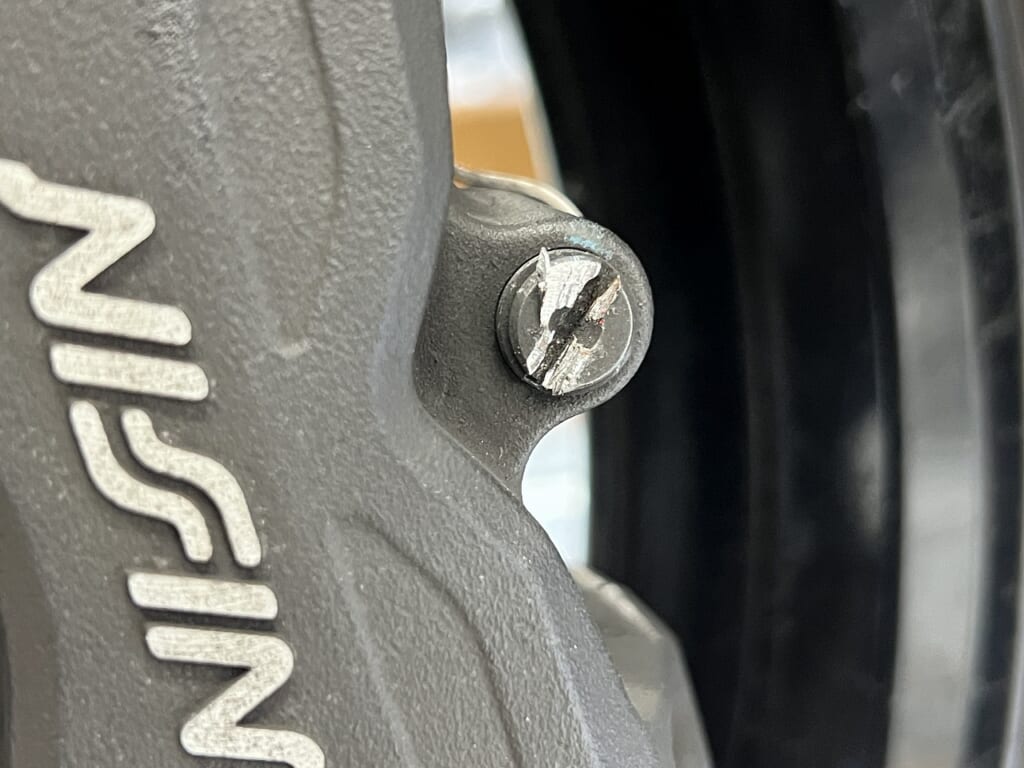
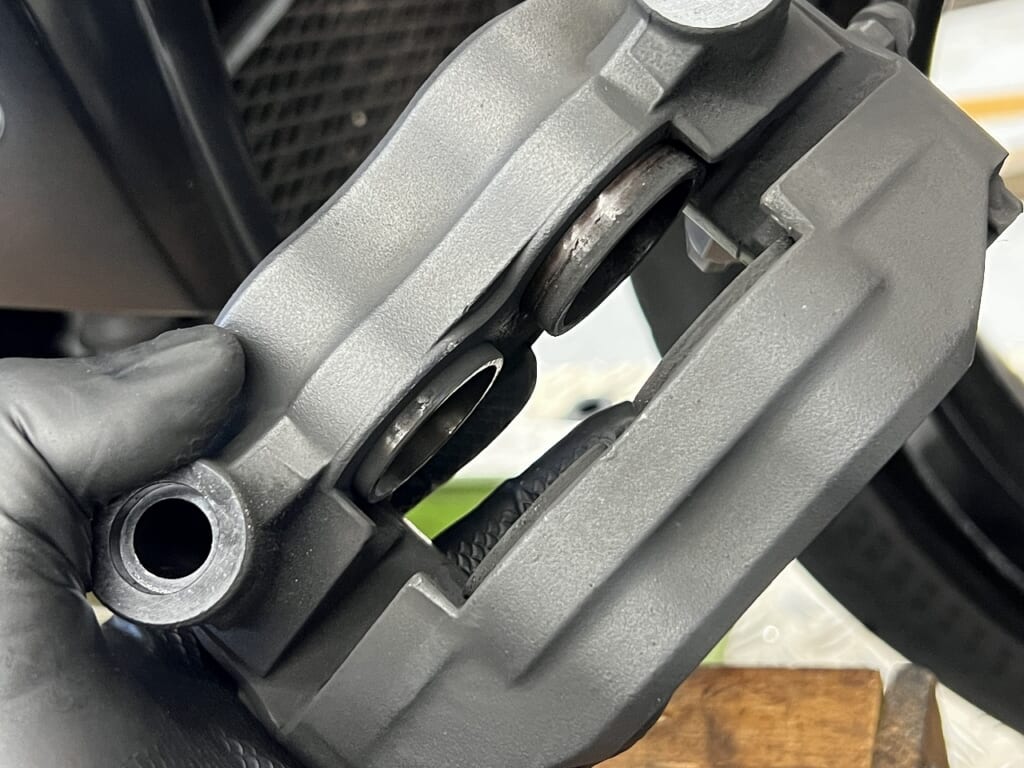
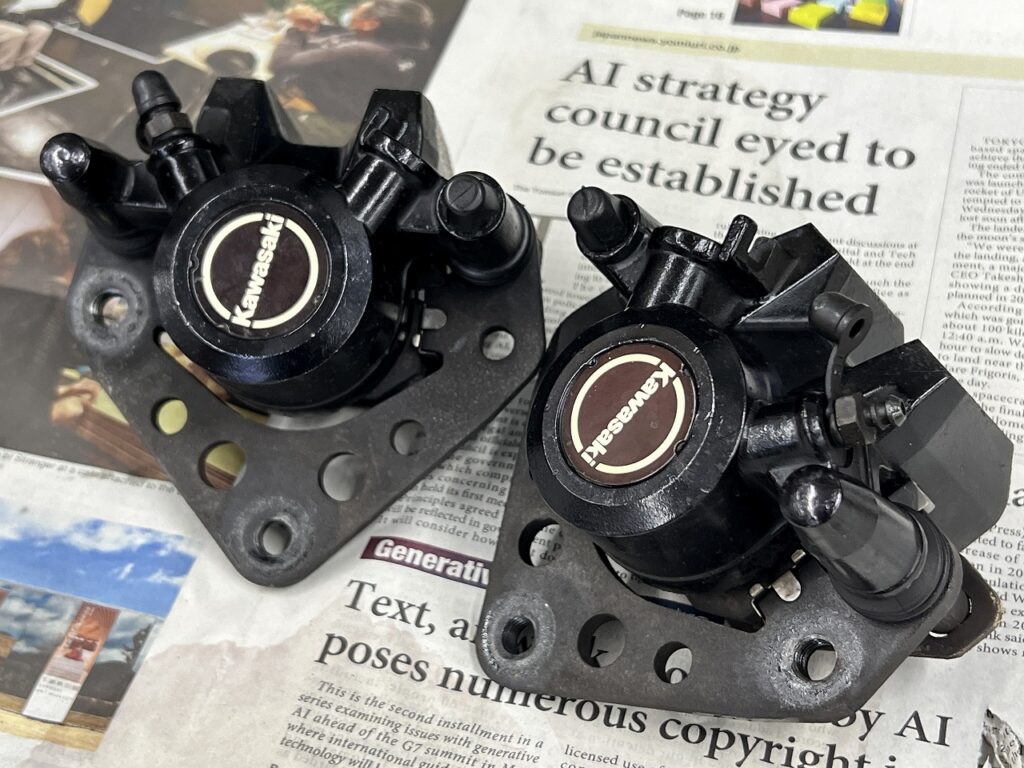
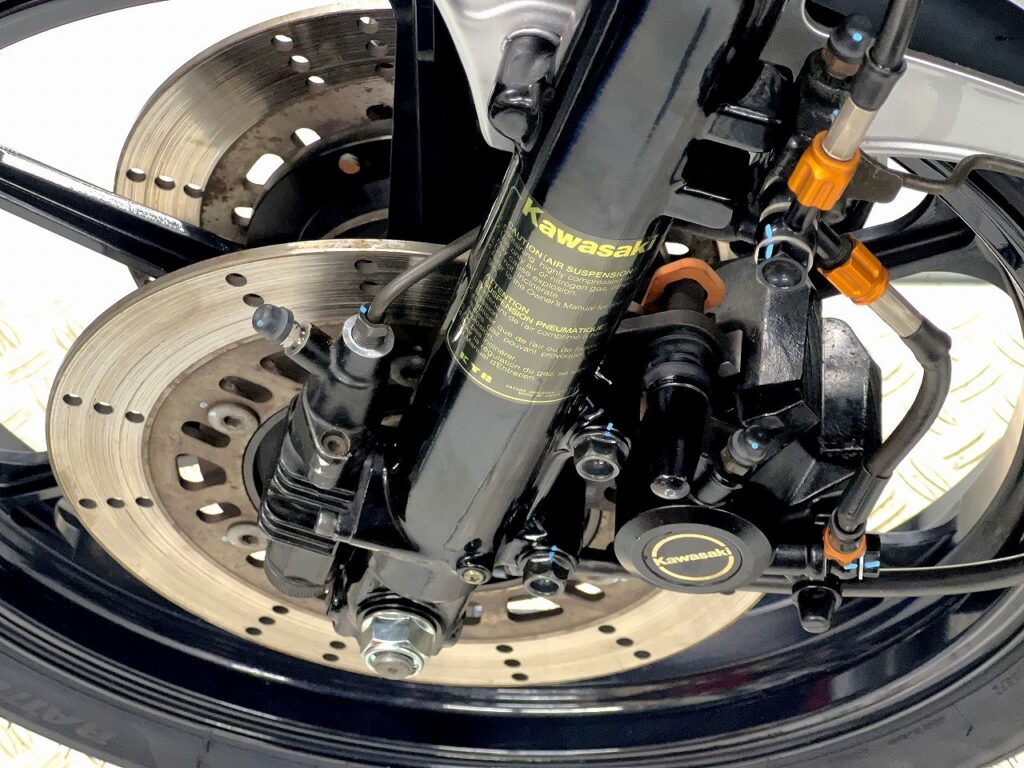
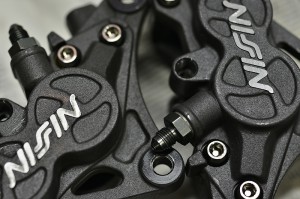
I’ll clean and inspect the calipers. If movement is poor, an overhaul is essential. This time everything checks out, and I’m amazed by Japanese manufacturing quality.
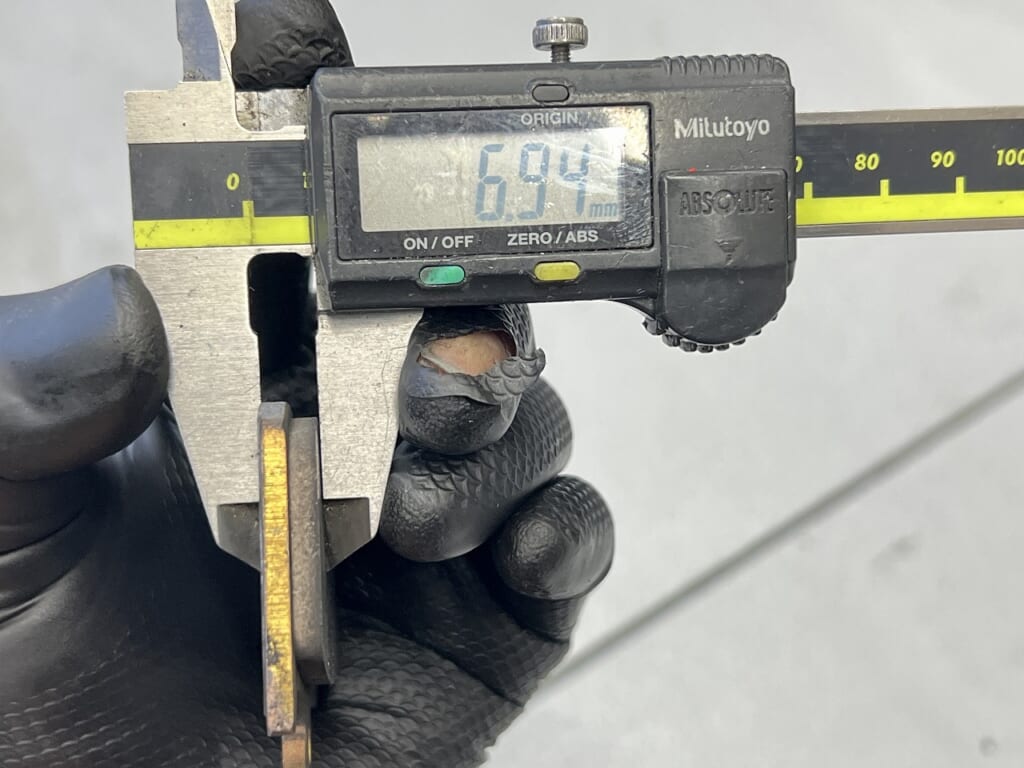
I’ll check the brake pad thickness. Brake pads don’t wear evenly, so using them right to the limit isn’t good for the disc.
Especially the leading edge and inner diameter wear faster Differences of 0.2mm are common. You can see how the pad gets pulled along as it rotates.
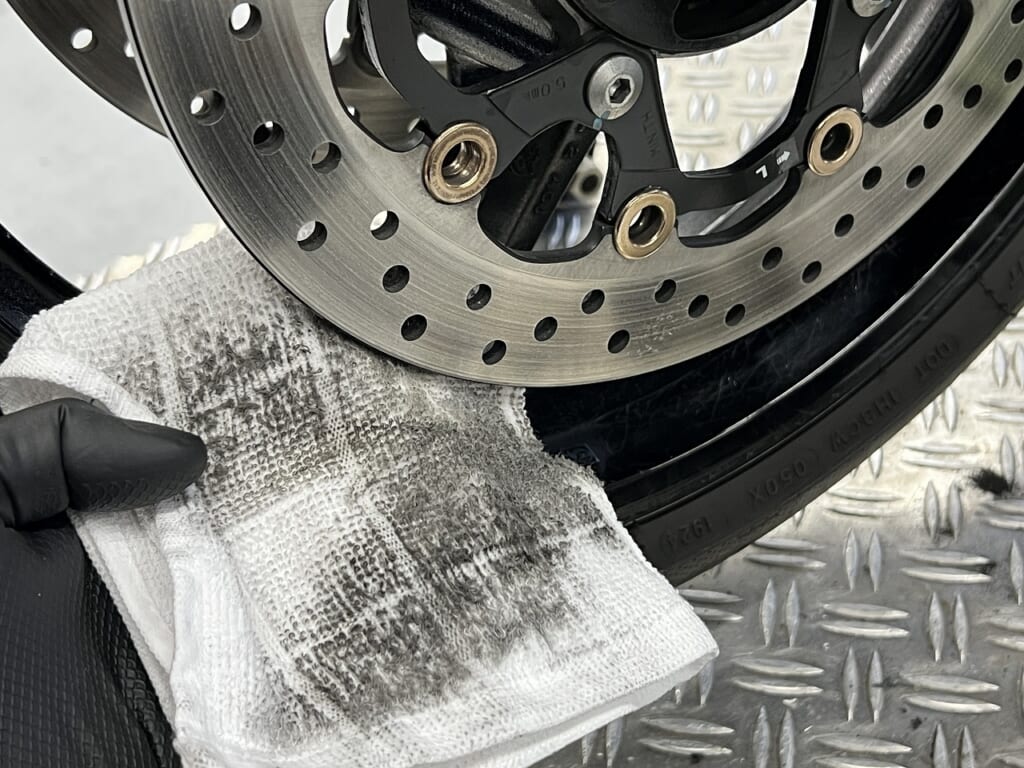
I’ll degrease and clean the brake disc surface. Be careful—the first application will feel surprisingly weak.
The goal is to reset to a clean state and let the pads bed in fresh. It’s not a dramatic improvement, but you’ll feel a slight difference.
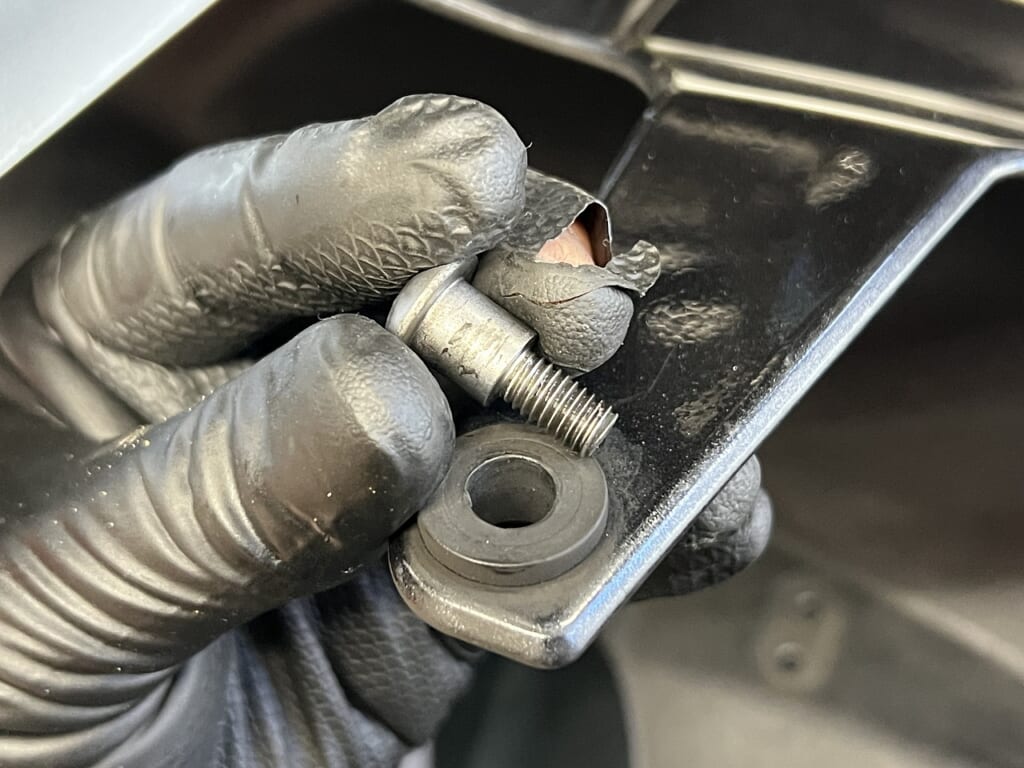
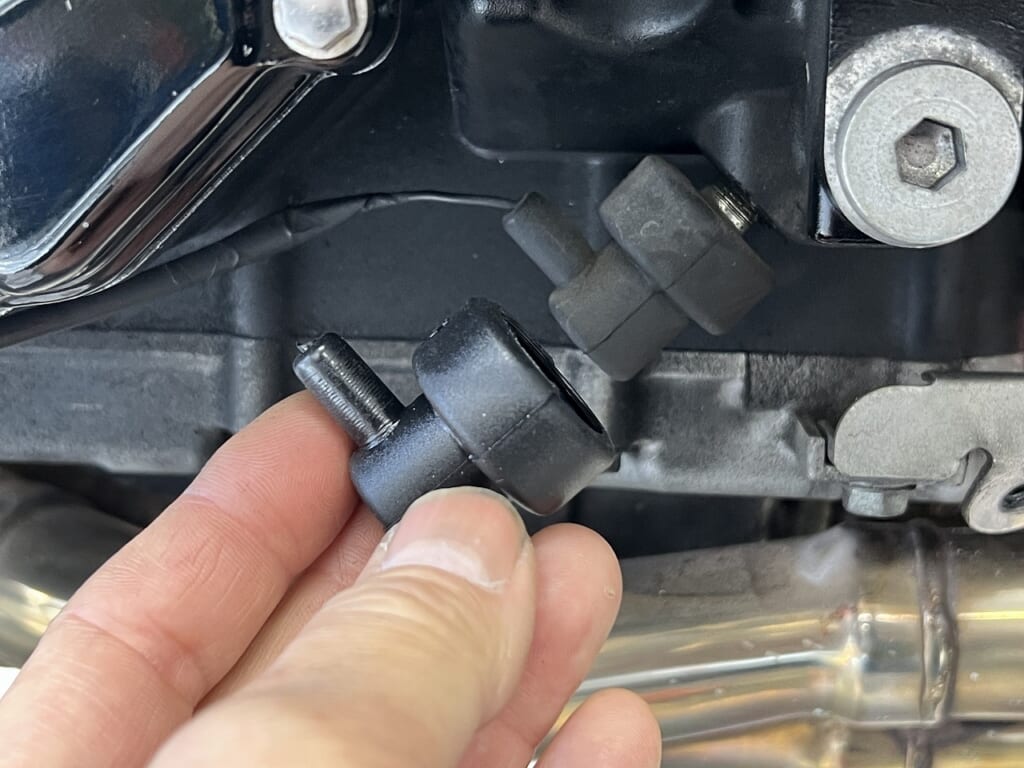
By this era, the plastic fastening method was well established. An H-shaped damper is inserted and secured with a stepped collar.
Metal-to-plastic clamping really does make a difference in durability and vibration noise. With the fender hole tolerance plus the damper, there’s some play, so installation is both loose and secure. Production efficiency improves too.
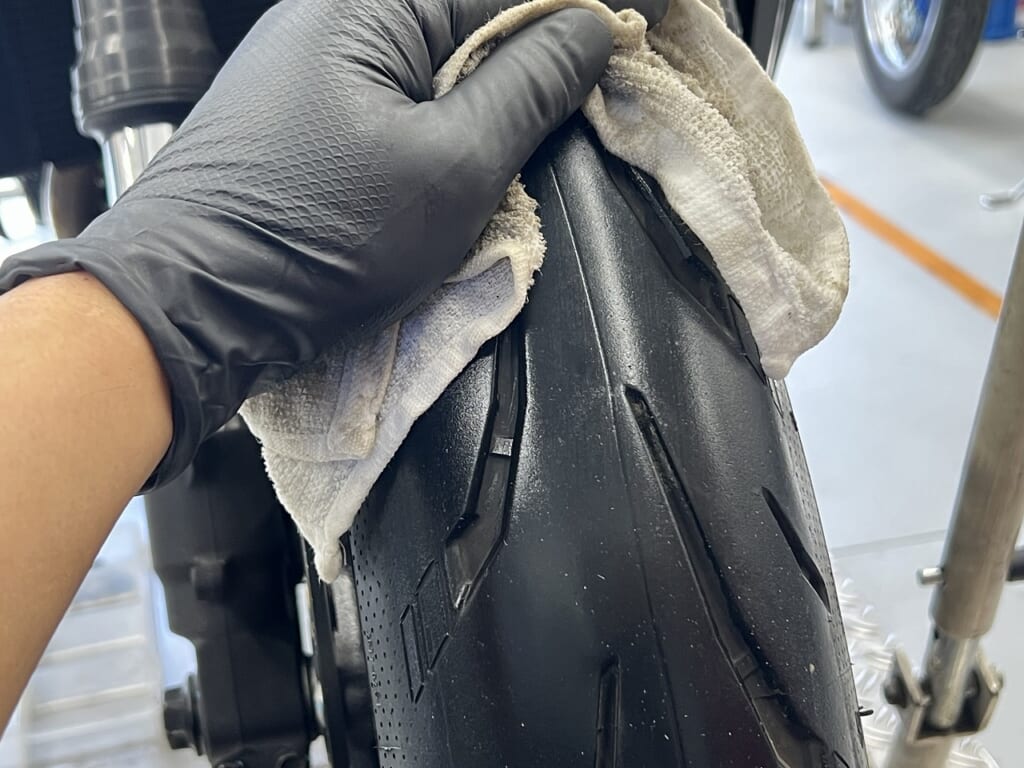
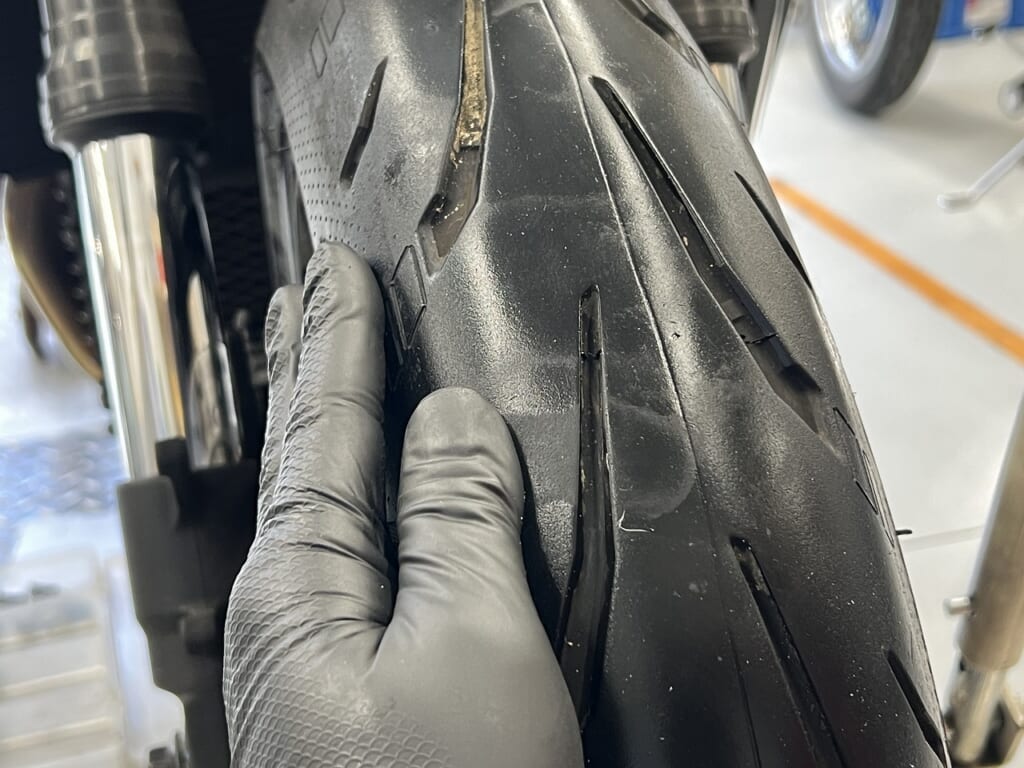
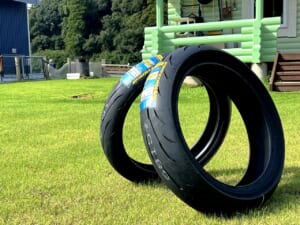
I’ll wipe the tires with a damp cloth and check for any embedded objects. Everything looks good overall, so no concerns.
Now replacing the front wheel bearing.
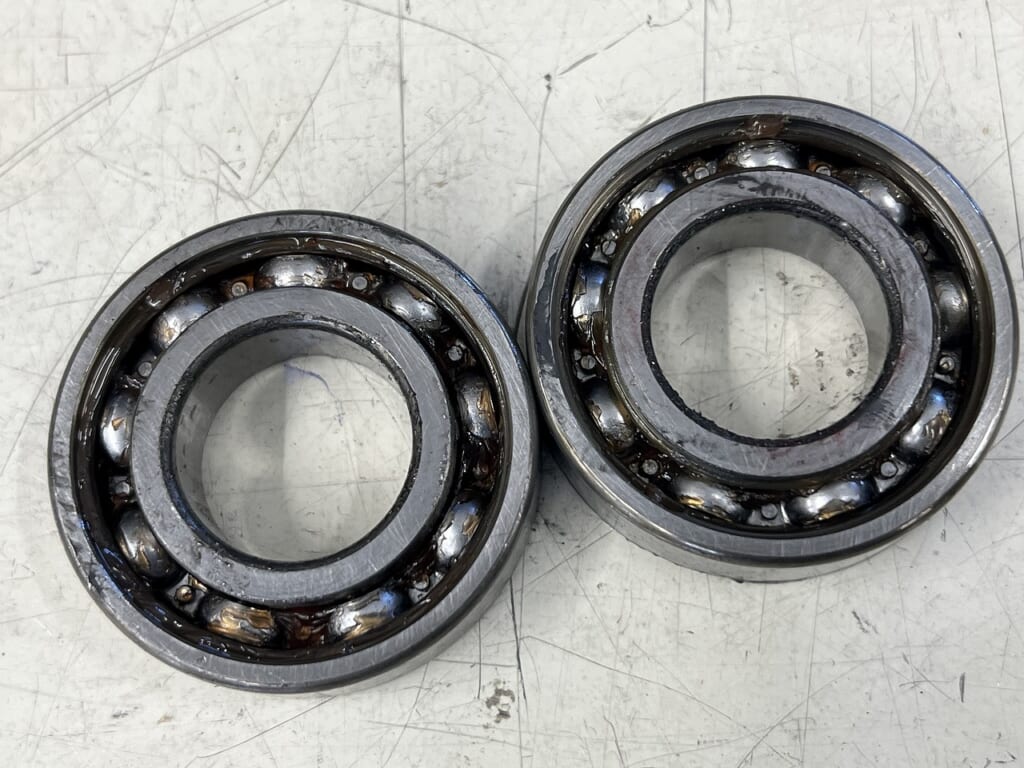
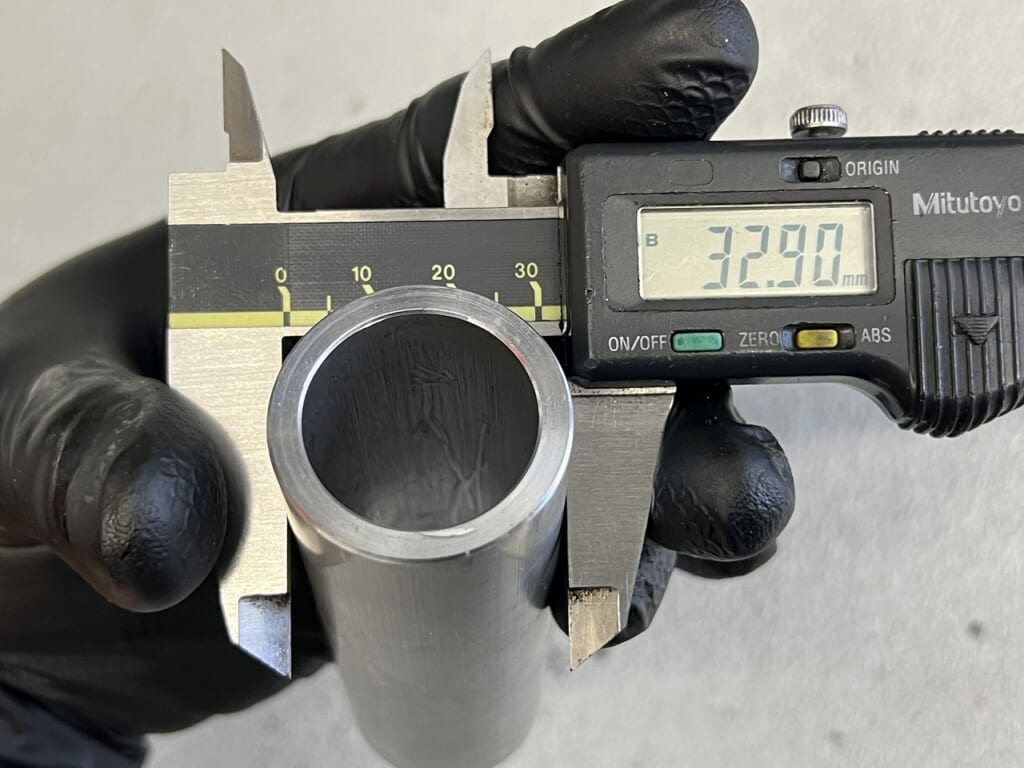
Reliable 25φ. No need to overthink it. It’s probably been in use for about 70,000 kilometers.
As shaft diameter increases, bearings get larger and more robust.
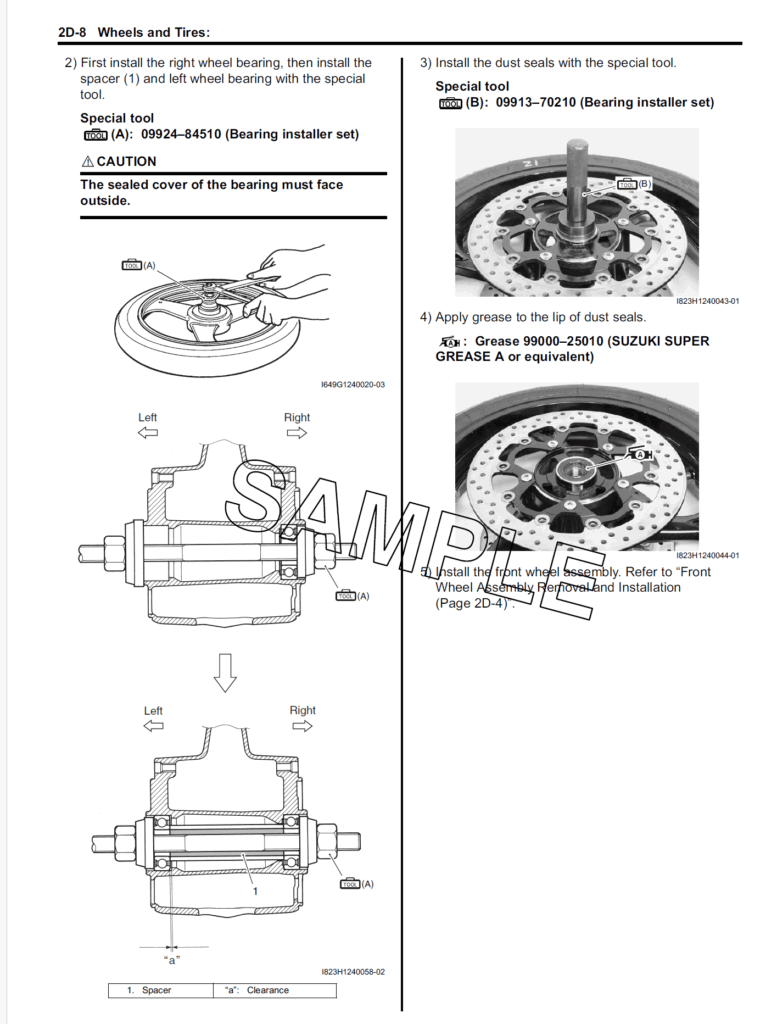
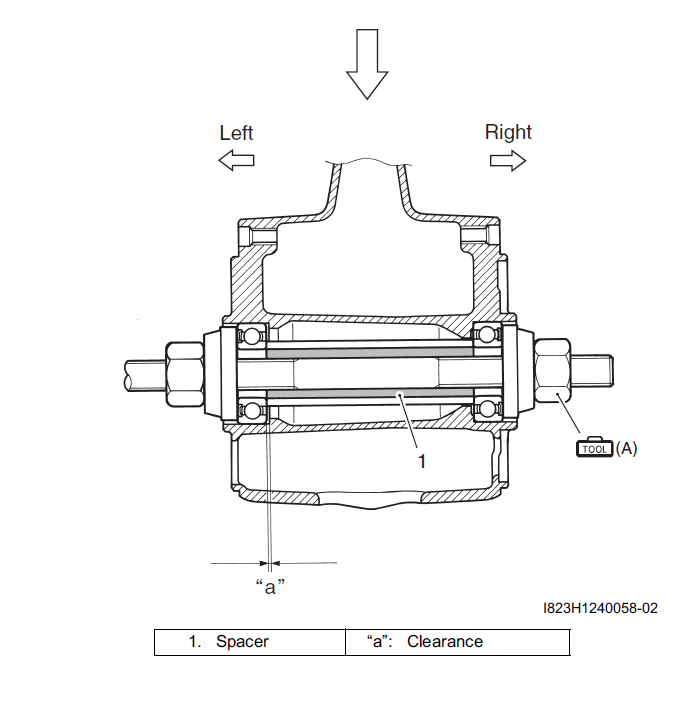
Wheel bearings aren’t complete just by pressing both in fully. Basically, “one side bottoms out, the other is adjustable”is the setup. So please don’t hammer the axle shaft hard.
The force from hammering can easily shift the bearing. Japanese motorcycles are amazing—they hold up anyway. If you don’t check the manual before replacement, you won’t get maximum benefit.
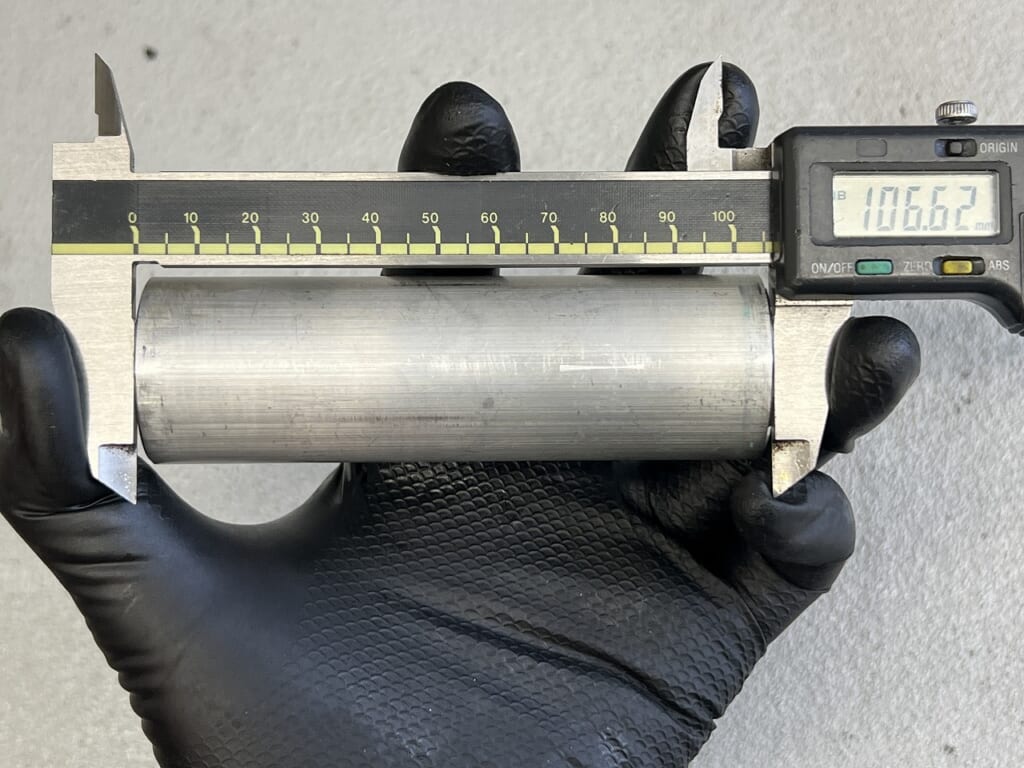
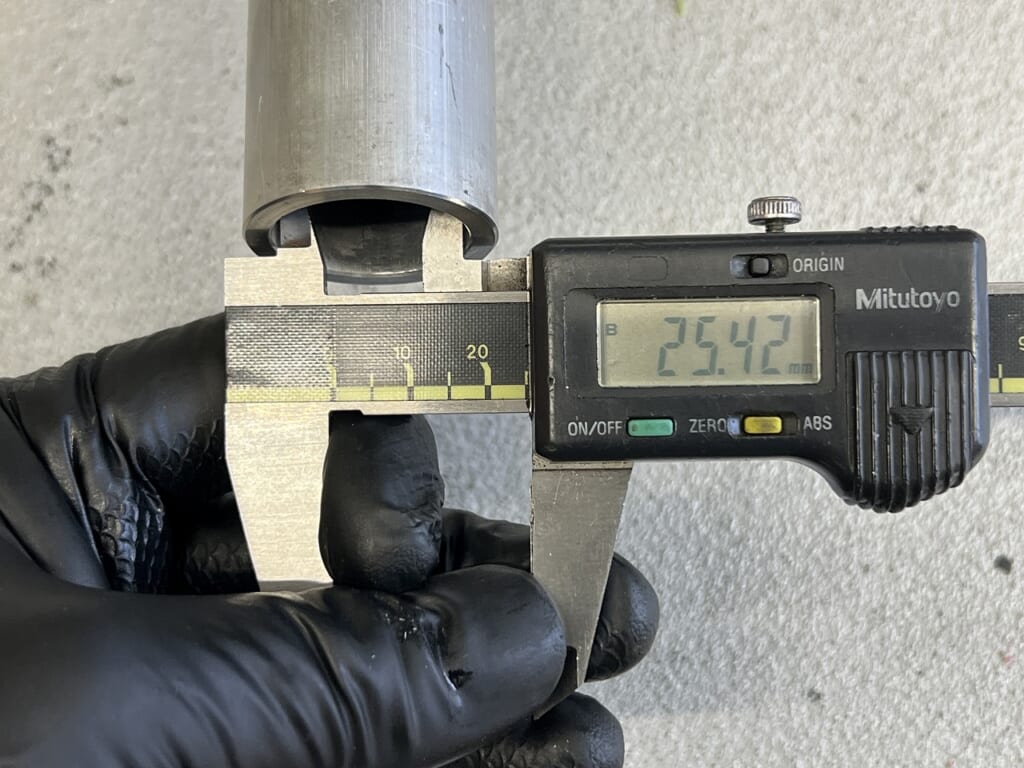
Distance collars can be reused as spare parts. When you don’t have stock material and buying standard lengths is a hassle, plus shipping costs add up—this is perfect. It’s totally viable as a machining base.
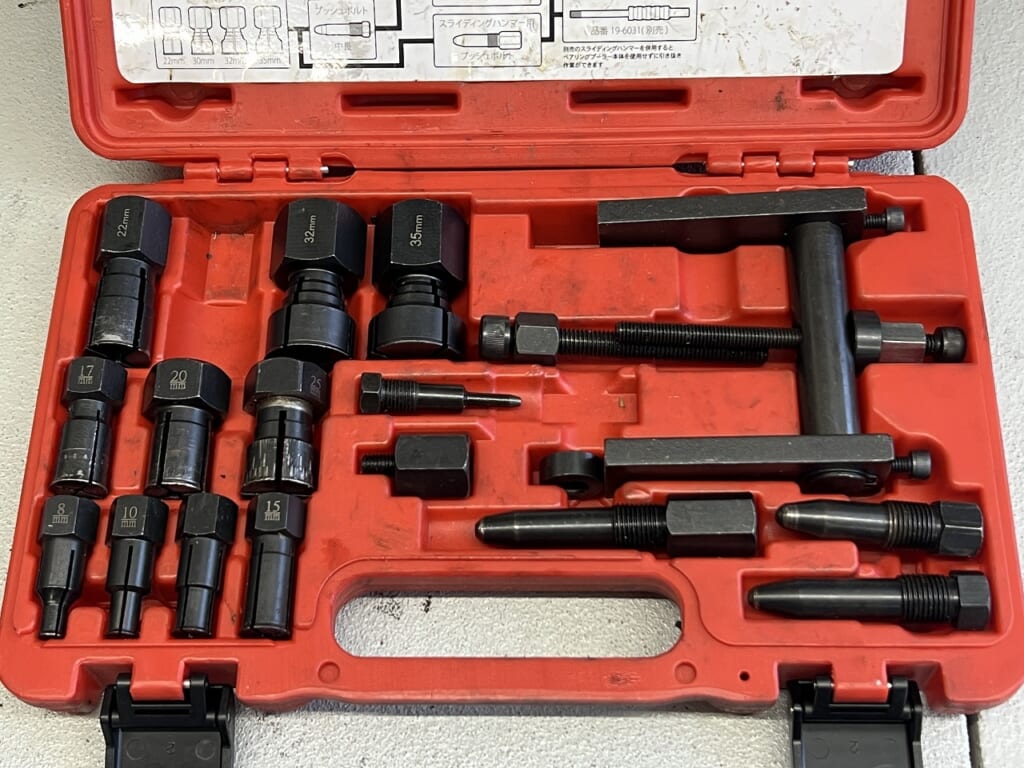
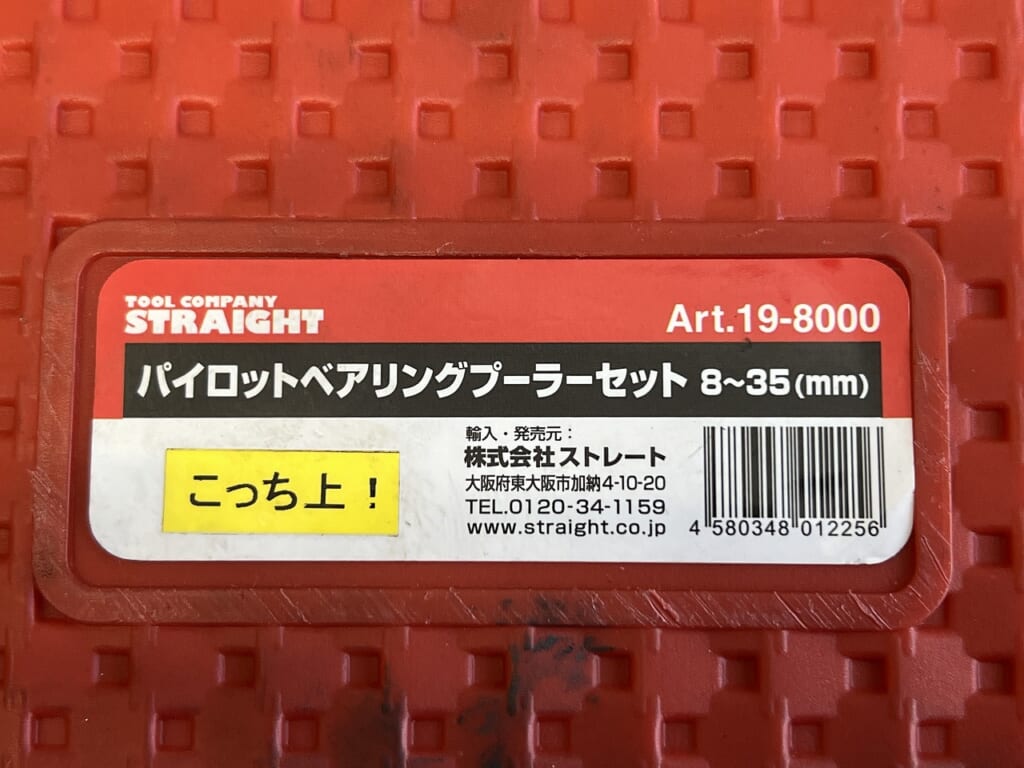
This wheel bearing puller is excellent. It’s a straight type, and I don’t use anything else…
There’s a fancy Hasco version too, but it never gets used. Cheap tools get heavy use, which is a good thing. I keep wondering if I should buy the lost 30mm—then I find it right after buying a new one.
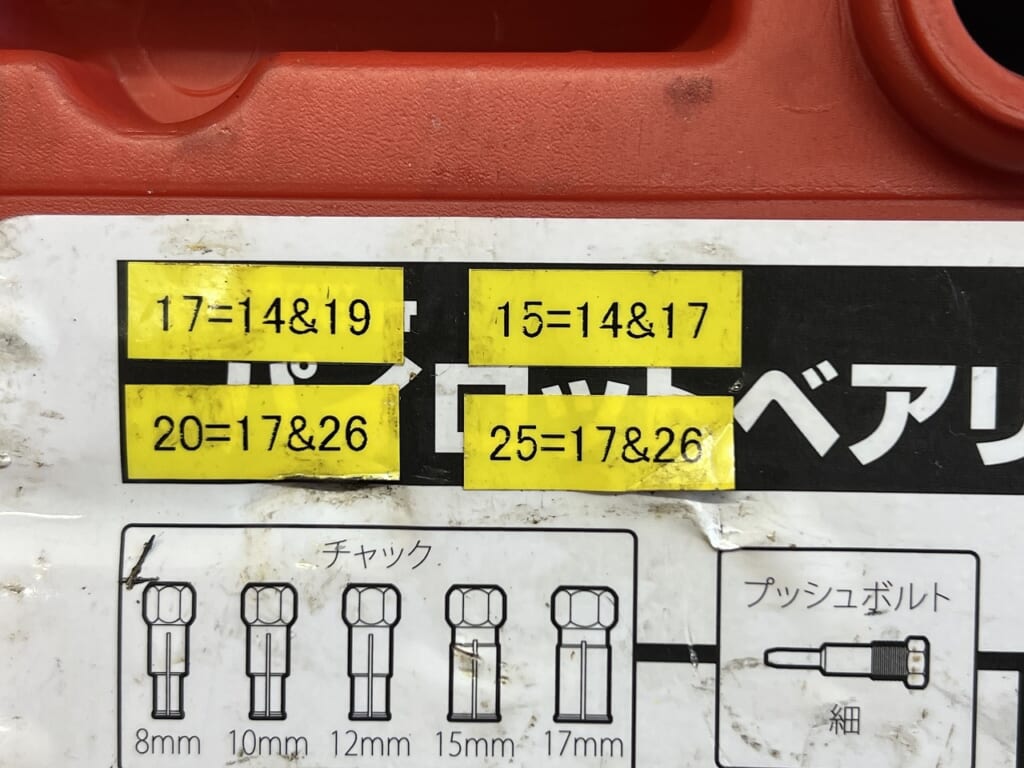
I’ll note the wrench size so I can jump right into work. The cap says “this side up”—I flipped it once and spilled everything.
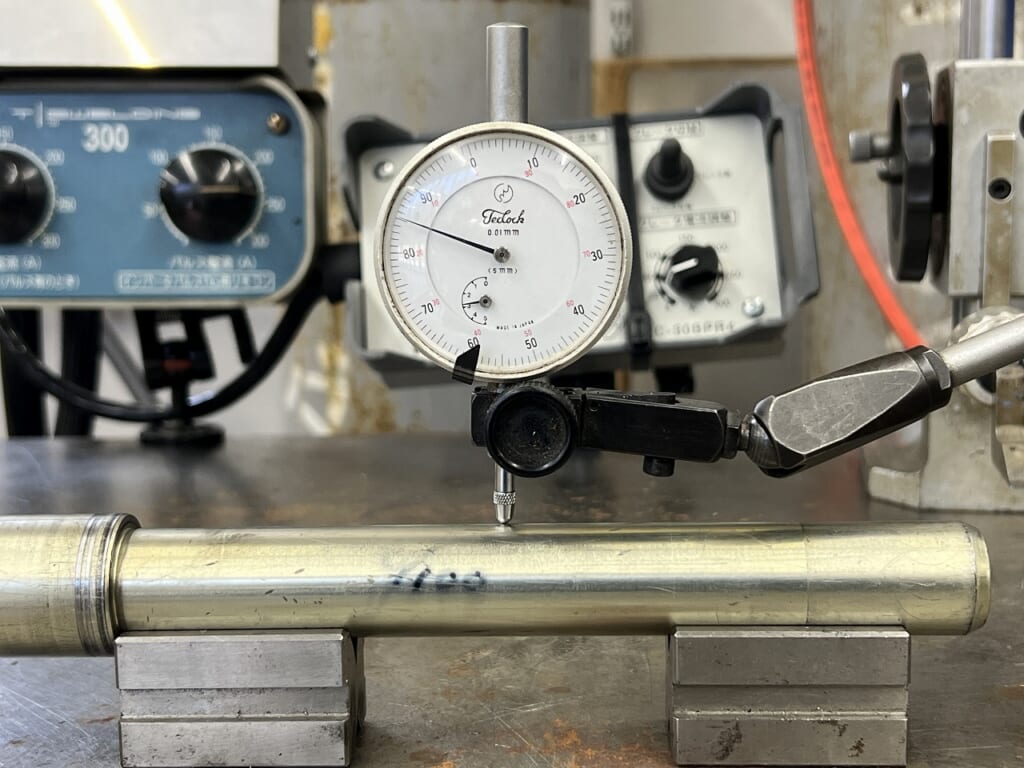
The front and rear axle shafts are in good condition.
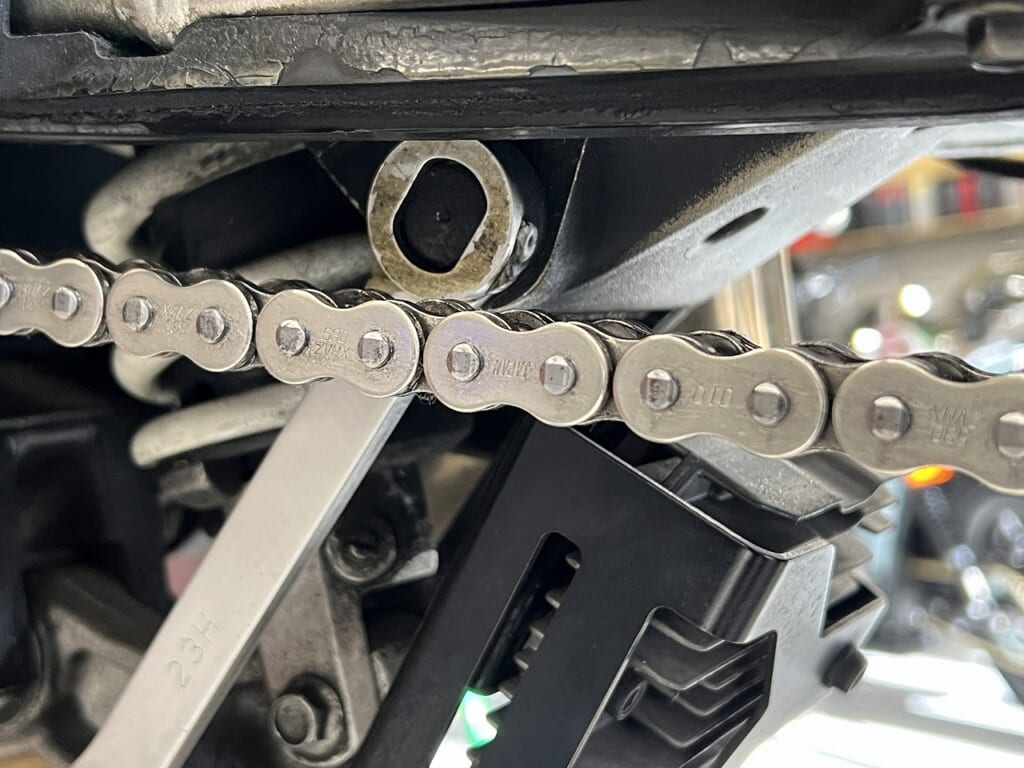
The chain area is in excellent condition thanks to the owner’s good maintenance.
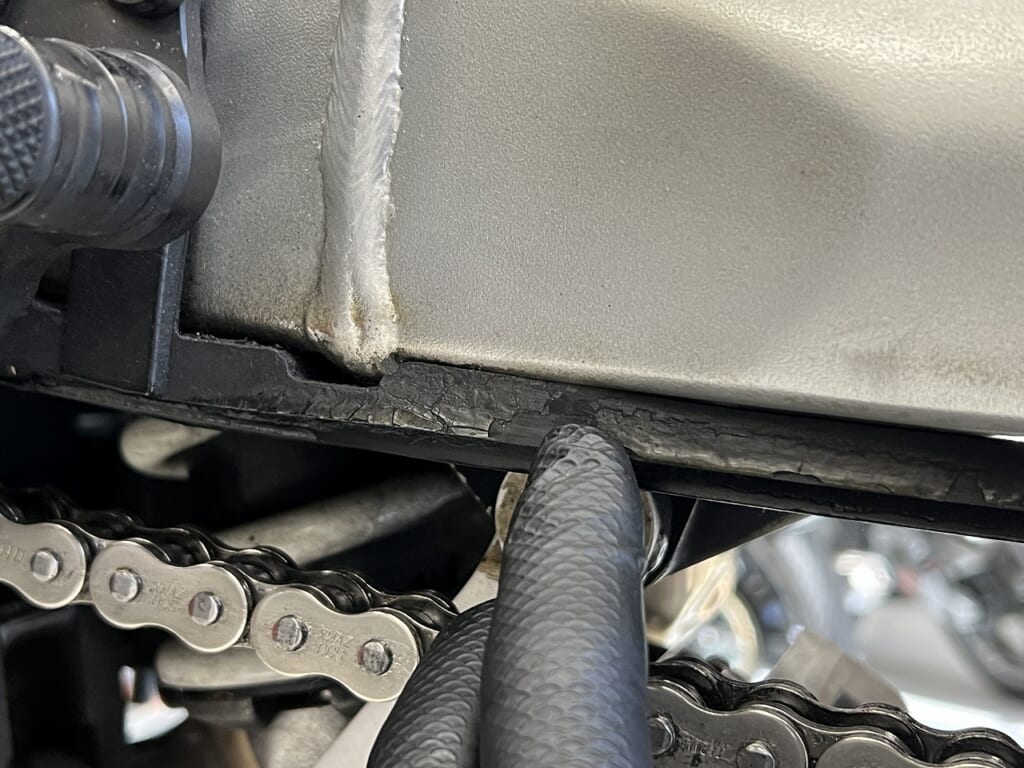
The chain slider is showing some wear. But you can’t replace it without removing the swingarm.
If you’re planning to disassemble that area anyway, the chain slider should be on your replacement list.
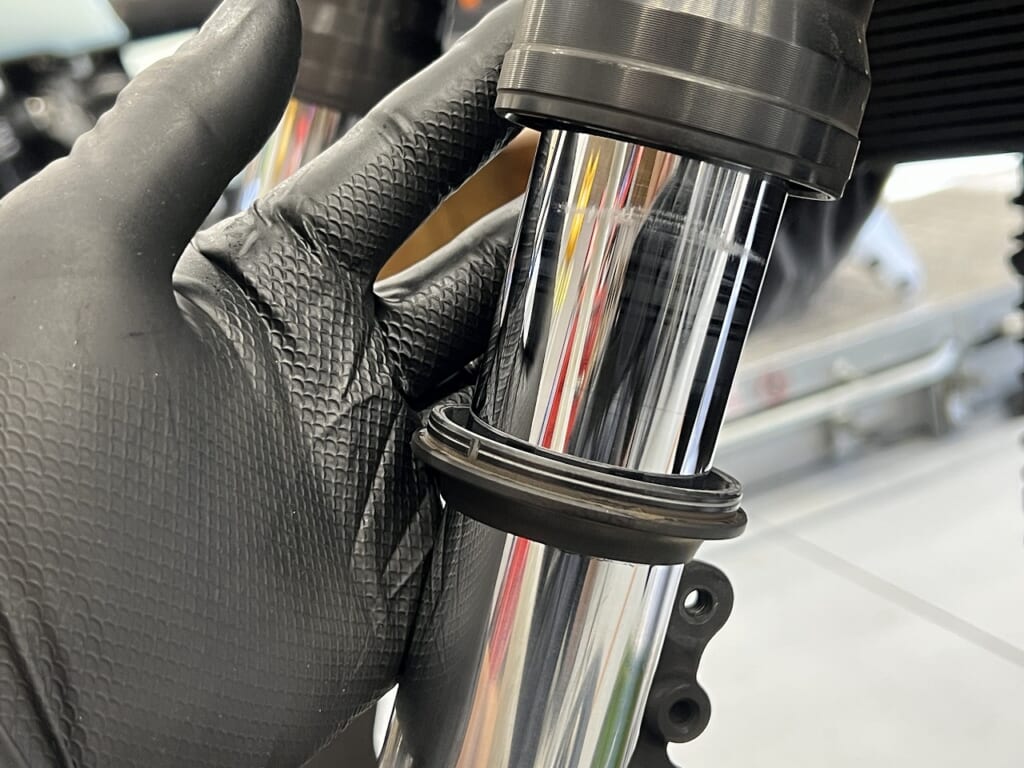
I’ll remove the front fork dust seal, clean it, and apply fresh oil. Inverted forks rub the same spot continuously. Especially important: clean and lubricate the front side and check for wear.
Also want to make sure the inner lower section doesn’t rust.
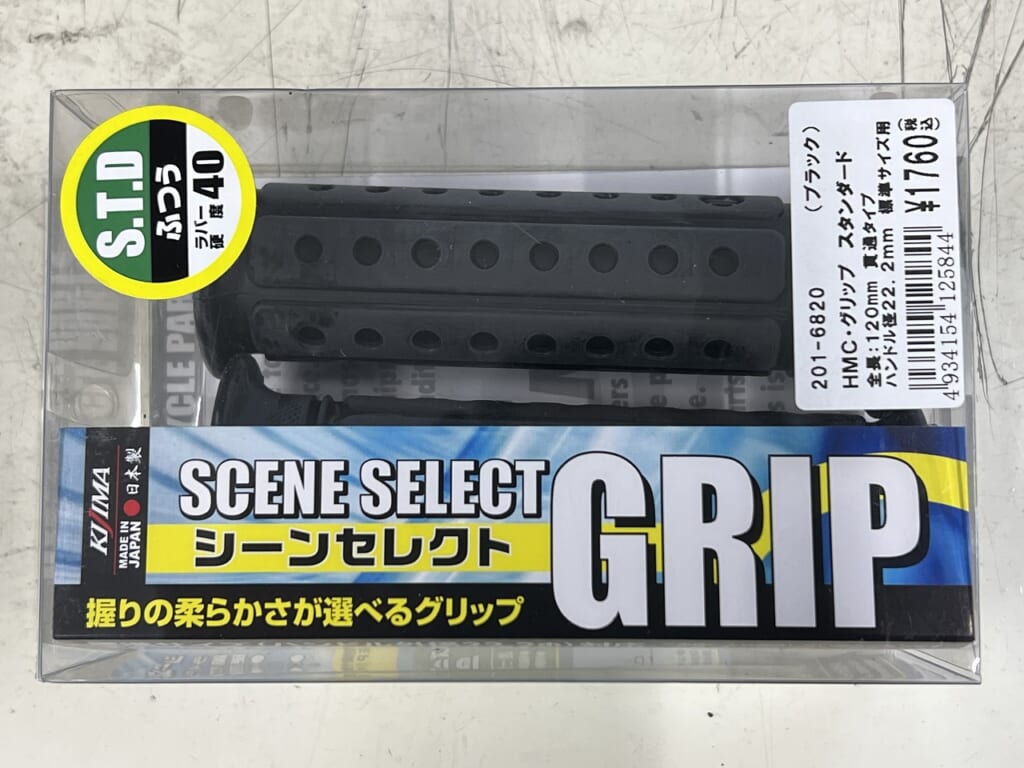
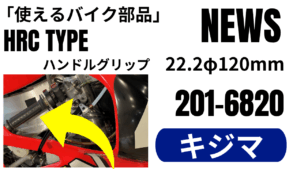
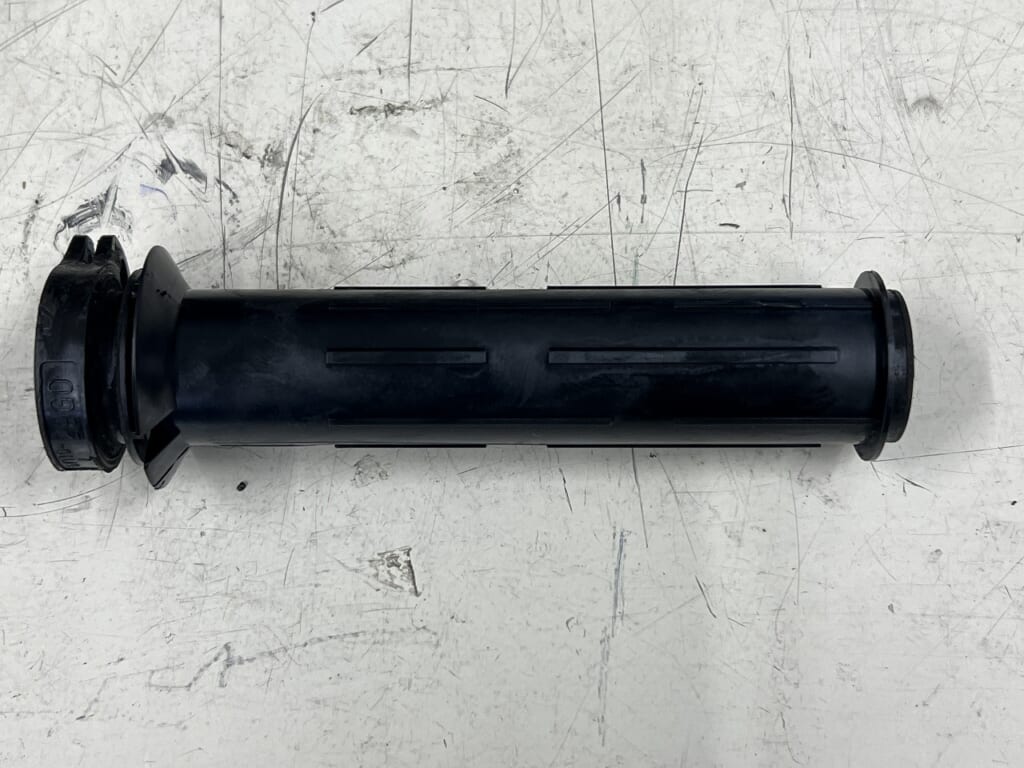
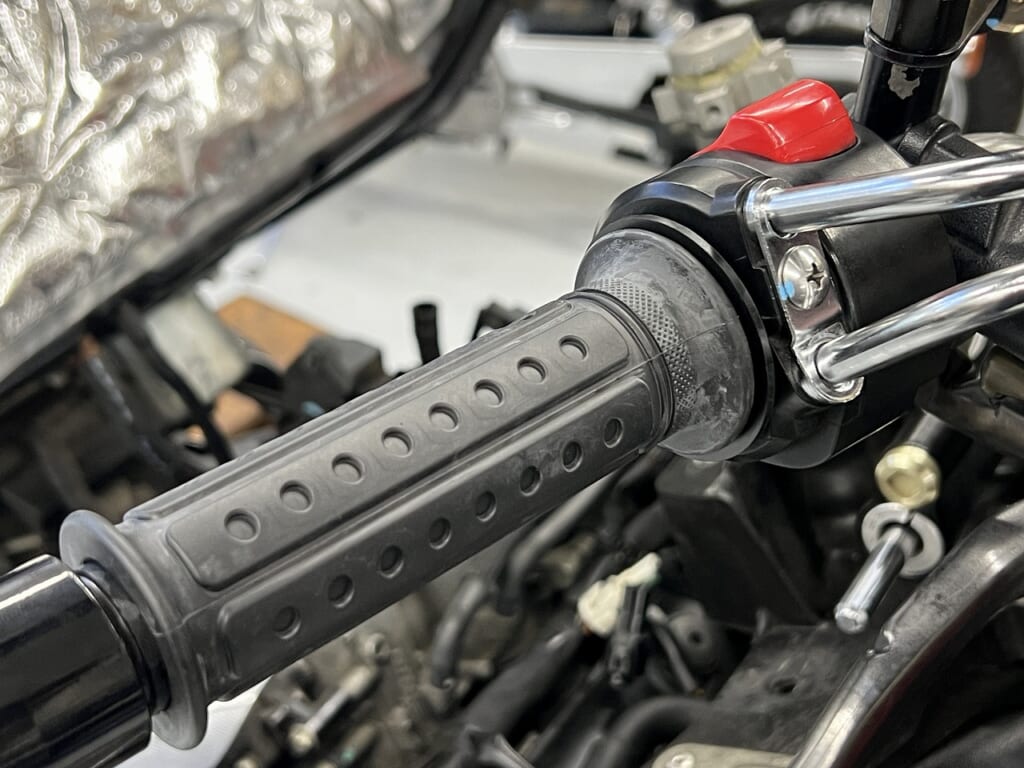
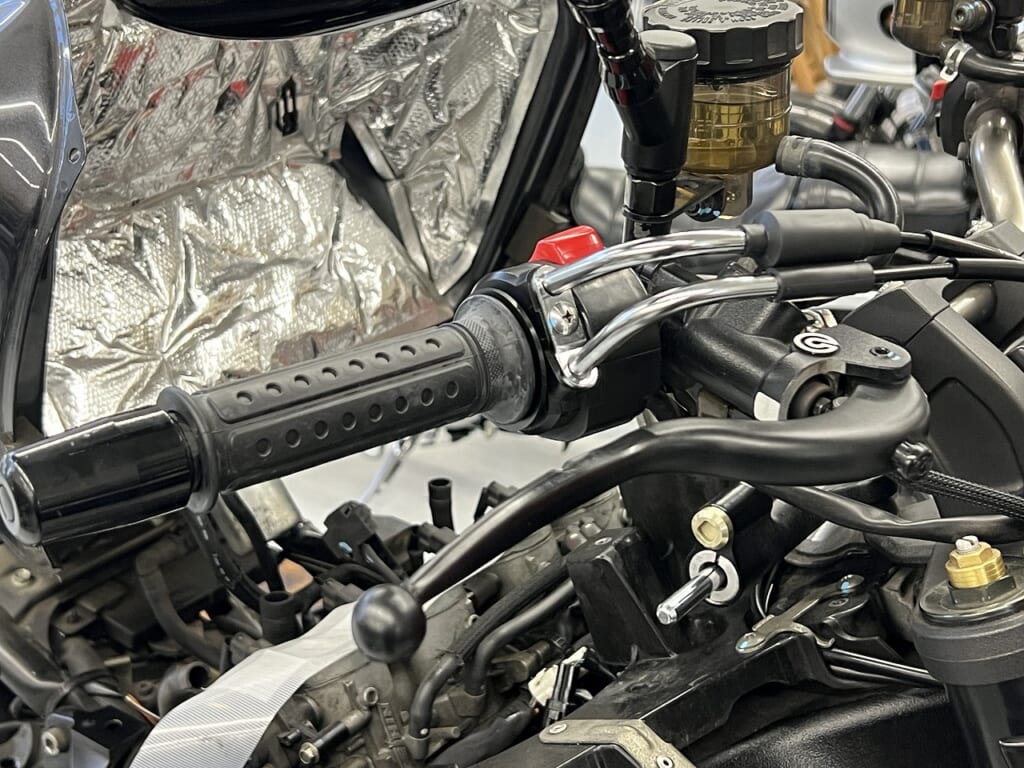
Replaced with quality work-style grips
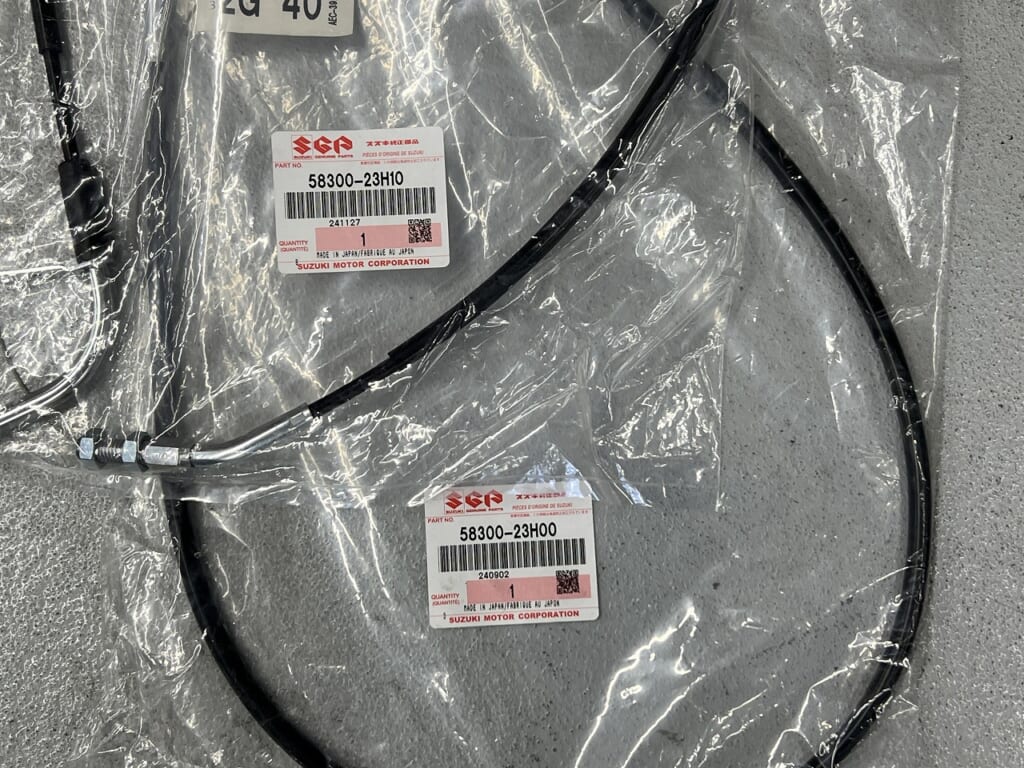
You should definitely get the product name right… Pretty niche stuff.
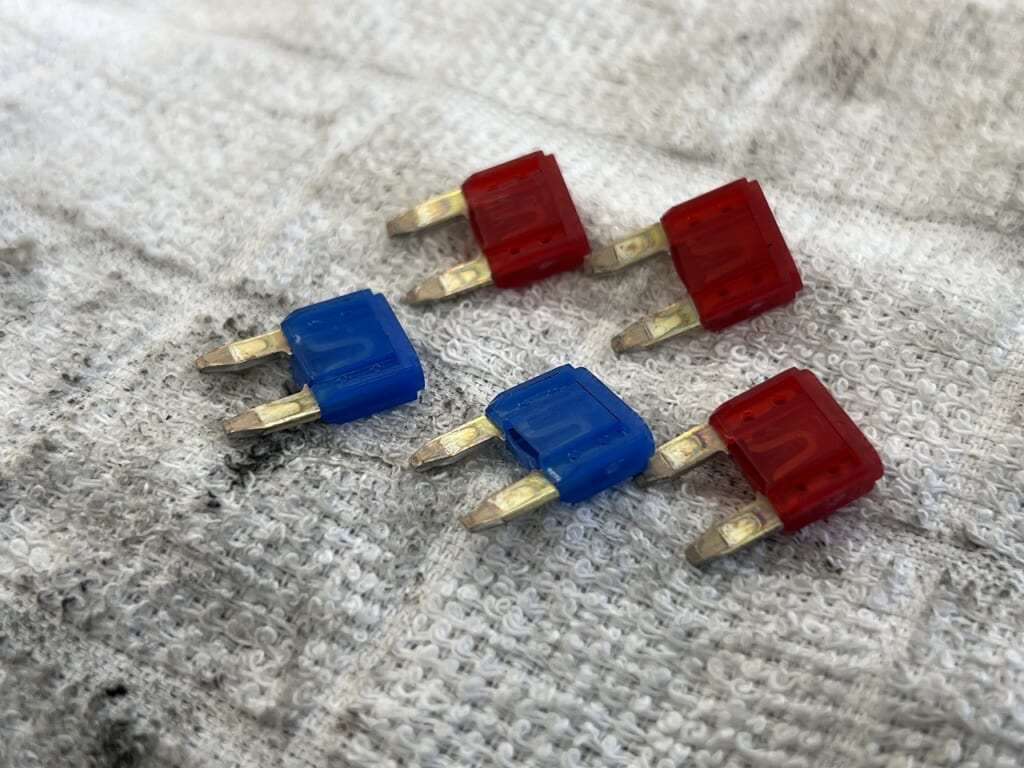
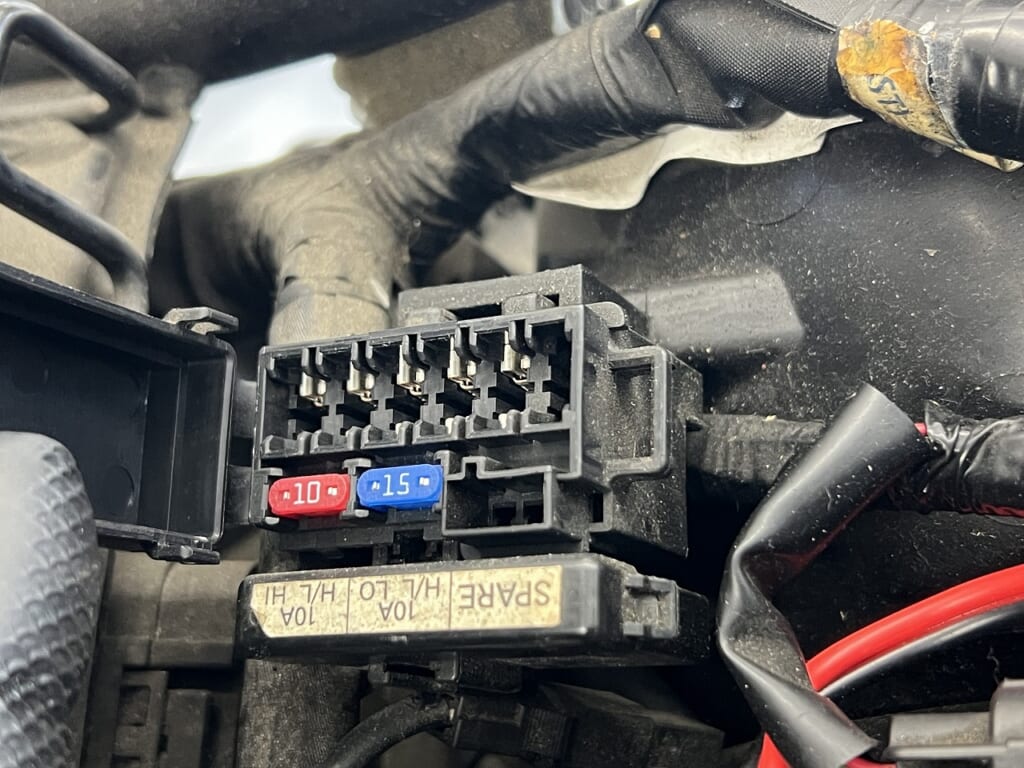
I occasionally remove the fuses and replace them if dirty. If reusing, I wipe them with contact cleaner, then wipe again before reinstalling. No major replacements, but it gives peace of mind.
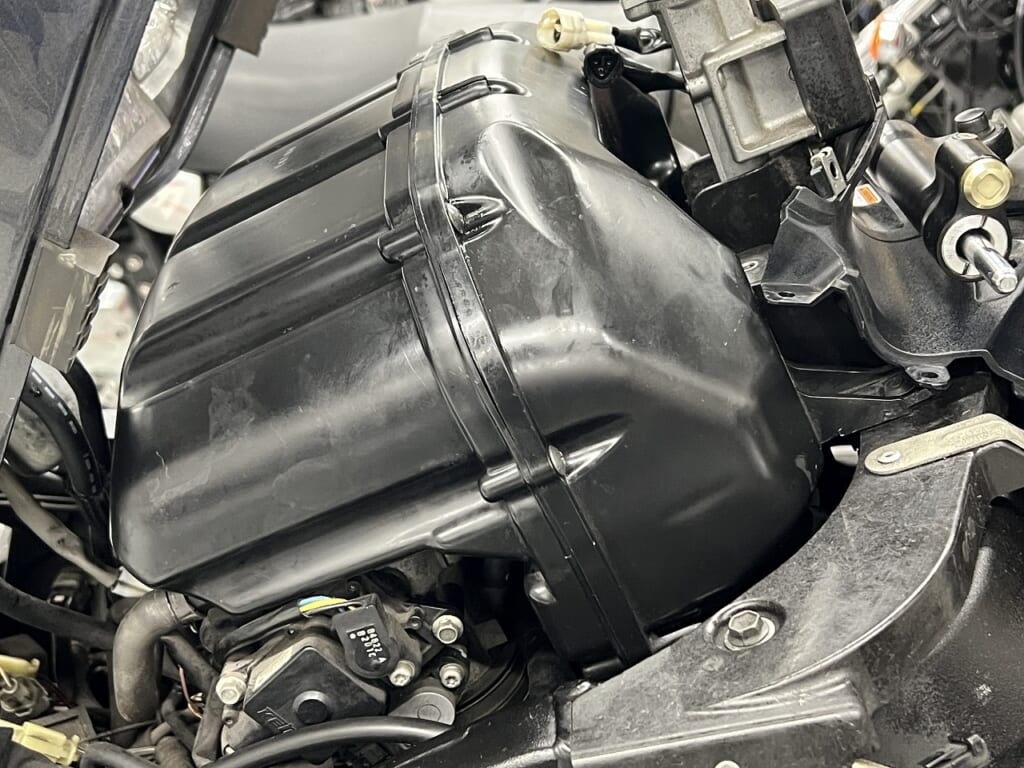
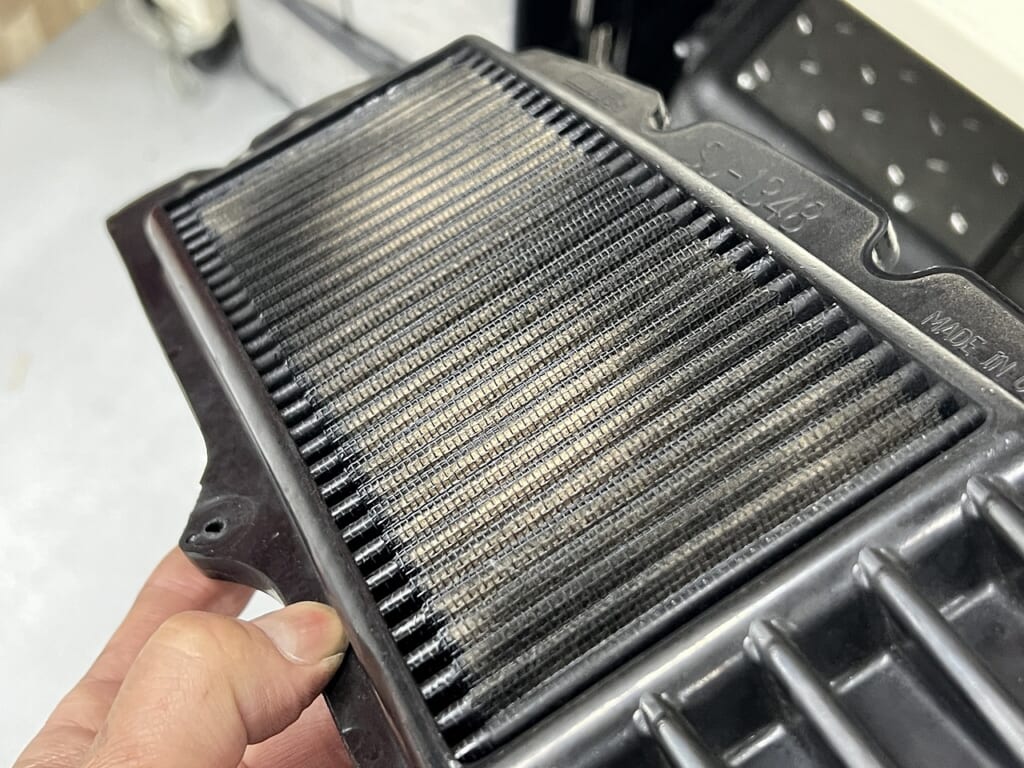
Removing the air filter requires taking off the box too—a rugged design. It was getting a bit dirty.
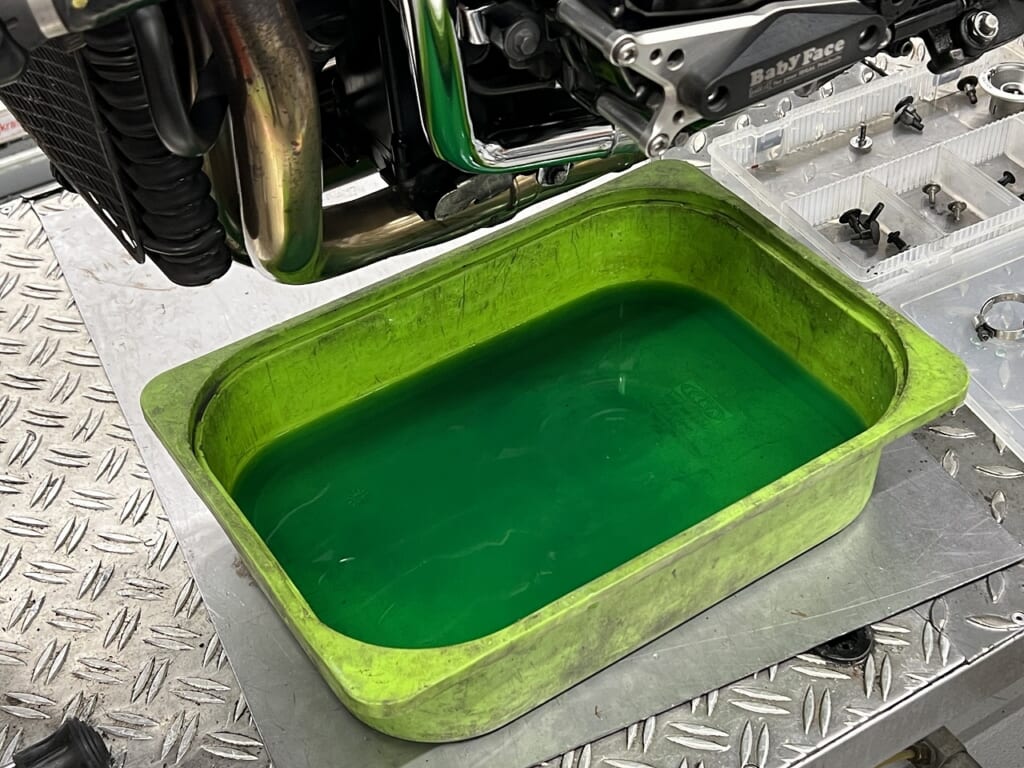
The coolant was clean. Water cooling is really sensitive to heat, so ideally replace it at least every two years. The reservoir tank often loses level, so checking is essential.
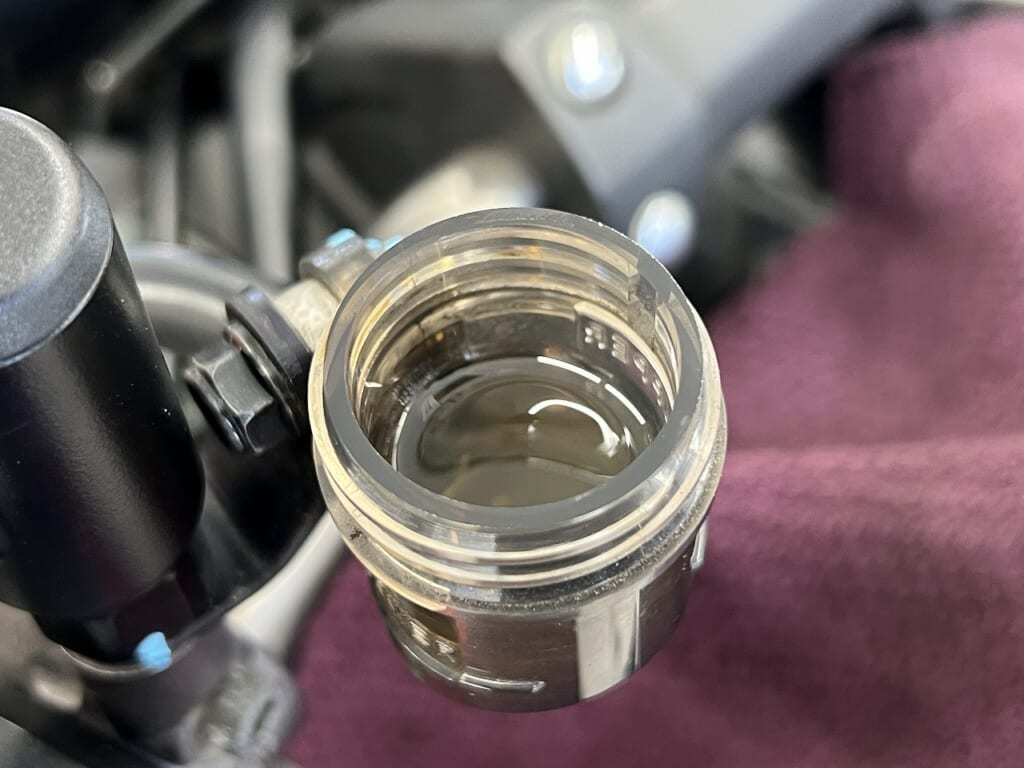
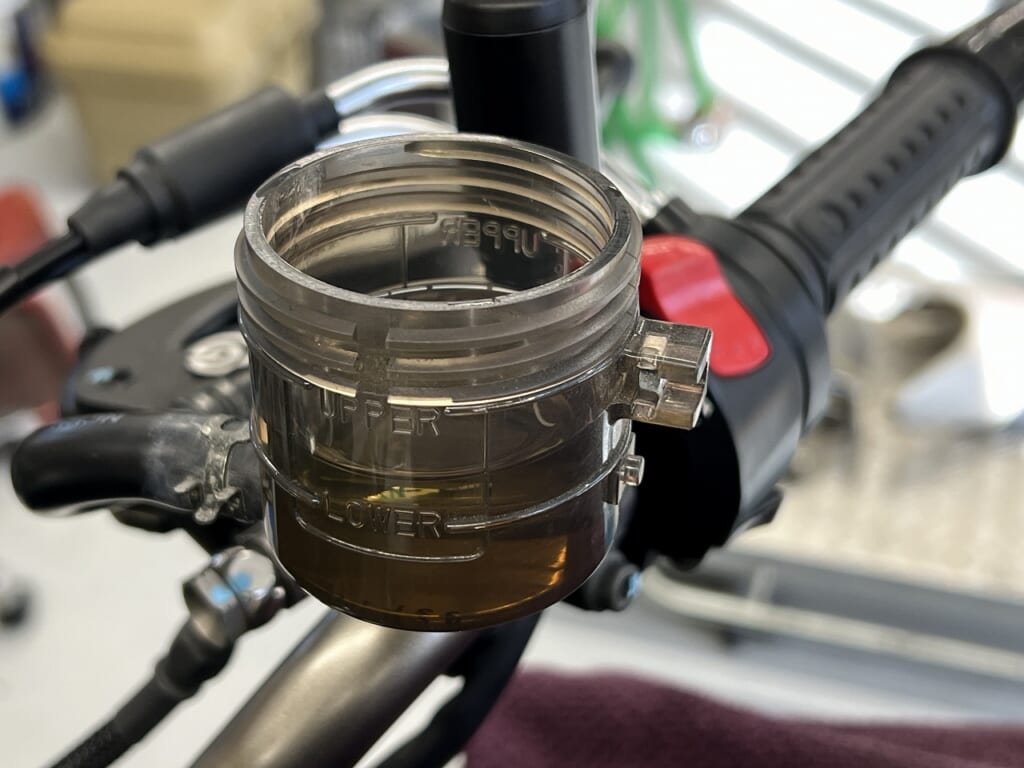
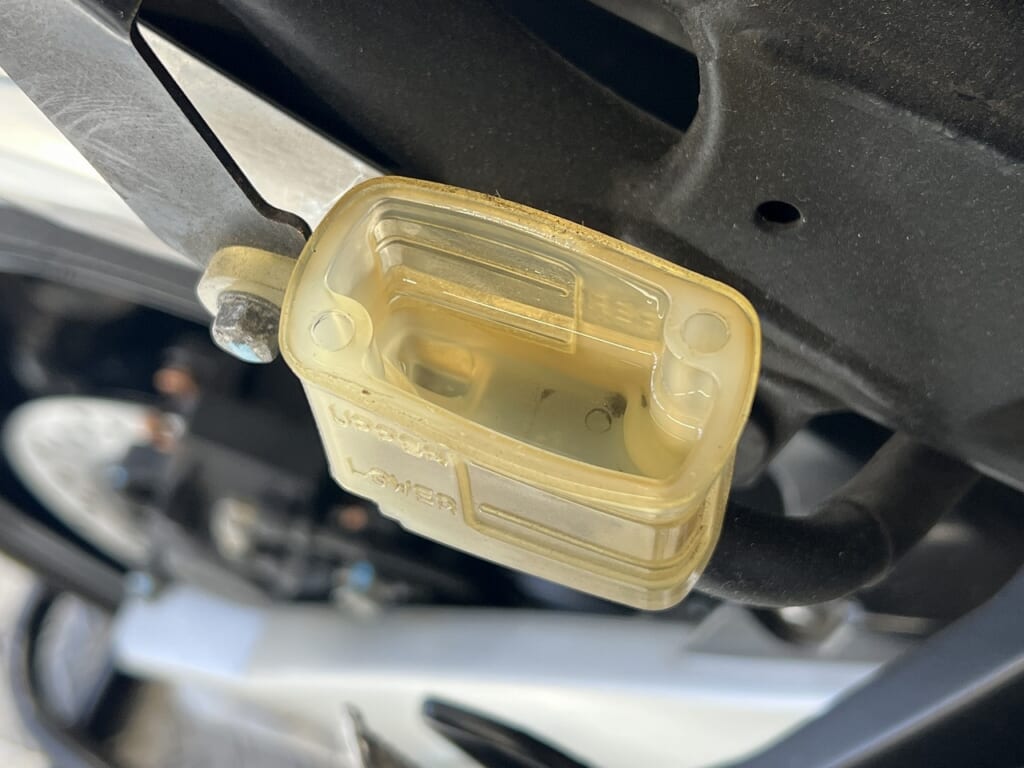
Brake fluid is Golden Cruiser DOT. I trust it absolutely.
Issue: The massive B-KING (powered by the Hayabusa engine) places immense stress on its wheels. The bearings were worn out, causing resistance. Work: Replaced front and rear wheel bearings and dust seals with new Japanese parts. Result: The difference is night and day. Pushing the bike around the garage feels significantly lighter, and the handling on the road is now smooth and predictable. Essential maintenance for heavy bikes.


 ポチップ
ポチップ