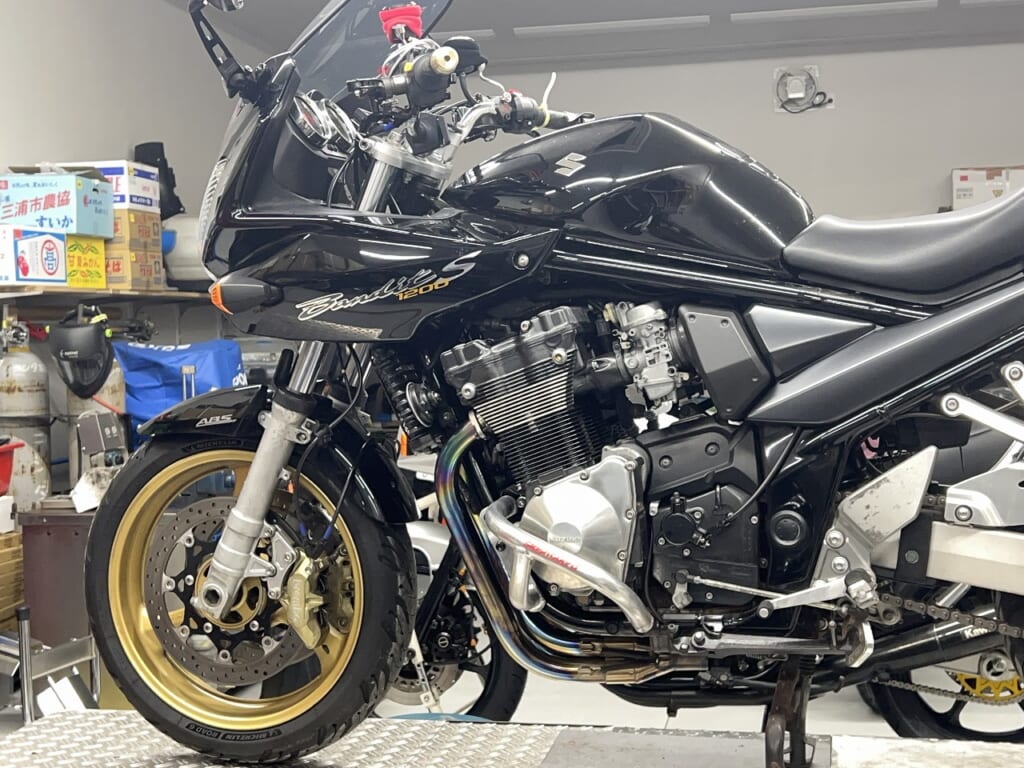
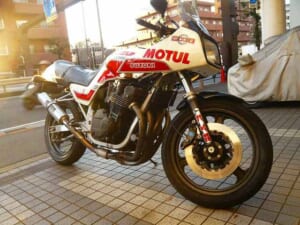
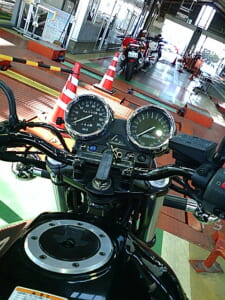
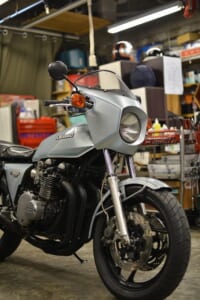
GSX1200S Oil-Cooled Katana! Choosing the right chain to bring out the “best” of an oil-cooled engine. 530 or 520? Drive system tuning that doesn’t lose torque.
Aiming for 300,000 km! GSX1200S Oil-Cooled Katana. There’s no bike you really want to switch to, and without any major trouble, you just keep riding… I feel like there are a lot of long-term owners like that. *Based on our comparison
It becomes somewhat of a “rotten relationship,” doesn’t it? I don’t really know how many kilometers it’s already traveled, but I’m sure only the frame and bodywork remain… Today we’re replacing the chain and sprocket with the ultimate combo of DID and Sunstar.
Maintenance & Custom Log for this article
Theme: Drive Chain & Sprocket Replacement and Selection
Issue: With an aged chain (stretched and stuck), the oil-cooled engine’s responsiveness and torque are lost.
Selection: DID ZVM-X Series or RK XXW Series and other high-grade chains.
*Size is either the stock 530 or a 520 conversion for friction reduction (adjust according to article content).
Effect: The “bite” when opening the throttle improves, and the sensation of the rear tire gripping the road is transmitted directly.
Conclusion: This is an important part where you can feel the “difference in performance” more than an oil change.
Decoboco’s other BLOG. “RURAL GARAGE ”
A hidden room beyond motorcycles. Sharing everyday convenient items, relocation, delicious food, life philosophy and more. ←click
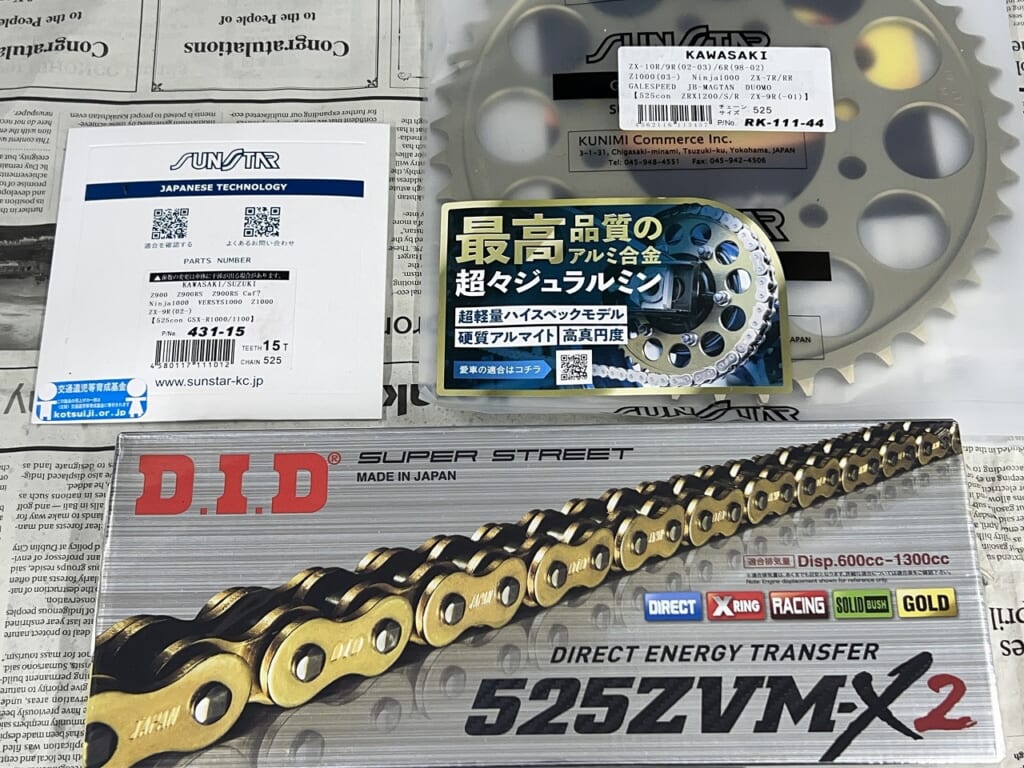
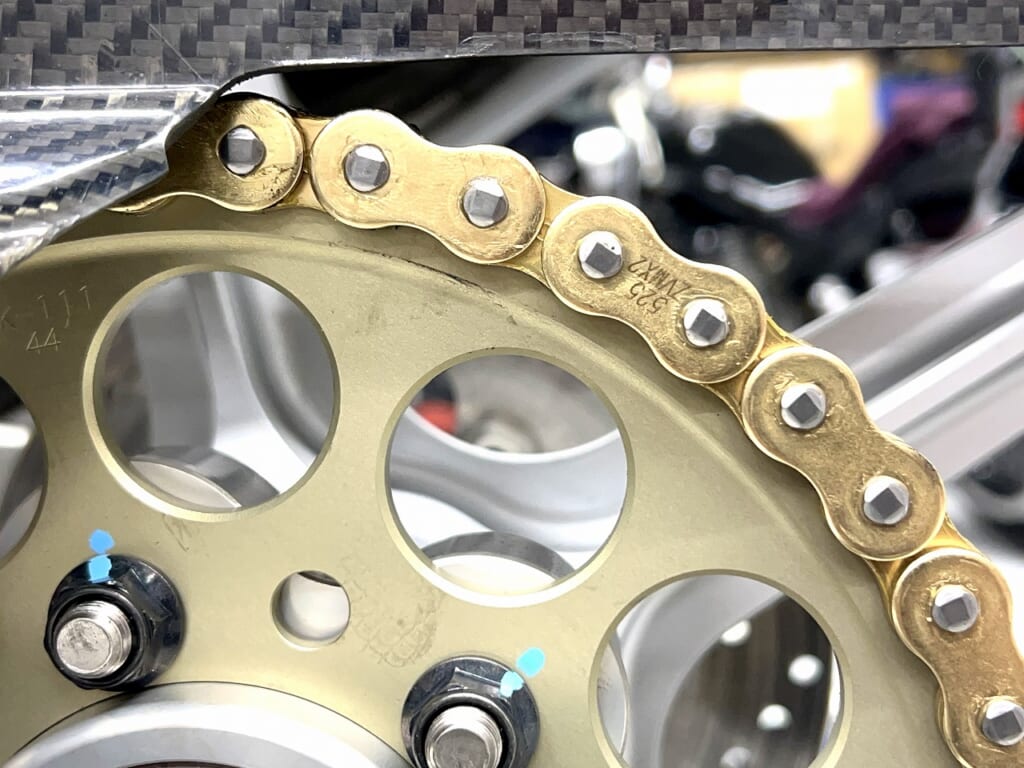
This time we’re converting to a 525 size. The modern mainstream is shifting toward 525 size, and I sometimes wonder if 530 is becoming obsolete… These days I think about it quite often (;∀;)
With an oil-cooled engine, if you have the STD wheel, there are limited choices for rear sprockets, so caution is needed. Since this bike has a Mag Tan JB1 wheel, you have plenty of options for final drive and chain size.
Inazuma 1200 Chain Size Selection: Differences and the Right Answer for 530, 525, and 520
For the Inazuma 1200 (oil-cooled 1200cc), when converting from the stock 530 size, choosing which size to go with is a dilemma. I’ve compiled the merits and demerits of each, along with dimensional differences.
Size-by-Size Merits and Demerits Comparison
1. Stock (530 Size)
This is the manufacturer’s original specification with the largest safety margin.
Merits
Overwhelming durability: Plate thickness and pin strength are at the highest level.
Peace of mind: Even with low maintenance frequency or long-distance touring, trouble is unlikely to occur.
Demerits
Weight: Both chain and sprocket are heavy, with significant impact on handling (gyroscopic effect).
Drive resistance: Larger contact area means maximum friction loss.
2. Conversion (525 Size)
This is the “new standard” of modern times, even adopted as stock on recent liter-class supersports and mega-sports.
Merits
Best balance: Noticeably lighter than 530, with noticeable improvements in unsprung weight reduction, road tracking, and acceleration response.
Sufficient durability: With modern high-grade sealed chains, adequate street life is achievable even with 1200cc torque.
Abundant parts: With compatibility across other Suzuki models, sprocket options are plentiful.
Demerits
Life difference: With reduced physical contact area, replacement cycles tend to come sooner than 530 with equivalent maintenance frequency.
3. Conversion (520 Size)
This is the choice for race use or when aiming for extreme friction reduction.
Merits
Maximum performance: Overwhelmingly light. Positive effects on fuel economy, acceleration, and cornering—you can feel the lightness just by pushing and pulling.
Demerits
Durability is critical: With the large torque of the oil-cooled 1200, uneven stretching begins early.
Sprocket wear: High contact pressure on teeth causes sprockets to wear faster.
Risk: Increased risk of breakage if maintenance is neglected, so this is for experienced riders who can manage it carefully.
Understanding “Strength Differences” Through Dimensions
Why 525 offers the best balance becomes clear when you look at specific numbers (specifications and product dimensions).
Standard Dimensions (JIS/ANSI Common)
All 50-series chains share the same “pitch (15.875mm)” and “roller diameter (10.16mm).” The only difference is inner width.
Size
Pitch (P)
Inner Width (W)
Roller Diameter (R)
520
15.875mm
6.35mm
10.16mm
525
15.875mm
7.93mm
10.16mm
530
15.875mm
9.53mm
10.16mm
Here’s what matters: “Pin diameter” and “overall width” as actual products
What professionals really care about are “pin thickness” and “outer width,” which rarely appear in catalog specs. (※Numbers are reference values for typical high-strength chains)
530 (Overall width approx. 25–27mm)
Uses the thickest pins available, very robust.
525 (Overall width approx. 23–25mm)
Many brands actually use the same pin thickness as 530
In other words, it’s designed with “530-level strength” but “narrower width for weight reduction.” This is why it’s optimal for the 1200cc class.
520 (Overall width approx. 21–23mm)
The pins themselves often become thinner, reducing “shear strength” against large-displacement torque.
Conclusion: “525” is the Optimal Choice for the Inazuma 1200
For street use, the 525 size can be said to combine “530’s strength (pin thickness)” and “lightness close to 520”
The 520 is for those willing to pay the price of “frequent adjustments and costs” for “speed.” If you want to combine customer safety with light, responsive handling, converting to 525 is the most professional recommendation I can make. Conversely, if you’re the type to replace it every year or every two years, 520 is totally viable. It’s good to choose based on your usage patterns, frequency, and situation.
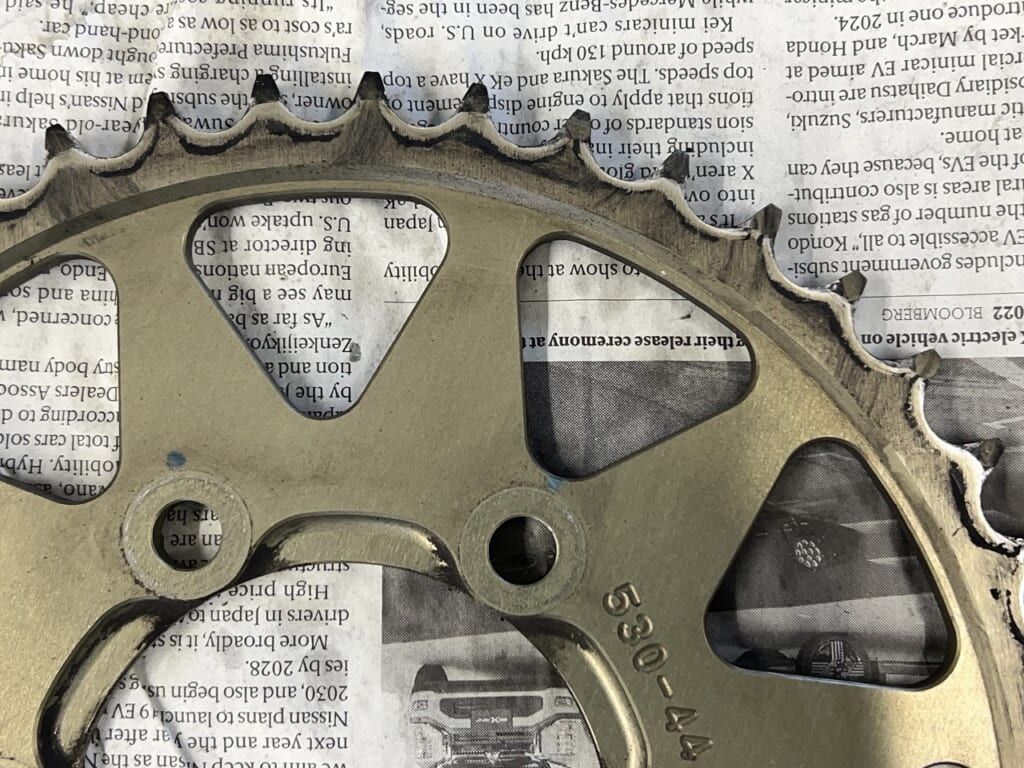
Removing the chain and sprocket.
Protection first, protection second. Even careful people make mistakes… Oh, I wish I’d protected it… is something you think. If just a few seconds or a minute of effort ensures safety, it’s worth protecting.
Since the new wheel was installed on December 6, 2023, about two years have passed. I’d say it’s done about 20,000–30,000 km.
With careful chain maintenance and throttle control, aluminum wheels can last that long. Fast wear often indicates problems with how the bike is being used.
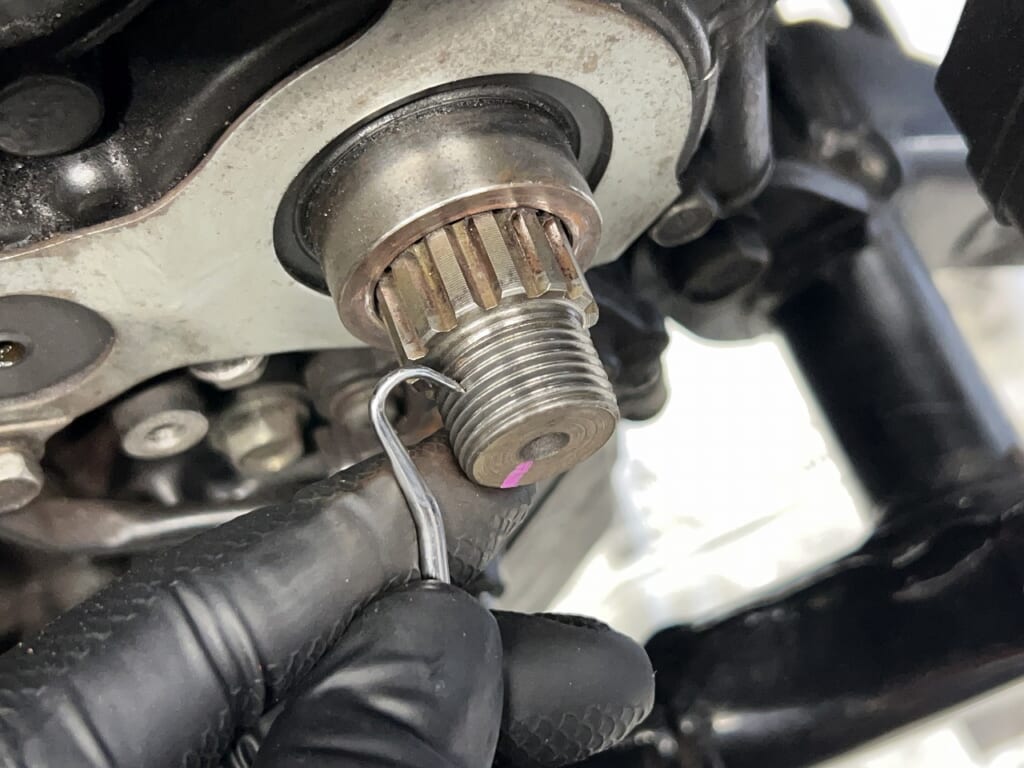
Don’t put stress on the countershaft.
The shaft is properly hardened, so it won’t budge easily. I hate tightening when loctite residue remains on the threads… I quickly brush it clean and scrape with a scriber If it takes 5–10 minutes to feel satisfied, I clean it.
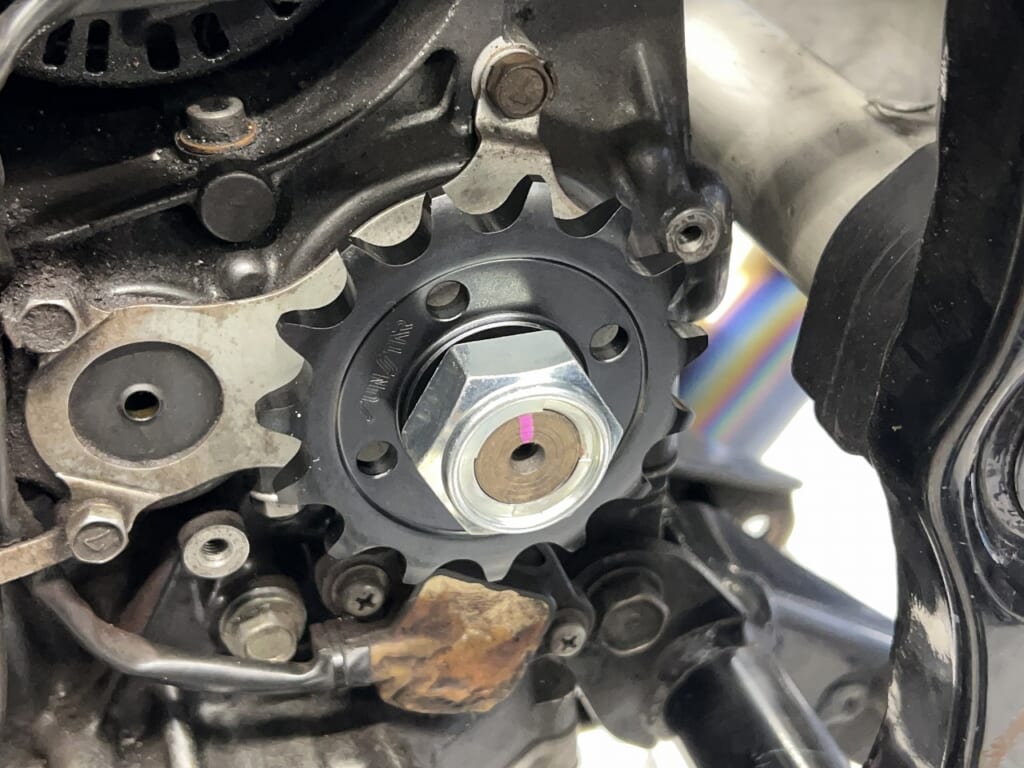
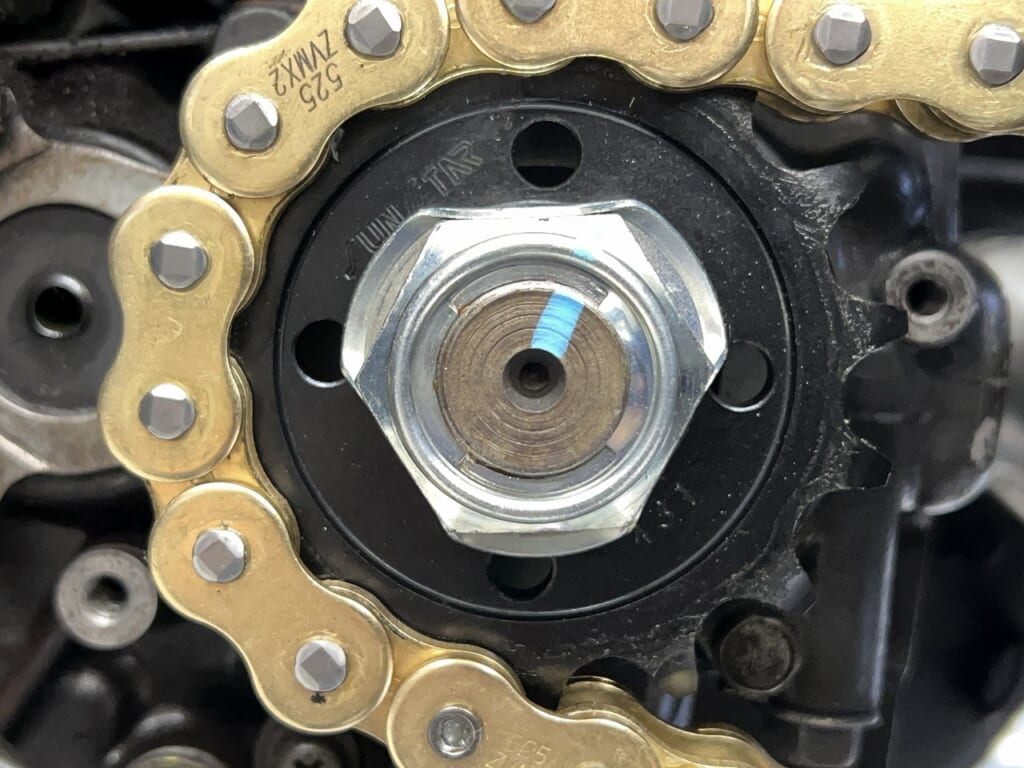
Replace the stock lock nut and washer with new ones. I remove the stock microcapsule threadlocker with a brush and secure it with liquid threadlocker.
Loose fasteners often have “residual threadlocker on the shaft + new lock nut threadlocker,” and the excessive stiffness might be mistaken for proper torque being reached. Threadlocker is really amazing stuff.
At least two locations, ideally three. Ensure proper safety and enjoy your bike (*´ω`*)
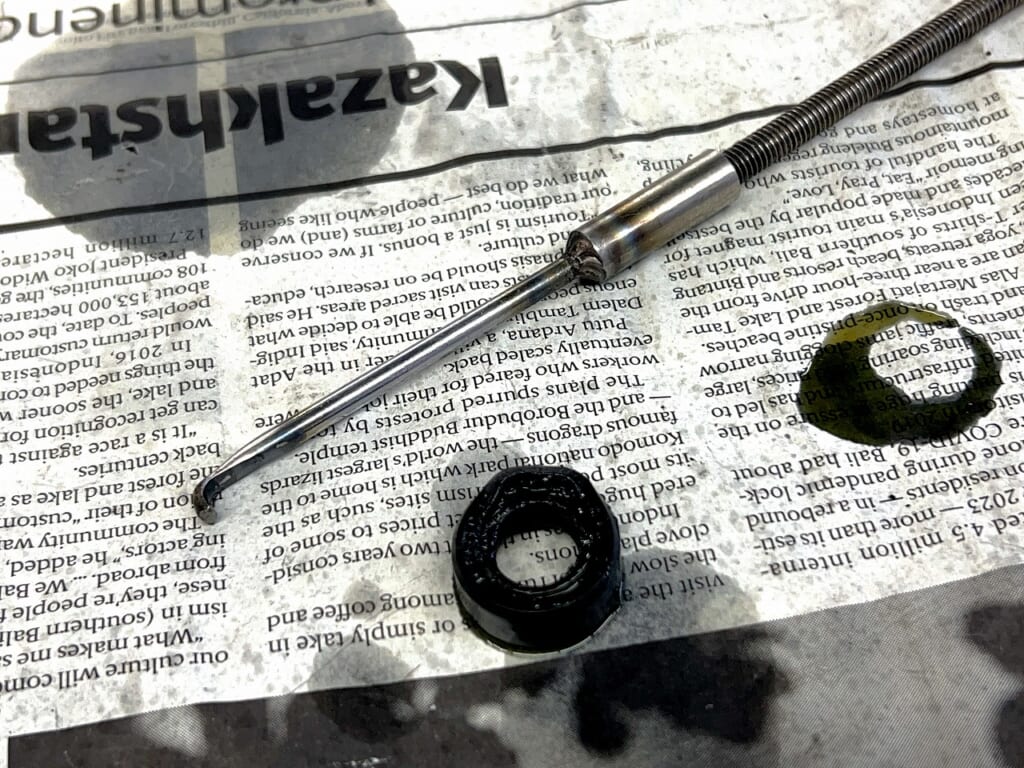
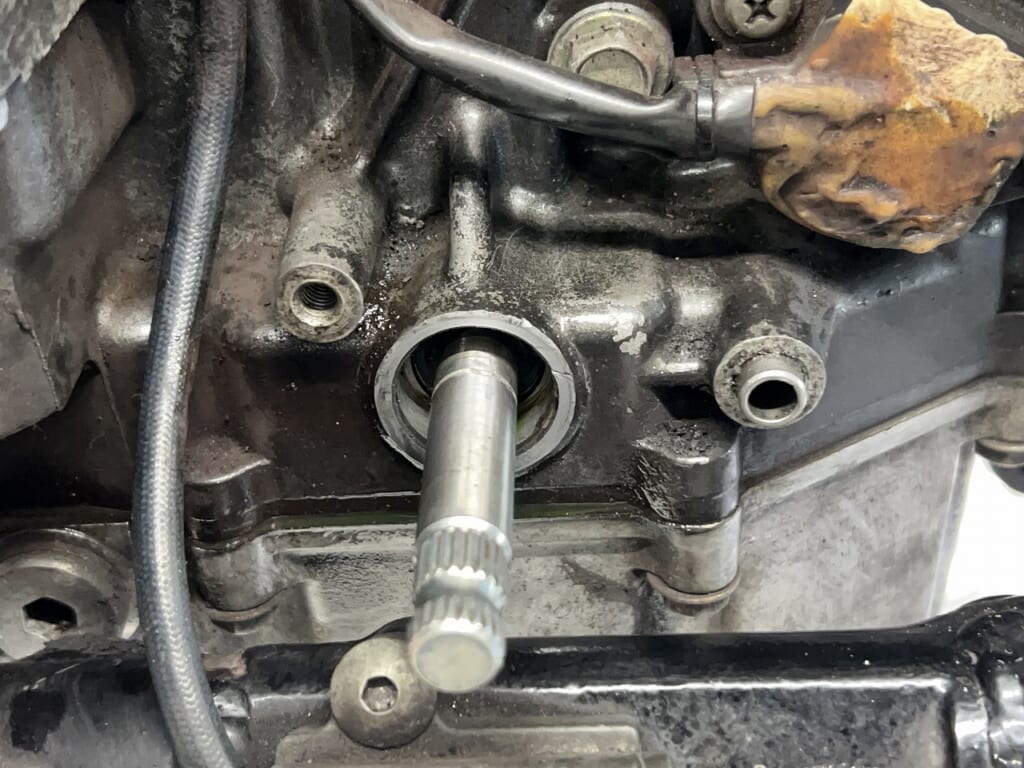
Replacing the shift oil seal as a precaution
I was asked to replace the shift oil seal as a precaution. I was told to check it, but usually “it’s either fine or it’s not”— that’s all you can tell. If you’re unsure, it’s best to just replace it.
I seal the lip with fluorine grease and apply it to the surface, then secure it with a washer and snap ring. The idea is that it stays lubricated longer, and fluorine doesn’t allow oil through, so it’s less likely to leak. Fluorine is truly wonderful, but be careful where you use it.
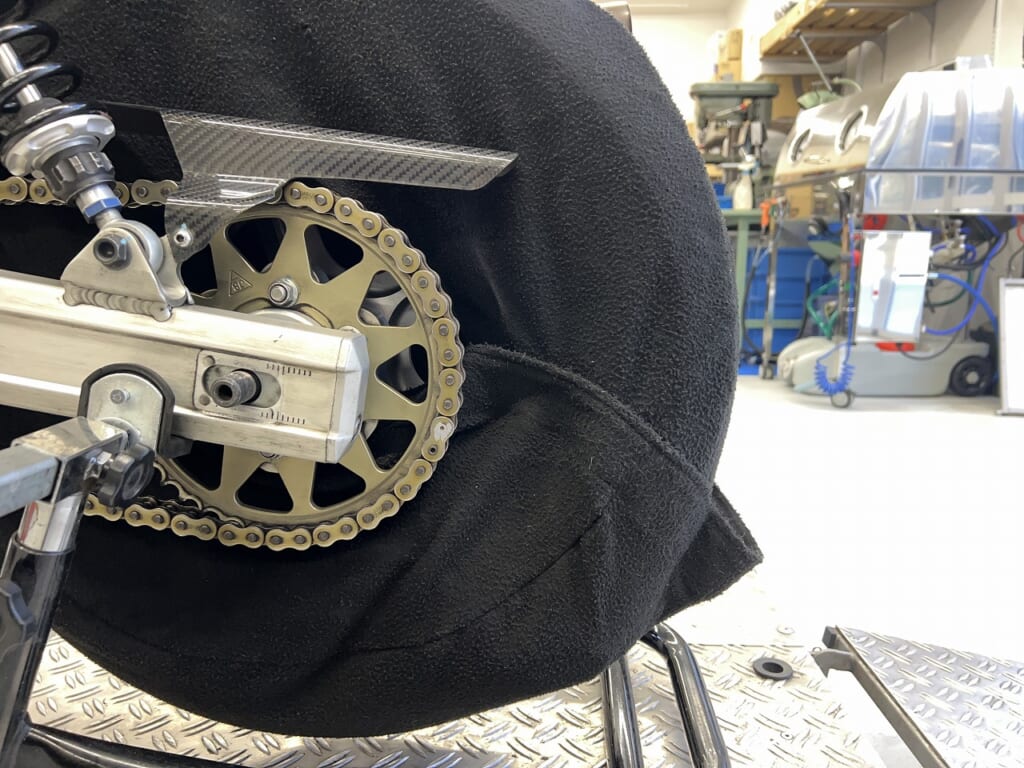
I cleaned the rear end with wet blasting.
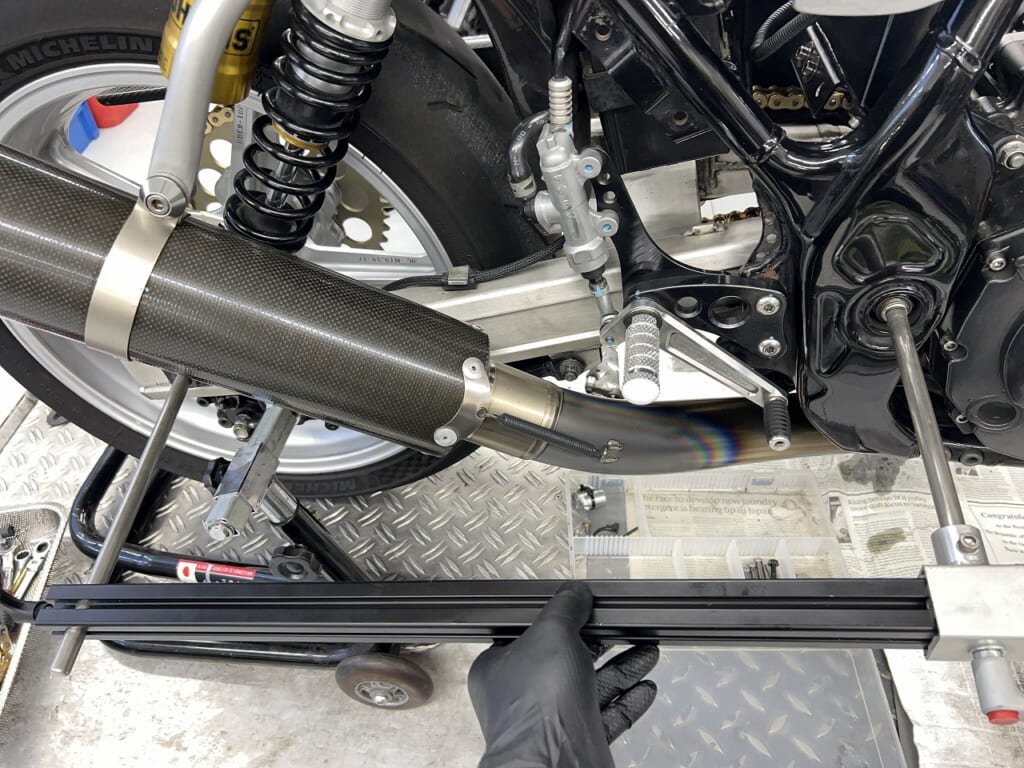
Chain tension is by the numbers—no guessing! (*´ω`*)
This gauge is rough too, but it’s better than eyeballing with a chain tool. Plus, you also learn the pivot-to-axle dimension—double benefit! It’s educational to think, “Oh, this bike is pretty long,” and so on.
Fresh chain and sprocket really make a difference! (*´ω`*) Whee!
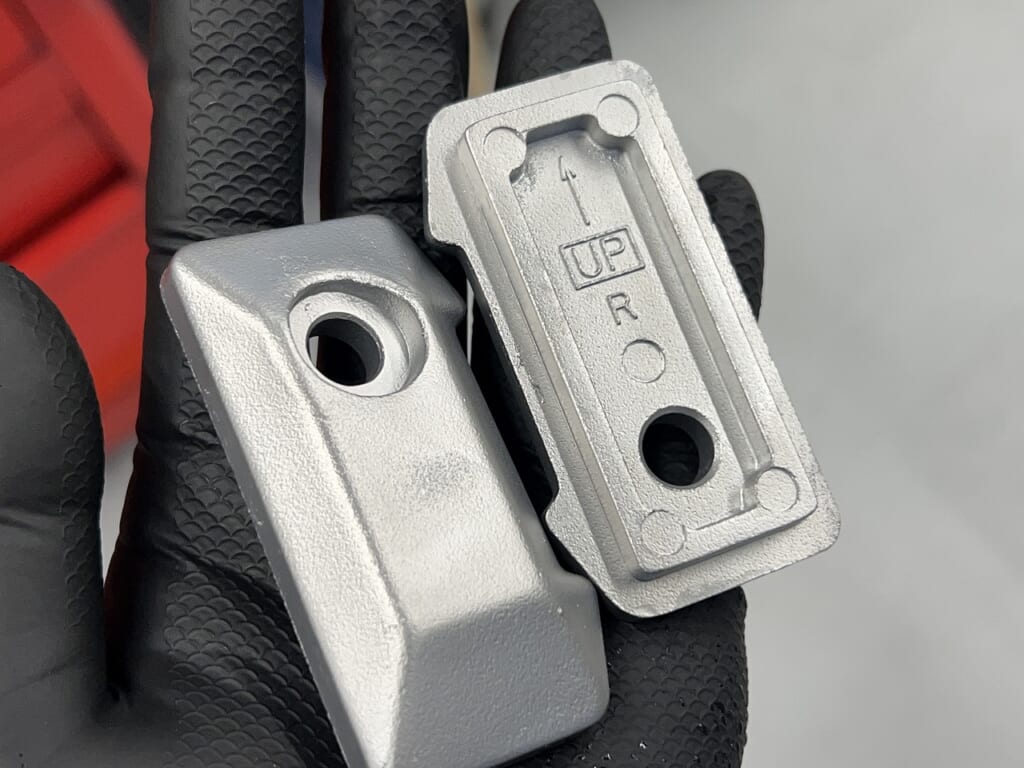
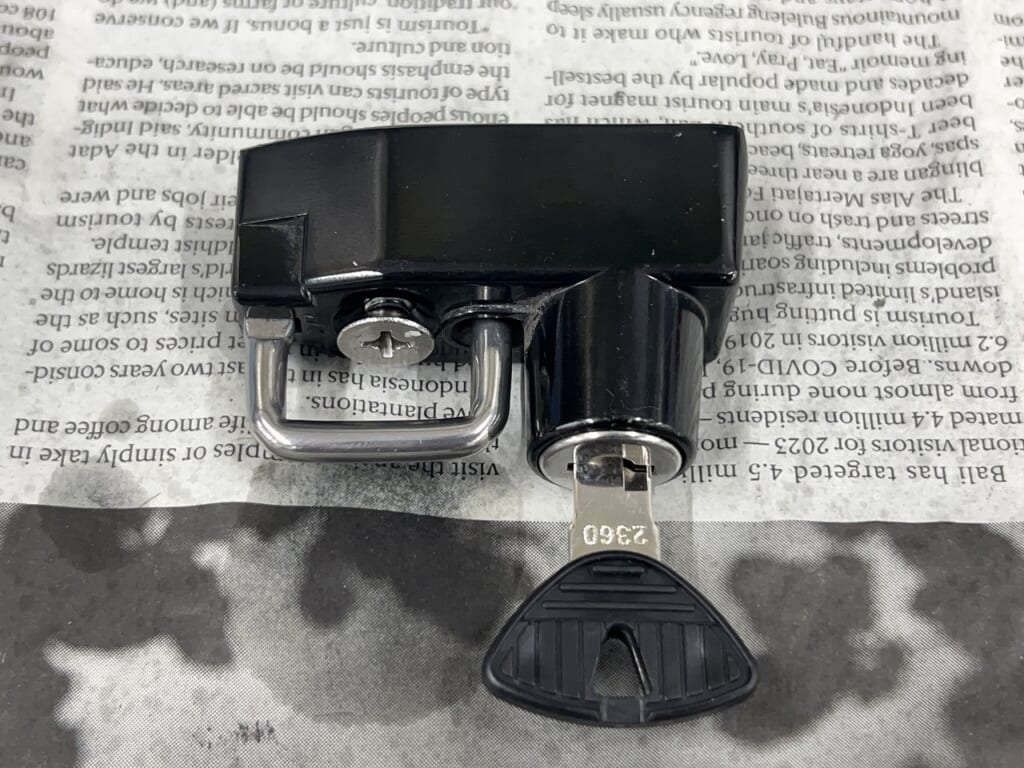
Helmet holder relocation plan
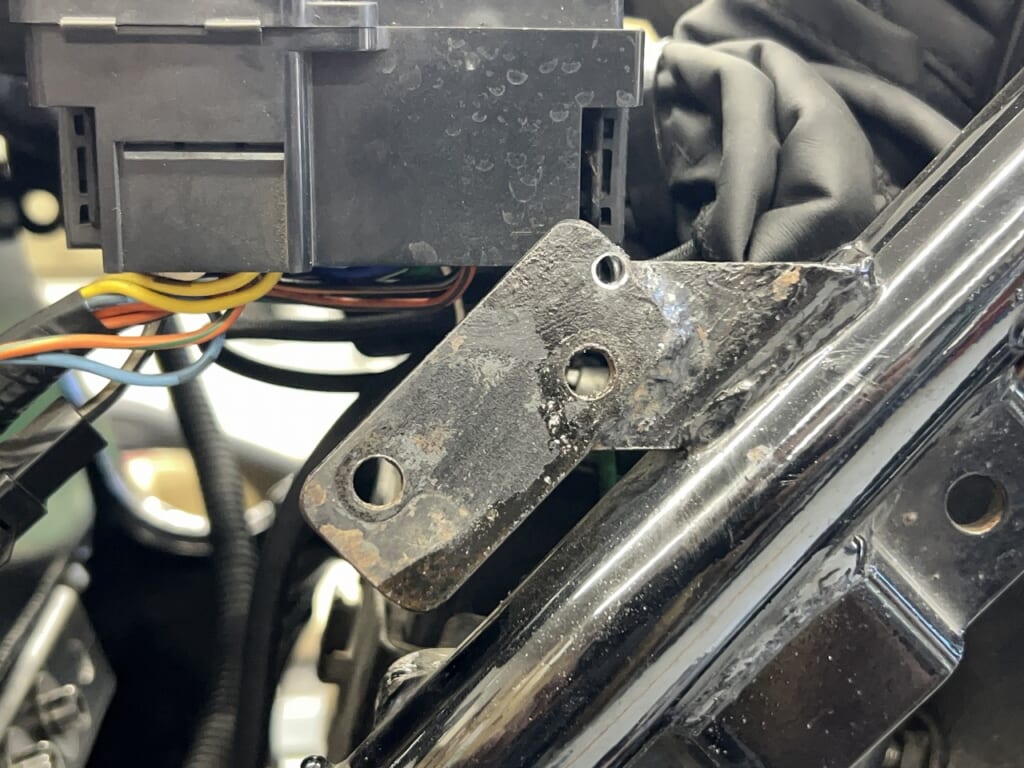
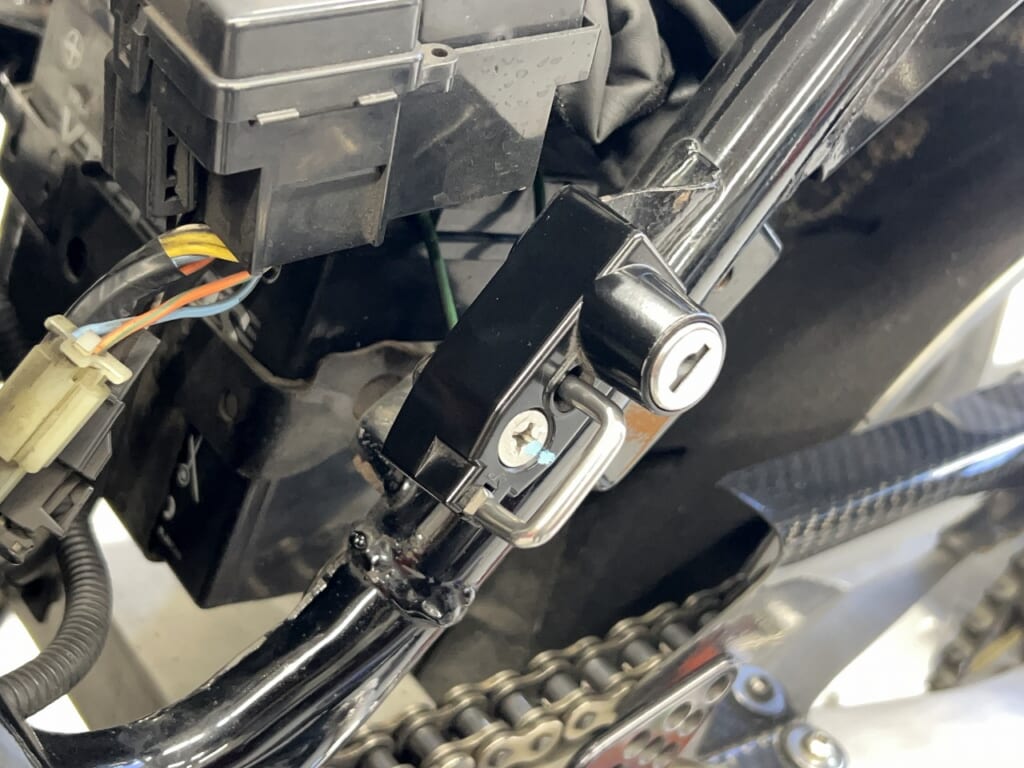
Requesting to relocate the helmet holder removed from the SV. Whether to do it properly or not… it’s a moment of hesitation.
The pin is a stopper anyway, so it should work! It was seriously tight… drilling worked out.
Unlocking the Torque: Drive Chain Replacement for Oil-Cooled Engines.
Importance: To fully utilize the massive torque of the Suzuki oil-cooled engine, a high-quality drive chain is essential. A worn chain causes power loss and poor throttle response. Upgrade: Replaced the old chain with a high-rigidity DID (or RK) chain. Result: The power delivery is now direct and immediate. The bike feels lighter and more responsive, truly bringing out the “sweet spot” of the engine.
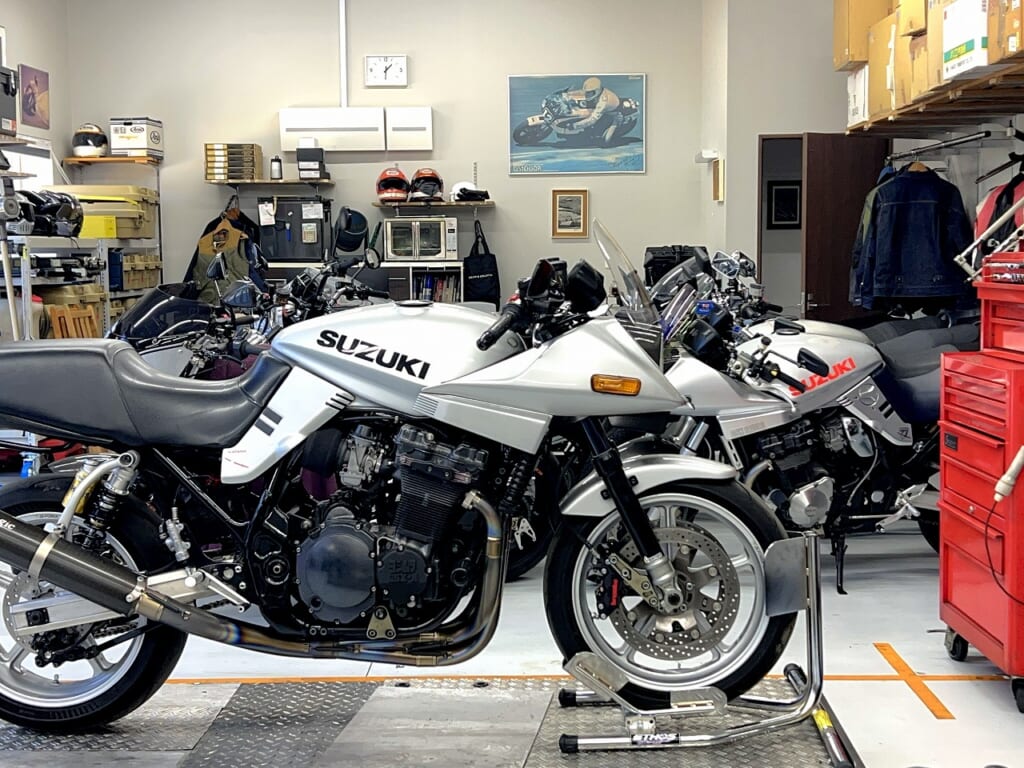
GSX1200S Oil-Cooled Katana! Choosing the right chain to bring out the “best” of an oil-cooled engine. 530 or 520? Drive system tuning that doesn’t lose torque.

 ポチップ
ポチップ